Star Formation Newsletter #400
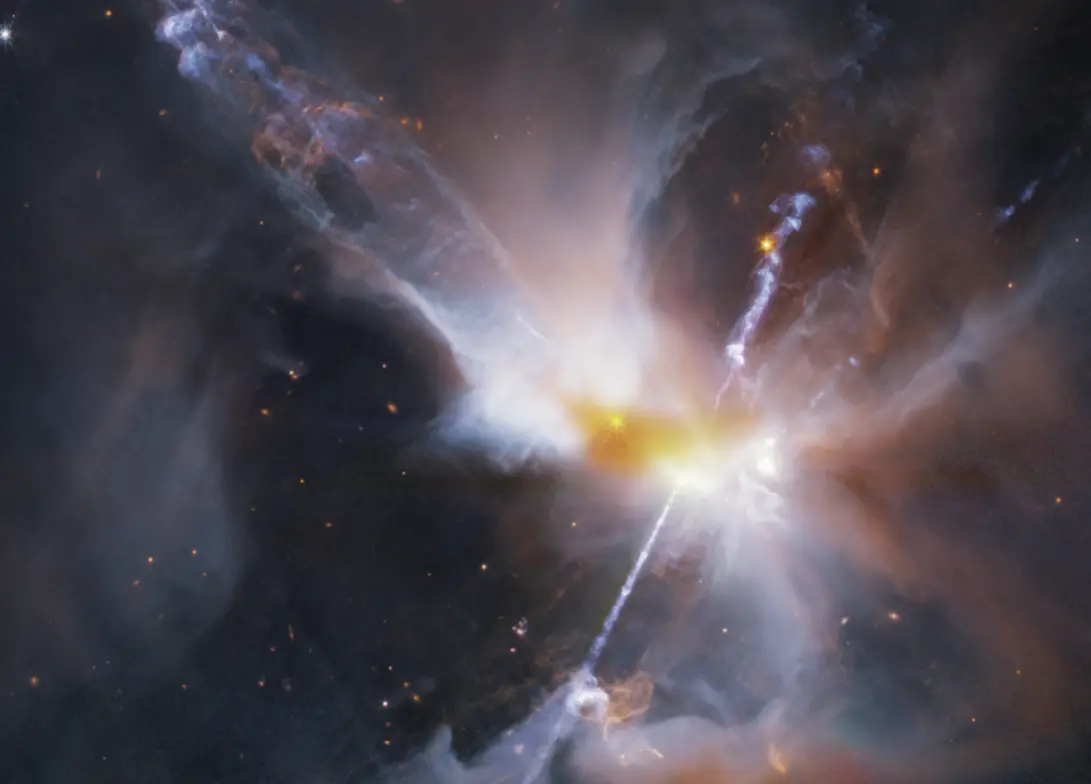
Lilly Kormann, João Alves, Emily Hunt | 5 May 2026 | Header image: Judy Schmidt
This month, we began a new announcements section, which includes four new announcements:
- First data release from JDISCS
- Apply to host the next Protostars & Planets conference
- PLATO’s guest observers programme: AO-1 call closing soon
- Why choose RMxAA for your next star formation paper?
New announcements can be submitted using this form.
This edition contains the latest abstracts from April 2026.
JOYS: Launching and destruction of dust in protostellar jets. The case of BHR71-IRS1 with JWST/MIRI
Protostellar winds can theoretically lift solids from the planet-forming disks, but direct evidence for launched dust has been scarce so far. Numerous atomic lines that are unique to mid-infrared (IR) wavelengths reveal refractories eroded from dust grains and provide information on wind properties in the earliest stages of the star formation process. We present JWST/MIRI-MRS spectral imaging of the inner 2000 au of the BHR71-IRS1 blueshifted side of the outflow. Atomic line intensities are compared to shock models to constrain the physical conditions and elemental abundances of the outflowing gas. Dust continuum maps are constructed from PSF-subtracted cubes, and the dust spectral energy distribution is analyzed. The ionized central jet of BHR71-IRS1 is spatially resolved and imaged for the first time, revealing a unique inventory of refractory, volatile, and noble-gas fine-structure lines (Fe, Ni, Co, Cl, S, Ne, Ar). The emission is concentrated along four bright knots that wiggle along the jet axis. PSF-subtracted continuum maps reveal extended mid-IR continuum emission co-spatial with the jet bullets and within the H-traced outflow cone. Spectral energy distributions along the jet are fit together with the extinction, revealing a warm (200-400 K) and a cold (70-90 K) dust component. Shock modeling constrained by the mid-IR lines indicates a decline in shock velocity from 70 to 35 km s and pre-shock density from 10 to cm with distance from the protostar. Gas-phase Fe and Ni are measurably depleted relative to Solar abundances, consistent with a substantial fraction of refractories remaining locked in grains in spite of the shocks. These JWST observations provide direct evidence that dust is launched in a Class 0 jet and at least partly survives shock processing.
JOYS: Linking the molecular ice and gas-phase composition towards the high-mass hot core IRAS 18089-1732
Context. The formation and destruction of molecules in the interstellar medium is a complex interplay between gas-phase reactions as well as processes on grain surfaces and within icy mantles. For many decades, the gas-phase composition of the cold material towards star-forming regions could be well characterized using (sub)mm facilities. Prior to the launch of the James Webb Space Telescope (JWST), ice species other than the main constituents (H2O, CO, CO2, NH3, CH4, CH3OH) were challenging to detect due to insufficient sensitivity as well as angular and/or spectral resolution. Aims. We determine molecular ice and gas-phase column densities towards the young and embedded high-mass hot core IRAS 18089-1732 within a region of 5000 au. Methods. We use spectroscopic data from 5-28 micron obtained with JWST to derive ice column densities of H2O, SO2, OCN-, CH4, HCOO-, HCOOH, CH3CHO, CH3COOH, C2H5OH, CH3OCH3, and CH3COCH3. Gas-phase column densities of a total of 38 molecules, including, O-, N-, S-, and Si-bearing species as well as less abundant isotopologues, are inferred from sensitive molecular line observations taken with the Atacama Large Millimeter/submillimeter Array (ALMA) at 3 mm wavelengths. Results. We find comparable abundances (relative to C2H5OH or CH3OH) in both phases for C2H5OH, CH3OH, and CH3OCH3. The abundances of SO2 and CH3COCH3 are higher in the gas-phase suggesting additional gas-phase formation routes. The abundance of CH3CHO is one order of magnitude higher in the ices compared to the gas-phase. The ice abundances (relative to H2O ice) towards the IRAS 18089 hot core are similar to previously studied Galactic low- and high-mass protostars. There are hints of a decreasing abundance with Galactocentric distance for OCN-, CH3OH, and CH3CHO ice. (abridged)
Protoplanetary Disk Evolution in a Low-Metallicity Environment: JWST's First Mid-Infrared Census of Low-Mass Stars
This study presents the first high-resolution, high-sensitivity mid-infrared (MIR) investigation of protoplanetary disks in a low-metallicity environment, using JWST/NIRCam and MIRI observations of Digel Cloud 2, a star-forming region in the outer Galaxy ( kpc, dex). It hosts two very young (0.1 Myr) embedded clusters, Cloud 2-N and Cloud 2-S, offering a window into disk evolution under conditions analogous to the early universe, where low metallicity implies reduced dust content. Imaging across 1-20 m, including F770W and complementary bands (F356W, F444W, F405N), enables probing disk properties with unprecedented spatial resolution and stellar mass sensitivity down to 0.1 . Among 89 and 95 sources detected in F770W in Cloud 2-N and 2-S, respectively, we identify candidate stellar-mass cluster members using infrared photometry, from which stellar mass and extinction are estimated. Among these, 75 % retain optically thick disks in both clusters based on MIR SED slopes, consistent with similarly aged solar-metallicity regions. In contrast, a lack of 2 m excess suggests diminished inner disk emission, possibly due to enhanced silicate grains with low sublimation temperatures. Using the F405N narrow-band filter covering Br, we detect accretion signatures in 35 % of sources selected by extinction criteria, with rates 10 yr, comparable to or exceeding those in nearby low-mass stars. Brown dwarf candidates, identified across multiple bands including F770W and shorter wavelengths, exhibit a high disk fraction of 75 %, indicating robust disk retention across mass ranges even under low-metallicity conditions.
The Star Formation Factory revisited I. The impact of metallicity on collapsing star-forming clouds
Context. Stellar feedback regulates star formation and shapes the interstellar medium, yet its role during the collapse of molecular clouds remains uncertain over a wide range of initial conditions. Aims. We explore how stellar winds and supernovae influence star formation in collapsing gas clouds that span a broad parameter space in mass, size, and metallicity. Methods. Using a one-dimensional numerical model, we follow the evolution of feedback-driven bubbles produced by embedded clusters, incorporating time-dependent energy and mass injection, self-gravity, integrated cloud collapse, radiative cooling, shell instabilities, and triggered star formation. Our treatment of gas cooling in the hot bubble explicitly accounts for heat transfer across the bubble-shell interface. Results. We find that metallicity acts as a key regulator of feedback, comparable in importance to cloud mass and radius. In low-metallicity clouds, reduced radiative cooling is offset by weaker stellar winds, leading to prolonged star formation and higher efficiencies. Across a substantial portion of parameter space, the expanding shell undergoes a stalling phase that further enhances the star formation efficiency, an outcome that is not observed at higher metallicities. Conclusions. Our results suggest that the diverse properties of star clusters across cosmic time may arise from the metallicity-dependent interplay between stellar feedback and gas cooling.
Orbital evolution of highly eccentric bodies embedded in a ringed accretion disc
Various processes can induce long-lived overdense rings and arcs in protoplanetary and AGN accretion discs, such as the accumulation of gas at the outer edge of the dead zone, or the infall of material. Using the local approximation of dynamical friction, we investigate the orbital evolution of a low-mass highly-eccentric point-mass accretor (perturber) embedded in an isothermal disc hosting a density ring. We specifically consider the regime in which the eccentricity exceeds four times the disc aspect ratio. For prograde perturbers, orbits that cross the ring progressively circularize while their semi-major axes converge toward the ring radius. As a result, perturbers accumulate, forming a population ring superimposed on the gaseous ring. The ring therefore acts as a migration trap for these eccentric orbits. We also find that prograde orbits tangent to the ring, either at apocentre or pericentre, remain tangential throughout their evolution; perturbers confined to these trajectories experience the highest accretion rates. In contrast, retrograde perturbers always migrate inward. Once the semi-major axis becomes smaller than the ring radius, the eccentricity grows, but not enough for the orbit to intersect the ring again. We also discuss how feedback effects, such as jet launching and thermal torques, could modify the effective forces acting on the perturbers.
Modeling YSO Jets in 3D III: Dependence of Accretion and Jet Properties on Stellar Magnetospheric Field Strength and Rotation
Observations of Young Stellar Objects (YSOs) systems reveal a wide diversity of jet properties, from well-collimated bipolar jets to uni-polar jets and systems with no detectable jet. Both prograde and counter-rotating jets are reported, raising questions about how jets are launched and how their properties relate to the underlying star-disk system. Using 3D non-ideal MHD simulations, we present a suite of models in which jet properties depend sensitively on stellar rotation and magnetic field strength. In all models, jets are launched from ``two-legged'' magnetic field lines anchored to both the star and the turbulent, magnetically elevated disk surface, with interactions at the disk surface crucial for mediating the magnetosphere-disk coupling. The axial jet and its surrounding disk wind form a characteristic ``spine-tower'' structure: the spine is the kinematically-dominated jet along open field lines threading the star, and the tower is the surrounding toroidal-field—dominated disk wind. The stability of this structure depends on the balance between the spine's stabilizing power and the tower's destabilizing power; if the tower dominates, the disk wind can choke the jet, producing asymmetric or no jets. This relationship allows an upper limit estimate on the toroidal magnetic field strength in the disk wind-launching region using observed outflow properties. Counter-rotating jets naturally appear in models, particularly with non-rotating stars, showing that the classical rotation-poloidal velocity relation does not reliably indicate the jet-launching radius. Instead, it could be used to trace the stellar rotation rate, offering a potential observational diagnostic of stellar spin.
East Asian VLBI Network astrometry toward the star-forming region G040.96+02.48 in the Extreme Outer Galaxy
Accurate astrometric measurements for star-forming regions located on the far side of the Milky Way remain scarce. In this work, we present the astrometric results for a 22\,GHz water maser associated with star-forming region G040.96+02.48 located on the far side of the Milky Way, using the East Asian VLBI Network. The target water maser's proper motion was determined to be () = (, )~mas~yr. The derived three-dimensional kinematic distance to the star-forming region is 20.23.2\,kpc, placing it slightly outside the Outer ScutumCentaurus Arm. The corresponding vertical height of 872139\,pc indicates a significant warp of the outer Galactic disk, which is in good agreement with the latest precessing warp model. Moreover, the resulting peculiar motions reveal a complex kinematic pattern, characterized by a large outward radial velocity of 18\,km~s. Our observations substantially expand the valuable sample of star-forming regions with accurate astrometric measurements in the Extreme Outer Galaxy.
OB runaway stars originating in the Vel OB1 association
OB runaway stars are massive stars moving through interstellar space at high velocities (up to 200 km/s), produced by dynamical ejections in young massive clusters or supernova explosions in massive binaries. They can travel several hundred parsec before exploding as supernovae, affecting the dynamical and chemical evolution of the Galaxy. The Vel OB1 association, one of the largest OB associations, hosts about 20 O-type and more than 50 B-type stars. We aimed to identify OB runaways in this region, quantify their number, identify their parent clusters, and understand their production channels and impact on the surrounding medium. Using Gaia DR3 coordinates, parallaxes, and proper motions, we identified OB runaways by measuring their peculiar velocity. We inspected infrared WISE images to identify wind bow shocks and reconstructed runaway trajectories to locate parent clusters and estimate travel times. We identified six young stellar clusters hosting most of the massive-star population in Vel OB1 (distance 1.6-2.1 kpc; age 1-10 Myr) and derived a threshold velocity of 15 km/s to classify runaways. We identified 25 OB runaways (including HMXB VelaX-1) and one F-type runaway. We detected 16 arc-like features, six associated with runaways selected by peculiar velocity, and ten bow shocks aligned with runaway proper motions. Parent clusters are identified for seven runaways, most likely ejected dynamically. The runaway fraction is about 30%. Wind bow shocks from OB runaways reveal valuable information on local ISM conditions.
A New Cloud-Cloud Collision Source N68 toward the G35 Molecular Cloud Complex
Bubble N68 in the G35 complex shows clear cloud-cloud collision (CCC) signatures. Its semi-ring-like morphology harbors many significant massive star formation tracers: 6 HII regions, 4 6.7 GHz masers, 5 Midcourse Space Experiment sources, 9 radio peaks, and nearly 10 O/B-type stars. We also identified 163 young stellar objects (45 Class I, 5 Flat, 113 Class II), indicating active star formation toward N68. Our molecular study with CO reveals two distinct molecular clouds (N68a: 47-56 km s; N68b: 56-64 km s), with broad bridge features and complementary distributions at their borders, indicating an ongoing CCC. Star formation in N68 is collectively driven by collect-and-collapse (CC), radiation-driven implosion (RDI), and CCC mechanisms. However, compared with the CC and RDI mechanisms, the CCC mechanism does not enhance the star formation efficiency; instead, it tends to trigger the formation of massive stars. N68, along with bubbles N65 and N61, constructs a pc scale CCC system in the G35 complex.
Structure and Large-Scale Kinematics of Young Stellar Populations in the NGC 6357 and NGC 6334 Giant Molecular Cloud Complex
We map the three-dimensional structure and large-scale kinematics of the young stellar populations in the G352 giant molecular cloud (GMC) complex. In radio and infrared images, G352 appears as long filament extending ~ (~150 pc) parallel to the Galactic midplane. It connects the NGC 6357 and NGC 6334 giant H II regions and the GM1-24 compact H II region. We identify 1727 stellar members of G352 via matching large catalogs of Chandra X-ray point sources and Spitzer mid-infrared excess sources to the Gaia DR3 astrometric catalog. Our catalog of 11,470 X-ray point sources ranks among the three largest contiguous X-ray survey datasets ever assembled for a massive star-forming complex. We revise the mean heliocentric distance of G352 to pc, with the median parallaxes of seven constituent groups exhibiting a trend toward increasing distance with decreasing Galactic longitude. We identify two foreground stellar groups superimposed on NGC 6357 that may belong to the Sag OB4 association. The three massive clusters in NGC 6357 exhibit peculiar velocities that trail Galactic circular motion by km/s, while the stars associated with NGC 6334 are more consistent with a circular orbit. GM1-24 has a distinct proper motion and smaller parallax compared to NGC 6334. The steep pitch angle of the GMC filament into the sky appears inconsistent with a spiral arm. The various stellar groups are not gravitationally bound to each other, making G352 a proto-OB association.
Turbulent infall onto class 0 disks as cause of CAI brief condensation episode in the solar system
Calcium-aluminum-rich inclusions (CAIs) in carbonaceous chondritic meteorites are the oldest relics in the solar system. Notably, their radiogenic age feature a brief (100 kyr) condensation episode. In contrast, the reservoirs of the short-lived isotopes in CAIs, presumably supernovae or asymptotic giant stars, pollutes star-forming regions in giant molecular cloud complexes (GMC) over much longer (Myr) duration. Through a series of numerical simulations, we show here the possibility that, within an extended region (23 AU), nearly all ``pre-solar'' CAI-loaded grains in the infall clouds were sublimated and re-condensed during the early ( yr) infall and formation of class-0 disks. We adopt a set of initial conditions from a previous hydrodynamic simulation of the collapse of GMC and the formation of young stellar clusters. We analyze the evolution of the disk's thermal distribution and dynamical structure resulting from the interaction between circumstellar disks and infalling gas. Our follow-up simulations, with much higher resolution, show significant and rapid changes in the disk orientation and morphology due to the dynamic infall of external streamers. Warps and global spiral density waves commonly appear. They lead to intense dissipation which heats the gas to sufficiently high temperature to sublimate prior-generation CAIs. This solid-to-gas phase transition is followed by subsequent cooling and re-condensation. The CAI contained in the meteorites today could be the relics of the last episode of major infall onto class 0 disks.
Introducing PxP: A Population Synthesis Framework for Predicting YSO Properties
The most direct method of measuring the star formation rate is with young stellar objects (YSOs), but this requires high-resolution observations and high-quality models. Using the latest YSO radiation transfer and stellar evolution models, we have developed a population synthesis code that generates model YSO populations that can be observed by JWST. We combine these model populations with principal component analysis (PCA) and maximum likelihood fitting to create a complete framework for predicting the age and mass of YSO populations. We dub this combination of Population synthesis and PCA, PxP, and show that it is effective at predicting mass and age with self-fitting tests. We apply PxP to the Spitzer identified YSOs in N44 and find a mass of (1.1+-0.1)*10^4 M_sun and an age of 0.74^{+0.06}_{-0.03} Myr, consistent with previous work. Next, we identify 112 YSO candidates in the archival JWST observations of NGC 604. Applying PxP to this newly identified population we find a mass of (2.2+-0.2)*10^4 M_sun and an age of 0.62+-0.01 Myr. This first look at this framework demonstrates its effectiveness with a specific set of models and leaves clear opportunities for future exploration. PxP allows us to directly determine the recent (<3~Myr) star formation history, giving an unprecedented look at the effect of the large-scale environment on individual star formation.
The FUor Mass Distribution Matches the Solar Neighborhood IMF: Evidence for a Universal Eruptive Phase
Eruptive accretion events are expected to play an important role in the mass buildup stage of individual star formation. FU Ori objects (FUors) experience the most extreme eruptive outbursts, which raise the accretion rate of the disk from to and last for decades. During an outburst, the disk is approximately 100 times brighter than the star, making direct study of the central star impossible. However, the disk is expected to be in Keplerian rotation around the star, enabling indirect constraints on properties of the central source via observations of the disk. Using m high resolution spectra of several tens of FUors, we demonstrate the expected Keplerian rotation in their inner disks. We then adopt a Keplerian rotational broadening profile to model the line profiles of spectral lines, and focussing on the H-band region, we infer the mass distribution of FUors. We finally show that this mass distribution is consistent with inferred Solar neighborhood initial mass functions, suggesting all young stars undergo a period of FUor outbursts in their pre main-sequence evolution.
Characterizing and spectrally modeling embedded FUor eruptions in the near-infrared
Context. Episodic accretion in young stellar objects (YSOs) is thought to play a critical role in addressing the "luminosity problem" associated with star formation. However, optical surveys tend to bias against sources that are heavily obscured. Infrared time-domain surveys, such as unTimely WISE, facilitate the identification of such sources within the dense star formation regions of our Galaxy. Aims. We aim to systematically identify and characterize FUor outbursts in infrared-selected YSOs using high-resolution spectroscopy and detailed disk modeling. Methods. We conducted follow-up high-resolution spectroscopy with Gemini South/IGRINS for four FUor candidates discovered in infrared time-domain surveys. Using a combination of photometric and spectroscopic observations, we constructed spectral energy distributions and fit them with a disk model that incorporates an actively accreting inner disk together with a passively irradiated outer disk. Results. All objects show CO and HO absorption bands at 2.3m, and their positions in the Na + Ca versus CO equivalent width diagram further corroborate their classification as FUors. The best-fitting model spectra closely match both the observed spectral features and the overall continuum, providing additional confirmation of the FUor classification. The best-fit models reveal high extinction values ( = 10-20 mag), with comparable to those of classical FUors such as FU Orionis. Among 18 sources initially selected via infrared light curves, 7 out of 8 with available spectra exhibit FUor characteristics, implying a high selection efficiency.
The fragmentation properties of massive star-forming regions in 30Dor-10 at 2000 au resolution
The fragmentation properties of parsec-scales clumps play a fundamental role in shaping the dense gas condensations known as cores, the immediate progenitor of stars. The distribution of core masses, the so-called core mass function, is the precursor of the stellar initial mass function, which governs the distribution of stellar masses and, consequently, the evolution of galaxies. The stellar initial mass function is often described by a typical Salpeter-like slope, although deviations toward more top-heavy distributions have been reported in extreme environments, raising questions about its universality and about the physical connection between the two mass functions. To date, there are no observational constraints on the core mass function and its link to the initial mass function beyond the Milky Way. Here we present a study of the fragmentation properties and the measurement of the core mass function in an external galaxy, focusing on the 30Dor-10 region in the Large Magellanic Cloud, using high resolution observations that probe spatial scales down to 2000 au. Robust statistical analysis demonstrates that the core mass function is consistent with a Salpeter-like slope and suggests that variations in the stellar mass distribution arise from evolutionary processes rather than from initial fragmentation.
The mmax-Mecl relation in the LEGUS clusters
The relation between the maximum stellar mass in a very young cluster (mmax) and the total stellar mass of the cluster (Mecl), known as the mmax-Mecl relation, remains debated in the literature. To test the validity of this relation, we modelled young star clusters with masses between 102.5 and 105.0 M_sun and ages of 1-4 Myr using the galIMF code, in which stellar masses are optimally sampled from a varying initial stellar mass function. We compared the results with literature observations of extragalactic young star clusters. We incorporated stellar evolution via PARSEC and COLIBRI tracks and computed Halpha luminosities using the Pegase code. To account for dynamical ejections, we stochastically removed stars based on their spectral type, following previous N-body simulations. Additional sources of scatter, including uncertainties in age determination and contamination by field stars, were considered. Our results indicate that, under the assumptions explored here, optimal sampling is consistent with the extragalactic star cluster observations considered, whereas purely random sampling produces distributions that are not in agreement. These findings support a highly self-regulated interpretation of cluster formation in which stellar masses align optimally with the initial mass function rather than being drawn independently at random.
Radiative Feedback in Population III Protostellar Growth: The Impact of HI Shielding
We present a suite of radiation-magnetohydrodynamics simulations from the POPSICLE project that follow the long-term growth (~50 kyr) of primordial protostars while self-consistently coupling radiation, turbulence, and magnetic fields. The simulation suite is designed to quantify the relative impacts of the pathways of radiative feedback in Pop III stars - the extreme-ultraviolet (EUV) ionization and Lyman-Werner (LW) dissociation - by considering simulations with and without their inclusion. We find that without HI shielding, LW feedback alone can suppress and ultimately terminate accretion. With HI shielding, the large column densities near the protostar significantly weaken LW feedback. In the polar direction, atomic hydrogen fully shields LW radiation where self-shielding alone is insufficient. This leads to lower gas temperatures near the protostar and higher accretion rates, yielding larger final stellar masses than in models without shielding. The HII regions remain compact and confined to less than about 100 AU measured outward from the sink accretion radius (75 AU) due to high gas densities and continuous gas replenishment that inhibit the thermal pressure-driven breakout of the ionization front even for high ionizing luminosities. These results demonstrate that the interplay of gas dynamics, shielding, and radiative feedback can significantly alter the growth of Pop III stars. We discuss the implications for the initial mass function of primordial stars and the influence of feedback from early stellar populations.
How leaky? A large parameter study of leaky dust traps to quantify the transport of pebbles and ice in protoplanetary discs
In protoplanetary discs, the presence of dust traps can significantly alter the transport of solids from the outer to the inner regions, and hence they are often invoked as an explanation for the chemical diversity of inner discs observed with JWST (e.g., varying oxygen abundances and C/O ratios). As a detailed treatment of dust transport around dust traps is computationally expensive, earlier works investigating the impact of outer traps on the inner disc composition have often used simplified dust models representing the size distribution with a single effective size and drift speed. In this paper, we revisit the impact of outer traps on dust transport using the state-of-the-art one-dimensional dust evolution code \texttt{DustPy}, which simulates the transport and evolution of dust particles including detailed coagulation and fragmentation. We quantify and map the leakiness of dust traps across a broad parameter space, performing over 300 simulations while varying the disc viscosity, turbulence strength, planet mass and location, and dust fragmentation velocity. We find that dust traps are leakier than previously thought, on a broader parameter space, such that most outer traps (r > 5 au) will result in a long-lived O-rich inner disc with gas-phase C/O < 1. In similar conditions (e.g., carved by the same planet mass), we find inner traps are much leakier than outer traps, though their relative efficiency in reducing the pebble flux is time-dependent. Highly blocking traps altering the inner disc composition dramatically (leading, e.g., to C/O > 1) are possible to set up but necessitate low viscosity and weak turbulence, along with efficient planetesimal formation by the streaming instability. In that case, we find that is the formation of planetesimals, rather than the dust traps themselves, that is capable of significantly altering the inner disc composition.
JOYS: A JWST/MIRI survey of the evolution of H winds and jets from low-mass protostars
Protostellar outflows display wide-angle winds and collimated jets, the magnetocentrifugal launching of which enables accretion onto the protostar. The majority of the outflow mass is likely ejected or entrained molecular H, which can now be studied in unprecedented detail with JWST. Using JWST MIRI/MRS observations towards 13 single and 20 multiple Class 0 and I protostars, we investigate the nature and evolution of the H wind and jet morphology, mass outflow rate, and velocity and temperature structure. We construct line flux and velocity maps of the H S(1) and S(7) lines as well as the sub-mm CO traced by ALMA. Low- () H transitions trace extended wide-angle, low-velocity (0-20 km s) winds within the contours of the low-velocity ( km s) sub-mm CO emission, while high- () transitions are associated with shocks and knots. In Class 0 sources with a known high-velocity ( km s) molecular CO or SiO jet, higher H velocities are found along the jet axis. The opening angle of the wind traced by the H S(1) line broadens from to through the Class 0 to Class I stage. Near the base of each blue-shifted outflow lobe, we extract representative spectra, where rotation diagram fitting of the H lines is combined with the outflow width and H line velocity to measure the mass-loss rates. The rotation diagrams show a warm K, component with two orders of magnitude more mass than the hot, 1500-3000 K component. The H outflow mass-loss rates decline by two orders of magnitude from the Class 0 to Class II stage and are correlated with bolometric luminosity. The declining warm H mass loss rates and increasing opening angles from the Class 0 to I stages, and the absence of H jets in the Class I sources, are consistent with the predictions of MHD disk wind models.
The PHANGS-Hα survey. Ground-based narrow-band imaging of nearby star-forming galaxies
We present PHANGS-Hα, a narrow-band imaging survey that maps Hα emission over a sample of 65 nearby massive star-forming galaxies. The data were obtained using the MPG-ESO 2.2-meter telescope at La Silla and the du Pont 2.5-meter telescope at Las Campanas Observatory, in the framework of the multi-wavelength cloud-scale (50-100 pc) resolution mapping of molecular gas and star formation conducted by the Physics at High Angular resolution in Nearby GalaxieS (PHANGS) collaboration. PHANGS-Hα complements the already published PHANGS-ALMA, PHANGS-MUSE, PHANGS-HST, and PHANGS-JWST surveys, providing an anchor point for the photometric and astrometric calibration of these datasets, as well as samples of H ii regions, and star formation rate maps for the bulk of the PHANGS sample. We present observations, data processing, and calibration of the PHANGS-Hα dataset, as well as the procedures used to derive emission-line fluxes from narrow-band imaging. A subset of galaxies with available spectroscopic Ha mapping from the PHANGS-MUSE survey allows for a detailed comparison with the narrow-band photometry presented here. This informs a series of best practices for the processing of narrow-band Hα imaging that we apply to the full dataset.
TMC-1: probing the onset of chemical complexity in space
In recent years, the obsessive interest in the observation of TMC-1 has brought a boost in our knowledge of the chemistry of cold dark clouds. The number of molecules detected in this particular cloud has been more than doubled. Two observational programmes, GOTHAM and QUIJOTE, are responsible for this spectacular achievement. Here we provide an overall view of QUIJOTE, which is a line survey carried out in the Q band (31-50 GHz) with the Yebes 40m radiotelescope, summarize the actual observational status of TMC-1, and discuss the chemistry of this remarkable source. We highlight the successes and failures of state-of-the-art chemical models to describe its chemical composition, with a particular emphasis on the origin of PAHs, which is yet far from being understood.
Cosmic evolution of the [CII]-to-molecular gas relation
The [CII] 158 m line is widely used to trace star formation and the gas contents of high-redshift galaxies. However, it remains unclear under which physical conditions it reliably traces the molecular reservoir, and whether a unique conversion factor can be applied across cosmic time. We investigate the evolution of the relation between the [CII] luminosity and molecular gas mass from to using the Vintergatan simulation, a high-resolution cosmological zoom-in of a Milky Way-like galaxy. We post-process the snapshots with the Skirt radiative transfer code to generate synthetic [CII] data cubes. We measure global and spatially resolved (100 pc) relations between [CII] luminosity (), star formation rate (SFR), and molecular gas mass (). We follow the redshift evolution of the [CII]-to-molecular gas conversion factor , and link these trends to the evolution of the interstellar medium (ISM) phases. The global - and -SFR relations evolve from a steep, [CII]-deficient regime at very low metallicity to an almost linear behaviour, similar to calibrations at , once the ISM reaches - at . Over this evolution, spans nearly three orders of magnitude, from down to , even though the [CII] emission remains spatially correlated with the molecular gas. A unique, redshift-independent therefore cannot recover molecular gas masses across the regimes we explore. [CII] remains a viable tracer of molecular gas at very high redshifts, but only when used with conversion factors that explicitly account for metallicity, ISM phase mix, and merger events.
Evidence for a bloated massive protostar in IRAS20126+4104
Variability is a well known phenomenon in low-mass young stellar objects, but in recent years the monitoring of methanol masers and infrared continuum emission has permitted the detection of both burst-like episodes and periodic variations also in high-mass (proto)stars. Multi-epoch studies on large samples of these objects have become possible thanks to the NEOWISE database, which surveyed the sky in the mid-IR for about a decade. Our goal is to analyse the mid-IR emission from the well studied massive protostar IRAS20126+4104 and confirm the hypothesis that such emission is periodic, as proposed in previous studies. We take advantage of the NEOWISE, ALLWISE, and Spitzer databases to obtain 24 images of the 3.4 m emission from IRAS20126+4104 spanning 19 years, with 6 months sampling over a decade. With these data we create a light curve for each lobe of the bipolar nebulosity/outflow associated with the protostar. Our results confirm that the IR emission from IRAS20126+4104 varies regularly with a period of 6.8 yr. The period is the same for both lobes, but their emissions are anticorrelated with a phase difference of 2.5 yr. The variation is consistent with that found in previous studies for the 6 GHz CHOH masers and the near-IR emission from the lobes. After discussing four possible ``clocks'' that could determine the observed periodicity, we rule out all but a model involving rotation of the star with a spot obscuring 20% of the stellar surface. The long rotation period implies that the 12 protostar is bloated, with a radius of 200 .
An 18 - 25 GHz spectroscopic survey of southern hemisphere dense cores
We extended the radio K-band spectroscopic survey for organics in southern hemisphere dense cores by observing seven sources using NASA's Deep Space Network 70-m antenna in Canberra, Australia, over the frequency range of 18 to 25 GHz. Molecular column densities of NH, -CH, HCN, HCN, CCS, CS, and -CHD were derived for each source assuming LTE. The resulting column density ratios were compared with predictions of a state-of-the art astrochemical model to constrain the C/O ratio and chemical age of each source. Most cores have similar C/O ratios of , much different from the best studied TMC-1 dense core characterized by a high C/O ratio of . The chemical ages of the cores are also similar and fall between 0.6 and 5~Myr. The less dense cores tend to have the oldest chemical ages, as might be expected given that chemical timescales scale with density. Our results showcase the synergistic approach of combining radio observations using the DSS-43 antenna with state-of-the-art astrochemical models to study the chemical composition of southern hemisphere dense cores, enabling constraints on their C/O ratios and chemical ages, which remain largely unexplored.
The long-term outburst(s) of GPSV16: from an intermediate to a FUor classification
FU Ori outbursts are thought to play a key role in stellar mass assembly and in the chemistry of protoplanetary disks during the early formation of stars. However, uncertainties remain regarding the universality of these events and the physical mechanism driving the high-amplitude variability. In this work, we present an analysis of optical, near- and mid-IR photometry (ZTF, UKIDSS GPS, NEOWISE) and near-IR spectra (IRTF, Gemini) of the eruptive variable Class I YSO GPSV16. The YSO, associated with the HII region G71.5200.38 (~kpc), showed two outbursts, one with ~mag (2005-2012) and a second starting in 2016 with ~mag and accretion luminosity of 130 L. The outbursts displayed distinct spectroscopic characteristics: the first showed emission lines associated with a hot inner disk surface, whereas the second showed absorption lines arising from the cooler upper layers of a viscously heated disk. These features likely arose due to the different accretion rates reached during each outburst. The second outburst showed a two-stage mid-IR rise, requiring years to reach peak brightness. The mid-IR rise also started 8 years before the onset of the optical outburst. The wavelength-dependent light curve points to an instability that is triggered at larger distances within the accretion disk and propagates inward. Assuming a propagation time of 8 years for the accretion wave, we estimate that the second outburst started at a distance of ~AU. These results show how long-term, multi-wavelength photometric monitoring can help identify the disk instabilities that trigger eruptions in YSOs.
The Influence of the Fractal Dimension on Dust Evolution in Protoplanetary Disks
Context: During the first stages of dust coagulation in protoplanetary disks, the dust aggregates are expected to have a high degree of porosity. Most models of dust growth, however, do not take this into account. The reason for this is the technical complexity of this problem. Furthermore, the coagulation/fragmentation kernel for colliding porous or fractal dust aggregates is not well understood. Aims: We wish to explore the effect of aggregate porosity on the evolution of the dust population in protoplanetary disks, with an emphasis on the fragmentation and the bouncing barrier. Methods: We use the DustPy code, and implement porosity as a prescribed function of particle mass with the fractal dimension as a free parameter. In this way, we parameterize the ill-constrained physics of colliding porous/fractal aggregates, and we can explore the effect of different porosity prescriptions. We take into account the effect of porosity on the dust dynamics, while neglecting its effect on the collision outcomes. Results: We find that larger particle masses are reached for lower fractal dimensions. The maximum Stokes numbers that are reached do not depend on the fractal dimension in the case of fragmentation-limited growth and decrease with decreasing fractal dimension in the case of bouncing-limited growth. Furthermore, particle growth is slower for smaller fractal dimensions in our models. Conclusions: The dust evolution is strongly influenced by the fractal dimension. Although larger masses are reached for smaller fractal dimensions, the particles are still much smaller than planetesimals. Under the assumption that the bouncing/fragmentation velocity does not depend on the fractal dimension or filling factor, fractal growth is not beneficial for the streaming instability to occur in the case of fragmentation-limited growth and even disadvantageous in the case of bouncing-limited growth.
A study of the spatial evolution of the Radcliffe wave in a sample of young open star clusters
A sample of 139 young open star clusters closely associated with the Radcliffe wave is considered. Modeling their spatial distribution and kinematics over a time interval of 30 Myrs ago and 30 Myrs into the future revealed that they exhibit the main properties characteristic of a Radcliffe wave over the past 10-15 Myr. They are distributed on the galactic XY plane as a long and narrow chain inclined to the Y axis, and exhibit a wave-like behavior of their vertical coordinates up to 15 Myr in the past. This behavior of their vertical coordinates will persist over the interval of 15-20 Myr in the future. A new finding is the presence of vertical perturbations with an amplitude of deviation from the galactic symmetry plane of up to 200 pc over the entire time interval considered in the past, up to -30 Myr. This result calls into question the possibility of using a scenario in which the initial disturbance of the interstellar medium is assumed to be the Parker instability of the galactic magnetic field.
Dust evolution during protoplanetary disk buildup enhances CO ice relative to water
Water ice is expected to be the dominant volatile component of bodies formed in the outer Solar System. However, recent observations of comets and trans-Neptunian objects suggest that the relative abundances of ices can vary substantially, with some bodies exhibiting unusually high CO/HO ratios. We study the prospects of producing CO-rich pebbles and planetesimals. We use a one-dimensional protoplanetary disk model with dust evolution including coagulation, fragmentation, and radial drift, water and CO ice and vapors evolution, and planetesimal formation via the streaming instability. We compare models with and without the disk formation stage. CO-rich pebbles can be formed at the CO snow line due to the cold finger effect, regardless of whether the disk buildup is included. Models including disk buildup show stronger CO enhancement relative to water in the outer disk. However, CO-rich planetesimals do not form in the smooth disk models. The formation of CO-rich planetesimals likely requires mechanisms that preserve the CO-enriched ice reservoir, such as pressure traps or gas removal processes. Models concerning the chemical evolution of protoplanetary disks and its impact on the atmospheric C/O ratio of forming planets should consider the disk buildup stage.
The curved jet in the young star FN Tau
In the vicinity of the young star FN Tau, we have detected a microjet and four Herbig-Haro objects, whose positions and kinematics indicate the presence of a bipolar collimated outflow from the star - HH 1267. The stellar jet does not propagate rectilinearly, and we discuss the possibility that the curved shape of the jet, whose axis is inclined to the line of sight at an angle , results from the precession of the inner regions of the FN Tau protoplanetary disk. Approximately 60 years ago, the star underwent outbursts with an amplitude of lasting several months, which we associate with the onset of the microjet.
Investigation of Hourglass-shaped Magnetic fields in the G35.20-0.74 Star-Forming Complex
To investigate the role of magnetic fields toward the G35N and G35S sub-regions in the G35.20-0.74 star-forming complex, we utilized multi-wavelength polarimetric observations from the SOFIA/HAWC+ at 154 m and ACT at 220 GHz/1.3 mm. The ACT 220 GHz polarization data (resolution 1) show an hourglass-shaped plane-of-sky magnetic field morphologies toward both the sub-regions, although with distinct symmetry axes. SOFIA/HAWC+ 154 m data (resolution 13.6) confirm an hourglass morphology in G35N, whereas G35S displays a different magnetic field configuration compared to the ACT observations. An hourglass morphology identified at clump scales (pc) toward G35N is consistent with the previously reported B-field morphology at core scales (0.05 pc), supporting the scenario of a magnetically regulated collapse. Using the SOFIA/HAWC+ data, we estimate magnetic field strengths of 600 200 G in G35N and 850 310 G in G35S. Energy balance analysis suggests that gravity and magnetic fields contribute comparably in G35N, while in G35S the gas dynamics are dominated by magnetic field, followed by gravity and turbulence. The higher field strength in G35S likely results from compression by the expanding HII region, highlighting the impact of stellar feedback. The derived magnetic field strengths and corresponding magnetic energies should be treated as upper limits due to unresolved beam-scale correlations and the limited fitting range of the polarization angle structure function. Overall, our results show that magnetic fields decisively regulate star formation, with G35N shaped by magnetically controlled collapse and G35S being strongly influenced by stellar feedback.
JOYS+ analyses of OCN, NO, NO, and complex cyanides in ices – Thermal processing results in modest enhancement of OCN ice
Nitrogen-bearing molecules are more difficult to observe than oxygen-bearing ones, mainly due to the lower abundance of nitrogen in the interstellar medium. Therefore, the formation pathways of many of these species is still under debate. Studies prior to the launch of the JWST did not have the sensitivity to observe ices toward the youngest and most deeply embedded Class 0 objects. Here we will focus on OCN, CHCN, CHCN, NO, and NO in ices to better understand their formation. We use the data from the JOYS+ program to study 8 Class 0 and 11 Class I objects with JWST. We firmly detect OCN in ices for all these objects, tentatively detect CHCN, CHCN, and NO toward three sources, and find upper limits on the NO abundance in ices. The OCN/CO ratios are found to be larger by a factor of ~2-3 for the objects that have a visible CO double peak (a sign of ice thermal processing) pointing to the moderate effect of temperature on OCN production. Relation of HO, CO, and OCN with indicates that OCN may tentatively form at a later stage than HO and CO. We find that the ratios of CHCN, CHCN, and NO with respect to OCN are relatively constant within one order of magnitude across our objects, likely suggesting that they have similar ice environments. The upper limit abundances of NO are ~1 order of magnitude lower than what was previously predicted in ices of a mature protoplanetary disk. This indicates that the detected gas-phase NO in that disk may be a product of another molecule (e.g. NO) in the ices. We conclude that OCN can get enhanced at higher temperatures by only a factor of ~2-3 and thus OCN detection alone does not imply ice heating. Large-sample studies of OCN toward pre-stellar cores will be useful to further confirm the formation timeline of this molecule.
Azimuthal Dust Polarization from Aerodynamically Aligned Grains as Evidence for the Streaming Instability in Protoplanetary Disks
(Sub)millimeter dust polarization in protoplanetary disks has revealed the presence of large (~ 100 um) dust grains that are aligned along their long axis following the azimuthal direction of the disk. The novel Badminton Birdie-like Aerodynamic Alignment predicts large grains to align with their long axes following the direction of gas flow experienced by the dust, denoted as the A-field. With 3D streaming instability (SI) simulations, we find that the A-field is predominantly in the radial direction in regions of low dust-to-gas ratio, but in the azimuthal direction in regions of high dust-to-gas ratio. Through polarized radiation transfer, we find that the resulting polarization angle indeed follows the disk azimuthal direction in the high dust density regions. Therefore, the azimuthal dust polarization pattern, as observed in an increasing number of disks, especially at relatively long millimeter wavelengths, offers evidence of ongoing SI in protoplanetary disks.
Lithium and the evolution of intermediate-mass T Tauri and Herbig stars. Rotation, accretion, and planets
(Abridged) We contribute to our understanding of the evolution of young intermediate-mass stars by providing a comprehensive analysis of their lithium (Li) content. A sample of 71 intermediate-mass T Tauri (IMTT) and Herbig stars within the mass range 1.5 – 3.5 M was carefully selected for the analysis. Metallicities, rotational velocities, and accretion rates were obtained from spectra. The curves of growth for stars hotter than 8000 K were built to infer the Li abundances, which were interpreted considering standard models of stellar interiors and non-standard processes affecting Li depletion. Li is generally less strongly depleted in intermediate-mass stars than in their lower-mass counterparts, as expected from standard evolution models. However, Li abundances significantly below the cosmic value are observed in 25 – 30 of intermediate-mass stars. It is also unexpected that the results show no significant difference between the 1.5 —2.5 M and 2.5 – 3.5 M subsamples. Evidence is provided showing that disk-locking works in young intermediate-mass stars. This constitutes independent support for the hypothesis that magnetospheric accretion scenario operates in these sources. We found that disk-locking is effective for a timescale that is about twice shorter than for lower-mass stars, before magnetospheres reduce their sizes during the transition from the IMTT to the Herbig regime. This contraction of the magnetosphere can explain the increase in rotation by a factor of about 3 and in accretion by a factor of about 4 that is observed during this transition. We propose a complex scenario linking rotation, accretion, and the surface Li abundance. Finally, we tentatively suggest that the known relation between the presence of planets and Li depletion might also be present in intermediate-mass main sequence (MS) stars and might originate in the pre-MS.
An inverted infall profile for the collapse of the massive star-forming IRDC SDC335.579-0.292
There is increasing evidence for global collapse of clumps over parsec-scales in massive star formation regions. Such collapse may result in characteristic molecular line emission profiles but the spatial variation of such lines has rarely been quantitatively examined. Here we explore the infall properties using the spatially-resolved HCO J=1—0 and HCO J=1—0 maps of the massive infrared dark cloud (IRDC) SDC335.579-0.292. We compare the observations with the analytical Hill5 model and radiative transfer models. This shows that the best-fit infall velocity towards the cloud centre to be well-constrained to to km s and the mass infall rate between a few and Myr. The comparison also highlights some limitations of the Hill5 method. We demonstrate that the width of optically thin spectral lines, which are usually interpreted as resulting from turbulent motions, are in fact dominated by unresolved, ordered infall motions within the beam. Our results suggest a complex collapse situation where there is a minimum in the infall velocity at cm (0.7 pc) with the infall velocity increasing at both smaller and larger radii. The parsec-scale infall with an inverted velocity profile indicates that the accretion in this massive star-forming cloud should have intermediate scales, at which fragmentation or filament formation has to occur before material flows onto the cloud centre.
SPYGLASS. VII-B. Tracing the Fragments of Massive Star Formation Using Low-Mass Associations
New observations from the Gaia spacecraft have traced an emerging demographic of low-mass associations disconnected from larger associations or GMCs. The first of these associations were recently characterized, but the star-forming environments they trace remain unknown. Using new velocities and ages alongside literature catalogs, we uncover the origins of 16 low-mass associations ( M, Myr) using dynamical traceback. We reveal that three groups of currently disparate populations share common formation sites, comprising the Leo, CaNMoS, and AquENS associations. Twelve of 16 associations have plausible connections to larger complexes, six of which form while moving outward from well-established multi-generational star-forming events that drive known or suspected bubbles. We find that feedback from the oldest co-spatial and co-moving relatives of these associations can explain the current morphologies of the Local and Orion-Eridanus Bubbles, along with the formation of related associations like Sco-Cen and Orion OB1. Most remaining populations show evidence for triggered star formation. In the Leo Association, high vertical velocities and a deceleration signature suggest that it formed out of an intermediate velocity cloud colliding with gas in Orion, which would make it the first known case of star formation in one of these clouds. The other newly defined associations show similar asymmetric velocity signatures, such as CaNMoS, which may trace bubble-driven acceleration or a cloud collision. We conclude that the lowest-mass young associations remain undiscovered, and that these populations may have a critical role revealing the small gas overdensities that trace the processes sculpting galactic star formation.
From Fragments to Flares: Migration, Tidal Disruption, and Observable Bursts in Massive Protostellar Disks
We investigate how resolving the inner few astronomical units of a massive protostellar disk affects the migration, disruption, and accretion signatures of an inward-moving fragment. In particular, we aim to determine whether the predicted burst strength and duration depend on the adopted sink cell size. We present a new three-dimensional radiation-hydrodynamic simulation of a 5 protostar surrounded by a self-gravitating disk, comparing the original 30 AU sink model to a refined model with a 1 AU sink that resolves the inner disk. The resulting gas structures are post-processed with radiative transfer calculations to derive synthetic photometry and multi-band images. Both simulations produce a major accretion burst as a migrating fragment is tidally disrupted, but their detailed behavior differs markedly. The refined model shows faster migration, a complete tidal disruption of the fragment, and a shorter, sharper outburst (more consistent with observations) with nearly the same peak accretion rate as the 30 AU model, which yields a broader, smoother event. The refined run produces much stronger near- and mid-infrared emission, reflecting the formation of a compact, hot inner disk. Resolving the inner few AU qualitatively changes the dynamics and observable appearance of fragment-driven bursts. Diffuse fragment disruption can reproduce decade-long events, but the much shorter (3 yr) bursts observed in some massive protostars likely require the tidal disruption of more compact objects such as second Larson cores. Our trajectory analysis indicates that second Larson cores can migrate sufficiently close to the star to be tidally destroyed, offering a plausible mechanism for the fastest FU-Ori-like bursts observed in massive protostars.
Carbonaceous Chondrites provide evidence for late-stage planetesimal formation in a pressure bump
Carbonaceous chondrites are samples from planetesimals that formed 2-4 million years after solar system formation began. They consist of distinct dust components formed at different times and locations in the accretion disk and whose abundances in carbonaceous chondrites vary over planetesimal formation time. The mechanism that led to this time-varied accretion is not understood, but is critical for understanding late-stage planetesimal formation. Using a two-dimensional Monte Carlo simulation of dust evolution, we show that differences in dust filtering and delivery rates of distinct dust components to a planet-induced pressure bump in the disk reproduce the observed compositions and formation ages of the carbonaceous chondrites. This implies that carbonaceous chondrites likely formed in a single, long-lived dust trap, most likely outside of Jupiter's orbit. Because differentiated meteorites, which sample an earlier generation of planetesimals, exhibit similar isotopic variability as the chondrites, they likely have also formed in dust traps, implying these structures were the dominant site for planetesimal formation in the solar system.
A homogeneous three-dimensional view of Molecular Cloud kinematics out to 2.5 kpc. Using Young Stellar Objects and Open Clusters as complementary tracers
Understanding the large-scale dynamics of molecular clouds (MCs) is crucial for constraining the processes that govern star formation and the structure and evolution of the Galaxy. While gas tracers have traditionally been used to map MC kinematics, stellar tracers such as young stellar objects (YSOs) and open clusters (OCs) provide a complementary approach that enables direct comparisons between the stellar and gaseous components. We aim to validate OCs as complementary tracers by testing whether they retain the same bulk kinematic imprint as YSOs, and to reconstruct the three-dimensional (3D) motions of the main MC complexes within 2.5 kpc of the Sun using YSOs and young OCs as tracers. Using Gaia DR3 astrometry together with complementary spectroscopic surveys for radial velocities, we compiled a unified sample of 24,732 stellar tracers. We applied robust clustering in proper motion space to identify co-moving YSOs and derived cloud-averaged motions via Monte Carlo sampling. These were compared with the kinematics of OCs younger than 30 Myr. Finally, we performed orbital integrations in a realistic Galactic potential to trace the past evolution of the clouds and quantify their expansion and rotation. We derive homogeneous 3D kinematics for 15 MC complexes within 2.5 kpc. YSOs and OCs exhibit strongly consistent kinematics, with a median spatial velocity offset of km s, confirming that both populations trace the bulk motion of their parent clouds. The resulting cloud kinematics show a median peculiar velocity of km s with respect to Galactic rotation. We trace back the Solar System's voyage through the Orion cloud and the common origin of Lupus, Ophiuchus, and Corona Australis in Sco-Cen. Internally, we detect significant expansion in Orion and Ophiuchus () and coherent rotation in at least seven complexes.
Exploring Polarized Millimeter Emission from Protoplanetary Disks with Irregular Dust Grains
Polarization at millimeter wavelengths provides a powerful diagnostic of dust grain properties in protoplanetary disks. Standard models based on solid spherical grains often struggle to reproduce the observed polarization fractions and morphologies in systems where self-scattering is expected to dominate. We investigate the impact of grain morphology on polarized millimeter emission by comparing models that adopt solid spherical grains with models that employ solid irregular hexahedral particles drawn from the TAMUdust2020 database. Both grain populations share identical size distributions, enabling us to isolate the effects of geometry while preserving the same internal structure and material density. We explore three optical-depth regimes-optically thick, optically thin, and an intermediate hybrid case-to assess how grain morphology modifies the polarization structure under different conditions. For size distributions with , where scattering-induced polarization is expected to peak, we find that the polarization morphology and fraction are nearly indistinguishable between spherical and irregular grains. The primary quantitative difference is an enhancement of the scattering opacity by up to a factor of for irregular particles, implying that disk dust masses inferred under the assumption of spherical grains may be systematically overestimated. Irregular grains also suppress the polarization reversal predicted by Mie theory at large size parameters (). Nevertheless, modifying grain geometry alone is insufficient to reproduce the observed polarization fractions within a pure self-scattering framework. These results suggest that additional physical effects, such as dust porosity, warrant dedicated investigation.
Scale-dependent surface and volume density properties of filaments in molecular clouds
We present a systematic analysis of scale-dependent properties of filamentary structures in seven nearby molecular clouds Taurus, Ophiuchus, Perseus, Orion A, California, IC 5146, Vela C using the multiscale extraction method . Alongside the usual surface density profiles , we derive volume density profiles for a large sample of filaments, providing new observational constraints on their three-dimensional structure. The half-maximum widths and of the surface and volume density profiles, respectively, increase systematically with spatial scale, following power laws and , with distributions spanning pc across all scales, challenging the notion of a universal filament width of pc. The median volume density slopes are systematically lower than the value expected for an isothermal cylinder in hydrostatic equilibrium. For shallow profiles with , the volume density width falls below the surface density width by one to two orders of magnitude, demonstrating that surface density widths overestimate the true physical extent of filaments with shallow profiles. Volume density contrasts are substantially higher than surface density contrasts ( vs. ), confirming that filaments are substantially more prominent in three dimensions than their projected appearance suggests. Measured filament widths and slopes depend systematically on angular resolution and distance, highlighting the importance of accounting for resolution bias in comparative filament studies.
The Effect of External Photoevaporation on the Disk Fraction in M17
A major obstacle to improving models of planet formation is understanding how the local environment influences the lifetime of the disks in which they form. The spread in observed disk lifetimes is caused by effects both observational (e.g., target selection, survey sensitivity) and physical (e.g., disk destruction by internal and external photoevaporation); however, the degree to which each plays a role remains poorly constrained. Isolating the impact of external photoevaporation on the disk lifetime benefits from the inclusion of low-mass ( M) YSOs, for which this effect is most predominant. In this work, we measure the inner disk fraction from JHK excess in the ~6000 M, ~1 Myr-old star-forming region M17. Using VLT/HAWK-I, we perform a deep photometric survey of an ~88 field towards the region. The ~4 times greater sensitivity and ~2-3 times higher resolution than previous surveys of M17 reveal 10,339 sources. We select cluster members using the Massive Young Star-Forming Complex Study in Infrared and X-ray (MYStIX) catalog and find a disk fraction of 282%: the first X-ray-selected disk fraction measurement in M17 to include low-mass YSOs, and only the second such measurement in any high-mass star-forming region. After correcting for observational biases, we find no correlation between disk fraction and incident UV flux within M17, likely due to dynamical mixing within the region. However, when compared to other regions of similar age, we find lower disk fractions in regions with higher UV fields, suggesting that external photoevaporation decreases the average disk lifetime.
Magnetic field alignment with dense cores in the transition between cloud and core scales
In a magnetically-dominated model of star formation, we expect to see alignments between the magnetic field orientation of star-forming dense cores and the cloud-scale magnetic field. Pandhi et al. (2023) showed instead, however, that the orientation of cores and their angular momentum vectors appear random with respect to the larger-scale magnetic field, implying that magnetic fields may play a diminished role in core formation and evolution. Here, we use higher-resolution dust polarization data from the B-Fields In Star-forming Region Observations (BISTRO) survey on the James Clerk Maxwell Telescope (JCMT) to investigate the change in the magnetic field orientation from cloud scales to core scales, and reassess any correlations between core-scale magnetic fields, core orientations and core velocity gradients. We produce a catalog of 79 cores over 14 star-forming regions with averaged core-scale magnetic field orientations. We find that the core-scale magnetic field is more disordered compared to the cloud-scale field, as measured by an increased standard deviation in the magnetic field vector orientations. Alignment between the core-scale and cloud-scale field varies greatly between regions. Our results are consistent with random alignments between the core-scale magnetic field, core orientation, and core velocity gradient, in agreement with the results by Pandhi et al. (2023) for the cloud-scale field. We conclude that there is a clear change in the magnetic field in the transition from cloud- to core-scales. Our results suggest that the magnetic field may not play a dominant role in the evolution of dense cores on core scales.
EPISODE III: The Nested Jet/Outflow Morphology of EC 53 Revealed by JWST and ALMA
We present an extensive study of the structure and kinematics of the jet and outflow of EC 53, a Class I protostar with a quasi-periodic variability, using combined James Webb Space Telescope (JWST) and Atacama Large Millimeter/submillimeter Array (ALMA) observations. ALMA continuum observations resolve a compact disk with a radius of 0.14\arcsec\ (60\,au). Scattered light from the outflow cavity is prominent in the short-wavelength NIRCam and NIRSpec observations, revealing only the southeast nearside lobe. We detected 27 H emission lines tracing a narrow, cone-shaped structure within the outflow cavity. A high-velocity ionized jet is detected in several forbidden atomic lines, characterized by a position angle of 142\degree, an opening angle of 1.4\degree, and an estimated geometric launching radius of at most 40\,au. Mid-infrared CO ro-vibrational emission lines, stronger in the P-branch, show a similar distribution to the H emission and are likely to originate from hot gas within the outflow cavity. CO and CH emission lines detected by ALMA trace slower, colder outflow components and cavity walls. The spatial and kinematic stratification between the hot atomic and molecular components and the colder molecular gas is consistent with predictions from MHD disk wind models, although envelope material entrained by a wide-angle wind or jet may also contribute. Our analysis highlights the powerful synergy between JWST and ALMA in advancing the understanding of protostellar jets and outflows across multiple spatial and physical scales.
EPISODE IV: Ice Inventory in the Envelope of EC 53
We present the 1.628 m spectra of the young protostar EC 53, obtained with JWST NIRSpec IFU and MIRI MRS during the quiescent and burst phases of its periodic brightness variations. To isolate ice absorption features, we modeled and removed the mid-infrared silicate dust absorption using a dedicated continuum-fitting procedure. In the optical depth spectrum, we first fit the broad HO ice features and then decomposed the major ice components, including NH, CO, CHOH, CO, and CH, by matching laboratory profiles for both pure and HO-mixed ices. The 4.62 m and 6.85 m bands are attributed to OCN and NH ions, respectively. Minor or tentative contributions from complex species (HCOOH, HCO, CHCOOH, CHCHO, CHCHOH, and NHCHO) are also considered to our global ice analysis. The silicate-corrected spectra reveal no measurable change in any ice absorption band between the two phases, indicating that moderate and short-period accretion bursts in EC~53 do not significantly alter the physical or chemical state of the ices within its envelope. The derived abundances of these major species relative to HO significantly exceed the values typically observed toward other embedded protostars. Finally, we place the ice inventory of EC~53 in the context of other protostellar systems observed with JWST, highlighting that its chemically rich, thermally quiescent ice reservoir provides a benchmark for studying ice evolution under episodic accretion.
The Stellar "Snake"-III: Co-evolution of Stars and Molecular Clouds Unveiled by Gaia, MWISP, and LAMOST
By combining multi-band data from Gaia DR3, MWISP CO, and LAMOST DR11 LSR/MSR, we investigate the co-evolution of stars and their parent molecular cloud in a snake-like stellar structure, named Snake III. Based on 5-D phase-space selection, we identified 5683 member stars (median age 7.6 Myr) across approximately pc volume, along with 12 embedded open clusters. Then we use BEEP distances combined with CO velocities to clearly identify the molecular clouds associated with the stellar complex in spatial and kinematics. The molecular cloud density increases with Galactic longitude, with older open clusters forming in cavities near higher-density regions (except ASCC 125), while young field stars currently form preferentially in present-day high-density environments, indicating that cloud density regulates the star-formation sequence. CO excitation temperature, centroid velocity, velocity dispersion and H emission reveal that early feedback first compresses cloud edges to trigger new stars, then sweeps and disperses the parent clouds. The extremely young cluster (ASCC 125, 4.4 Myr) lies near the densest region yet is surrounded by a shell with bidirectional density-velocity perturbations, consistent with a delayed-triggering scenario under the combined influence of UBC 178 stellar-wind feedback and a suspected supernova blast. Our results naturally demonstrate that snake-like stellar structures are filamentary relics of hierarchical star formation within giant molecular clouds. They provide direct observational evidence that cloud density and early feedback jointly modulate the progression of star formation, offering a clear and young laboratory for studying star-cloud co-evolution.
Requiem for a belt: A spatial and kinematical reinterpretation of Gould's Belt in light of Gaia
We reassess the long-standing idea of Gould's Belt using Gaia DR3 for a sample of young massive stars and nearby young clusters. The structure surrounding the Sun, often interpreted as an inclined, expanding, and rotating ring, emerges in our analysis as a transient alignment of a few cluster families rather than an individual, coherent dynamical feature. By combining the ALS III catalog of OB stars with a homogeneous sample of clusters younger than 70 Myr, and by tracing their motions in a realistic Galactic potential, we show that neither the spatial distribution nor the kinematics form a unified system. The inferred expansion, rotation, and bulk motion of the Belt can be reproduced by the superposition of the Per, Cr135, M6, and Vel cluster families and are further amplified by solar reflex motion and historical assumptions about the local standard of rest (LSR). The classic inclined geometry is largely explained by the oscillatory pattern of the Radcliffe Wave, which contributes a major arc of the supposed ring. Taken together, these results indicate that Gould's Belt is not a physical structure but a 3D asterism shaped by a complex local star formation history, observational biases, and projection effects.
High-Contrast Imaging of Forming Protoplanets: VLTs, JWST, and the Promise of ELT
Planet formation remains a fundamentally important yet poorly understood process. Protoplanetary disks, the birthplaces of planetary systems, exhibit a wide range of substructures that are increasingly interpreted as signatures of interactions with forming planets. However, the direct detection rate of protoplanets within these disks remains low, leaving critical gaps in our understanding of the physical mechanisms driving their formation and early evolution. In this chapter, we review recent efforts by the high-contrast imaging community to directly observe forming protoplanets and their immediate environments. These observations aim to provide key constraints on thermal and accretion processes, planetary growth, and the formation of circumplanetary disks and satellite systems. We also propose a path forward for deriving observational estimates of the planet mass-to-radius ratio (), a crucial parameter for distinguishing between competing formation models and understanding the thermal evolution of young planets. Finally, we highlight how upcoming instruments on the Extremely Large Telescope (ELT), with their unprecedented combination of high spatial and spectral resolution, will transform our ability to probe planet formation at the smallest and most critical scales.
Streaming instabilities in weakly ionized protoplanetary discs: the Ambipolar Streaming Instability (AmSI)
The regions of protoplanetary discs where planets can form are believed to be weakly ionised, suggesting thereby that non-ideal magneto-hydrodynamics (MHD) effects play an important role in the disc dynamics and in the planet formation process. In particular, the combined effect of ohmic resistivity and ambipolar diffusion can be responsible for launching MHD-driven disc winds. In this context, we focus on the effect of ambipolar diffusion (AD) and examine the stability of a dusty, magnetized disc by employing both linear stability analyses and numerical simulations. We show that dust feedback tends to stabilize the MRI oblique modes involved in the ambipolar-shear instability. We also find that ambipolar diffusion leads to the onset of a strong resonant drag instability (RDI), in which an Alfvén wave is destabilized by the relative drift between the gas and dust components. The main impact of AD is to modify the Alfvén wave frequency, resulting in a large resonance width. The instability is found to have significant growth rates even in dust-poor discs and for tightly coupled particles, which may help to bridge the gap between growth of dust grains through coagulation and planetesimal formation.
The Ophiuchus DIsc Survey Employing ALMA (ODISEA). Substructures as a function of SED Class and disc mass in 100 systems
Current high-resolution studies of protoplanetary discs are biased toward small samples of the brightest (flux > 50 mJy at 225 GHz) and largest systems. We present a complete flux-limited high-resolution study of about 100 discs from the Ophiuchus Disc Survey Employing ALMA (ODISEA), spanning fluxes of about 4-400 mJy at 225 GHz. We investigate substructures as a function of SED Class and disc mass using ALMA Band 8 continuum observations (410 GHz, 0.7 mm). The survey extends to faint discs containing as little as about 2 Earth masses of dust. Given the flux-size relation, sources with flux >= 20 mJy were observed at about 20 au resolution, while fainter sources were observed at three times higher resolution. We used the Frankenstein code to fit non-parametric models to the visibilities, achieving sub-beam resolution. We classify substructures into an evolutionary sequence linking morphology with stages of giant planet formation, from featureless discs (Stage 0) to inflection-point discs, gap-ring systems, and discs with central cavities. Despite higher optical depths, Band 8 efficiently traces substructures and recovers gaps and cavities seen at longer wavelengths with shorter integration times. Discs with dust masses above about 10 Earth masses show structures consistent with this sequence, even at modest resolution. The fraction of evolved substructures increases from 23 percent (6 of 26) in Class I sources to at least 50 percent (16 of 30) in Class II objects. In contrast, lower-mass discs rarely show such features, likely due to the steep flux-size relation and limited resolution. These results support a link between substructures in discs above about 10 Earth masses and giant planet formation, and highlight Band 8 as a powerful probe of disc substructures.
Random gas motions inside sub-parsec scale supercritical filaments
Supercritical gas filaments in molecular clouds host the dense cores in which new stars form. The mechanisms governing their formation and subsequent gas accretion remain poorly understood. In this study, we conduct a statistical analysis of a large sample of sub-parsec supercritical filaments using H13COp J=1-0 data from the ALMA Three-millimeter Observations of Massive Star-forming regions (ATOMS) Survey. We identified velocity-coherent filaments in position-position-velocity (PPV) space and systematically examined velocity gradients both along and perpendicular to their skeletons. Our analysis uncovers a remarkable result: at scales of ~ 0.1-1 pc, the local velocity gradients within these supercritical filaments show no preferred alignment with the filament skeletons and exhibit no correlation with the local gravitational field. This random orientation suggests the presence of chaotic gas motions deep inside these dense structures. These findings may indicate that turbulence-rather than gravity-dominates gas dynamics and structural evolution at small scales, even in regions on the verge of star formation, challenging the paradigm of gravity-dominated structure formation within molecular clouds. This scenario should be further tested by more state-of-the-art simulations. This study offers key observational insights into the roles of turbulence and gravity in establishing the initial conditions for star formation.
Study of the migration of Earth-like planets in planetesimal disks and the formation of debris disks
The aim of this study is to investigate the interaction of Earth-mass planets with a planetesimal disk. It is shown that an Earth-mass planet, initially located near the inner boundary of the planetesimal disk, migrates into the disk. The depth of penetration of the planet into the disk is a random quantity determined by the angular momentum distribution of planetesimals approaching the planet. However, at a certain stage, the direction of the planet's migration changes, and the planet returns to the inner boundary of the disk. During such reversible migration, the planet perturbs the orbits of planetesimals and increases their relative velocities in the region of the disk traversed during its migration. The relative velocities of planetesimals increase to values sufficient for their fragmentation in collisions. Our estimates show that, after the passage of an Earth-mass planet through the outer planetesimal disk, the mean relative velocities in the main part of the disk increase to values sufficient to disrupt monolithic basaltic planetesimals with sizes of 40 km. Thus, the interaction of even a relatively low-mass planet (of order an Earth mass) with a planetesimal disk can lead to the formation of dust particles observed in outer debris disks.
Molecular Clouds at the Edge of the Galaxy II. Physical properties and scaling relations
The outer Galaxy presents an optimal setting for investigating molecular clouds and star formation in environments with low metallicity. A total of 72 Galactic edge clouds were surveyed using the CO\,(2—1) line with the IRAM\,30\,m telescope, leading to the identification of 112 CO clumps within molecular clouds with linear resolutions of 0.5—0.9\,pc. Parameters such as size, mass, surface density, and velocity dispersion of these CO clumps, derived from CO\,(2—1) observations, exhibit ranges of 0.6—3.4\,pc, 34—8250\,M, 12—1025\,M\,pc, and 0.3—1.7\,km\,s, respectively. Over the Galactocentric distance range of 14—23\,kpc, no systematic variations are found in these parameters. The velocity dispersion-size relationship of the Galactic edge clumps is modeled as \,=\,0.69(0.03), indicating that turbulence is present within the Galactic edge clumps, akin to observations in the inner Galactic disk clouds. Furthermore, the luminous mass-size relation of the Galactic edge clumps is described by \,=\,196(17), suggesting the average column density remains almost constant for clouds of different sizes. The virial parameters range from 0.6 to 15.3, with a median value of 2.8\,\,0.6, suggesting that most clumps are gravitationally unbound. Furthermore, the virial parameters of our Galactic edge clumps show a decreasing trend with increasing Galactocentric distances, described by an exponential relation \,=\,33.0(\,10.4)\,e, consistent with previous results.
Observations of highly inclined disks with ALMA. Results from 12CO gas and continuum observations
[Abridged] We aim to study the radial and vertical extents of 12CO gas, millimeter dust thermal emission and optical/NIR scattered light by dust in disks. We analyze a sample of 14 highly inclined protoplanetary disks. We present ALMA high angular resolution band 7 (0.9 mm) continuum images and 12CO (3-2) gas moment maps as well as HST and VLT/SPHERE scattered light images. The majority of disks in our sample (11 out of 14) follow Rgas > Rdust,micron > Rdust,mm. The other 3 disks appear more extended in millimeter continuum than in scattered light. Highly inclined disks tend to appear less radially extended in CO gas line emission than in millimeter dust continuum compared to less inclined disks. This results from optical depth effects and/or radial drift. The known correlation between disk size and millimeter continuum and line fluxes are confirmed in our sample with highly inclined disks significantly fainter than disks seen at lower inclination for a given disk radius. We found that this correlation is significantly tightened once fluxes are corrected for the disk inclination, consistent with the disks being optically thick at millimeter wavelengths. Regarding the vertical extent defined as the apparent emitting height, most disks in our sample follow Hgas > Hdust, mm. This strengthens our previous findings that the millimeter dust is highly decoupled from the gas and forms a layer in the disk midplane due to vertical settling. Most disks appear more vertically extended in gas than in scattered light, suggesting that the micron-sized dust is not fully coupled to the gas. We also estimated dynamical masses using PV diagrams for the first time for most of the objects in our sample. We found an anti-correlation between the dynamical mass and the aspect ratio, emphasizing the dominant role of gravity in setting the disk vertical extent, but no correlation with the disk radius.
Distances to molecular clouds in the Galactic longitude l=10-20 deg from the MWISP 12CO 1-0 survey
We present distances to 56 molecular clouds within and from the Milky Way Imaging Scroll Painting (MWISP) CO survey, 47 of which are first-time determinations. The molecular clouds were identified using the DBSCAN algorithm, and their distances were measured with the model-calibrated color-distance method using colors and the distances provided by 2MASS and \textit{Gaia} EDR3. The distances range from 275 pc to 2118 pc. We also derived the physical properties of molecular clouds and found a moderate correlation between the dust extinction and the CO integrated intensity.
What you see is not necessarily what you get: Interpreting near-infrared scattering phase functions of debris discs
Scattering phase functions (SPFs) derived from resolved scattered-light images of debris discs are widely used to infer dust grain properties, often via parametric forms such as the Henyey-Greenstein (HG) phase function. However, it remains unclear to what extent the inferred scattering behaviour reflects intrinsic dust properties rather than projection effects, disc geometry, or methodological choices. We test how reliably SPFs and HG asymmetry parameters can be recovered from scattered-light images and identify regimes where geometric and observational effects introduce significant biases. We use a physically motivated forward-modelling framework combining dust-scattering calculations, grain dynamics, and ray-tracing to generate synthetic total-intensity images. Since the intrinsic SPFs are known a priori, phase functions extracted from the images can be directly compared to the input scattering behaviour. We explore a grid of grain size distributions, disc inclinations, and opening angles, and fit two-component HG functions to evaluate how well the forward-scattering parameter traces grain properties. Even under idealised conditions with perfect knowledge of disc geometry, the recovered phase functions can differ substantially from the intrinsic SPFs. Limited scattering-angle coverage is the dominant effect: strong forward-scattering peaks at small angles are typically unobservable, leading to non-monotonic trends of apparent anisotropy with grain size. Projection effects, line-of-sight mixing, and SPF-extraction choices further modify the recovered phase functions, causing the fitted to depend strongly on viewing geometry and methodology. We conclude that SPFs and HG parameters derived from scattered-light images should be interpreted as effective, observation-dependent quantities rather than direct proxies for dust properties.
Icy Volatile Enhancements in Evolving Protoplanetary Disks
Protoplanetary disk ice lines shape a multitude of planet formation processes, setting the environmental composition through evolution. Ice line locations depend on molecular sublimation and deposition properties, but in dynamic disks where temperature and density structures change, so do the expected compositions of planets and planetesimals. In turbulent viscous disks with particle drift, thermal evolution, and desorption/adsorption, Price et al. 2021 demonstrated that the CO/HO ice ratio beyond the CO ice line can become enhanced by . We expand on their work by incorporating additional carbon, nitrogen, and oxygen species, more particle sizes, and a broader disk parameter exploration. We find that before Myr, volatile ices are enhanced relative to HO as the outer disk is desiccated by drift, while at later disk times outward advection and volatile deposition further increase relative volatile icy enhancements beyond the evolving critical disk radius. The outcome of these combined relative icy enhancement to HO mechanisms is solid C/O N/O beyond the hypervolatile ice lines, much higher than expected in static disks. Hypervolatiles (N, CO, and CH) robustly increase to across the explored parameter space, while mid-volatiles (CO and NH) are sensitive to model choices, with enhancements ranging from . Together these results demonstrate that coupling disk dynamics with simple sublimation and deposition chemistry is fundamental to predicting grain, planetesimal, and planetary compositions, particularly the role of advection in redistributing volatiles across disk radii.
JWST/MIRI Hydrocarbon and Water Absorption in the Wind of a Young Disk: Signatures of Pebble Drift and Carbon Grain Sublimation
We present JWST/MIRI-MRS observations of ISO-Oph 37, a highly inclined flat-spectrum (1 Myr old) source, to investigate the chemical composition and dynamical origin of its inner-disk gas. The spectrum reveals a rich combination of molecular emission and absorption: HO, CO, and OH are detected in emission, while strong absorption is observed from CO, HO, CO, HCN, CH, and CH, with no detectable ice absorption features. LTE slab modeling of the absorption yields excitation temperatures of K and column densities of , characteristic of warm gas located within the inner few au. The absorption lines are significantly blueshifted relative to the systemic velocity, with mid-IR lines exhibiting larger shifts than near-IR CO absorption. This velocity structure points to a velocity- and temperature-stratified molecular disk wind. In this framework, the absorption directly samples disk material lifted from the inner disk surface, preserving the chemical imprint of the wind-launching region. Along the line of sight, ISO-Oph 37 is unusually hydrocarbon-rich compared to other known absorption systems (GV Tau N and IRS 46), exhibiting high (CH+CH)/HCN, (CH+CH)/CO and HO/CO column density ratios, while the CO and HCN columns remain broadly typical. We find that these molecular ratios are best explained by enhancement of both hydrocarbons and water, driven by inward drift and sublimation of icy pebbles and by thermal processing of carbonaceous grains at the soot line. ISO-Oph 37 thus demonstrates that carbon-rich inner-disk chemistry can be established early in disk evolution and that it can be directly probed through molecular absorption in disk winds.
A Study of HH 270 with the James Webb Space Telescope
We present a study of the Herbig-Haro object HH 270 based on observations from the James Webb Space Telescope (JWST), Subaru Telescope, and Atacama Large Millimeter/submillimeter Array (ALMA). High-resolution infrared images of H and CO were obtained with the NIRCam instrument (JWST) using the F212N (2.12 m) and F460M (4.60 m) filters, revealing a previously unseen collimated protostellar jet closer to the source, in addition to the very well defined bipolar cavities carved by the outflow. Newly identified knots associated with the jet were also detected. Ground-based optical images in the H (660 nm) emission line, alongside millimeter spectral observations of the (2-1) transition of CO, CO, and CO, further enrich the analysis. The Subaru images show a connection between the optical outflow in H and the protostellar jet observed in the infrared. ALMA CO observations trace the kinematics of the entrained molecular gas in the protostellar outflow and reveal the dense, slow-moving material distributed around the driving source, HH270VLA1. These multi-wavelength observations show evidence of the interaction between the shock-excited jet emission and the molecular outflow seen at optical, infrared and radio wavelengths, which provides a detailed view of the complex structure and dynamics of HH 270.
Gauging the Impact of Cosmic Ray Feedback on the Stellar Initial Mass Function
Cosmic rays (CRs) drive ionization and influence gas dynamics in molecular clouds (MCs), potentially impacting the resulting star formation outcomes. Although previous simulations of individual star formation have included methods for cosmic ray transport (CRT), none have been large enough to resolve the stellar initial mass function (IMF). We conduct numerical simulations following the collapse of a MC and the subsequent star formation including CRT, both with and without CRs accelerated by winds from the young massive stars, and compare against a non-CRT simulation. We show that after the first massive stars form, the cavity produced by feedback is more pronounced in the CRT simulations because the external CRs are able to propagate inwards and compress the gas into higher density structures. This increases the subsequent star formation in the cloud; by the end of the simulation, the SFE in the CRT simulation including stellar wind CRs is 43 \% higher than the non-CRT simulation. The IMF is also top heavy in comparison, with a slope above 1 that is shallower by \%. These effects are also present in the simulation without wind-accelerated CRs, but they are not as pronounced; the SFE is only 16 \% higher than the non-CRT simulation, and the IMF high-mass slope is shallower by \%. These results may explain some of the observed top-heavy IMFs, which typically occur in high-CR environments such as the galactic center.
Estimating the Luminosities of Protostars with Limited Infrared Photometry
The luminosities of protostars provide one of the only indirect methods of measuring their masses and mass accretion rates in their earliest stages of evolution. Accurate measurements of protostellar luminosities traditionally requires assembling complete spectral energy distributions (SEDs) from the near-infrared through millimeter wavelengths. In this work, we use published evolutionary radiative transfer models of collapsing protostellar cores to evaluate the extent to which protostellar luminosities can be estimated from a limited number of infrared photometric measurements. We confirm previous results showing a tight correlation (in log-log space) between the luminosity of a protostar and its flux at 70 microns, although we demonstrate that these previous results yield luminosity estimates that are too low by factors of 2-3. We expand this work to additional wavelengths, finding that single wavelengths at 40 - 350 microns provide luminosity estimates with a 1sigma uncertainty of a factor of 3 (0.477 dex of solar luminosities) or lower, with the uncertainty reduced to a factor of 2 (0.301 dex of solar luminosities) or lower at 70 - 160 microns. While the shorter wavelengths observed by JWST (0.6 - 27.9 microns) do not correlate as well with luminosity, we demonstrate that using a single photometric measurement in two different JWST filters simultaneously can result in luminosity estimates that are less uncertain than even the best estimates obtained using a single JWST filter. Using a single photometric measurement in three different JWST filters simultaneously can result in luminosity estimates that are comparable in accuracy to those obtained using single far-infrared photometric flux measurements.
Compact Hydrogen Sulfide Emission Indicates Sulfur-bearing Ice Sublimation in the Inner Disk of HD 163296
The sulfur chemistry in protoplanetary disks directly affects the composition and potential habitability of nascent planets, but its volatile inventory remains highly uncertain. Here, we present deep Atacama Large Millimeter/submillimeter Array (ALMA) observations of hydrogen sulfide (HS) along with SO and SO in the disk around HD 163296 at an angular resolution of (or 30 au). We detect unresolved, compact emission of HS and SO (and tentatively SO) at the disk center with a broad line width of 40 km s, suggesting that the emission is originating from the innermost regions. By fitting line profiles with a geometrically-thin Keplerian-rotating disk model, we constrain the emitting radii and gas temperatures of these molecules to be 3-5 au and 90-120 K, respectively, consistent with sublimation of sulfur-bearing molecules along with water ice in the inner warm region. While the higher or comparable column density of HS with respect to SO and SO indicates that HS is an important volatile sulfur reservoir in the disk, the limited constraints mean that we cannot rule out significantly depleted volatile sulfur as also commonly inferred in other planet-forming disks. Further observations are needed to better constrain disk sulfur inventory, unravel how sulfur compounds are reprocessed in disks, and shed light on the nature of less-volatile species, such as salts and sulfide minerals, which may occupy a significant portion of sulfur budget.
CII fine-structure line observations of the Sagittarius C Region in the Galaxy's Central Molecular Zone
Context. Sagittarius C (Sgr C) is a massive, relatively quiescent complex at the western edge of the Galaxy's Central Molecular Zone (CMZ). While the Sgr B2 region has been extensively studied, Sgr C has received comparatively less attention. Aims. We aim to characterize the kinematics and physical state of the gas in Sgr C using spatially and velocity-resolved [CII] 158 microns emission. This line traces the multi-phase interstellar medium, providing a crucial complement to molecular, infrared, and radio observations. Methods. We present a fully sampled 74x47 pc map of the [CII] line toward Sgr C, observed with SOFIA. The data feature a 0.55 pc spatial and 1 km/s spectral resolution. These observations are analyzed in conjunction with ancillary maps of the CO(2-1) transition and its isotopologues from the APEX telescope. Results. [CII] emission is widespread, showing a continuous structure extending from Sgr A to Sgr C with complex morphology. The bulk emission arises at negative radial velocities, consistent with Galactic rotation. The most prominent feature is the giant Sgr C HII region, where [CII] reveals an expanding, ring-like shell interpreted as a photo-dissociation region (PDR). Kinematic modelling yields an expansion velocity of 23 km/s and a dynamical age of about 0.13 Myr. Our analysis suggests that stellar winds from known massive stars are insufficient to power the observed expansion, pointing toward alternative drivers like a buried supernova. Finally, we find a striking spatial association between this shell and a non-thermal radio filament, indicating that the shell's expansion has triggered high-mass star formation at its edge.
Disc lifetime distribution as a function of the mass of host star
The lifetime of protoplanetary discs is a critical factor for planet formation. Although the mean disc lifetime provides an estimate of the typical period available for planet formation, it does not capture the substantial variability in individual disc lifetimes or their dependence on host star mass. This study addresses these limitations by deriving the disc lifetime distribution as a function of stellar mass. Our results reveal a pronounced mass-dependence. Performing a phenomenological fit using a Weibull distribution, we find the maxima of the distributions at 3.72 Myr for high-mass stars ( 1.00—3.00 ) and 7.20 Myr for low-mass stars ( 0.01—0.20 ) assuming an initial disc fraction of . All distributions are broad (typically 3.2 Myr 4.7 Myr), with the distribution for low-mass stars being somewhat broader. Our analysis indicates that not all stars are initially surrounded by a disc (60% 90% at cluster zero age), and that the initial disc fraction is even lower ( 40%) for higher-mass stars. The potential mechanisms responsible for the observed spread and mass-dependence of disc lifetime distributions and initial disc fractions are discussed. Our primary aim is to demonstrate the methodology; more robust constraints will require improved data on mass-dependent disc fractions. Nevertheless, the derived mass-dependent disc lifetime distributions can already serve as a valuable input or a benchmark for planet-formation synthesis models.
Two young open clusters in Cygnus and their vicinity: combining multicolor photometry with Gaia DR3 astrometry
We investigate two neighboring clusters in the Cygnus complex, Berkeley 86 and Berkeley 87, with a primary emphasis on the evaluation of extinction in the field of view towards and across the clusters. We also analyze their kinematic behavior in space and time to discern their possible common origin and relation to the Cyg~OB1 association. New CCD photometry in the Vilnius seven-color system, obtained down to V=19.0 mag in the fields of these two clusters, is used to classify stars in terms of spectral and luminosity classes and to determine the individual values of interstellar extinction. The probable cluster members are identified in a 5-parameter space based on Gaia DR3. The cluster ages and stellar masses are derived through the use of the HR diagrams. To obtain the 3D kinematics of the clusters and trace their orbits back in time, we combine the Gaia-based proper-motions and distances with radial velocities from the literature. The estimated cluster properties show that both clusters are almost equidistant (1.7 kpc) and nearly coeval, with average ages of 6.10.5 and 6.50.4 Myr, respectively, and age dispersion of 3 Myr. The nonuniformity of extinction is evident within each cluster, especially pronounced across the face of Berkeley 86 where the most-massive stars show substantial substructure. By extrapolating the observed mass function to a minimum stellar mass, we obtain cluster masses of 519 M(Sun) and 1551 M(Sun) for Berkeley 86 and 87, respectively. Although both clusters share very similar properties, their orbital paths show no indication that they had a common birthplace, however Berkeley 87 and its neighbor NGC 6913 are very likely to have been born in pair.
The formation of circumbinary planets through disc fragmentation
Over 50 circumbinary exoplanets have been discovered in recent years, with several of them being gas giants on wide orbits (AU). The aim of this work is to investigate whether these planets can form through circumbinary disc fragmentation due to gravitational instability. We perform hydrodynamic simulations of marginally unstable (i) circumstellar discs, (ii) circumbinary discs with the same temperature profile as the circumstellar discs (fiducial model), and (iii) realistic circumbinary discs heated individually by each star of the binary. We find that discs around binaries with wider separations fragment earlier and more efficiently than those around closer binaries, and earlier than circumstellar discs. Realistic circumbinary discs form a larger number of protoplanets ( protoplanets per disc), than fiducial circumbinary (), and circumstellar discs (). In realistic circumbinary discs, initial protoplanet masses are lower than those formed in circumstellar discs, and a larger fraction of them lie in the planetary-mass regime, favouring the formation of gas giant planets over brown dwarfs or low-mass stars. Fragmentation occurs predominantly beyond a binary-imposed forbidden region of AU, leading to final orbital radii peaking at AU. We also find that in circumbinary discs dynamical interactions eject a higher fraction of protoplanets than in circumstellar discs, producing free-floating objects, with ejection velocities on the order of . We conclude that gravitational fragmentation of circumbinary discs is a viable and potentially significant formation pathway for circumbinary gas giant planets.
ALMA Observations of Acetone in Hot Cores
Acetone (CH3COCH3) is a ubiquitous interstellar molecule, and serves as an important tracer of hot core chemistry. We conducted a line survey of acetone and its precursor acetaldehyde (CH3CHO) towards 60 hot cores by using the ALMA 3 mm lines observations. We calculated the rotational temperatures and column densities of acetone using the XCLASS software. Acetone was detected in 15 hot cores with rotational temperatures ranging from 89 to 176 K. Its column densities range from (0.9-24)x 10^16 cm^-2. The spatial distributions of acetone exhibit similarities with those of acetaldehyde. The emissions of acetone are concentrated toward the hot core regions and generally exhibit a compact spatial distribution, whereas the emission of acetaldehyde shows a more extended spatial profile. Combined with previous studies, we found a moderately positive correlation between the column densities and rotational temperatures of acetone for the high-mass hot cores (r = 0.59). We also found a strong positive correlation between the column densities of acetone and acetaldehyde (r = 0.82), indicating a chemical relationship between them. By comparing these observational results with the three-phase model results, we found that the models overpredict the ratio of acetone to methanol relative to the observational data. This discrepancy suggests that current chemical networks may inadequately account for acetone destruction pathways or potential missing physical conditions in the model. Therefore, our large sample observations can provide constraints on chemical models and reinforce the role of acetone as a tracer of complex organic chemistry in warm, dense regions.
The ALMA-QUARKS Survey: Multipolar episodic molecular outflow associated with W49N, the most energetic water maser source in the Milky Way
We present a detailed investigation of a multipolar episodic molecular outflow in the mini-starburst region W49N, which hosts the most luminous water maser in the Galaxy. Using high-resolution (0.3 arcsec) Atacama Large Millimeter/submillimeter Array (ALMA) observations of the emission as part of the ALMA-QUARKS survey, we analyze the morphology and kinematics of the outflow. Our observations reveal four newly identified outflow lobes in addition to the previously known central bipolar jet. These lobes appear more jet-like rather than exhibiting wide opening angles. Based on the (2—1) and (2—1) emission, we provide a more reliable estimate of the outflow's physical parameters, confirming it as one of the most energetic outflows in the Galaxy. Notably, these newly discovered lobes exhibit chains of knots, a characteristic signature of episodic ejection. Furthermore, two of the lobes display prominent S-shaped wiggles, suggestive of a precessing jet. The discovery of these features – commonly observed in outflows from low-mass protostars – in such an extreme massive star-forming environment provides compelling evidence that some underlying physical mechanisms for launching outflows are conserved across a wide range of stellar masses.
The effect of dust on vortices I: Laminar models
One of the main questions regarding planet formation is how to cross the metre-scale barrier. Several theories rely on the formation of dust clumps dense enough to collapse under their own gravity. Vortices are promising candidate sites of clump formation because they can concentrate dust 'laminarly' by capturing particles, and 'turbulently' by creating the ideal conditions for the streaming instability. In this two-part series, we assess the validity of both pathways by investigating the effect of backreacting dust on vortices. This first paper focuses on the laminar pathway. We use multiple timescale analysis to create two models of vortex evolution. They differ in their assumptions regarding how much gas crosses the vortex's boundary: the first one assumes that the vortex's mass is constant, whereas the second one assumes that the gas density is constant. These two options epitomize the two ways in which vortices can respond to dust concentration. Essentially, as dust gets closer to the vortex centre, it loses angular momentum. To compensate, the gas must either move away from the vortex centre or change its vorticity (and therefore its shape). This choice neatly emerges from the conservation of a quantity akin to potential vorticity. Interestingly, we find that vortices that adjust their vorticity all evolve towards elliptically unstable shapes. And since the elliptical instability destroys the vortex, we conclude that dust imposes an upper bound on vortex lifetimes. If vortex destruction happens before the dust reaches the Hill density, the 'laminar' vortex pathway to planetesimal formation fails.
The effect of dust on vortices II: Streaming instabilities
One of the main questions in planet formation theory is how to cross the metre-scale barrier. In this two-part series, we assess the merits of vortex-based theories by investigating the effect of backreacting dust on vortices. Specifically, this second paper focuses on the 'turbulent' vortex theory, according to which the streaming instability (SI) might be active in vortices. We re-purpose the dusty vortex models derived in paper I as background flows for a linear stability analysis. To simplify the perturbation equations, we build an analogue of the shearing box that follows vortex streamlines instead of Keplerian orbits. This allows us to study the evolution of small wavelength perturbations. We find that inertial waves and dust density waves can propagate in vortices, but that they are not sinusoidal in time. We then extend resonant drag instability theory to these non-modal waves. This allows us to demonstrate that a close cousin of the SI remains active in vortices, a result that greatly strengthens the case for vortex-induced planetesimal formation. Our results also complement past simulations - which showed that the dust's backreaction makes vortices unstable - by providing insights into the nature of (some of) the unstable modes. The caveat is that our work is restricted to the limit of dilute well-coupled dust and to the linear phase of the instability. Finally, our 'vortex SI' extends to 2D. We explain the mechanism of this 'zonal flow RDI', but remain unsure whether it is the unknown instability seen in 2D vortex simulations.
The Evolution of Star-Forming Gas in STARFORGE: From Clouds, to Cores, to Stars
Star formation occurs within dense regions of giant molecular clouds (GMCs), however, exactly how gas collects and evolves to form individual stars and what role dense cores play remains unclear. We use the Lagrangian cell information in the STARFORGE simulation suite to track star-forming gas in three GMCs with varying magnetic field strengths. We find that, once a protostar forms, the lifetime of the unaccreted gas correlates with the final stellar mass, where low-mass stars ( < 0.5 M) accrete for 0.5-0.6 Myr from a relatively local reservoir of gas, and high-mass stars ( > 2 M) accrete over 3.3-4.7 Myr from a much larger volume. Although the protostellar accretion time increases weakly with magnetic field strength, the accreting gas radii, velocity dispersions, virial parameters, and magnetic energy ratios are largely insensitive to the global cloud properties. At the time of protostar formation, the unaccreted gas exhibits linewidth-size and mass-size relations characteristic of turbulently regulated, isothermal dense cores, following and , respectively. Low- and intermediate-mass stars undergo relatively continuous accretion and their accretion histories are well-fit by either isothermal sphere, turbulent core, or competitive accretion models, where no one model fits all masses. However, many high-mass stars experience intermittent accretion and their accretion histories are not well-fit by any of these models. While the distribution of accreting gas is more extended than typically-defined dense cores, the physical properties and structure of the star-forming gas resemble those of observed cores and are largely regulated by turbulence and feedback.
An FUor-like Outbursting Class I Protostar in NGC 7538
We report on the discovery of an FUor-like Class I protostar in NGC~7538. The source, named NGC~7538~MIR, exhibited a giant luminosity burst () and a prolonged high-luminosity state lasting at least five years. Its mid-infrared (mid-IR) light curves, constructed from WISE/NEOWISE multiepoch data, presented a rapid rise and slight fading after the peak, placing this event among long-duration eruptive phenomena observed in protostars, for example, FUor-type events. The evolution of W1/W2 luminosity and color can be naturally split into three phases, pre-burst, burst and post-burst, suggesting that different physical processes may dominate in the three phases. The evolution of NGC~7538~MIR is consistent with a transition from variability influenced by circumstellar extinction (pre-burst) to a phase with greatly enhanced accretion luminosity (burst), and followed by a gradual relaxation of the circumstellar environment (post-burst). Overall, the observed IR variability of NGC~7538~MIR is consistent with an FUor-like accretion event occurred at an early evolutionary stage, highlighting the importance of long-term IR monitoring for identifying episodic accretion events in deeply embedded protostars.
PENELLOPE: IX. Lithium, iron and barium elemental abundances in eight nearby young clusters
We conducted a homogeneous chemical analysis of pre-main sequence stars with effective temperatures ranging from 3000 K to 5500 K in eight nearby star-forming regions (SFRs): Chamaeleon I, Chamaeleonis, Lupus, Orion OB1a, Orion OB1b, Orionis, Taurus, and Corona-Australis. Our study aims to: 1) derive the lithium abundance (A(Li)) and highlight the impact of veiling correction on both A(Li) and age determination; 2) perform the iron (Fe) and barium (Ba) abundance analysis in regions with scarce previous measurements; 3) investigate the possible Ba enhancement. The analyzed data were obtained as part of the PENELLOPE Large Program using the ESPRESSO, UVES, and X-Shooter instruments. We measured the equivalent width of the lithium line (EWLi) at = 6707.8 Angstrom, from which A(Li) is derived using the curves of growth method. The Fe and Ba abundances have been measured through spectral synthesis analysis. Using the EAGLES code, we derived an upper limit on the age of the eight SFRs. Our findings underscore the necessity of veiling corrections on EWLi, which can shift A(Li) and age estimates by up to 0.7 dex and 20 Myr, respectively. Accounting for veiling, the A(Li) distributions peak in a range between 3.3 and 3.8 dex for most clusters, and the upper age limit is approximately 5 Myr for all SFRs. We successfully measured the mean iron and barium abundances in Lupus, Taurus, Cha I, and Cha, showing slightly sub-solar iron abundance, and a clear Ba overabundance, with [Ba/H] values reaching up to 0.75 dex.
Deriving volume density profiles of filaments from observed surface densities
Accurate characterization of filamentary structures in star-forming clouds is essential for understanding star formation. Traditional methods fit observed surface density profiles with slope and width using the Plummer function, assuming and for the volume density slope and width. These assumptions are inconsistent with the finite nature of filaments. We present a new fitting method that explicitly accounts for finite cylindrical geometry and establishes self-consistent empirical relationships between the parameters of and those of the volume density profile with slope and width . The method was validated on model profiles and applied to California filaments. The slope difference falls below unity for shallow () and compact profiles; and can differ by over an order of magnitude for extended filaments with shallow slopes. Accurate parameter recovery requires high resolvedness (where is the beam width); at lower resolvedness, slopes are severely overestimated and filaments remain unresolved even when . The traditional Plummer function yields systematically overestimated slopes. Accurate deconvolution requires a priori knowledge of the true parameters, creating a fundamental circular problem whose only robust solution is obtaining sufficiently high angular resolution. Current far-infrared observations typically lack sufficient resolution, and some previously reported filament properties may require reinterpretation.
Dynamical masses of young stellar objects with the VLBA: DYNAMO-VLBA: Radio binary stars in Orion
We present results from a multi-epoch Very Long Baseline Array (VLBA) survey conducted as part of the DYNAMO-VLBA project, aimed at measuring the dynamical masses of young stellar systems in the Orion complex. Our observations include 19 radio sources associated with 15 binary or multiple young systems. For four visual binaries in which both components were detected, the derived Keplerian orbits yield model-independent stellar masses; in particular, Brun~656 and HD~294300 show excellent agreement between VLBA-based and spectral-energy-distribution-based estimates, providing valuable benchmarks for pre-main-sequence evolutionary models. The component NU Ori C is confirmed as an intermediate-mass (7\,M) star with nonthermal radio emission, offering rare evidence of magnetic activity near the boundary with the high-mass regime. Several additional sources exhibit astrometric accelerations or periodic residuals, revealing unseen companions and extending dynamical constraints to systems with only one radio-emitting component. These results highlight the capability of very long baseline interferometry astrometry to obtain precise and model-independent masses of young binaries, providing critical empirical anchors for stellar evolution models and new insights into the origin of magnetism in intermediate-mass stars.
A giant solution to the disk mass budget problem of planet formation
Understanding how dust evolves in protoplanetary disks is crucial to constraining the initial conditions of planet formation. The apparent "mass budget problem", which stems from the comparison of the observed disk masses to the ones inferred for exoplanets, remains debated, as it is unclear whether the discrepancy arises from limitations in interpreting disk observations, from evolutionary processes that rapidly deplete dust, or from incorrect assumptions about the initial disk mass distribution. This work is build on the analysis presented in Savvidou and Bitsch (2025) by separating the cumulative distribution functions of dust masses at different evolutionary stages into different populations according to the initial disk masses and embryo injection times. The best match to observations comes from disks with intermediate initial disk masses around 4-7% solar mass. The largest discrepancy between the total dust mass in the models and the estimated through an "optically thin" approximation comes from the models that have the most favorable conditions for giant planet formation and thus contain a large fraction of giants and subsequently trapped "optically thick" dust mass because of the pressure bumps they generate. However, the final dust masses remain higher compared to the estimates from the observed evolved disks. Example cases in this work including planetesimal formation show that the pressure bumps that giant planets form can be prime locations for planetesimal formation and the conversion to planetesimals significantly decreases the dust mass, as expected. However, (giant) planet formation is not influenced showing that the mass in evolved protoplanetary disks can be estimated to be quite low but it can be a natural consequence of planetesimal and planet formation along with depletion due to radial drift.
Substructures Induced by Dust Drag in Protoplanetary Disks
Dust substructures observed in protoplanetary disks are commonly attributed to embedded planets; however, intrinsic gas-dust interactions can also generate complex morphologies. We performed two-dimensional, axisymmetric simulations of gas and dust that include dust back-reaction and parameterized turbulence to investigate how the streaming instability (SI) and vertical shear instability (VSI) shape dust distributions. With moderate viscosity and sufficiently high metallicity, we identify a characteristic shuttlecock-shaped dust substructure composed of a dense, vertically settled "head" and a vertically extended "tail." This morphology arises from nonlinear SI driven by marginally coupled grains and the associated modification of gas flows. The dust scale height in the tail exceeds predictions based on the simple diffusion-settling balance, indicating strong self-generated turbulence. With lower viscosity, VSI becomes more vigorous, disrupts midplane structures, and increases vertical stirring; nevertheless, for dust grains with Stokes numbers around 0.01, SI can still attain dust-to-gas ratios of up to 20-50, potentially approaching the Hill density for gravitational binding. Our results demonstrate that intrinsic gas-dust interactions can generate prominent dust substructures even in disks with finite viscosity and, under favorable conditions, concentrate dust to levels relevant for planetesimal formation.
Planet formation at the inner edge of the dead zone – I. the interplay between accretion outbursts and dust growth
The inner edge of the dead zone in protoplanetary disks has been shown to periodically go unstable, leading to accretion outbursts and annular substructure within the dead zone. While dust opacities play a key role in this process, the thermal and dynamical effects of dust drift and growth have not been fully explored. We investigate the evolution of accretion outbursts in the inner disk and their impact on the formation of dust-rich substructure with a fully dynamic dust model. In doing so, we aim to highlight the importance and limitations of dust growth in forming planets in this region. We carry out radiation hydrodynamics simulations of a protoplanetary disk including prescriptions for the structure of the inner edge of the dead zone, viscous and irradiation heating, radiative cooling, dust-gas dynamics, and dust evolution. We find that accretion outbursts at the inner disk edge can lead to the formation of multiple dust rings that extend deep inside the dead zone (~1 au) and diffuse on viscous timescales (~10 kyr for alpha=1e-4). The rings contain dust masses of up to ~1.6 Earth masses, possibly kickstarting planet formation. Dynamic modeling of dust fragmentation enhances the total opacity during the burst, yielding more intense outbursts that penetrate deeper into the dead zone. Our results highlight the thermal and dynamical importance of treating dust dynamics self-consistently in models of accretion outbursts. Additional modeling is needed to characterize the inevitable nonaxisymmetric structures arising from accretion outbursts and their observational prospects.
Missing pairs in open cluster catalogs
Open clusters (OCs) in our Galaxy can be found in pairs, possibly forming physical binaries, or in groups. These objects offer unique insights into the process of star formation and testify to the dynamical interactions at local and galactic scales. Therefore, building as complete a census as possible is a valuable endeavor. This work is aimed at identifying and characterizing new OC pair candidates that had been overlooked in previous studies. Two recent comprehensive catalogs were cross-matched to identify OCs in the first catalog that had been missing from the second one. From this list, counterparts in the second catalog were searched within a 3D distance of 50 pc. Candidate pairs were then selected by applying constraints on the tangential velocity (TV) difference. An orbital integration was performed to assess gravitational binding. The similarity in terms of the radial velocity (RV) and age was evaluated. We identified seven isolated binary cluster candidates, comprising two likely bound systems with stable orbits over 100 Myr; two pairs with a possible common origin but lacking RV confirmation; and three pairs with significant velocity discrepancies, suggesting they are unbound or in transitional states. We also identified six cluster group candidates, while refining the membership of known complexes such as UBC\_672 and NGC\_1977, and discovering a new group around FSR\_0198. Notably, the UBC\_392 group exhibits coherent proper motions but inconsistent RVs and large age spreads, indicating that it is not gravitationally bound. Additionally, we reconciled 15 clusters with discrepant nomenclature between the two catalogs. Multi-catalog integration combined with kinematic and dynamical validation is essential for establishing a complete census of Galactic cluster pairs.
Simulating the interplay between the snowline pebble flux and ongoing planet formation and migration
Pebble drift plays a central role in modern planet formation models. In this work we carry out planet formation simulations (including pebble accretion and migration) for a range of disc parameters to investigate (a) the impact of the snowline pebble mass flux on final planet orbits and masses, and (b) the back-reaction of growing and migrating planets on the snowline pebble fluxes in their natal discs. We find a strong correlation between the snowline pebble flux (at the time of protoplanet insertion) and the final planet mass. The correlation is continuous in disks with high turbulence levels (), but exhibits a step function at lower turbulence (), with giant planet formation requiring (initial) snowline pebble mass fluxes exceeding . We find qualitative agreement between pebble mass fluxes inferred for discs aged and our planet-containing models, especially for larger disks (40 au), high (), and low (). Additionally, giant planets in high turbulence disks are found to perturb the snowline pebble flux only temporarily (for ) due to them quickly growing and migrating across the snowline. Our simulations show that currently observed pebble fluxes can indeed be used to constrain planet formation simulations, emphasizing that planet formation via pebble accretion is broadly in agreement with the currently available constraints from disc evolution as provided by JWST.
Large Dust Grains and a Possible Dust Trap in the Polar Circumbinary Disc of HD 98800B
HD 98800 is a nearby hierarchical quadruple system comprising two binaries orbiting each other. Surprisingly, despite its 10 Myr age and dynamic environment, the Ba-Bb component is surrounded by a compact gas-rich disc in a polar configuration. Previous millimetre continuum observations of this disc found a low millimetre spectral index ( 2.1 up to 9 mm), potentially arising from large dust grains, optically thick emission, or both. Furthermore, the interpretation was complicated by emission mechanisms other than dust thermal continuum at longer wavelengths. We present new observations of this system with the Very Large Array (VLA) at 6.8 mm and 3 cm, providing crucial additional sampling of the emission at millimetre/centimetre wavelengths. By combining these with ancillary data, we derive a dust spectral index 3 for wavelengths 1 cm. Our modeling suggests that the emission is optically thick at short millimetre wavelengths ( 3 mm) and it becomes at least partially optically thin for the VLA observations. The shallow spectral index thus indicates the existence of large grains in the disc. We also identify gyro-synchrotron emission from the A and B components at 3 cm. The VLA images also reveal an azimuthal asymmetry at 6.8 mm and 8.8 mm, which is not present in high-resolution ALMA 1.3 mm data. After ruling out geometric and illumination effects, we interpret this asymmetry as a local dust overdensity, possibly induced by a vortex or a relic of the previous passage of the A component.
Compact CO emission and no evidence of radial drift. ALMA observations of the faintest planet-forming disks in Lupus
A large fraction of planet-forming disks observed with ALMA show faint CO emission, often interpreted as strong CO depletion. However, faint emission may also arise from spatially unresolved disks, whose sizes are overestimated, making them appear intrinsically faint. The limited sensitivity of previous observations has prevented testing this scenario, hindering our understanding of disk evolution and planet formation. We present new ALMA Band 7 observations of 12CO (J=3-2) and 13CO (J=3-2) in 17 of the faintest disks in Lupus, aiming to assess whether compact disk structure can explain their weak CO emission. The data reach an angular resolution of 0.25arcsec (about 20 au at 160 pc) and are an order of magnitude deeper than archival observations. We apply line stacking to enhance sensitivity and compare the derived CO luminosities with physical-chemical models of compact and extended disks, also estimating gas and dust sizes. We detect both isotopologues in 10 disks, only 12CO in 4, and neither in 3. Several disks are consistent with being intrinsically compact and optically thick in both lines, providing an alternative to the CO depletion scenario. The inferred gas radii (Rco less than 40 au) support this interpretation and suggest that a significant fraction of disks may be born compact, in line with recent Class 0/I results. Gas-to-dust size ratios show no clear evidence for dust evolution, indicating these disks are not drift-dominated.
Massive star formation at the Galactic crossroads: Insights from G358.69+0.03 in the Galactic center
We investigated the high-mass star formation activity in a subregion of the Sagittarius E star-forming complex, centered at (l,b) = (358.69 deg, 0.03 deg), where infrared and radio sources trace a prominent U-shaped structure that has not been identified in previous studies. We used radio continuum data from the Global View on Star Formation (GLOSTAR) survey, which is a wide-band radio (4-8 GHz) survey of the Milky Way that combines data from the Karl G. Jansky Very Large Array and the Effelsberg 100 m telescope. Using BLOBCAT source extraction software, we identified 49 compact radio sources. Based on multiwavelength associations and spectral index estimates, we identified GLOSTAR counterparts to 27 previously confirmed HII regions, detected radio emission from 3 WISE "radio-quiet" candidates, and report 5 new HII region candidates. The derived physical properties indicate that most are relatively evolved HII regions. We find around 50 cold dust clumps, predominantly toward the south and southeast. Mid-infrared flux-ratio maps ([4.5]/[3.6]) show localized shock enhancements along the arc and adjacent clumps, and 15 clumps exhibit SiO emission with broad components indicative of shocks. Together with CO data, the SiO velocity components delineate a continuous (>100 km/s) velocity bridge that links the far dust-lane inflow to the central molecular zone (CMZ) stream. The largest concentration of clumps and compact HII regions lies at this interface. These combined diagnostics favor a scenario in which bar-driven cloud-cloud collision at the far dust-lane-CMZ interface compressed the gas and triggered the observed high-mass star formation.
Evidence of Enhanced Ionization in Protostellar Envelopes
Ionization is a major driver of both physical and chemical evolution in protostellar systems. Recent observations reveal substantial chemical processing in protoplanetary disks by the time the surrounding envelope has cleared. Thus, physical conditions during the preceeding phase, when an infalling envelope of material is still present, are crucial for determining the extent of chemical processing at early stages. We used observations of H13CO+ and C18O from the Northern Extended Millimeter Array (NOEMA) and IRAM 30m telescope to constrain the ionization rate in the envelopes of three Class 0 protostars: NGC-1333 IRAS4A, L1448-C, and L1157. We find ionization rates in the range zeta = 1e-16 - 1e-13 s , several orders of magnitude above the ionization rate of zeta = 6e-17 s in the diffuse interstellar medium. This supports the idea that ionization driven chemistry is more efficient at earlier stages (< 1e5 years) of protostellar evolution.
Parametric SED Modelling of Protoplanetary Discs: Validation and Application to an Unstudied YSO
We present a physically motivated spectral energy distribution (SED) modelling framework for deriving stellar and circumstellar disc parameters from broadband photometry. The model combines a parametrized disc structure, dust opacity, and interstellar extinction within a Bayesian Markov Chain Monte Carlo (MCMC) inference scheme, allowing correlated parameters to be constrained self-consistently. Initial parameter estimates are obtained via non-linear least-squares fitting and subsequently refined through MCMC sampling. The method is first validated using the well-studied debris disc system 49 Cet, for which the model successfully reproduces key literature properties. It is then applied to the previously uncharacterised young stellar object (YSO) candidate 2MASS J02512618+6012576, using photometric measurements compiled from multiple surveys. The resulting fit indicates a late-type pre-main-sequence star surrounded by a substantial circumstellar disc consistent with a moderately embedded Class II object. We further assess the sensitivity of the inferred parameters to the adopted extinction law and find that the high reddening required by the model is robust against variations in . This work demonstrates that physically meaningful constraints on disc structure can be obtained from broadband SED modelling when extinction and distance are treated within a statistically consistent framework.
A Salpeter-like filament linear density function across nearby molecular clouds
Filamentary structures in molecular clouds are thought to play a central role in star formation, yet the statistical distribution of their mass per unit length – and any connection to the stellar initial mass function (IMF) – remains poorly constrained observationally. Here we present a systematic analysis of the filament linear density function (FLDF) across seven nearby molecular clouds spanning 100—1000\,pc in distance and a wide range of star-forming environments, from quiescent to massive, using the multiscale extraction method . The median linear densities of filaments increase approximately linearly with spatial scale, , and the fraction of supercritical filaments varies widely among clouds, from a few per cent to over 50%. Only when integrating over the full hierarchy of spatial scales do the combined linear densities across all clouds yield a FLDF that follows a power law with —, mirroring the Salpeter IMF slope of . Our results suggest that the stellar mass spectrum is pre-encoded in the filamentary structure of molecular clouds, providing a direct observational link between the large-scale distribution of interstellar gas and the universal slope of the stellar IMF.
MINDS: Intertwined evolution of dust and gas in large planet-forming disks. A diversity driven by halted pebble drift?
(Abridged) We aim to investigate the inner regions of large and massive disks orbiting T Tauri stars, thought to be progenitors of systems with wide-orbit planets and possible cases of halted pebble drift. We analyze the MIRI spectra of three disks from the MINDS program: V1094 Sco, DL Tau, and IM Lup. The spectra reveal a striking diversity. V1094 Sco and DL Tau exhibit the highest CH/HO flux ratio in the MINDS sample of T Tauri disks. In V1094 Sco, even cold CH is seen. In contrast, the IM Lup spectrum is dominated by O-bearing species. No one-to-one correspondence is found between the gas in the outer disk, as traced by the CH/CO flux ratio, and that of the inner disk as traced by the CH/HO flux ratio. To explain these results, we propose a scenario based on a toy model of halted pebble drift. We show that a volatile C/O ratio close to unity and low C and O abundances in inner disks arise only if: (1) ~95 of the icy grains are blocked in the outer disk, (2) the outer disk is chemically evolved, and (3) the gas in the outer disk has had time to reach the inner disk. DL Tau and perhaps V1094 Sco would be the rare examples for which all these conditions are met. Therefore, a high CH/HO flux ratio in pebble-rich disks would have a different origin than proposed for very-low mass stars, for which fast drift of O-rich pebbles would eventually leave a C-rich inner disk. We also show for the first time that the disks with high CH/HO flux ratio exhibit a prominent silica dust component, a result found in four disks published so far (V1094 Sco, DL Tau, CY Tau, DoAr 33). We propose that the reformation of dust at the sublimation front of silicates in a gas with super-solar (but below unity) C/O ratio leads to a silica stoichiometry (SiO). In turn, silica is a promising diagnostic of the C/O ratio in the inner disks.
Interaction between Winds from Weak-lined T Tauri Stars with Exoplanetary Magnetospheres
T Tauri stars, in more advanced stages of evolution, during the final accretion phase of stellar formation, exhibit intense stellar winds and surface magnetic fields with intensities around a kilogauss. With the growing interest in the search for rocky exoplanets with Earth-like dimensions, it is essential to deepen our understanding of the interaction between stellar winds and planetary magnetospheres. We investigated the interaction between stellar winds from 46 weak-lined T Tauri stars (WTTSs) and the magnetospheric protection of Earth-like planets located within their habitable zones. We employ two distinct stellar wind models, nonmagnetized and magnetized with both constant and resonant Alfven wave damping, to evaluate the pressure balance between the stellar wind and the planetary magnetic field. Our results show that the strong wind dynamic and magnetic pressures characteristic of WTTSs lead to systematically compressed planetary magnetospheres, significantly smaller than that of the present-day Earth. The analysis further indicates that planetary magnetospheric sizes increase with stellar age, following the decay of stellar magnetic activity, in agreement with previous findings for solar-type stars.
Apparent Stability in Self-Gravitating Turbulence and the Evolution of Molecular Clouds
Recent observations of hydrostatic structure and virial equilibrium in supersonically turbulent, self-gravitating molecular clouds imply a stability that contrasts with the transcience of turbulent structure. To investigate this contradiction, we model a molecular cloud as a turbulent eddy and study its evolution as a dynamical system. In a two-dimensional phase space of structure and energy, we find that the dynamical equilibrium is a saddle point, stable in the direction aligned with force balance, but unstable in the direction of energy balance because of the combination of the turbulent dissipation and the negative heat capacity of self-gravitation. Near the saddle point, evolutionary trajectories follow a characteristic pattern that first approaches the equilibrium before departing in the direction of instability. Since the phase-space speed is proportional to the virial and energy imbalance, trajectories slow near the equilibrium resulting in a local overdensity of clouds. Also, near equilibrium, the relaxation to force balance is faster than the growth rate of the instability in energy. Consequently, more clouds are observed in near equilibrium states with hydrostatic structure even though the equilibrium is metastable. This resolves the apparent contradiction of equilibrium structure observed in dynamically unstable, self-gravitating turbulence.
The circumstellar environment of the young, low-mass dipper star JH 223. Accretion and large-scale magnetic field topology
Studies of magnetospheric accretion and magnetic field topology in T Tauri stars have advanced over the years, but their applications to fully convective, very-low-mass T Tauri stars remain relatively unexplored. We aim to analyze the circumstellar environment of the very-low-mass dipper-like star JH 223 by investigating the accretion process and characterizing its large-scale magnetic field topology. We analyzed the photometric variability of JH 223 using observations from multiple telescopes, including K2, TESS, and LCOGT. Additionally, we used Gemini/GRACES spectroscopic and CFHT/SPIRou spectropolarimetric data to investigate the star-disk interaction and characterize the large-scale stellar magnetic field using Zeeman-Doppler imaging. JH 223 is a fully convective classical T Tauri star with an age of about 3 Myr and a mass of 0.4 M. The large-scale surface magnetic field is predominantly poloidal, with a 250 G dipolar component. The dipole field strength and mass accretion rate indicate that the disk truncation radius is near the corotation radius. The star-disk interaction, combined with the inclined dipole, generates accretion columns that warp the inner disk. As the star rotates, this warp periodically obscures the stellar surface every 3.31 days, producing dipper light curves. The same period is also detected in radial velocity and longitudinal magnetic field variability. The accretion columns, traced by redshifted absorption in H and He I 1083 nm, are associated with the inner disk warp at the same rotational phase. The accretion process in JH 223 is dynamic, transitioning from an unstable to a stable regime over a few weeks, consistent with magnetohydrodynamic simulations of star-disk interaction. Results from multi-technique observations suggest that the magnetospheric accretion model remains valid for fully convective very-low-mass young stars.
A Monte Carlo method for tracking dust properties during coagulation in protoplanetary disks
Dust growth is a crucial step in planet formation, and the efficiency of this process is controlled by the physical and chemical properties of the dust grains. Monte Carlo-based methods are commonly used to follow the collisional evolution of dust while tracking their properties. However, current Monte Carlo methods in planet formation do not strictly conserve the global inventory of dust properties across the protoplanetary disk, causing fluctuations that can grow over time and affect predictions of dust evolution. Here we present a coagulation algorithm that ensures the global conservation of dust properties while resolving the spatial evolution of dust. The method is validated against analytical solutions for standard coagulation kernels and benchmarked in a two-dimensional disk. We show that the method reproduces standard results, resolves the full dust population, and improves the resolution of the small-grain regime compared to other Monte Carlo methods for modeling global dust evolution. Finally, using a test case that includes sublimation and condensation of water interacting with silicates, we demonstrate strict conservation of each component's mass during coagulation, establishing the method as a valuable tool for tracking dust properties in protoplanetary disks.
Investigation of gravitational stability of protoplanetary disks based on statistical analysis of their masses
We compiled a sample of protoplanetary disks, combining data from ten surveys of star-forming regions. Based on the sample, we constructed a power-law approximation of the disk mass distribution: , . We used the sample for a statistical analysis of the gravitational stability of protoplanetary disks. To analyze the stability of the disks, we calculated the Toomre parameter () for each of them. In the calculations, it was assumed that the radial density distribution in the disks is described by a power-law profile. The calculations of the Toomre parameter show that only % of the disks in the sample are formally unstable (), while % are in a state of marginal stability (). The low observed abundance of unstable disks contradicts theoretical expectations and may be explained by a systematic underestimation of disk masses due to limitations of observational methods. Considering the effects of optical depth, CO depletion, as well as uncertainty in the gas-to-dust ratio, we conclude that the actual fraction of the gravitationally unstable systems may be significantly higher.
ALMA-IMF XXII. Role of core subfragmentation in the IMF origin: Hierarchical fragmentation cascade and CMF in W43-MM1
The gravo-turbulent fragmentation of the interstellar medium is expected to create a hierarchical cascade of cloud structures, crossing the scales from core to disk. We aim to predict how the currently observed top-heavy core mass function (CMF) in the massive protocluster W43-MM1 evolves due to core subfragmentation. We used the getsf algorithm to extract sources in five ALMA images of W43-MM1 at 3 mm, with a spatial resolution ranging from 14 kau to 270 au. Then, we applied FAMILY, a graph-theory-based analysis tool, to create and characterize networks of nested sources in W43-MM1. We compared the hierarchical fragmentation cascade of W43-MM1 to those measured in the NGC 2264 protocluster and in synthetic images of an Orion-like protocluster simulated by magneto-hydrodynamical calculations. Assuming self-similarity, we measure a small fractality index of mathcal F3D =1.19+/-0.10 in W43-MM1, which means that, on average, a cloud structure will fragment into only 1.19 fragments each time the physical scale decreases by a factor of two. We estimate an imbalanced mass partition between siblings, with 2/3 of the mass of siblings at a given scale belonging to the dominant sibling. The mass transfer efficiency, computed from one physical scale to another, is high and corresponds to a core formation efficiency (CFE) from 2400 au to 200 au of ~16%. Based on the fractality and efficiency values measured in W43-MM1, the gravo-turbulent model by Thomasson et al. predicts that its fragmentation below ~14 kau is not driven by turbulence but by gravity. Using these parameters and the measured mass partition, we demonstrate that the fragment mass function, from which the the initial mass function (IMF) emerges, has a high-mass end which remains top-heavy. Therefore, core subfragmentation in W43-MM1, and perhaps more broadly in massive Galactic protoclusters, plays a minimal role in the IMF origin.
Formation and disruption of wide binaries in star clusters revealed by N-body simulations
Wide (soft) binaries are expected to be rapidly disrupted in dense stellar environments, yet they are observed in both the Galactic field and open clusters (OCs). In this paper, we investigate the formation and disruption of wide binaries in star clusters using direct N-body simulations. We perform simulations containing 10,000 objects with varying binary fractions and initial bulk rotation to give an in-depth look into the dynamical evolution of wide binaries in star clusters. We find that wide binaries dominate early disruption and formation processes during the initial high-density phase of cluster evolution. We propose two semi-analytical models to reproduce the evolution of the wide-binary population in simulations. The exponential model consists of an early, rapid-disruption phase with a time less than 10 Myr, driven by frequent encounters at high density, and a longer, relaxation-driven phase between 200 and 300 Myr. The broken power-law model provides break timescales when the decrease of wide binaries slows down during the early and long-term disruption. All timescales from both models agree with each other and decrease with increasing stellar density induced by high primordial binary fraction and cluster rotation. Wide binary disruption is mostly responsible for the early decline in the total binary fraction of the cluster. Such disruption leads to the decrease of radial binary fraction toward the cluster center until 500 Myr. Our results suggest low-density OCs or stellar groups younger than 10 Myr as the optimal environments for detecting wide binaries and provide a physical framework for understanding their contribution to the Galactic field population.
Large Interstellar Polarisation Survey. III. Observational constraints on the structure of grains
Dust in the diffuse interstellar medium remains incompletely understood with regard to the structure, composition, size distribution, and alignment properties of the grains. Joint observations of reddening, starlight polarisation spectra, and polarised dust emission for individual sightlines provide essential constraints on such properties. We study a far-UV selected sample of 96 reddening curves, for which optical linear polarisation spectra were obtained with FORS at the VLT as part of the Large Interstellar Polarisation Survey (LIPS). Starlight polarisation spectra for 60 stars are presented in this work. These data are combined with Gaia distance estimates and Planck thermal dust emission. A three-component dust model is made publicly available. It consists of nanoparticles, amorphous grains, and micrometre-sized dust agglomerates, varying axial ratios, porosities, sizes, element abundances, and alignment efficiencies to match the observations. The diversity of reddening and polarisation spectra is well reproduced by prolate grains with typical axial ratios of two, a porosity of 10%, and high alignment efficiencies. Such efficiencies can be achieved with radiative torque alignment theory (RAT), but not with imperfect Davis-Greenstein (IDG) alignment, except when adjusting the magnetic-field orientation to maximise the polarisation. Micrometre-sized dust contributes wavelength-independent grey extinction in the optical, accounts for about one-third of the visual extinction, and carries one-third of the dust mass. A follow-up submillimetre survey with high-resolution polarimetry will further constrain grain shapes and alignment physics.
A Chemical Mismatch Between Young Stars and Their Inner Disks
We present the first stellar elemental abundance study for two very low-mass stars, similar in mass to TRAPPIST-1, in the \,Myr-old Upper-Sco association. Their mid-infrared JWST/MIRI spectra, like those of many very low-mass stars, are hydrocarbon-rich, indicating C/O ratios greater than unity in the inner disk gas inside their snowlines. By fitting synthetic spectra to high-resolution APOGEE near-infrared stellar spectra, we show that, unlike their inner disks, both stars have solar C/O ratios. Their Fe, C, O, Mg, and Ca abundances are likewise consistent with solar values, placing them within the Galactic thin-disk population, as expected for nearby star-forming regions. This contrast between stellar and inner disk C/O ratios provides the first direct evidence that the inner disk's supersolar values are not inherited from the natal cloud but arise from disk processes. If these enhanced C/O ratios are primarily driven by inward drift of icy pebbles, there are major implications for disk evolution and planet formation, which we also discuss.
Want to see a paper in The Star Formation Newsletter next month?
Submit abstracts
to our submission form.
― Since the previous SFN ―
Loading...