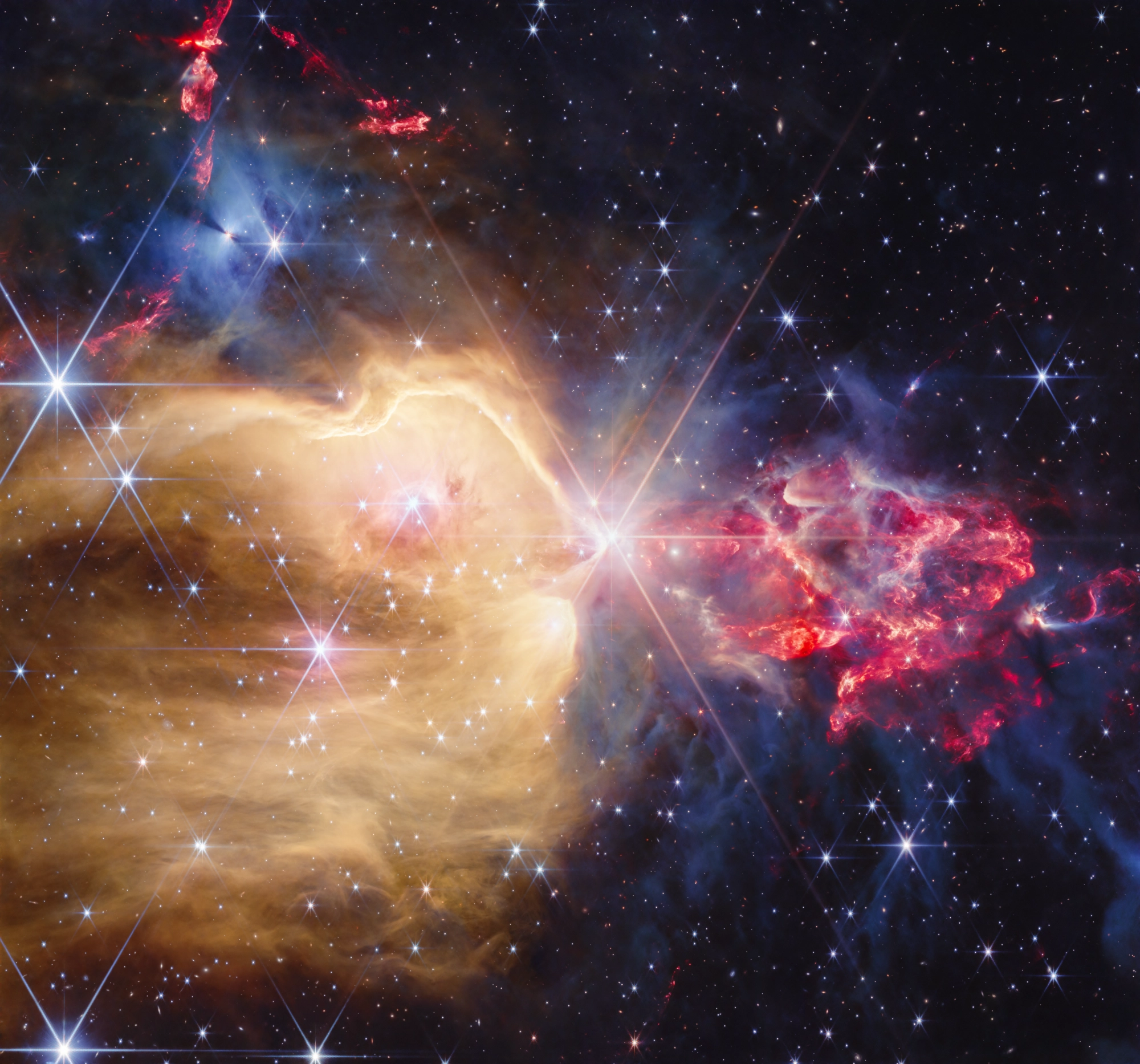
Star Formation Newsletter #406
Janine Jochum, Lilly Kormann, João Alves | 4 November 2026 | Header image: NASA, ESA, CSA, STScI; Image Processing: Alyssa Pagan (STScI)
This month’s issue brings you 107 abstracts, a sign of how active our field is. It also raises a question we would like to answer together with you.
The Star Formation Newsletter has always aimed to be a curated read for the star and planet formation communities, encouraging you to engage with the latest research but also to expose you to adjacent work. However, at this size it risks becoming a list that readers scroll past. We are thinking about changes that would make each issue easier to read and navigate, and that would better reflect the diversity of the work and the people in our community.
Before we decide anything, we want to hear from you. Please share your ideas in this short form. Thank you for reading, and for helping us shape the future of the SFN.
The SFN Editors
This edition contains the latest abstracts from October 2026.
DEMOS I. A Bayesian inference framework to constrain disc evolution from observed demographics
The mechanism driving the evolution and dispersal of protoplanetary discs has a substantial impact on the theories of planet formation. To date, neither the viscous paradigm nor the MHD wind-driven framework have been ruled out by the observations. The statistical richness of the observed samples provides a unique opportunity to test evolutionary models through population synthesis. However, comparisons between models and observations are normally carried out by eye, and a more statistically rigorous approach has not yet been implemented. We present DEMOS, a Bayesian inference tool that aims to infer the model parameters and initial conditions that best reproduce the full distribution of global properties of disc populations. This framework relies on a comparison between observations and synthetic populations generated with the 1D disc population-synthesis code Diskpop. We tested the tool with both the MHD wind model and the viscous framework with internal photoevaporation. Applying DEMOS to synthetic populations, we find that, for both models, it accurately recovers the model parameters of disc populations and their associated uncertainties, including cases in which initial conditions are correlated with the stellar mass. In the optimal scenario in which disc masses, accretion rates and disc sizes are available, the tool can also constrain the angular-momentum transport parameter. We show that, although parameter estimates are the most precise with samples of about 100 discs, the tool also yields meaningful constraints for smaller populations of 10-30 discs. We further find that the predictions obtained with DEMOS closely align with those found by previous works. We anticipate that DEMOS will be a valuable tool to infer the initial conditions of observed disc populations, to design observational programmes, and to assess which evolutionary model best reproduces the data.
Global and Local Infall in the ASHES Sample (GLASHES). III. Physical Parameters of Contracting Motion onto Dense Cores in 70 m Dark Massive Clumps
Core growth is a key process in high-mass star formation. As part of the GLASHES (Global and Local Infall in the ASHES Sample) survey, we present infall velocities and mass infall rates derived from blue-asymmetric line profiles toward cores embedded in massive 70 \textmu m-dark clumps. Robust Hill5 model fits were obtained for 70 of the 135 cores exhibiting blue-asymmetric profiles, yielding infall velocities of 0.11—1.60 km s and mass infall rates ranging from 10 to . Both quantities increase systematically from prestellar candidates to warm cores and outflow-associated cores. The inferred infall velocities are close to the cores' free-fall velocities (mean ) and is comparable to the free-fall time, indicating dynamical fast contraction. Hill5 infall velocity correlates moderately with the non-thermal velocity dispersion and Mach number measured from optically thin tracers, indicating that organized infall contributes to the observed line widths. The mass infall rate follows a power-law relation with core mass, , across . The power-law index increases from 0.65 for prestellar cores to 1.10 for outflow-associated cores, likely tracing an evolution in the dominant physical process. The Hill5 infall velocities and mass infall rates for the GLASHES cores are larger than those of cores in nearby low-mass star forming regions but smaller than those of larger scale high-mass clumps. These results provide the first statistical constraints on core-scale mass accumulation during the earliest stages of high-mass star formation.
Gravitational Capture of Large Interstellar Planetesimals by Collapsing Prestellar Cores
We investigate the capture of free-floating planetesimals by the time-varying gravitational potential of a collapsing prestellar core. We use one-dimensional collapse models to estimate the volume of space from which planetesimals are captured. We combine this calculation with an estimate of the size distribution and velocity dispersion of the free-floating planetesimal population to determine the largest planetesimal that is typically captured, as well as the total mass of all planetesimals captured by a given protostar. We consider two cases: one in which the free-floating planetesimal population comes from the birth cluster of the star, and one in which the planetesimals are captured from the Galactic population of free-floating planetesimals. We find that the details of the collapse matter substantially, with the predicted diameter of the largest captured body from the Galactic population ranging from km to km depending on collapse model, and the largest body from our model birth cluster environment ranging from km to km, for assumed velocity dispersions ranging from 0.7 to 8.5 km/s. The total solid mass captured by this mechanism does not exceed 0.07 Earth masses in all cases. We discuss the effect of these captured objects on the planet formation process, and argue that while the total solid mass captured is likely not significant, the largest captured bodies may grow to planet size via accretion of pebbles present in their host disks. This process may accelerate planet formation, or enable it in disks that have difficulty in forming their own planetesimals.
JWST Imaging of Edge-on Protoplanetary Disks. V. Flux Ratio Reversal and Disk-edge Structure in the Flying Saucer
We present near- and mid-infrared broadband imaging observations of the edge-on protoplanetary disk 2MASS J16281370-2431391, a.k.a. the 'Flying Saucer', obtained with NIRCam and MIRI on board JWST. These data are combined with archival optical and near-IR broadband imaging from HST, millimeter dust continuum emission from ALMA, and optical lightcurves from the K2 and TESS for a comprehensive multi-wavelength study. The JWST observations reveal a reversal of the flux ratio between the two reflection nebulae at near-infrared wavelengths (2-3 ), which can be explained by a misaligned inner disk. For the first time, JWST reveals the bright lining along the disk edge at 2 and 3 , arising from forward scattering of background photons by dust grains near the layer. By combining the dust lane thickness measured with HST and JWST, we find the dust grains up to at least 3m are vertically mixed throughout the disk and have undergone significant growth. In addition, comparison of earlier HST/NICMOS J and K band images with those from JWST/NIRCam reveals variability in the scattered-light morphology, as well as measurable proper motion of the system with respect to the background stars, confirming that the Flying Saucer is co-moving with the young star population of Ophiuchi.
EK Cha b: multi-tracer detection of a protoplanet candidate in a gas-rich environment
Despite sustained community efforts and advances in instrumentation and high-contrast imaging, the search for protoplanets remains difficult, with only two widely accepted systems to date in Class II systems (PDS 70 and WISPIT 2). Here we present the detection of EK Cha b, a new protoplanet candidate, identified through CO emission, millimeter continuum and 0.82 micron broadband photometry, linked to EK Cha, a young late-type M star. The detection of a new protoplanet candidate offers an additional opportunity to advance our understanding of planet formation. By exploiting the wealth of archival data available for nearby star-forming regions, we aim to place EK Cha b in context, characterize its properties, and motivate future campaigns targeting similar systems. We analyzed high-spatial-resolution archival observations of EK Cha from HST, VLT/NACO, VLT/MUSE, and ALMA. We searched for EK Cha b in broadband continuum and gas tracers, reporting the measured flux with uncertainties, and upper limits for non-detections. EK Cha b shows a spectrally-resolved footprint that matches the CO J=2—1 emission, together with 0.82 micron and millimeter continuum emission. EK Cha b is spectrally resolved in CO J=2—1 emission, kinematically consistent with a circumplanetary disk. Best fits from evolutionary models place EK Cha b as a planetary mass companion, although deeper observations are required to fully confirm its nature. Although giant planets are uncommon around M dwarfs, these stars host the highest planet occurrence rate while remaining severely underrepresented in protoplanet searches. EK Cha b demonstrates that such systems are now within reach, and the advent of extremely large telescopes and improved high-contrast imaging – where the lower host luminosity relaxes the required contras— will open this overlooked regime to systematic exploration.
Dynamical response of a protoplanetary disk to an FU Ori-type outburst
Episodic accretion events onto young stars can significantly change the global structure of their surrounding protoplanetary disks. Using radiation hydrodynamical simulations with the HURAKAN code, we study the response of the outer passive disk to a powerful FU Ori-type outburst. Disk heating initiates a factor-of-two increase in the vertical scale-height, which develops on a local keplerian timescale. This effectively launches an outward travelling wave with a bump whose radial position changes with time as . After the outburst ends, new waves are launched as the disk structure re-equilibrates toward a quiescent state. The vertical expansion of the disk introduces significant time-variable extinction of the central source emission. Disks with inclinations in the range go from weakly () to a strongly embedded state (), with the extinction decaying on a yr timescale after the outburst. A fingerprint of the outburst-launched shadowing wave is a long-lived drop or a transient dip in the luminosity curve occurring several years after the outburst begins. This apparent luminosity variation is relatively large, up to in the V band, and is not related to the intrinsic accretion variability.
On the Evolution of Circumstellar Disks Modified by the Presence of a Binary
Stars form within circumstellar disks, and some binary stars develop circumbinary disks surrounding the pair. Observations suggest that disks that form around binary star systems are less common than those around single stars. One possible explanation is that binary stars may disrupt or shorten the lifespan of their surrounding disks relative to those around single stars. To investigate this, we used the DISCO hydrodynamics code to compute the lifetimes of circumstellar disks with and without a binary. Our results indicate that binary systems can reduce the lifetime of a circumbinary disk by a modest factor of two to three compared to disks around single stars. This effect is present when the binary separation is at least one-tenth of the disk radius. While our findings show that binaries can shorten circumbinary disk lifetimes, this alone might not be enough to fully account for the scarcity of these disks.
Long-term ultraviolet variability of Taurus T Tauri stars from the IUE archive
Ultraviolet (UV) radiation from Classical T Tauri stars, generated primarily by magnetospheric accretion, plays a fundamental role in circumstellar disk evolution. However, its long-term variability remains poorly characterized due to the scarcity of homogeneous time-series observations. We investigate the variability of the near-UV continuum and the Mg II resonance doublet to assess whether both diagnostics trace the same underlying accretion variability. We analyzed the complete archive of long-wavelength International Ultraviolet Explorer (IUE) observations of T Tauri stars in Taurus-Auriga, comprising 475 low-dispersion spectra of 36 objects collected over 18 years. We characterized continuum variability using three windows between 2600 and 3100 Angstroms and examined continuum-subtracted Mg II fluxes, UV-V colors, and Lomb-Scargle periodograms to investigate correlations and characteristic timescales. Continuum fluxes between 2675 and 3055 Angstroms are strongly correlated, with variability dominated by changes in continuum level rather than spectral shape. Near-UV and quasi-simultaneous optical fluxes are significantly correlated in six of the seven best-sampled sources, although their relative variability differs. The Mg II-continuum relationship shows substantial object-to-object diversity, ranging from correlated variations with different fractional responses to decoupled or anti-correlated behavior, indicating no universal temporal response. Lomb-Scargle periodograms reveal formally significant features in some well-sampled objects, including near 10 and 33 days. However, irregular and clustered sampling prevents their identification as reliable periodic or characteristic timescales.
Cracking open the "dragon egg": ALMA 1.3mm observations of a compact, young high-mass core candidate at 30mas resolution
Massive prestellar cores are a central assumption of core-accretion models of high-mass star formation, yet convincing observational examples remain rare. The "dragon egg" (C2c1a) core in the infrared-dark cloud G028.37+00.07 has been proposed as a promising compact high-mass core candidate. We present new ALMA Band 6 observations at - (-400 au at 5 kpc), providing one of the most stringent high-resolution tests of such a candidate. The region resolves into multiple fragments, but the brightest component, C2c1a(a), remains a single compact continuum peak down to au, with a deconvolved radius of au and a nearest neighbouring fragment at a projected separation of au. The continuum peak reaches a brightness temperature of K, exceeding the K gas temperatures inferred from lower-resolution NH observations and indicating a strong radial temperature gradient. Continuum-based mass estimates range from to (implying extreme densities of cm), depending on temperature, while lower-resolution data indicate a much larger mass reservoir of on au scales. The spectrum shows no strong hot-core tracers and only weak, spatially extended HCO and CO emission; no high-velocity outflow can be unambiguously associated with C2c1a(a). We conclude that C2c1a(a) is an exceptionally compact core embedded within a massive cold reservoir, with no additional compact fragments detected within the present resolution and sensitivity limits, potentially tracing the earliest formation of a central protostellar "seed" within a still-dominant reservoir. [abridged]
Scaled three-dimensional simulations of giant-planet accretion and disk clearing
We develop accelerated three-dimensional simulations of growing planet pairs that draw on a finite gas reservoir. An annulus compression (Scaling A) shortens the predicted clearing time and shrinks the computational domain at equal grid resolution while preserving key physical parameters. Planetary seeds start with Hill radii equal to the disk scale height, retaining three-dimensional accretion. We demonstrate the method in scaled PDS 70 and Solar-System configurations, assuming perfect Hill capture by growing planets on circular orbits. We compare Scaling A at radius-compression factor with the unscaled PDS system at matched resolution, through a 1\% reduction of the interplanetary gas inventory. The scaled run is nearly an order of magnitude faster, with similar accreted mass and a comparable partition of gas between the planets. For the Solar-System configuration at , the scaling forecasts a speedup of nearly two orders of magnitude at equal local resolution. The scaling is complementary to orbital advection. On eight CPU cores of a desktop computer, the scaled PDS 70 and Solar-System runs reduce the gas inventory between the orbiting planets by roughly half in less than a day. Accretion-driven orbital convergence narrows the shared feeding zone and, together with gas clearing, limits the planetary growth budget. In our scaled PDS 70 and Solar-System runs, the angular momentum carried by meridional inflow directly constrains delivery theory. These results establish a practical route to testing accretion theory against simulations at matched scaled parameters, before applying it to unscaled planetary systems.
Evolutionary Demographics of Molecular Ice Mantles in Young Stars with SPHEREx
Molecular ices are a primary reservoir of volatile C, O, and N in star-forming environments, tracing the chemical pathway from molecular clouds to planet-forming disks. SPHEREx provides contiguous 0.75—5~m all-sky spectrophotometry for vastly larger samples than are accessible to JWST, enabling population-scale ice demographics for the first time. We present a search for ice signatures in SPHEREx spectra of 20{,}292 young stellar objects (age ~Myr) drawn from the Gaia-based kinematic catalog of Kounkel \& Covey 2019. Using laboratory templates for the spectral signatures of HO (3.05~m), CO (4.27~m), and CO (4.67~m), we identify 746 HO ice candidates, including 131 high-confidence HO+CO detections and 22 with additional corroborating CO absorption. When binning by age, we find that the HOCO detection rate declines by an order of magnitude between 3~Myr and 5~Myr, suggesting a chemical or physical evolutionary trend. Candidates concentrate toward high-extinction sightlines (~mag) and embedded SED morphologies, consistent with the idea of envelope dispersal and photodesorption depleting detectable ice mantles within the first few million years of pre-main-sequence evolution. This catalog provides a homogeneous demographic baseline and a prioritized target list for JWST follow-up.
FAUST XXXII. Chemically layered structures and ionisation in the disk and envelope of NGC 1333 IRAS 4C
Recent molecular line observations with high spatial resolutions have revealed vertical chemical stratification in Class I/II disks (i.e. chemical composition changing with height in the vertical direction of the disk), as well as a radial variation of ionisation rates. However, such chemical layered structures in Class 0 disk and envelope systems have been investigated only for limited objects, such as L1527. In the context of the ALMA Large Program FAUST, we report the results of molecular line observations toward the disk and envelope around the low-mass Class 0 protostar NGC 1333 IRAS 4C in the Perseus Molecular Cloud. Previous observations have shown that the disk rotation axis of this object is largely tilted to the line of sight, making it suitable for studying the molecular abundance distribution as a function of disk height. We found that the molecules known as gas density tracers such as C18O and H2CO are distributed around the disk midplane. In addition, molecules known as tracers of photochemical reactions such as CCH and c-C3H2 are distributed in the low-density upper layers of the disk, unlike the distribution in L1527. Moreover, the column density ratio of HCO+/CO derived from the H13CO+ and C18O line emission suggests that the ionisation degree and the ionisation rate vary with the disk radius and they are larger in the outer region of the disk and envelope.
Peering into the Midplane of the DM Tau Disk using N2H+ and DCO+
Planets form in the midplanes of protoplanetary disks, thus investigating the properties of the midplane region can shed light on the physical and chemical processes governing the evolution of planetary systems. In this work, we study the conditions near the midplane of the disk around DM Tau using 0."3 (~43 au) ALMA observations of N2H+ (J = 3 - 2) and DCO+ (J = 4 - 3). The radial profiles reveal that DCO+ is centrally peaked, with a depression near 120 au, while N2H+ exhibits a central depression and a peak near 100 au. In addition, both molecules display extended emission out to 400 au. Using parametric models to interpret our observations, we note that a fiducial model based on CO-derived parameters captures the features within 200 au, but fails to reproduce the outer disk emission. We explore various mechanisms that could account for this extended emission and conclude that it is best reproduced by an increased external UV penetration and cosmic ray/X-ray ionization rate, possibly enhanced by radial drift. These processes affect the precursors of N2H+ and DCO+ : increased UV leads to the photodesorption of CO and N2, while ionization enhances H3+ abundance. Besides, the observed N2H+ and DCO+ features are broadly consistent with previous CO snowline constraints, but can also be shaped by processes such as ionization, CO depletion, and multiple chemical pathways. Thus, using these molecular ions as robust CO snowline tracers requires additional constraints from complementary molecular tracers and detailed chemical modeling.
Interpreting the -ray emission from Westerlund 1: hadronic or leptonic?
High-energy -ray emission has been detected from several star clusters, indicating that these sources are sites of cosmic-ray acceleration. However, it is still unclear whether the -ray emission is of hadronic or leptonic origin. We present a comprehensive study of the -ray emission from Westerlund 1, under the assumption that high-energy particles are accelerated at the cluster WTS. We investigate both the hadronic and leptonic scenarios by fitting simultaneously the spectrum and morphology of the -ray emission. We numerically solve the transport equations for non-thermal protons and electrons for a given and derive their energy and spatial distributions. rays are produced either by hadronic pp interactions of protons with the target gas or by inverse Compton scattering of relativistic electrons (both primary and secondary) with the ambient photon fields. We also calculate the synchrotron emission from these electrons. The predicted SEDs are compared with the -ray measurements by Fermi-LAT and HESS and with the X-ray upper limit derived by eROSITA. For reasonable model parameters, we find that in the case of Bohm diffusion, both the leptonic and hadronic scenarios can account for the observed multi-wavelength spectrum and -ray morphology. However, in the case of Kraichnan diffusion, better motivated in star clusters, only the hadronic scenario can explain the observations, while the leptonic scenario fails to reproduce the highest-energy -ray data points. For the leptonic scenario, the magnetic field immediately downstream of the shock can be constrained to be a few G thanks to the eROSITA upper limit. On the other hand, in order to explain the -ray observations with hadronic emission alone, the gas density inside the bubble should be .
Chandra-JWST Probing the Effects of Moderate X-Ray Superflares on Protoplanetary Disks
Powerful X-ray flares from young stars may rapidly alter the physical and chemical conditions of their planet-forming disks, but direct observational tests remain scarce. We present a Chandra-JWST/NIRSpec study of infrared spectral variability associated with pre-main-sequence (PMS) X-ray flares in the Orion Nebula. Combining six Chandra/ACIS-I observations with three NIRSpec-MOS visits, we analyze two-epoch spectra of 10 X-ray Flare stars and 12 matched non-flaring Controls among 84 observed disk-bearing PMS stars. We investigate three diagnostics: narrow 2.8-4.3 micron features, HI Br-alpha, and the CO fundamental band. Flare stars show tentative evidence for relatively fewer variable narrow features at longer wavelengths than Controls, while feature incidence decreases strongly with projected distance from the dominant ionizing O star Theta1 Ori C. Most classifiable features appear in absorption. These properties suggest that at least some features may arise in externally irradiated disk atmospheres and/or associated photoevaporative flows, with their apparent epoch-to-epoch variability potentially reflecting spatial sampling of such locally structured material rather than intrinsic temporal changes. Br-alpha behaves differently: flare stars show systematically stronger variability and uniquely exhibit absorption-core profiles, suggesting control by magnetospheric accretion and stellar magnetic processes rather than disk irradiation. The CO fundamental band shows no significant flare-associated variability, consistent with thermochemical models predicting weak responses to moderate X-ray superflares. This pilot study demonstrates the potential of coordinated Chandra-JWST observations to probe how young stellar magnetic activity affects planet-forming environments, motivating future monitoring to build larger superflare samples and extend them into the rare X-ray mega-flare regime.
A breath of fresh air: Oxygen enhancement from silicate sublimation during early protostellar evolution
Recently, an analog to the t = 0 moment of our Solar System's meteoritic record was identified for the first time around the Class I protostar HOPS-315. Crystalline silicates were found to recondense from SiO gas that cools as it advects upward from a hot thermostat region in the inner midplane. This t=0 moment may be associated with the formation of the first planetesimals in this disk. We explore whether HOPS-68, a Class I protostar with similar properties and system geometries, is engaged in such refractory recondensation as well. A detection of cooler gas-phase SiO in absorption above a hot disk midplane would allow us to achieve this goal, thanks to a previous detection of crystalline silicates. HOPS-68 was observed with the JWST MIRI and NIRSpec, showing multiple bands of molecular absorption. We use local thermal equilibrium slab models to measure the temperature, column density, velocity, and radial location of these bands. The molecular absorption bands of gaseous SiO, H2O, CO2, and 13CO trace a warm molecular inversion layer (300-500 K) at mid-altitudes above the hot disk midplane from 0.3-16 AU, which is consistently blue-shifted with respect to the system velocity by 33-53 km/s. Atacama Large Millimeter/submillimeter Array (ALMA) observations of HOPS-68 kinematically resolve an SiO-rich jet and wind. We confirm that HOPS-68, like HOPS-315, is undergoing an epoch analogous to the t=0 moment in the Solar System's planet formation timeline. The detected warm molecular layer traces the base of a disk wind, which carries sublimated material from the thermostat region near 2 AU up into the outer disk. As for HOPS-315, the molecular layer in the inner few AU of HOPS-68 is enhanced in bulk oxygen as a result of this sublimation. Since HOPS-68 is less evolved than HOPS-315, this may indicate a prolonged epoch in protostellar evolution in which such oxygen enhancement occurs.
Rotation in the Lagoon Nebula with K2
A low-mass star's rotation rate drives its magnetic field, and in the case of young stars, also affects accretion and planetary formation. Observations of the rotation rates of young stars help constrain models of star and planet formation. We present rotation rates from K2 observations of stars in the ~1-2 Myr Lagoon Nebula, one of the youngest clusters with space-based rotation rates available. From 414 light curves we obtain reliable rotation periods for 325 stars; 124 of them are disk-bearing and 201 are disk-free. This constitutes a significant increase in the collection of K2 rotation rates available for ~1-5 Myr stars. The overall distribution is broadly consistent with expectations, in that the slowest rotators are mid-K and both lower and higher masses are on average faster rotating. There is weak evidence that disked stars rotate more slowly. There are a few complex periodic variables, but they appear to be surprisingly high mass compared to prior known examples of this kind of object.
The Physics of the Cold and Warm Interstellar Medium Through Radio Recombination Lines
The interplay between star formation and the interstellar medium (ISM) gives rise to a feedback cycle that is one of the key drivers of galaxy evolution. The coldest gas in the ISM provides the fuel for star formation, and, in turn, the ISM is affected by feedback in the form of photons, shocks, and cosmic rays. Radio recombination lines (RRLs) offer a unique way of characterizing the gas in the ISM as extinction free probes of the gas kinematics, density, temperature, and radiation field. Hydrogen RRLs (HRRLs) probe gas where hydrogen is ionized, while carbon RRLs (CRRLs) probe cold gas in the HI-to-H transition layers. The superb sensitivity, spatial resolution, large field of view, and frequency resolution and coverage of the Square Kilometre Array (SKA) will allow for efficient observations of RRLs, that will make significant impacts to the study of the diffuse ISM. By observing RRLs with the SKA we will be able to determine the thermal and turbulent balance, chemical enrichment, sizes, and ionization rate of the cold and ionized gases from degree-scales down to arcsecond scales in our Galaxy.
The 200-300 GHz Survey for 18 Class II Disks in the Ophiuchus Star-Forming Complex
We measured the 198-310 GHz flux densities of 18 Class II protoplanetary disks in the Ophiuchus star-forming complex using the Submillimeter Array (SMA). The 200-300 GHz spectral indices () of these disks are . In this observed frequency range, emission properties of the Ophiuchus disks are very similar to the 48 spatially compact Class II disks in the Taurus-Auriga region observed in a previous SMA survey. Combining the Ophiuchus and Taurus-Auriga samples, the Pearson correlation coefficient between and the flux density at 250 GHz () is 0.27 (). We do not find a convincing correlation between and the radius of the disks. Our interpretation for the values being close to 2 in the spatially compact disks is that at GHz frequencies, the continuum emission in these disks is dominated by optically thick dust thermal emission, independent of and . As a result, the (sub)millimeter luminosity and the apparent disk size are positively correlated, which has been found in numerous resolved emission surveys of Class II disks. In young clusters with ages of 1-2 Myr, Class II disks with smaller radii or lower (sub)millimeter luminosities are not necessarily those in which the dust mass budget has been consumed or dispersed.
Tracking the flow of interstellar gas across scales: from galaxies to star clusters
While the baryon cycle of the interstellar medium - and its ability to form stars - plays a key role in galaxy evolution, unravelling the physical processes driving its evolution remains a critical challenge, given that present-day observing facilities are unable to map entire galactic ecosystems down to the scales of individual star-forming clumps. Here, we outline the technical requirements that would enable, for the first time, to connect the small (pc) scale physics of star formation, to the large (tens-of-kpc) scales of galaxies, enabling an effective tracking of the flows of matter and energy across a vast range of environments, and answering the long-standing question of what regulates star formation across cosmic time.
Unveiling star formation at sub-solar metallicity with ALMA2040
A fundamental question in astrophysics is whether the processes governing star formation are universal or depend on the physical conditions of their local galactic environment. The Milky Way and the Magellanic clouds offer ideal laboratories to explore this question, as the gas conditions in them span up to orders of magnitude in metallicity, gas surface density, ambient pressure, dust abundance, radiation field, and cosmic-ray flux. In particular, both the outer Milky Way and the Magellanic clouds provide the closest low-metallicity environments with conditions similar to those of metal-poor galaxies, while remaining sufficiently close to soon allow spatial resolution of individual star-forming cores and disks. Recent observations with ALMA and other facilities have begun to unveil the physical and chemical properties of star-forming regions in low-metallicity environments. Yet, their distances from the Sun still require transformational gains in current ALMA capabilities to address fundamental open questions: (1) Are the properties of prestellar cores universal? (2) Does cloud fragmentation, and the resulting stellar IMF, depend critically on metallicity? (3) How does dust evolution depend on metallicity, and what is the impact in the survival of protoplanetary disks? (4) Is the reduced amount of metals and dust shielding at low metallicity critical for the formation and survival of molecules? ALMA2040 will identify similarities and differences between solar- and sub-solar-metallicity star-forming regions, and answer the question: how do different environmental conditions influence the physical and chemical pathways leading to star formation?
Asteroseismic properties of young pulsators in the Perseus Molecular Cloud. Discovery of period-spacing patterns in HD 281229
Very young pulsating stars, including pre-main sequence pulsators, provide a rare opportunity to probe stellar interiors and investigate rotation during the earliest phases of stellar evolution. However, they remain relatively unexplored, particularly in the intermediate-mass regime. We aim to identify and characterise young pulsating stars in the Perseus Molecular Cloud using photometric data from the Transiting Exoplanet Survey Satellite (TESS). We compiled Gaia-based membership catalogues for the Perseus Molecular Cloud, applied selection criteria to isolate young intermediate-mass stars, and extracted light curves from TESS full-frame images. Variability classification was performed using Lomb-Scargle periodograms and iterative pre-whitening. For confirmed pressure-mode pulsators, we estimated the frequency of maximum pulsation power, . For gravity-mode candidates, we searched for period-spacing patterns and fit them using the traditional approximation of rotation. From 148 membership-selected targets, we identified eight pressure-mode pulsators and two objects showing possible gravity-mode pulsations. We analysed the previously known Sct star V705 Per, bringing the total sample to 149 targets. One of the gravity-mode pulsators, HD 281229, is the youngest star known to date with a detected and modelled period-spacing pattern. By simultaneously fitting the dipole and quadrupole period-spacing patterns, we estimate an asymptotic period spacing of s and a near-core rotation frequency of . These results highlight the potential of asteroseismology to probe the internal structure and rotation of very young stars. The detected period-spacing pattern in HD 281229 shows that gravity-mode asteroseismology can provide meaningful constraints on the properties of stars at early evolutionary stages.
Sulphur-bearing molecule survey towards prestellar and starless cores in the Perseus molecular cloud
Sulphur is drastically depleted from the gas phase in dense starless and prestellar cores, creating the long-standing "missing sulphur problem". Observations of sulphur-bearing molecules are crucial to understanding sulphur chemistry, core-environment relationships, and the physical evolution of star-forming regions. We present a survey of four sulphur-bearing molecules, HCS+, OCS, H2CS, and SO, towards 15 starless and prestellar cores in the Perseus molecular cloud using the Yebes 40m telescope. The HCS+ 1-0, OCS 3-2 and 4-3, H2CS 1_{0,1}-0_{0,0}, and SO 3_2-2_2 transitions were observed, fitted with Gaussian profiles, and column densities were calculated assuming local thermodynamic equilibrium (LTE). We also compare these with observations of CS, CCS, and CCCS from a previous study. HCS+, OCS, H2CS, and SO are detected in 100%, 93%, 100%, and 73% of the sample, respectively. Derived column densities are (2.2-17.0)x10^11 cm^-2 for HCS+, (1.9-25.0)x10^12 cm^-2 for OCS, (1.0-15.0)x10^12 cm^-2 for H2CS, and (0.3-17.0)x10^13 cm^-2 for SO, spanning over an order of magnitude. HCS+ and SO abundances strongly correlate (inversely and directly, respectively) with core volume density, reinforcing their early- and late-type status. Correlations indicate a differentiation between carbon and oxygen chemistry for sulphur-bearing molecules, with CS showing the strongest correlations as expected. Cores in protostellar outflow paths do not show consistently higher abundances. The chemical age (SO/CS) correlates with physical age (volume density), except for Per752, an outlier likely linked to an enhanced cosmic ray ionization rate. These results provide a robust observational baseline constraining chemical models of sulphur chemistry in early star formation.
HD 152384: A 5 Myr old debris disk system showing a gaseous ring of refractory elements at the dust sublimation radius
Context: Circumstellar gas around young stars provides key insights into planet formation and disk evolution. HD 152384, a young (5 Myr) A0 V star in Sco-Cen, shows hybrid-disk traits: a modest infrared excess from small dust grains and atomic emission lines dominated by refractory elements, but its disk structure and origin remain unclear. Aims: We characterise the kinematics and excitation of the circumstellar gas around HD 152384 and constrain the physical properties of its emitting region. Methods: We use new high-resolution optical and near-infrared VLT/UVES and VLT/CRIRES spectra to re-examine the circumstellar environment of HD 152384, previously suggested to host a broad, gas-rich disk. Results: The observations reveal 74 narrow, double-peaked emission lines of Fe, Mg, Si, and Ca, with similar profiles and a 103 km/s peak separation. Keplerian modelling places the gas in a geometrically thin ring at 0.09-0.12 au, close to the dust sublimation radius (0.10-0.14 au for a sublimation temperature of about 1500 K). The Fe I emission is optically thick, whereas the optically thin Mg I lines imply 2.2 x 10^22 kg (3.6 x 10^-3 Earth masses) of magnesium gas in the ring. Conclusions: The dust and gas properties are consistent with a secondary origin involving collisions of rocky planetesimals. We propose that small collision-produced dust grains spiral inward and sublimate near the dust sublimation radius, accumulating atomic gas there. HD 152384 thus represents a young analogue of gas-bearing debris disks such as Beta Pictoris and gaseous debris disks around metal-polluted white dwarfs, offering a new window on the early violent processing of rocky planetesimals.
Stellar Kinematics and Molecular Gas toward NGC 6357: An Overlooked Earlier Stellar Generation
We investigate past star formation in NGC 6357 using Gaia DR3 astrometry and Three-mm Ultimate Mopra Milky Way Survey (ThrUMMS) CO(—0) data. A Hierarchical Density-Based Spatial Clustering of Applications with Noise (HDBSCAN) search independently recovers the previously cataloged cluster G352.8+0.6 in addition to Pismis 24, G353.1+0.6, and G353.2+0.6. Isochrone fitting yields an age of Myr for G352.8+0.6, compared with approximately 1—3 Myr for the three young clusters. Assuming constant relative plane-of-sky motion, a linear traceback places G352.8+0.6 closest to their reference center approximately 1.8 Myr ago, comparable to their inferred ages. The km s CO component overlaps G352.8+0.6 in projection and shows localized depressions in integrated intensity around three spectroscopically identified massive stars belonging to G352.8+0.6. The and km s components show complementary projected distributions and intermediate-velocity CO emission in position—velocity space. Assuming that the km s component was physically associated with G352.8+0.6 and shared its transverse motion, our principal interpretation is that the two molecular structures interacted around the epoch indicated by the stellar traceback, approximately 1.8 Myr ago. The resulting gas compression may have contributed to the recent episode of clustered and high-mass star formation in NGC 6357 and to the formation of Shell A, which subsequent stellar feedback may have reshaped.
A Collimated Protostellar Outflow Likely Driven by Jet and Reshaped by Environment in the Sagittarius C Cloud of the Central Molecular Zone
The Central Molecular Zone (CMZ) at the center of the Galaxy provides a nearby laboratory for studying star formation under extreme physical and chemical conditions. Recent ALMA (Atacama Large Millimeter/Submillimeter Array) observations have identified 43 candidate protostellar outflows in three CMZ clouds. One of these, the Sgr C-F#2 outflow in Sagittarius C (Sgr C), has a highly collimated lobe extending approximately 0.8 pc in projection. Here we present a joint analysis of ALMA observations of SiO J=8-7, 5-4, and 2-1. We use local thermodynamic equilibrium (LTE) and non-LTE methods to constrain the SiO column densities, H2 number density, and gas temperature. The low SiO rotational temperatures and higher kinetic temperatures inferred from non-LTE methods suggest subthermal excitation. The elongated SiO morphology, shock-excited gas, position-velocity structure, and the alignment of the red shifted molecular lobe with JWST infrared knots altogether favor jet-dominated entrainment, whereas a broader disk-wind component close to the source cannot be excluded. The outflow shows asymmetries in its morphology and physical properties, which can be attributed to dense gas on the path of its lobe impeding its propagation and feedback from a nearby HII region imposing different pressure on its two sides.
Diversity of planetary origins and compositions traced by stellar abundance differences of co-natal star systems
Co-natal stars, wide binaries that form from the same molecular cloud, should harbor the same stellar composition. Observations indicate stellar abundance differences in a small fraction of these co-natal systems. The stellar abundance differences have been attributed to the ingestion of planets by their host stars. We analyze a previous sample of co-natal stars to determine the composition of the planets that were ingested. The abundance differences in these co-natal pairs can show a positive abundance difference of the refractory elements (Fe, Mg, Si) paired with a positive, zero, or negative abundance difference of volatiles (O, C, S). Positive trends of refractory and volatile abundance differences can be explained (at minimum) with the ingestion of a single planet by one of the stars. Positive trends of refractory abundance differences paired with zero or negative abundance differences of oxygen and carbon imply that both stars are required to ingest planets formed at different locations (interior/exterior to the water and/or C-grain evaporation front). Some systems show a sulfur abundance difference that is a factor of a few lower than the abundance difference of Fe, Si, and Mg, even though sulfur is accreted via the moderately volatile compound FeS. This can be explained by the migration of one of the planets across the FeS evaporation front, where the planet first accretes large amounts of sulfur and then no sulfur, while still accreting the other refractory elements before being ingested by its host star. Our study shows that the planetary compositions derived from the detailed stellar abundances can explain the measured abundance differences of co-natal stars, giving a handle on the composition of exoplanets. At the same time it implies very different planetary compositions caused by the different formation location of these planets, in agreement with planet formation models.
Identifying the principal mechanism of star formation feedback
Feedback from massive stars regulates the formation of next-generation stars and planets and thus shapes the evolution of galaxies, yet observational evidence capable of determining which mechanism dominates the feedback process has long been lacking. Here,we present a large-scale HI survey toward Orion A With an unprecedented sensitivity and superior resolution, FAST (Five-hundred-meter Aperture Spherical radio Telescope) reveals a well-defined heart-shaped expanding HI bubble, enshrouding the well-known "Veil" bubble of ionized gas. The photoionization-driven and wind-driven gas expands at 10.9 and 13.8 kilometers per second, respectively, with a kinetic energy ratio of 1:2 assuming a spherical symmetry and a uniform HI-to-H2 ratio. This first direct comparison within a single bubble shows that radiation does not dominate the feedback process as predicted by classical theories; instead, stellar winds contribute a comparable share of the injected kinetic energy.
Survey of Orion Disks with ALMA (SODA) IV: Millimeter variability of protoplanetary disks
Context. Short-term millimeter-wavelength variability in Class II young stellar objects (YSOs) has been considered minimal, often dismissed as very rare in ALMA-based studies on short timescales. However, recent findings suggest that variability on sub-day timescales is significant. Aims. This study aims to quantify short timescale (~1 hour to ~3 days) millimeter flux variability in unresolved Class II YSO disks observed as part of the SODA survey, leveraging its large dataset to assess the statistical significance of such variability across the LDN 1641 and LDN 1647 regions in Orion. Methods. We analyze ALMA Band 6 observations of 873 YSOs obtained over multiple epochs using a custom flux extraction pipeline to separate individual execution blocks. By computing variability factors and statistical deviations from the mean flux, we identify sources exhibiting significant variability, accounting for noise and calibrator stability. Results. Even with conservative selection criteria, we identify 20 variable sources within the sample (~5.3% of all detections). The maximum of the measured variability factor is >=7 over about one hour. More liberal selection criteria yield up to 60 sources that could be called potentially variable (~15.9%). Conclusions. The number of variable sources detected in our sample indicates physical processes operating on time scales of hours, likely associated with magnetic reconnection and/or synchrotron radiation or strong cases of magnetic accretion changes. These detections show the need to reconsider typical stability assumptions in single-epoch observations and calls for follow-up studies in star-forming regions with ALMA. Masses derived from unresolved measurements could potentially be biased by this sort of variability.
Water Abundance and Ortho-Para Ratio in the S140 Photon Dominated Region
We analyzed archival far-infrared to submillimeter Herschel PACS, SPIRE, and HIFI spectroscopic observations of the S140 photon dominated region (PDR) to constrain the water vapor abundance and ortho-para ratio in this region. Toward the high-mass protostar IRS1, 52 spectral lines, including 15 water lines, are detected with the PACS and SPIRE instruments. PDR modeling suggests a UV radiation field G0 ~ 1 x 10^3 Habing units, and a thermal gas pressure of 5 x 10^8 K cm^-3 in this region. The models strongly underestimate intensities of high-J CO lines, which may indicate the presence of hot shocked gas associated with outflows along the line of sight, in addition to the UV irradiated gas. The spectral resolution of the PACS and SPIRE spectrometers is insufficient to separate the PDR and shock contributions. The PDR models further suggest that optically thick ground-state water lines trace primarily surface layers of the PDR. The gas temperature in this region is predicted to be ~ 800 K and the water abundance with respect to hydrogen nuclei reaches ~ 10^-5. However, the bulk of gas-phase water is located in a more shielded region, deeper inside the PDR, with a gas temperature ~ 24 K, and a gas-phase H_2O abundance of ~ 10^-7. A comparison of the observed water line fluxes toward IRS1 with PDR model predictions shows no evidence for departures from the LTE ortho-para ratio at the local gas temperature, which is assumed in the models. The sensitivity of the Herschel instruments was insufficient to measure the water ortho-para ratio toward the externally illuminated edge-on PDR at the surface of the S140 molecular cloud. Such observations will be possible with the next generation far-infrared spectroscopic space missions currently in development.
An ALMA view on molecular complexity: water, methanol, and methyl formate in the HD 100546 and IRS 48 disks
Water and methanol are the fundamental constituents of interstellar and cometary ices: understanding their abundances in disks is therefore of high importance to reveal how this ice reservoir evolves across the timeline of star and planet formation. We present ALMA band 5 line emission observations of water and methanol in the warm Herbig disks of HD 100546 and IRS 48. While the IRS 48 disk is methanol-rich, water vapor is not detected, implying a high methanol-to-water column density ratio >0.2, possibly reflecting a distinct ice composition. Methanol and water are both detected in the HD 100546 disk, leading to a CH3OH/H2O ratio of ~0.02, consistent with the median of the cometary distribution and with the lower edge of the distribution of Young Stellar Objects. We suggest that the gas-phase methanol-to-water ratio in the HD 100546 disk directly reveals the ice reservoir subsequently sublimated in the warm disk stage. Moreover, we report a methyl formate-to-methanol ratio in the IRS 48 disk of ~0.2, consistent with the upper edge of the distribution of Young Stellar Objects. The methyl formate-to-methanol ratio in the HD 100546 disk is ~2, much higher than in younger and older sources, possibly reflecting a chemical enhancement of gas-phase methyl formate. We additionally constrain non-LTE conditions, optical depths, and emitting regions of the methanol lines in both disks. These results offer a new opportunity to probe the chemical trail of molecular complexity in the intermediate disk stage, bridging early and late phases of the star and planet formation history.
Discovery of thermal radio recombination line emission toward the high-mass protostar IRAS181622048
The physical conditions within the innermost few tens of au of high-mass protostars () remain largely unexplored. At these scales, ionised emission may trace photoionised gas, accretion disks, or the base of protostellar jets. We search for ionised emission in the form of radio recombination lines (RRLs) in high-mass star-forming regions. We use archival data from the Atacama Millimeter/submillimeter Array (ALMA) interferometer in band 6 (1.3 mm) with a resolution of to examine the high-mass protostar IRAS181622048, driving source of the Herbig-Haro (HH) objects HH80-81. We detect, for the first time in this protostar, the thermal emission of the RRL H30 ( GHz). The ionised emission is spatially unresolved in our observations, but we estimate an emitting region au at the source distance of 1.4 kpc. The H30 line profile is broad and spectrally resolved with a Local Standard of Rest velocity of (i.e., blue-shifted with respect to the systemic velocity of the cloud) and a full width at half maximum of . These observations suggest that the H30 line is tracing outflowing blue-shifted material in the well-known radio jet from this object. This detection opens the possibility of detailed studies of the kinematics and physical properties of ionised jets.
Planetesimal Delivery to Giant Planet Circumplanetary Disks: Bulk Ice Enrichment and an Ice-rich Iapetus
The regular satellites of Jupiter and Saturn are substantially enriched in ice relative to the rock-rich solids of the outer Solar System. In addition, the satellites interior to Titan and distant Iapetus are icier than Titan itself. Collisional processes and subsequent migration can readily alter compositions deep in the planetary potential well, but producing a distant, ice-rich satellite with Iapetus's radius of about 700 km is a challenge \citep{mosqueira2026a}. We show that differential ablation and capture of icy and rocky fragments from differentiated outer Solar System bodies can explain the bulk Jovian and Kronian satellite ice enrichment and supply the substantial ice-rich inventory needed for Iapetus. For 1\,m—1\,km fragments with the canonical size-distribution index and a source containing 30\% ice by mass, the fixed radial distance Saturn calculation deposits material with ice fractions of 0.66 (delivery of vapor-only rock) or 0.50 (with retained rock melt) at 20 Saturn radii and nearly pure ice at 60 Saturn radii. Following three-dimensional trajectories over repeated passages through the pressure-supported gas gives ice fractions of about 0.4 near 20 Saturn radii and 0.9 near 60 Saturn radii. The matching Jupiter calculation yields a similar bulk ice enrichment, with a corresponding compositional gradient across the Galilean satellite region. These delivery profiles supply ice-enriched material for satellite formation. Yet satellitesimal inward migration subsequently modifies the material incorporated into satellites and thus alters their bulk compositions. We briefly discuss the implications for the PDS~70 planetary system.
Differential and integral scaling laws of the mass density of molecular clouds
In this work we investigate the mass density - size scaling law in molecular clouds (MCs). This relation reflects the fractal nature of MCs and plays a key role for understanding the physics, structure and evolution of these objects. We make use of the notion "ensemble of MCs", introduced in our previous work (Donkov, Veltchev \& Klessen, 2017), in which all MCs with the same probability density function (PDF) of mass density and effective size are represented by an abstract spherical cloud with the same PDF and size. In this spirit, the model is built on the base of abstract scales of the clouds' substructures (which are simply the radii of the spherical object). We consider two forms of the mass density - size scaling law: differential and integral, which in turn reveal the local and the global fractal clouds' structure. Both scaling functions are characterized by their scaling exponents, which can be explicitly expressed by the PDF of mass density, in the general case. Moreover, we derive a first order linear differential equation connecting the two scaling exponents and obtain its exact solution. As examples we apply this abstract construction to two PDFs: the so called power-law tail and the log-normal. Both have great importance for MC structure and evolution, as the latter corresponds to the earlier stages of clouds' evolution, when supersonic turbulence dominates the physical processes, while the former describes the latest stages of evolution, when star-formation takes place. The obtained results for the scaling exponents in both examples are qualitatively and numerically consistent with respective observations and simulations of MCs.
A Warped Dust Ring in the CQ Tau Disk
The diversity of planetary orbital architectures calls for observational constraints on radial variations in disk-plane orientation, or warps, yet such variations in dust disks remain poorly characterized. CQ Tau is a promising target because its misaligned inner disk and candidate gas warp suggest a radially extended warp. We present the ALMA 1.3 mm dust continuum image reconstructed from the real part of the visibilities, extracting the centro-symmetric disk structure. At an effective spatial resolution of ( au), the image reveals a bright main ring at radii of — au and an unresolved compact emission component tracing the inner disk around the central star. Ellipse fits centered on the stellar position to contours tracing the inner and outer edges of the ring reveal radial variations in position angles and inclinations. At the inner edge (— au), the position angle and inclination span — and —, respectively, while they span — and — at the outer edge (— au). Whereas a coplanar ring toy model fails to reproduce such variations, a warped ring model with the local tilt decreasing from at au to at 60 au reproduces them. The high-pass-filtered real-part image reveals a pair of opposed curved negative residuals. Similar features appear only in the warped ring model, further supporting the dust warp. These results establish CQ Tau as an example of a warped dust disk and an important laboratory for investigating the connection between three-dimensional disk geometry and planet formation.
A Search for Dust in the Outflow of the HH212 Class 0 Protostellar System
Perhaps the most visually striking phenomenon during star formation is the ejection of material along the direction of the protostar's rotational axis. Observed in the form of molecular outflows and/or atomic jets, these features carry away mass, energy and angular momentum from the system. Given the known dust content of protoplanetary disks, and the energetics of outflows, it has been suggested that it should be possible to lift dust from disks via winds, yet limited observational evidence has been presented in the literature. Any detection of dust within protostellar outflows not only puts constraints on the dust content in outflows, but if a sufficient amount of dust can be removed from the system, the mass budget for planet formation could also be affected. We present re-imaging of archival, multi-frequency dust continuum observations taken with the Atacama Large Millimeter/sub-millimeter Array (ALMA) towards the HH212 protostellar system. We detect an extension in the dust emission, and using multi-frequency data in Bands 7 and 9, we estimate the spectral index of the emitting dust and the dust mass in the wind launching region. We find a small but still significant amount of dust mass coincident with the molecular outflow cavity. This finding is assessed in relation to the hypothesis that the outflow could be capable of transporting dust away from the HH212 protoplanetary disk.
Tracing Accretion and Inner-Disk Gas Evolution in the Orion Nebula via Br-alpha and CO
We present a systematic spectroscopic study of hydrogen Brackett-alpha (Br-alpha) and carbon monoxide (CO) fundamental-band (4.3-5.2 micron) emission from a homogeneous sample of 0.2-1.5 Msun pre-main-sequence (PMS) stars in the Orion Nebula observed with JWST/NIRSpec-MOS as part of our Chandra-JWST project. Using 73 Br-alpha and 46 CO spectra, we investigate correlations between warm-gas emission, stellar properties, accretion, and environment with censored correlation and regression analyses accounting for multiple testing. Br-alpha luminosity correlates strongly with accretion luminosity (Lacc), even after excluding sources within 2' of Theta1 Ori C, the nebula's main ionizing O-type star, whose radiation may bias proplyd Lacc estimates. This supports Br-alpha as a robust empirical tracer of accretion in PMS stars. Br-alpha also correlates with visual extinction (Av) and more weakly with stellar bolometric luminosity and mass. CO fundamental-band luminosities likewise correlate positively with Lacc and Av, relationships that persist in a larger combined JWST/NIRSpec+MIRI sample spanning multiple star-forming regions. In contrast to Br-alpha, CO luminosity shows no significant dependence on basic stellar properties, suggesting that warm molecular gas is governed primarily by accretion and local disk conditions. The weaker correlations of the Spitzer/IRAC spectral slope with Lacc and Av suggest that warm inner-disk gas may evolve or disperse faster than optically thick dust. Overall, the CO results tentatively indicate declining warm-gas emission as disks evolve, modulated by accretion-powered thermal and ultraviolet excitation, although variations in emitting area inherited from natal core conditions may also contribute.
Testing Pre-main-sequence Evolutionary Models with Gaia and SPHEREx Observations of Canis Major North
Pre-main-sequence (PMS) evolutionary models can assign different ages across stellar mass within the same population. We use joint Gaia and SPHEREx spectral energy distributions to infer effective temperatures, radii, and luminosities for members of Canis Major North (CMaN), a nearby association with independent lithium and kinematic age constraints near 23 Myr. The SPHEREx fluxes agree with 2MASS and WISE photometry to 3—6\%, and we anchor the absolute flux scale to Gaia, 2MASS, and WISE. Using the revised temperatures, we obtain a lithium age of Myr. For a 29-star PMS sample, population-wide HR-diagram fits yield Myr for unspotted SPOTS models, consistent with the external constraints, and Myr for the Feiden nonmagnetic and BHAC15 models, and substantially older ages of and Myr for the Feiden magnetic and PARSEC models. No grid returns a temperature-independent age. The Feiden, SPOTS, and BHAC15 models assign older ages to stars above K, whereas PARSEC assigns increasingly older ages toward lower temperatures. The intrinsic luminosity dispersion is also mass dependent, approximately dex below K but dex at intermediate temperatures. At a fixed age of 23.0 Myr, a single SPOTS filling factor cannot reproduce the width of the low-temperature sequence, whereas the empirical filling-factor distribution of young stars overpredicts it. Spotted isochrones can enclose every cool member only at ages of 37—50 Myr, inconsistent with the lithium and kinematic ages.
Mid-infrared Imaging of SR 12 c with JWST/MIRI: Grain Growth in an Evolved Circumplanetary Disk
The physical properties of circumplanetary disks offer insights into the formation of giant planets and their satellites. The circumbinary planetary-mass companion SR 12 c (1200 au from SR 12 AB) hosts an isolated dust disk directly detected with ALMA. We present JWST/MIRI imaging of SR 12 c from 5.6 to 21 m and analyze its spectral energy distribution from infrared to submillimeter wavelengths. Phenomenologically, the dust disk can be described by a two-component blackbody with large contrasts in characteristic temperatures and radii. Physically motivated models with varied geometries and heating mechanisms suggest a predominantly flat, irradiation-heated disk with a smaller contribution from viscous dissipation. The disk is inferred to be compact, with an inner radius of ~3 . The outer radius is only loosely constrained, with a characteristic value of ~3 au. The lack of strong 10 m excess emission suggests significant grain growth and dust settling. We also find that SR 12 c is broadly consistent with the empirical star-disk scaling relations, providing context for its possible formation pathway. These results demonstrate the power of combining mid-infrared and submillimeter observations with disk modeling to better understand the physical properties of circumplanetary disks.
Bridging Theory and Observation: Synthetic Far-infrared Insights into Star Formation Efficiency
The star formation efficiency per free-fall time () quantifies how efficiently giant molecular clouds (GMCs) convert gas into stars and is often observed to be orders of magnitude lower than expected for free-fall collapse. Observers typically estimate by mapping far-infrared (FIR) dust emission to infer gas surface densities () and counting embedded protostars, assuming simplified lifetimes and masses. Using the fiducial STARFORGE radiation-magnetohydrodynamics simulation of an GMC that self-consistently models star cluster formation and stellar feedback, we generate synthetic FIR observations and apply the same methodologies used in GMC surveys to investigate this discrepancy. We present the first analysis in a fully feedback-regulated GMC simulation that resolves the formation of stellar systems. Our synthetic measurements reproduce the low observationally inferred efficiencies, showing that feedback-regulated star formation naturally produces without requiring extreme initial conditions. We also find that varies strongly over a GMC's lifetime, suggesting that much of the observed scatter reflects evolutionary sampling rather than intrinsic cloud-to-cloud differences. Finally, by comparing observational and simulation definitions, we show that methodological assumptions introduce systematic biases, with a transition near that depends on resolution. Above this threshold, the smoothing of dense structure increases both the inferred free-fall time and enclosed gas, with the latter dominating and suppressing . Below the threshold, the discrepancies are primarily driven by star formation rate assumptions.
The ALMA-QUARKS Survey. IV. Core Mass Function and Evolutionary Trends in Core Formation Efficiency and Chemistry
The ALMA-QUARKS (Querying Underlying Mechanisms of Massive Star Formation with ALMA-Resolved Gas Kinematics and Structures) survey targets 139 massive protoclusters selected from the ATOMS survey. The targets were observed at 1.3~mm wavelength with an angular resolution of , corresponding to ~au at the sample's median distance of ~kpc. Using \texttt{getsf}, we identify 3374 dense cores and classify them as starless, protostellar, hot core, or H{\sc ii} region candidates based on spectral-line diagnostics (e.g., H30, CHCN, and CHOH) and CO outflow associations. The resulting catalog provides core physical properties and enables statistical investigations of dense core populations in massive protocluster environments. The derived global core mass function (CMF) after excluding H{\sc ii} region candidates, which is biased by distance effects, has a relatively flat power-law slope at the high-mass end (, with ). In contrast, the measured high-mass slopes in individual distance bins are approximately Salpeter-like, while their fitted lower mass limits increase with distance. We further examine the core formation efficiency (CFE) across the full sample and find that it positively correlates with the luminosity-to-mass ratio of the parental clumps, consistent with an evolutionary increase in the fraction of mass concentrated into dense cores. We also investigate the detection rates of different molecular tracers and find systematic chemical variations with evolutionary stage. Compared with the ASHES survey, we find that the detection rates of deuterated species vary significantly even for cores at the same evolutionary stages, suggesting an important environmental influence on the chemical evolution of cores.
Tentative Detection of FeS toward Orion SrcI
Iron sulfide (FeS) is a key refractory compound in astrophysical environments. It is commonly found in meteorites and evidence of FeS has only been reported in solid form in a protoplanetary environment. Furthermore, FeS is of astrobiological interest since it acts as a precursor to the formation of pyrite (FeS), which plays a key role in anaerobic metabolism. We present millimeter-wave spectroscopic calculations for gaseous FeS and report its tentative detection toward the massive disk Orion SrcI. If confirmed, this would constitute the first ever detection of gaseous FeS in the interstellar medium. Our data are consistent with a FeS column density of cm. Comparing to other sulfur reservoirs, the amount of sulfur locked in FeS is more than three orders of magnitude lower than that contained in SO and SiS. However, FeS emission may arise from a different region as it is the case for the metallic salt NaCl. Our results support the presence of FeS in interstellar grains and are consistent with grain destruction playing an important role in the origin of the FeS emission. The observations, however, are still insufficient to discern whether FeS is a main sulfur reservoir in molecular clouds or a primary carrier of refractory iron-bearing material.
B-fields In STar-forming Region Observations (BISTRO): Dual-Wavelength Constraints on Size-Dependent Grain Alignment in Star-Forming Regions
We compared 450 and 850 m POL-2 observations from the James Clerk Maxwell Telescope at resolution. The median absolute difference in polarization angle between bands is across 21 regions. For total intensity and polarized intensity , 24-27 of 35 regions have , allowing for limits on weak polarized intensities. The median is , ranging from to under these limits. The ratio of polarization fractions is , with no detected dependence on the angle difference. We suggest that the dependence of alignment on grain size offers the simplest explanation of these findings. For optically thin components sharing a polarization angle and opacity law, temperature mixing reproduces the median only if the warm dust is polarized less efficiently than the cold dust. If the cold dust is at 10 K or warmer and the warm dust at 40 K or cooler, the median requires a ratio of warm to cold effective polarization efficiencies . We tested mixtures with opacity index in four fields against Herschel dust temperatures and Green Bank Ammonia Survey kinetic temperatures. We assumed equal gas and dust temperatures, ammonia tracing cold gas, and model ranges of 3-20 K for cold dust and 25-40 K for warm dust carrying at most half the mass. Mixtures matching both temperatures cannot reproduce within in three fields, including OMC 2 tentatively, even for . Allowing warm dust at 10-100 K and up to 95% of the mass permits solutions only for . To explain these three fields by temperature mixing, we need wider model ranges and a very strong contrast in polarization efficiency. The origin of this contrast remains undetermined.
Characterizing the hierarchical structure of filaments I. On the origin of the length-mass (L-M) scaling relation
Aims. Filamentary structures in molecular clouds are widely recognized as fundamental components of star formation. Observations report a length-mass relation of the form with . We characterize this relation in simulated molecular clouds and investigate the influence of hierarchical fragmentation and spatial resolution. Methods. We apply a two-step filament identification method to high-resolution 3D hydrodynamical and magnetohydrodynamical simulations from the SILCC-Zoom project, combining the Rolling Hough Transform with dendrogram-based segmentation for hierarchical decomposition. We analyze the resulting structures across multiple spatial resolutions. Results. The identified structures span column densities of —. Across multiple resolutions and, separately, the full hierarchical decomposition at the highest resolution, the ensemble exhibits a sub-linear relation close to . When individual structures are traced across resolutions, the slopes remain sub-linear (—), consistent with the geometric prediction of a fragmentation-driven random walk. In contrast, decomposing individual structures at the highest resolution yields a wide range of slopes (—), peaking at . A simple toy model shows that this diversity arises from differences in the internal column-density distribution and segmentation geometry. Conclusions. Taken together, these results indicate that the average sub-linear length-mass relation with is a robust property of the hierarchical structure and fragmentation occurring in molecular clouds.
Saturation Level of the Streaming Instability
In proto-planetary disks, gas turbulence can cluster dust grains and catalyze the formation of planetesimals. This process depends on the strength of the turbulence. Here, we evaluate the turbulence strength that is induced by the streaming instability. Based on the amount of free energy available, we estimate the viscous parameter to be alpha ~ St Pi^2 f(epsilon), where St (< 1) is the Stokes number of the streaming grains, Pi is the dimensionless pressure gradient, and f (epsilon) is an explicit function of epsilon, the local dust-to-gas density ratio. This estimate explains the results of many previous studies, and is also supported by our additional tailor-made simulations. We discuss two easy applications of our result, one is a self-consistent dust scale height, one is the astrophysical relevance of a pressure bump. Lastly, while this work allows one to characterize the streaming turbulence, we emphasize our current inability to connect the strength of turbulence to the formation of planetesimals.
Chemical Demographics of Star-forming Regions
Our understanding of complex organic chemistry during the formation of stars and planets is shaped by a handful of cherry-picked sources with bright molecular emission lines. This observational bias impedes our assessment of how universal chemical complexity is during star formation. The lack of systematic wideband spectral surveys for statistically significant samples of protostars and cores is a major roadblock to properly probing how COM inventories and abundances depend on the vast range of physical conditions, local cloud and global galactic environments, and evolutionary timescales of low- and high-mass star formation. In turn, this limits our ability to constrain and test physicochemical models, which depend critically on these parameters. The next-generation ALMA2040, with a 10x improvement in line sensitivity, is required to observe COMs, that we perceive as common today, in a fraction of the observing time that is needed today with ALMA. Such capabilities will propel us into the era of chemical demographics, whereby wideband (>100 GHz) spectral surveys at high sensitivity (routinely probing COM abundances down to 0.01% relative to CH3OH) will be executed towards >1000-10000 prestellar and protostellar sources. With robust chemical inventories towards large source sample sizes, we will be able to probe for dependencies of chemical complexity on mass regime, feedback processes in a cluster, Galactic position, metallicity, and time-variable accretion. Only with statistically significant samples at high sensitivity will we be able to assess the ubiquity and homogeneity of COM chemistry across the protostellar mass spectrum and natal cores. Constraining the diversity and availability of such species is critical for our understanding of the chemical reservoir available for planet formation, which eventually shapes (exo)planetary atmosphere compositions.
A Single Line-Emitter Identified in an Unbiased Search with JWST/NIRSpec: Multi-Object Coronagraphy for Slitless Spectroscopy
We report the detection of a previously unknown object with a single emission line within the Hubble Ultra Deep Field, using a new JWST NIRSpec technique called Multi-Object Coronagraphy for Slitless Spectroscopy (MOCSS) with the G140M/F100LP observing mode. The MOCSS technique involves opening almost all the shutters on the NIRSpec microshutter array, while simultaneously closing the shutters that lie on top of known low redshift objects, facilitating a wide field slitless spectroscopic search without contamination from bright objects. This observational technique has enabled the detection of a strong emission line in four different dither positions and in two position angles, and thus cannot be artificial. This line is detected at 1.60 with a line flux of and a FWHM of Å, and does not correspond to any known source with some of the deepest HST and JWST imaging in existence. Based upon the absence of imaging detection, we place a lower limit on the observed frame equivalent width (EW) of 7620Å on this object, which strongly limits the number of possible lines that this line can be. Given the wavelength, an EW limit that is near the ceiling of expectation, and the lack of other lines in the bandpass, this line cannot be easily explained by [OII] at , [OIII] at , H at , and Ly at . We discuss possible AGN and transient phenomena that could explain the finding.
What sets the star-formation rate in the Milky Way? I. A multi-scale view of the star-formation rate
Context. The star-formation rate (SFR) is one of the key quantities that characterizes the star formation process and has been extensively investigated both observationally and theoretically. Aims. We aim to provide a coherent multi-scale view of star formation by connecting Galactic-scale conditions (kpc) to the properties of individual star-forming clumps at sub-parsec scales. Methods. We perform a set of numerical simulations with large-scale turbulent forcing designed to reproduce physical conditions typical of the solar neighbourhood. Using adaptive zooming down to 0.03 pc, we obtain a population of star-forming clumps that is analyzed and compared with observational catalogues in a companion paper. Results. For column densities and velocity dispersions consistent with Galactic values, the resulting SFR is close to the rate inferred for the Milky Way. Comparing this value with the SFR expected from pure free-fall collapse shows that turbulence provides multiscale support that lowers the SFR by more than an order of magnitude. Additional regulation by stellar feedback, including ionizing radiation and protostellar outflows, likely reduces the SFR by an additional factor of 3-10. Comparisons with observations across multiple spatial scales show good overall agreement with this model. Conclusions. These results support a picture in which turbulence plays a central role in regulating star formation in the Milky Way. In combination with stellar feedback, it limits the star formation efficiency to only a few percent. Key words. stars: formation – ISM: clouds – physical processes: turbulence
Detection of HNCOH+ in the interstellar medium
Only five out of the 350 molecules detected in the interstellar medium (ISM) carry the isocyanate functional group (NCO), the essential substructure of peptide bonds in proteins. Among them are isocyanic acid (HNCO) and its most stable N-protonated isomer HNCO. Previous studies have predicted that the O-protonated isomer HNCOH should be present in the ISM; yet this species has remained elusive. We search for the metastable HNCOH towards the Galactic Center molecular cloud G+0.693-0.027, where HNCO has already been detected. We use an ultra-deep broadband spectral survey carried out towards G+0.693-0.027 with the Yebes 40-m, IRAM 30-m and APEX telescopes covering nearly 150 GHz of bandwidth between 31 and 275 GHz. We report the first detection of HNCOH in the ISM with a column density of = (9.9 0.5)10 cm, which corresponds to a molecular abundance relative to H of (7.3)10. With the measured HNCO column density of = (2.6 0.3) cm, this yields a HNCOH/HNCO ratio of 3.8. This result is consistent with recent kinetic calculations that favour the formation of HNCOH over HNCO. The detection of HNCOH in the ISM broadens the inventory of molecules known to contain the isocyanate functional group and reinforces recent works showing that isomer abundances in the ISM do not necessarily correlate with thermodynamic stability.
First L-type substellar object discovered in the vicinity of the embedded cluster NGC 2023
We present the first substellar object in a star-forming region spectroscopically confirmed with Euclid, namely J054158.70-021031.4. This young and faint source is located close to the embedded open cluster NGC 2023. It has a spectral type of L3, a reddening of Av = 3 mag, proper motion consistent with the nearby cluster NGC 2024, and a magnitude of in the Euclid optical band. At the distance of 403 pc, its inferred mass lies close to the planetary-mass boundary. We discovered the object by searching for ultracool dwarf candidates in the Euclid Early Release Observations. The search was based on photometric criteria, followed by the analysis of slitless 2D spectro-images in order to distinguish features that indicate the nature of these objects. This work demonstrates the potential of Euclid to unveil previously hidden populations of very low-mass objects, located in obscured regions where star formation is ongoing.
Beyond static torques: Self-consistent migration and dynamical trapping of low-mass planets in dusty disks
The rapid inward migration of low-mass planets remains a primary theoretical challenge in planet formation. While recent studies show that the solid component of protoplanetary disks can exert strong positive torques to counteract the negative gas torques, traditional static fixed-orbit models fail to capture the fully coupled dynamics of a migrating planet. In this work, we present 2D high-resolution, two-fluid hydrodynamical simulations using a comoving reference frame to track the self-consistent orbital evolution of embedded planets across a comprehensive six-dimensional parameter space. By allowing the planet to dynamically respond to disk-exerted torques, we identify a wide diversity of migration regimes, involving inward/outward migration and oscillatory radial confinement. We also find that massive cores can overcome dust-induced barriers, experiencing dust-mediated runaway outward or inward migration. Conversely, in dust-rich environments continuous gas-dust momentum exchange combined with planet torques dynamically regenerates co-orbital dust asymmetries, creating robust dynamical attractors where super-Earths undergo stable, oscillatory confinement, effectively halting inward drift without requiring pre-existing pressure bumps or disk substructures. This self-induced trapping mechanism could be relevant in the outer disk, beyond the water-ice line in environments with a enhanced local dust-to-gas ratio, where icy pebbles are moderately coupled to the gas. In low-metallicity or highly diffusive disks, planets generally adopt monotonic inward decay, apart from cases with outward migration. Ultimately, the diversity of these self-consistent trajectories demonstrates that static torque approximations are insufficient. Evaluating fully coupled kinematic feedback is essential for accurately predicting planetary survival and the final architecture of planetary systems.
Tracing star formation across the Rosette nebula using deep Spitzer imaging
We present a deep large-scale infrared survey of young stellar objects in the Rosette Nebula. Our analysis is based on stacked archival Spitzer/IRAC images. The images have been treated with the software DeNeb to remove nebulous emission. Our catalogue contains ~20000 sources with photometry in all 4 IRAC bands from 3.6 to 8.0 microns, complemented with near-infrared and optical data. From this database, we identify YSOs using multi-filter colour-colour criteria. We select 1528 YSOs, from which 1303 are Class II and 225 are Class I. Using this sample, we compile a list of clusters and groups of YSOs in the Rosette region, including previously known ones, plus three newly identified groups. Using our census of YSOs, in combination with the literature, we derive the Class I ratios and disk fractions for clusters in the nebula. The main clusters in the central cavity, NGC 2244 and NGC 2237 are almost devoid of Class I sources, indicating that star formation has ceased in this area. On the other hand, in an annulus around the centre with radii of 11-16 pc, roughly coinciding with the expanding HII front, about 30% of the YSOs are Class I, a clear sign of ongoing star formation. Other groups further out in the cloud also exhibit a high Class I ratio. Similar patterns are seen in the disk fractions. Our results are consistent with possible triggering by the expanding HII region, combined with star formation beyond the ionisation front.
The Birth and Early Feedback of Massive Star Clusters Across the Local Universe
Young massive star clusters (YMCs; ) represent a distinct, extreme mode of star formation and the closest present-day analogues of the environments in which globular clusters and Cosmic Noon stellar populations assembled. Given the extreme dust extinction in the earliest phase of YMC formation, (sub-)millimeter observations are the only means of probing their assembly and early feedback. Pioneering works with ALMA are limited to individual region studies and to the most massive YMCs in them, leaving many open questions about the initial conditions of YMC formation, the integrated star and cluster formation efficiencies, the dominant pre-supernova feedback channels, and the prevalence and reach of cluster-driven outflows. ALMA2040 will enable mass-complete, resolved surveys in hundreds of host galaxies, transforming the study of massive cluster formation and feedback from individual case analyses into statistical measurements across the full range of galactic environments.
Arepo-CD: Coupling Collisional -Body Dynamics with Moving-Mesh Magnetohydrodynamics
Star formation is a hierarchical, clustered process in turbulent giant molecular clouds (GMCs), where close stellar encounters can strongly affect cluster evolution and feedback. However, gravitational softening in many hydrodynamic simulations of GMCs limits the treatment of these encounters. We present Arepo-CD (Collisional Dynamics), a framework that couples star-by-star collisional -body dynamics to the moving-mesh magnetohydrodynamics (MHD) code Arepo. Star-star interactions use unsoftened gravity, while interactions involving gas or collisionless components remain softened. Compact stellar subsystems are identified on the fly and evolved with a fourth-order forward symplectic integrator and slow-down algorithmic regularization coupled to the native Arepo timestep hierarchy. Benchmark tests against the collisional -body code PeTar show good agreement in cluster core collapse and subsequent expansion, radial density profiles, and stellar velocity distributions. Coupled to the Rigel star formation and feedback model, Arepo-CD follows cluster formation and early evolution in radiation MHD simulations of a turbulent molecular cloud. In the fiducial GMC comparison, the collisional and softened-gravity runs yield similar star formation histories and integrated star formation efficiencies. Nevertheless, close gravitational encounters during the embedded phase generate a substantial runaway population, with a velocity tail extending beyond 100 km/s. Ejected massive stars redistribute radiative feedback into the surrounding lower-density medium and produce a more extended distribution of heated gas. Arepo-CD provides a practical and computationally efficient framework for studying collisional stellar dynamics and its coupling to gas evolution and feedback during star cluster formation in realistic galactic environments.
Searching for Circumplanetary Dust in the Cavity of the AB Aurigae Disk with ALMA
The young intermediate-mass star AB Aurigae is surrounded by a transition disk whose cavity contains several proposed protoplanets, including the debated source "AB Aur b" at a projected separation of arcsec ( au). To search for circumplanetary material associated with these candidates, we have obtained the most sensitive ( Jy/beam rms) and highest angular resolution ( mas) ALMA Band 7 (0.88 mm) observations of AB Aur to date. We recover the asymmetric dust ring in the continuum emission peaking at arcsec ( au) and compact emission at the stellar position, but detect no point source at the location of AB Aur b or any of the other proposed protoplanet candidates down to a limit of Jy. For optically thin emission, this corresponds to a dust mass of (for a dust temperature of 40 K), comparable to the circumplanetary disk around PDS 70 c. The CO emission fills the continuum cavity, revealing inner spiral structure and a clear rotation pattern. The gas at the position of AB Aur b is smoothly connected to the ambient disk with no localized excess or obvious kinematic deviation. If any proposed candidates are accreting, their circumplanetary material must have a low dust mass, a small physical size, dust that is optically thick, or a dearth of large mm-emitting grains.
Planet forming disk populations and their connection to the environment
Existing sub-mm observatories such as ALMA have provided statistics on the planet-forming mass reservoirs within circumstellar disks around stars in stellar clusters out to distances of 400pc. However, these disks are not where most planets form. Many stars, and hence planets, form in more massive clusters, which are only found at larger distances. Environmental conditions that affect disks - such as UV radiation field, ambient gaseous mass reservoir, and stellar density - change significantly as a function of cluster mass, implying that our current knowledge of the disk population from current facilities is severely biased. Characterising planet formation in stellar clusters towards the peak of the cluster mass function requires determining the distribution of planet forming disk masses out to 3kpc, which encapsulates the nearby parts of the Sagittarius arm of the Milky Way and contains multiple massive stellar clusters. ALMA2040 will provide the leap in sensitivity needed to move beyond detections of only a handful of disks and robustly measure the slope and median of the disk mass distribution at these distances. This will mark the transition from studying individual detections to population-level studies of planet formation across diverse cluster environments. This has synergy with existing and upcoming measurements of accretion rates in these distant clusters, which combined provide a measure of the accretion timescale, enabling us to distinguish various evolutionary pathways and assess how they depend on cluster mass and star-forming environment.
Feedback-Driven Interaction of Expanding Molecular Clouds in the LDN 1204-Sh2 145-Sh2 140 Complex
We present a multi-wavelength study of an extended molecular cloud hosting the LDN 1204, Sh2 145, and Sh2 140 regions to investigate the interplay between stellar feedback, cloud dynamics, and star formation. Infrared images reveal two semi-arc/shell-like structures (extent 14-18 pc) associated with known massive O-type stars. Herschel temperature and column density maps identify one hub-filament system (HFS) candidate toward both LDN 1204A and LDN 1204B sub-regions, with peak column densities of 3.1 x 10^23 and 1.3 x 10^23 cm^-2, respectively. These sub-regions are located at the periphery of the Sh2-145 H ii region. Molecular line data reveal a large arc-/shell-like cloud resolved into two kinematically distinct components spanning -15 to -9.5 km s^-1 and -9 to -3 km s^-1. Each component exhibits an arc-/shell-like morphology, is centered on one of the massive stars, and displays an inverted C-shaped position-velocity structure, indicating expansion driven by its associated H ii region. Both LDN sub-regions are located at the projected interface of the two expanding cloud components. Young stellar objects (YSOs), particularly Class I YSOs, are concentrated toward these sub-regions, while moment 2 maps reveal enhanced velocity dispersion, suggesting increased turbulent motions at the interface. Altogether, the presence of dense filaments, candidate hub-filament systems, and active star formation in LDN 1204 sub-regions demonstrates that feedback driven shell expansion and interaction compressed the gas at the interface, establishing the necessary conditions for filaments and ongoing star formation. These results highlight the important role of feedback-driven cloud interactions in regulating dense structure formation and star formation in molecular clouds.
Planet formation on solar system scales
Giant planets are often regarded as primordial protoplanetary "architects". Their formation and interactions with planetesimals and other planets during and after the protoplanetary disc phase are key to setting the blueprint of the planetary systems we observe today. Catching nascent gas giants is our best opportunity to uncover these crucial steps in the planet formation process and shed light on the origins of our own solar system. Over the last decade, ALMA has revolutionised our understanding of planet formation; still, detecting signatures of Jupiter-like planets has remained out of reach. We argue that ALMA2040, a next-generation sub(mm) interferometer with improved sensitivity ( in the continuum and for line emission) and a higher angular resolution compared to ALMA, will be sensitive to (sub)mm emission around a forming Jupiter-like planet orbiting a Sun-like star within and allow kinematically characterising interactions of Jovian and sub-Jovian planets with their natal disc. ALMA2040 will provide unique and unprecedented insights into how gas giants carve gaps, accrete material, form satellites, and affect the architectures of their co-evolving planetary systems.
The nature of the Norma arm as a bar-driven star-forming shock front
The Milky Way is commonly depicted as having four major spiral arms, including the Norma-Outer arm, and a central stellar bar whose properties remain debated. Masers associated with young high-mass stars have been used to trace a segment of the "Norma arm" extending from one end of the Galaxy's central stellar bar. Recent work suggests that these masers may reside along a spiral arm or occupy the dominant x1 stellar orbits that give the bar its shape. We now use a new generation of N-body, hydrodynamic simulations to argue that these million-year old masers instead trace the Galactic bar's Quadrant I shock front or, equivalently, its dust lane. This implies that the bar dust-lane is star-forming, shedding new light on our understanding of star formation processes in the Milky Way. By associating the masers with the simulated shock front, we determine the bar's parameters to be: a ~ 4.3 +/- 0.2 kpc, b ~ 2.3 +/- 0.2 kpc, phi = 20 (+5/-2) deg, Omega_p <~ 40 km s^-1 kpc^-1, representing the bar's semi-major and semi-minor half-lengths, inclination angle and pattern speed, respectively. This raises questions about the Milky Way's spiral structure and suggests that the Galactic bar is long, slow and star-forming.
Coevolution of Dust Growth and Gravitational Instability in Massive Protostellar Disks
Massive protostellar disks are expected to sustain high accretion rates through gravitational instability, while dust growth may modify their opacity, cooling efficiency, and stability. Conversely, the time-dependent and nonaxisymmetric structures produced by gravitational instability may regulate the local conditions for dust growth. However, the coupled evolution of dust growth and gravitational instability in massive protostellar disks has not yet been explored self-consistently. We present two-dimensional hydrodynamic simulations that follow gas dynamics, dust growth, and opacity-dependent radiative cooling in a massive protostellar disk. We find that dust grains rapidly grow to millimeter-centimeter sizes shortly after disk formation, substantially reducing the infrared opacity. The enhanced cooling promotes disk fragmentation and produces more frequent accretion-driven luminosity outbursts than in a model without dust growth, with durations and peak luminosities comparable to those observed in massive protostars. Dust growth is broadly regulated by the fragmentation-limited size in dense disk regions, whereas newly formed outer disk regions and low-density regions deviate from this limit because of finite collision timescales and dust transport. These results suggest that dust growth may facilitate episodic accretion and fragmentation, while gravitationally unstable disk structures in turn regulate the dust growth process.
Spatio-temporal progression of star formation in the Carina OB1 association
The Carina OB1 association, harboring the famous Carina Nebula near its center, is the most massive, well-studied OB association in our Galaxy. Containing several massive star clusters with different ages, it shows a complex spatio-temporal structure. We explore the formation history and kinematic evolution of the eight most massive clusters in Car OB1. We determine the cluster ages, stellar populations, the initial massive star content, and the number of supernova explosions since the time of each cluster's formation. Using Gaia DR3 astrometry, we determine the 3D configuration of the association and perform a traceback analysis of the cluster positions over the last 13 Myr. The traceback analysis places the birth location of the oldest (13 Myr) cluster, NGC 3293, in the Carina spiral arm. Approximately four Myr later, a series of 11 supernova explosions started in NGC 3293. We construct a possible scenario in which the expanding bubble driven by these supernova explosions interacted with the southern part of the original cloud complex and led to the sequential formation of the younger clusters in the central Carina Nebula. Our scenario suggests that the sequence of 16+/-4 supernova explosions in the association during the last 10 Myr played an important role in creating the massive clusters in Car OB1. However, the supernova feedback does not dominate the large-scale expansion of the association; the general expansion rather seems to reflect the initial kinematics of the original unbound cloud complex.
Early Planet Formation in Embedded Disks (eDisk). XXV. Inclination-Induced Minor-Axis Brightness Asymmetries Reveal Limited Dust Settling in Embedded Protostellar Disks
How and when dust settles in young protostellar disks is a key open question for the dust concentration needed to form planetesimals and, ultimately, planets. However, directly measuring the vertical dust distribution in embedded (Class 0/I) systems remains challenging. We show that brightness asymmetry along the minor axis of highly inclined disks provides a simple, powerful geometric diagnostic of vertical dust structure. Using radiative transfer modeling with RADMC-3D, we generate synthetic continuum images showing that the observed asymmetry arises naturally from disk inclination, optical depth, and dust scale height. We apply this framework to nine Class 0 and I disks from the ALMA Large Program, Early Planet Formation in Embedded Disks (eDisk), using Markov Chain Monte Carlo (MCMC) fitting. Outflow observations independently validate the inferred near- and far-side geometries: all eight sources with useful outflow constraints agree with the orientations predicted by the dust continuum modeling. Our results indicate that most embedded disks show no strong evidence of significant dust settling, with dust scale heights comparable to the gas scale height. Given that the literature indicates Class II disks tend to be well settled, our results reinforce the notion that significant dust settling occurs during the Class I phase, when deeply embedded Class 0 disks transition to their more revealed Class II counterparts. Intriguingly, the timing of dust settling appears to broadly coincide with the development of widespread dust substructures, suggesting that gravitationally driven vertical dust concentration may have triggered substructure formation.
Star Formation across the Galaxy
Star formation is both a multi-scale and highly dynamic process. It is regulated by the combination of gravity, turbulence, feedback and magnetic fields, which connect more than six orders of magnitude in scale: from large molecular clouds (several 10s to 100s pc in size) down to protoplanetary disks (a few 10s to 100s of astronomical units in size, or 10^{-5} to 10^{-4} pc). Resolving the processes of fragmentation, accretion, and feedback that result in the formation of stellar systems throughout all relevant scales, from clouds to disks, and across the entire range of different environments in the Milky Way is key to constructing a comprehensive understanding and a predictive model of the formation process of stars of all masses that populate not only our Galaxy but the wider Universe across cosmic times. With current astronomical facilities, we are only able to grasp the details of star formation in <5% of Galactic star-forming regions, being heavily biased towards those close to us. Thus, characterizing this multi-scale phenomenon at the necessary sensitivity and resolution across all Galactic environments requires the next generation (sub)millimeter-wavelength facility: ALMA2040.
Pathfinder results for populations of planet-forming discs with SKA
Imaging of few-millimetre-sized dust grains (pebbles, on the construction path to planets) in protoplanetary discs has begun. The Planet-Earth Building-Blocks Legacy e-MERLIN Survey is a unique pathfinder for SKAO, imaging a sample of disc-host stars around 4.4 cm wavelength at 55 - 120 mas resolution. PEBBLeS has surveyed 10 flux-ordered fields of the northern sky, and the L1448C-N and HL Tau systems are presented as examples. The prospects for extending this science with SKAO are bright, including shorter integration times and better sensitivity to fainter outer discs. Simulations are presented of how a southern analogue to the HL Tau disc could look to SKA-Mid AA* in bands 5a and 5b. The initial lack of long baselines is suggested to pose a significant risk for imaging of planet-related features in protoplanetary discs.
The physical and chemical structure of TMC-1. The spatial distribution and excitation conditions of carbon, oxygen, and sulfur bearing species: Depletion of CO and CS
We present a detailed study of the physical and chemical structure of TMC-1 from the observed spatial distribution of HC3N, NNH+, CN, and their isotopologues, the O-bearing species C18O, C17O, CH3OH, CH3CHO, and H2CO, and the S-bearing species CS, HCS+, H2CS, and H2CCS. The well known filamentary structure of TMC-1 can be interpreted as a single cloud with a velocity gradient perpendicular to the filament, or less likely as due to the alignment of three independent clouds in the line sight with velocities of 5.3-5.7, 5.7-5.9, and 5.9-6.3 km/s. The main contribution to the emission of all studied C-bearing species is found at 5.83 kms/s. We conclude that the three velocity components are dynamically connected and that C-bearing molecules show a different behavior of their abundances compared to O-bearing species, which have emission peaks at 5.7 and 6.25 km/s, and appear at different spatial locations than cyanopolyynes and CnH and CnN radicals. The detection of 13C18O, with exactly the same line profile than that of C18O and C17O, excludes the possibility that the decrease of their emission at 5.83 km/s, could be due to self absorption or absorption by a foreground cloud component. Hence, as indicated by the spatial distribution of C18O and C17O, CO is significantly depleted at the velocities and positions where the emission of the carbon chains and radicals is found. This suggests that the emission of O-bearing species is coming from the external layers of the carbon-rich filaments. A comparison between S-bearing species and other molecules indicates that CS, CCS, HCS+, and H2CS are significantly depleted in the zone of CO depletion. A clear increase of the deuteration of several molecular species is found in the zones where CO and CS are depleted.
An HST survey of photometry and multiplicity of brown dwarfs and planetary-mass objects in the field of Taurus
We present a photometric and multiplicity survey of 26 young objects with masses between 6 Mj and 37 Mj and spectral type later than M8 in the Taurus star-forming region with the Hubble Space Telescope. We search for companion candidates using two methods: a dedicated photometric technique based on the combination of colours from multi-band photometry and point spread function fitting. No companion candidates are detected beyond 30 au. With an updated membership and age identification, we determine luminosity, temperature, and mass for the 26 young objects using evolutionary models. We demonstrate that our HST observations are sensitive to companions down to masses of 1 Mj and even lower for some targets by artificial star injection tests. After survey completeness correction, we derive a binary frequency < 6.5% for this sample in the 68% confidence interval for companions with mass ratios between 0.1 and 1 and separations between 30 and 7,000 au. We find no significant difference in binary frequency among planetary-mass objects in Taurus, Upper Scorpius, and the field. These findings support that the binary frequency of planetary-mass objects is settled at young ages, probably younger than 1—10 Myr, suggesting that the formation of wide-orbit planetary-mass binaries is inefficient and the disruption of them likely occurs at a very early stage in a low density environment.
A compact NHD source without NH counterpart in the S187 high-mass star-forming region
Our goal is to investigate a so far only tentatively detected compact NHD source devoid of a notable NH counterpart, located rather close to the luminous IRAS 01202+6133 source (the projected distance is 0.3 pc) in the S187 high-mass star-forming region. A high ammonia deuteration in such an environment is unusual. We performed observations of this area with the 20-m OSO radio telescope in several frequency ranges from 72 to 112 GHz. The area was mapped at the lower frequencies while at the higher frequencies only the position of the NHD emission peak was observed. The data were analyzed using non-LTE modeling. The data confirm a compact NHD source with a size of 0.2 pc. In addition, emission from about 20 molecules was detected, but only the DCO(1-0) peak coincides with the NHD clump. The clump is not associated with any known astronomical source or an NH emission peak but the dust continuum map shows an enhancement at approximately the same position. The gas kinetic temperature derived from various indicators is 20-30 K, which possibly characterizes the surrounding material. The intrinsic NHD line width (0.4 km/s) implies a clump with subsonic or transonic turbulence. The ortho/para NHD line intensity ratio is consistent with an abundance ratio of 3, expected from the spin statistics. The NHD/NH abundance ratio may be 1. In general, the data hint at a compact cold gravitationally stable dense core within the warm environment, which may represent pristine material. However this picture still needs a verification with observations at a higher angular resolution.
SPICY 30021: an embedded bona fide FUor with a mid-infrared precursor
Unstable mass accretion in young stellar objects (YSOs) often leads to observable outbursts, which play a key role in stellar mass assembly during pre-main-sequence evolution. The highest-amplitude, longest-duration events are classified as FUors. Until recently, only 50 FUor events had been confirmed. Many occur in embedded protostars, which are difficult to monitor in optical surveys. We present photometric and spectroscopic observations of SPICY 30021, an eruptive young star discovered in the mid-infrared (MIR) NEOWISE time series. We aim to construct its spectral energy distribution and characterise its eruptive nature. We compiled multi-wavelength photometric time series from NEOWISE, VVV and VVV-RENEW, and obtained photometric and spectroscopic observations during the outburst with SOAR, Magellan and VLT, including data from the ESO public survey VVVX-GalCen. We identified the outbursting source, separated it from nearby companions, and estimated the line-of-sight extinction from spectroscopic features. Stellar parameters were constrained using radial velocity, proper motions and stellar evolution models. SPICY 30021 is an optically obscured FUor with a total interstellar and circumstellar extinction of Av = 12.5 mag. Its spectrum closely resembles those of classical FUors. Multiple methods yield a distance of 1.7+_0.4 kpc. Its accretion luminosity is Lacc = 32 L_sol, moderate among FUors. Quiescent near-infrared photometry is consistent with a young 0.9 M_sol progenitor, although the mass depends on the adopted model and distance. We confirm SPICY 30021 as a bona fide FUor event. Its MIR precursor suggests an outside-in triggering mechanism.
A new submillimeter Class I methanol maser at 345.903 GHz near the massive protostar S255IR NIRS3
We present results of further investigation of radio emission from the remarkable molecular core S255IR-SMA1 harboring a 20 Msun young stellar object NIRS3 which exhibited a disk-mediated accretion burst in 2015. Our study is based on observations of this object with ALMA in Band 7 with the longest baselines, which provide an angular resolution of 15 mas. The obtained data reveal several spots in the bright and narrow methanol 16(1) 15(2) A line emission at 345.903 GHz. These spots are located close to H_2O masers, knots in the jet and arc-like structures seen in submillimeter continuum. At the same time, they are far away from the peaks of the Class II methanol maser spots. High brightness temperatures and small line widths of the 345.903 GHz line emission indicate that this emission has a maser nature. Association with the shock tracers tells that these masers belong to Class I methanol maser category. Non-LTE analysis of the physical parameters which lead to population inversion of 16(1) 15(2) A transition shows that some known rare Class I methanol maser transitions are also inverted under these conditions.
Thermodynamics of Viscously Heated Circumplanetary Disks
Circumplanetary disks (CPDs) play an important role in the formation of gas giants and their satellites, yet remain poorly understood owing to the lack of observables and comprehensive theoretical models. Incorporating -viscosity, a free-fall prescription of mass infall and boundary layer accretion, we develop an axisymmetric viscous radiation hydrodynamic (RHD) model. We evolve this model for different physical parameters using the RHD code {\tt Guangqi}, which solves RHD equations under the flux-limited diffusion approximation. In eight out of nine simulations, we obtain quasi-steady-state solutions and verify self-consistent energy conversion and transport. Overall, disk thickness increases with accretion rate and decreases with planet mass, consistent with the expected trend in conventional -disk models. On the other hand, we highlight that the boundary layer plays a significant role in setting angular momentum transport and thermodynamics of the inner CPD, yielding ``hot'' () accreted gas, and potentially leading to dust sublimation. We identify a supersonic accretion flow, amounting to — of the total accretion rate, located at high elevations above the CPDs with low angular momentum in our simulations. If the planet is massive (), this low angular momentum flow impacting the planetary surface could generate observable H emission when the shock accretion rate is .
The ALMA Survey of Gas Evolution of PROtoplanetary disks (AGE-PRO): Evolution of dust properties from multi-wavelength observations
Understanding the evolution of solids in protoplanetary discs is important to comprehend the formation of giant planets cores and terrestrial planets. The ALMA Large Program AGE-PRO studied key disc properties in a survey of 30 protoplanetary discs across three evolutionary stages: the embedded phase (0.5-1 Myr), the middle-age phase (1-3 Myr), and the end of the disc lifetime (2-6 Myr). Preliminary dust properties were estimated using 1.3 mm observations, but a multi-wavelength analysis provides a better constraint of important properties such as the dust disc mass, the dust temperature, and the maximum grain size. We present new ALMA 3.1 mm and 1.5 mm (Bands 3 and 5) continuum observations of the complete survey of 30 AGE-PRO discs. We fitted the observed visibilities and derived radial brightness profiles, spatially resolving 20 discs from the AGE-PRO sample at the two studied wavelengths. A multi-wavelength modelling was performed including also the radial profiles from the 1.3 mm observations. Our results replicate trends obtained from the single wavelength analysis: the dust disc size seems to be constant over age and the dust disc mass decreases with time, with a factor 10-40 uncertainty from opacity assumptions. This result implies much lower gas-to-dust mass ratios for the discs in our sample than previously reported. In addition, the derived spectral indices are consistent with optically thick emission in a large fraction of the AGE-PRO discs, in particular for the Ophiuchus and Lupus discs.
Resolving the thermal component of stellar feedback with the "anchor-and-refine" scheme in galactic simulations
(abridged) Stellar feedback regulates galactic baryon cycles, but galaxy-scale simulations often cannot resolve supernova cooling radii. Momentum-based subgrid models can consequently underresolve the hot gas around young stars. We develop an "anchor-and-refine" feedback scheme that anchors a host cell near each star particle, preventing its displacement and preserving a thermal-feedback reservoir. When the cooling radius is resolved, all supernova energy is injected into the host cell as thermal energy; otherwise, the host cell is refined and terminal momentum is deposited into surrounding gas cells. Idealized tests agree with high-resolution simulations, yielding consistent superbubble properties and preserving hot interiors without artificial cooling. In an isolated Milky Way-mass galaxy, the scheme captures finer X-ray-emitting structures and a sharply defined, X-ray-bright central mid-plane. It also produces a smoother star formation history than pure hybrid feedback. Hot gas dominates outflow mass loading, with the mass-loading factor plateauing at approximately 0.2 at heights z>1 kpc. Phase decomposition indicates that hot gas sustains a steady, energy-driven wind, whereas cooler outflows decline with height because of radiative cooling and gravitational fallback. These results highlight the role of thermal feedback in driving galactic winds. By preserving hot superbubble interiors and the partition of thermal and kinetic energy, anchor-and-refine improves the treatment of hot gas, star formation, and feedback at limited resolution, supporting future applications to galaxy-scale and cosmological zoom-in simulations.
The environments forming stellar and planetary systems
How does a star's birth environment set the mass, angular momentum and chemical complexity delivered to its planet-forming disk, and thereby whether it builds planets, brown dwarfs or stellar companions? This requires following material from the cloud to the sub-au to few-au scales where infalling gas, magnetized winds and the disk interact, across all star-forming environments. At frequencies where young disks are optically thin, current facilities, even ALMA after its Wideband Sensitivity Upgrade, fall short by a factor of a few in angular resolution and an order of magnitude in sensitivity. Likewise, resolving how disks around distant high-mass stars fragment into tight multiples requires a linear resolution of a few to a few tens of au, currently out of reach. Yet the disks characterized so far lie almost exclusively in nearby, isolated clouds at near-solar metallicity, although the environment (radiation field, ionization rate, gas and stellar density, pressure and metallicity) varies by orders of magnitude across the Galaxy. Most stars, probably including the Sun, form in clustered regions at kpc distances, and the widest metallicity range lies farther still, in the outer Galaxy, the Central Molecular Zone and the Magellanic Clouds. With three times finer angular resolution and ten times the sensitivity, ALMA2040 will follow the path of material from cloud to disk across the full stellar-mass spectrum and, for the first time, measure how this path changes with environment: resolving the sub-au infall-impact and wind-launching zones nearby, disk fragmentation and the onset of multiplicity in distant high-mass regions, and disk formation at a few tenths of solar metallicity. It will thereby reveal the dust-obscured, embedded origins of planetary systems that optical and infrared facilities, including the ELT, see only once they emerge, and show how the birth environment shapes them.
Emergence of high-mass stars in complex fiber networks (EMERGE) VII. Multi-Tracer Column Density Synthesis
Obtaining accurate estimates of the gas column density is crucial to determine the physical conditions of the molecular gas in the Interstellar Medium. This paper introduces the "Multi-Tracer Column Density Synthesis" (MT-CDS) technique, a new empirical approach to derive high dynamic-range column density maps with interferometers such as ALMA. We have compared the integrated intensity maps of two density selective tracers, namely HNC (1-0) and (1-0), obtained with IRAM-30m with ancillary Herschel column density estimates in seven star-forming regions in Orion and derived individual temperature-corrected conversion factors for each of these tracers. We applied these conversion factors obtained at low-resolution into similar high sensitivity ALMA observations to derive independent column density maps describing both the low and high column density components at high spatial resolution (4.5"). We also combined these independent maps into estimates for the total gas column density gas sampling more than two orders of magnitude in column density between cm. A comparison with independent ArTeMiS column density maps at intermediate resolution (8") shows typical deviations of 0.2 dex from our MT-CDS gas column density estimates. We obtained individual column density maps in five of our targets at 2000 au resolution in which ALMA observations were available, that is a factor of 5 better than originally calibrated. These results demonstrate the potential of this MT-CDS technique to retrieve accurate, high dynamic range total gas column density estimates at interferometric resolution combining multiple molecular line tracers.
Starspots on weak-lined T Tauri stars in the sigma Orionis cluster
The light curves and spectra of T Tauri stars indicate the presence of cool starspots covering large areas of their photospheres. Heavily spotted stars should have a larger mid-infrared flux than the equivalent single-temperature photospheres. To test this prediction we first fit single and two-temperature models to optical spectra of young stars in the 4 Myr-old sigma Orionis cluster and a control set of older field stars. The fits to the young stars favour two temperatures while the field stars show no preference. Independent tests of our models for nine probable single K-type weak-lined T Tauri stars using infrared photometry confirms the presence of large cool components. We consider and rule out as explanations of the two temperature photospheres: binary stars for all but one WTTS; accretion, as the observed H-alpha equivalent width is too small; gravity darkening as the predicted temperature differences are too small. This leaves cool areas akin to starspots covering 30-95 per cent of the surface as the plausible explanation. Our results show no significant difference in the cool temperature for surface fractions between 0.30-0.75, implying a common mechanism is responsible. These cool surface fractions would lead to significant overestimates in age and mass when fitting unspotted isochrones in colour-magnitude diagrams. The dispersion in cool surface fraction could also explain the dispersion in lithium equivalent width seen in the spectra of coeval zero-age main sequence stars.
Star spots mimic the proposed abundance signatures of planet formation
Trends with stellar elemental abundances and condensation temperature have been proposed as a possible tracer of rocky planet formation. Here we present an alternative explanation, where we show that stellar activity (star spots) can also cause apparent abundance changes in refractory elements preferentially over volatile elements. This effect arises naturally from atomic physics: refractory (rocky; high-) elements preferentially have low first-ionization potentials, with strong transitions that are most sensitive to the cooler, magnetically-perturbed spot conditions, making any spot-induced change in line strength correlated with . We re-examine literature on Sun-like stars in the Solar neighborhood and find that the stellar activity indicator is correlated with the so-called slope: the gradient of chemical abundances with respect to condensation temperature. Using 1D LTE Korg.jl simulations of the Sun with spots of varying size and contrast, we show that a wide range of spot configurations can manifest as abundance patterns that mimic a signal of abundance trends with condensation temperature. Finally, we conduct a line-by-line differential analysis of an ambient Solar spectrum relative to a Solar sunspot umbra to represent an extreme case, where we find that elements with high condensation temperature can show a factor of three (0.5 dex) increase. We discuss implications that stellar activity poses for precision spectroscopy, and provide some direction on how this effect might be mitigated.
Spatial distribution of water ice in the protoplanetary silhouette disk d216-0939
The composition of rocky planets depends on the dust in their natal protoplanetary disk (PPD), potentially containing water ice. Crystalline water ice was detected in the PPD d216-0939 in the Orion Nebular Cluster (ONC). We aim at constraining the spatial distribution and crystallization state of water ice in the d216-0939 disk using recent observations of the water ice absorption feature at a wavelength of collected with JWST. We perform 3D Monte Carlo radiative transfer (MCRT) simulations to constrain the free parameters of an accretion disk model by fitting the calculated spectrum in the wavelength range from to the spectral energy distribution (SED) observed with the JWST instruments NIRSpec and MIRI. Additionally, archival, spatially resolved HST observations were used to constrain the global spatial structure of the disk, as the parameter space is degenerate with respect to the fit to the SED. Successively, we fit the water ice absorption feature using polychromatic MCRT simulations with spectral importance sampling to produce synthetic observations at high spectral resolutions. By probing the upper and outer disk layers, we found that a PPD model with dust containing 5.4% crystallized water ice beyond the snowline fits the observations well, necessitating outward transport of material, since crystalline ice is unlikely to form in situ in the probed disk layers. In the spectral region of the water ice absorption feature, scattering and thermal dust emission both contribute significantly to the total flux.
Isotopic ratios as probes of star formation and the origin of molecular gas in the Central Molecular Zone
The Central Molecular Zone (CMZ) contains most of the dense molecular gas in the Milky Way but forms stars at a surprisingly low rate. Isotopic ratios provide a unique tool to investigate both the local physical conditions and the nucleosynthetic history of this gas. I summarize recent isotopic studies toward the molecular cloud G0.6930.027. Deuterium fractionation (D/H ratios) reveals a cold ( K), relatively quiescent gas component embedded within the otherwise warm and turbulent CMZ, indicating that the earliest stages of star formation can survive in this extreme environment. I also present new C/C measurements from HCN and HCN, including the first constraints from doubly substituted C isotopologues. After accounting for isotopic fractionation with astrochemical models, the inferred elemental ratio (—48) exceeds the canonical CMZ assumed value (20), supporting a scenario in which the Galactic center is replenished by less chemically processed gas flowing inward along the Galactic bar.
Frontiers of chemical complexity in the interstellar medium: unveiling the cosmic origins of life
The interstellar medium (ISM) contains a rich molecular inventory that provides a unique window into the chemistry operating during star and planet formation and its connection to prebiotic chemistry. More than 350 interstellar molecules are currently known, including increasingly complex organic molecules and species containing elements beyond the second row of the periodic table. Yet the limits that interstellar chemical complexity can reach, its evolution from molecular clouds to planetary systems, and its contribution to the molecular feedstock of life remain poorly constrained. Addressing these questions requires sensitive, broadband observations capable of detecting multiple weak rotational transitions of molecular species, such as amino acids, nucleobases, sugars and lipids, towards star- and planet-forming environments. Current facilities, including ALMA, are limited by instantaneous spectral coverage, sensitivity (especially on extended spatial scales), and the trade-off between total bandwidth and integration time. The proposed ALMA2040 facility would overcome these limitations through at least a tenfold improvement in spectral-line sensitivity, high-fidelity imaging from sub-arcsecond to tens-of-arcsecond scales, and ultra-broad instantaneous frequency coverage from 35 to 950 GHz at high spectral resolution. These capabilities would allow systematic detections of species with molecular abundances with respect to H below 10, facilitating the identification of new complex and heavy-element-bearing species through multiple transitions, and providing complete molecular inventories across evolutionary stages. ALMA2040 would thus make it possible to comprehensively investigate the emergence and evolution of chemical complexity, and to determine whether molecular precursors of prebiotic chemistry are widespread throughout the Galaxy.
Evolution of Jeans instability in nonthermal magnetized complex plasmas
The classical Jeans instability framework provides a conceptual foundation for understanding self-gravitational collapse and subsequent star formation in interstellar environments. However, cosmic plasmas are inherently magnetized and frequently collisionless, exhibiting significant departures from local thermodynamic equilibrium. While linear theories predict initial instability thresholds, they fail to track the long-term nonlinear runaway dynamics. We present a fluid simulation investigating the nonlinear evolution of the Jeans instability in a magnetized tricomponent complex (dusty) plasma. The constituent nonthermal electrons and ions are governed by the -distribution law, while the heavier dust grains are treated in a fluid framework, coupled with a uniform ambient magnetic field. The numerical architecture utilizes a fourth-order finite difference method (FDM) for spatial gradients and a second-order leap-frog time-integration scheme. We systematically investigate the complex interplay among the self-gravitational attraction, nonthermal electrostatic screening, and magnetic pressure across a wide range of magnetic field strengths and degrees of nonthermality. It is found that enhanced nonthermality accelerates structural localization, while the magnetic field introduces a critical pressure barrier that suppresses the instability. In highly magnetized environments, thermal and nonthermal systems exhibit identical growth rate characteristics, indicating that magnetic pressure dominates the nonthermal thermostatistics in the strong magnetic regime. This study develops a comprehensive and numerically robust framework to understand early-stage star formation and evolution processes in nonthermal astrophysical media.
Unveiling the Shock-Excited Molecular Environment in the Orion Protostar HOPS 370
We present near-infrared K-band (—m) spectroscopy of the deeply embedded protostellar source HOPS\,370, obtained with the TIFR—ARIES Near Infrared Spectrometer (TANSPEC) on the 3.6-m Devasthal Optical Telescope (DOT). The spectrum is dominated by prominent molecular hydrogen () ro-vibrational emission, with multiple transitions detected from the — S, — S, and — Q branches. Using the intrinsically linked — Q(3) and — S(1) transitions, which arise from the same upper energy level, we derive a visual extinction of mag, corresponding to mag, consistent with the embedded Class~0/I nature of the source. The diagnostic line ratio —— is consistent with thermal excitation and disfavors ultraviolet fluorescence as the dominant excitation mechanism. Assuming optically thin emission and local thermodynamic equilibrium, we derive an excitation diagram that yields an excitation temperature of K and a molecular hydrogen column density of cm. We further derive an ortho-to-para ratio of , indicating substantial shock-driven thermal processing while remaining below the high-temperature equilibrium value of 3. Taken together, these diagnostics indicate that the molecular hydrogen emission in HOPS\,370 originates predominantly in warm, shock-heated gas most likely associated with its protostellar outflow. Our results demonstrate the diagnostic power of combined S- and Q-branch spectroscopy for constraining the physical conditions and excitation history of deeply embedded protostellar systems.
Bridging the gap between stars and planets
The formation mechanisms of brown dwarfs (BDs) and free-floating planets (FFPs) are poorly constrained. The two main competing scenarios include the star-like scenario, where these objects correspond to the least massive gravitationally unstable fragments of molecular clouds, and the planet-like scenario, where these objects form in a circumstellar disk and are subsequently ejected after a dynamical interaction. A new generation millimeter interferometer, such as ALMA2040, is required to disentangle the relevance of these scenarios. For this, ALMA2040 must provide the appropriate performance to explore BD/FFP formation from the cloud scale (~10 pc) down to the disk scale (~10 au). At cloud scales, ALMA2040 must detect a ~1 Mjup embedded FFP in the outer Galaxy (~10 kpc) in 1 h, or the same object in nearby clouds (<~ 400 pc) in about tens of seconds so that large-scale surveys of entire clouds can be performed. This would provide key censuses to compare the results with the predictions from each scenario. At disk scales, ALMA2040 must detect CO outflows from first hydrostatic cores in the substellar regime and potential molecular outflows from ~1 Mjup FFPs in nearby clouds, both with specific predictions in the star-like scenario. In addition, the planet-like scenario predicts a disk mass-to-star mass ratio for BDs larger than the star-like case, and testing this requires detecting disks of ~2 Earth masses around young BDs. Furthermore, the predicted emission for the star-like case of complex organic molecules in proto-BDs at 400 pc must be detected with ALMA2040, requiring a factor of 10 increase in line sensitivity at a spatial resolution of 5-10 au. Finally, ALMA2040 must detect Earth-like protoplanets around young BDs at 400 pc, in order to provide key observational constraints on the radial drift behaviour and planet formation mechanisms in the substellar regime.
3-Methoxy-1-propanol Rotational Spectroscopy and Radio Astronomical Search toward NGC 6334I
The methoxy functionalized alcohol species methoxymethanol and 2-methoxyethanol have recently been identified toward the MM1 protostellar source in the NGC 6334I massive star-forming region. Here we report measurements of portions of the centimeter, millimeter, and sub-millimeter regions of the rotational spectrum of the most stable conformer of 3-methoxy-1-propanol in order to probe the presence of even larger methoxylated alcohols toward the source. The experimental rotational parameters determined from these spectra were used to simulate the rotational spectrum of 3-methoxy-1-propanol under the physical conditions of the MM1 source and compared to the same ALMA observational dataset of the source in which 2-methoxyethanol was first discovered. No 3-methoxy-1-propanol transitions are identified in the data, and an upper limit on its column density toward the source was determined to be . When considering the series of these three methoxy alcohols, the decrease in column density going from 2-methoxyethanol to 3-methoxy-1-propanol is consistent with how the column density of 2-methoxyethanol decreases compared to methoxymethanol.
Multi-wavelength Polarization as a Probe of Planet Formation
Polarization reveals details of circumstellar disks that are not readily available from total intensity observations. Via multi-wavelength polarimetric observations of disks, we can trace how planets form, how dust grains evolve at the onset of planet formation, and how magnetic fields (B-fields) influence accretion. Since polarized emission from these disks is typically at levels from 0.5% to a few percent of the total emission, very high sensitivities are needed. Current ALMA capabilities make these key measurements of protoplanetary disks challenging due to (1) long integrations with separate observations to measure multi-wavelength polarization of substructures, (2) prohibitive time requests to observe large samples of disks, (3) limited sensitivity and frequency coverage for polarization in spectral lines; and (4) insufficient calibration of polarization in all the Stokes parameters. An ALMA2040 with large collecting area, increased bandwidth with multi-band capabilities, and accurate polarization calibration will provide a great leap in our understanding of the formation of protoplanets through polarization. Specifically, such an ALMA2040 can use polarized emission from the continuum and spectral lines to: (A) provide stringent tests of streaming instabilities; (B) accurately constrain grain shape, size, porosity, and alignment; (C) resolve polarization of substructures for a large sample of disks with resolutions less than 5 au; (D) quickly survey 100s of disks; and (E) measure the B-field strength and morphology of disks.
Ultraviolet accretion continua reveal a transition in T Tauri magnetic topology
Magnetic fields regulate accretion in T Tauri stars (TTSs) and evolve as radiative cores emerge during pre-main-sequence contraction. Stars above ~0.35-0.5 Msun transition from fully convective to partially convective interiors, a change associated with increasingly complex magnetic topologies and evolving dynamo behaviour. Because accretion flows are magnetically channelled, this evolution is expected to modify ultraviolet (UV) accretion diagnostics, although observational evidence has remained limited. We identify a transition in the UV continuum properties of TTSs using archival International Ultraviolet Explorer observations, complemented by recent spectra from the Hubble Space Telescope ULLYSES survey. An empirical UV photospheric sequence constructed from G-M main-sequence stars shows that late K-M TTSs broadly follow standard photosphere-plus-shock model predictions, whereas G-K5 stars display systematically lower F270/F303 continuum flux ratios (flux at 270 nm relative to 303 nm). Statistical analysis shows that transition models describe the observations significantly better than a single continuous trend, locating the transition near spectral type K5-K6, with its precise location limited by spectral-classification uncertainties, and consistent with the fully convective boundary. Comparison with photosphere-plus-shock models further shows that, while the late-type population is broadly encompassed by the parameter space sampled by the adopted models, the warmer stars extend systematically beyond it in this UV diagnostic. We interpret this transition as evidence for a change in magnetospheric accretion associated with the evolution of magnetic topology across the radiative-core boundary, resulting in a corresponding change in the emergent UV continuum.
Ammonia Fitting of Multiple Velocity Components in High-Mass Star-Forming Regions
We perform a multiple velocity component analysis of ammonia (NH) gas from KEYSTONE, a Green Bank Telescope survey covering 11 giant molecular clouds (GMCs) at distances from 0.7 to 2.7 kpc. We extend existing codes to enable simultaneous fitting of up to three velocity components in NH (1,1) with radiative transfer. Using our multiple component fitting technique, we produce the best maps of the centroid velocity and velocity dispersion in these clouds to date. Over the entire survey, multiple velocity components were seen in 13% of pixels where we detect and fit NH emission, primarily in clusters at the heart of the GMCs. In these multiple component pixels, the median measured NH linewidth decreased by a factor of 1.4 compared to equivalent single-component measurements, but there are also significant cloud-to-cloud variations. Regions with multiple velocity components tend to be found in the densest zones of the GMCs and at the sites of high-mass star formation, indicative of multiple filaments, cores, or complex velocities associated with the formation of massive stars. Disentangling these velocity features will allow future quantitative analysis of coherent motions, such as infall and outflow, in these complex environments. The multi-component data products are available on the CADC.
Probing Planet Formation within 10 au: Dust Substructures in Extremely Compact Protoplanetary Disks
ALMA high-resolution surveys have so far focused mainly on large, bright protoplanetary disks, where substructures are routinely detected, leaving compact disks poorly characterized. Yet, the survival of millimeter emission in Class II sources implies that radial drift must have been halted by pressure traps, previously undetected due to limited angular resolution. We present ALMA Band 7 (0.9 mm) continuum observations of 11 of the smallest ( au) Class II disks in Lupus, reaching (2 au) resolution, the highest currently available with ALMA at this wavelength. We detect substructures in 4 disks, including a clear inner cavity of radius 1.6 au, and hints of substructure in 3 more. Two disks also host faint outer rings beyond their bright inner core. Combining these results with demographic information on Class II disks observed with ALMA, we examine how the substructure detection rate varies with disk size, restricting to disks whose diameter is resolved by at least 3 resolution elements. We find that nearly all disks (95%) larger than 30 au show substructures, compared to a still substantial 50% between 3 and 30 au, with the lower rate likely affected by optical depth. The planet masses required to open gaps within 5 au fall in the super-Earth to mini-Neptune regime. These results demonstrate that substructures are ubiquitous across the disk population, and that planet formation conditions can be probed down to a few au from the host star.
Protostellar Outflows at the EarliesT Stages (POETS) X. Preliminary statistics of 6.7 GHz masers near POETS sources
So far, the POETS survey has focused on studying at high angular resolution the properties of both 22.2 GHz H2O masers and the radio continuum emission near young stellar objects (YSOs). Now, we want to add the information coming from another star formation tracer, the Class II 6.7 GHz CH3OH (methanol) maser, towards the same POETS targets. We seek to probe the existence of 6.7 GHz maser emission near POETS sources with high sensitivity observations and study their kinematic properties with respect to local radio continuum and 22.2 GHz maser emission at high angular and spectral resolutions. Within the POETS survey, we used the Very Large Array (VLA) in the A configuration, operating at high spectral resolution (0.1 km/s) and achieving a sensitivity of a few mJy/beam per channel map, in order to (i) probe the emission from methanol gas in the 6.7 GHz maser transition and (ii) trace its absolute spatial distribution and local standard of rest velocity. We present a preliminary analysis of 6.7 GHz CH3OH maser emission toward a subsample of the POETS survey (22 fields observed so far), 60 % of which show detection above a brightness temperature threshold of 10^7 K. Five sources among this subsample are new detections. We draw a 6.7 GHz maser brightness function by studying the distribution of the intrinsic luminosity of the maser population and predict that more than 30 % of the whole population is undetected at typical interferometric sensitivities of a few 10 mJy/beam. We confirm that 6.7 GHz masers arise close to the young star they are associated with and quantify that, on average, 90 % of them are distributed within radii of 3000 au only. Furthermore, we find a tight correlation between the 6.7 GHz maser luminosity coming from a given source and the local free-free emission, suggesting that the radio continuum provides the dominant source of seed photons amplified by the methanol gas.
Linking simulations and observations of star-forming regions I. Masses and temperatures of ALMAGAL-like cores
Dense cores and clumps in massive star-forming regions are studied through (sub-)millimetre continuum observations, but inferred masses and temperatures can be biased by limited resolution, interferometric filtering, projection, and uncertain dust temperatures. We quantify how reliably core masses and temperatures can be inferred from ALMA-like continuum data using synthetic observations of such clumps. We post-processed radiation-hydrodynamic simulations of collapsing 1000 M clumps with RADMC-3D and CASA to generate synthetic ALMAGAL-like images. Cores were defined around sink particles, enabling comparison of masses from the 3D simulations, idealised RADMC-3D maps, and synthetic ALMA images. We quantified how resolution, projection, and viewing angle affect core masses, and tested three dust-temperature estimators (clump-scale L/M, a L/M+flux model, and a supervised machine-learning estimate). Projection effects cause line-of-sight integrated core masses within 1500 au to exceed spherical masses by factors of two to three. The empirical L/M temperature prescription follows the global thermal evolution but misses the core-to-core scatter, producing core-mass errors of a factor of a few. Including local flux improves temperature and mass estimates, while a gradient-boosting machine-learning model suggests further improvement. Synthetic ALMAGAL-like images recover the global core structure, but flux-reconstruction uncertainties introduce mass errors up to a factor of three and limit reliable core-mass recovery to M, comparable to the ALMAGAL completeness limit. Individual core masses are typically uncertain by a factor of three to five, mainly due to dust-temperature assumptions and flux reconstruction. Reducing these biases requires temperature estimates that include local core information rather than a single clump-scale L/M-based prescription.
Kinematic structure and age of a Scorpius—Centaurus subcomponent: implications for PDS 70 planetary system
PDS~70, the only system with two directly imaged protoplanets embedded in their natal disk, is a benchmark for giant-planet formation theory. Interpreting the planetary luminosities requires a precise age for the host star, but the widely adopted isochronal age of ~Myr is substantially younger than ages inferred for the Upper Centaurus—Lupus (UCL) population with which it is associated. We address this discrepancy by determining a new kinematic age for PDS~70 using radial velocities for 405 candidate members of the Scorpius—Centaurus T subcomponent from the Wide Field Spectrograph (WiFeS) on the ANU 2.3~m telescope, reducing uncertainties by a factor of compared to \textit{Gaia}. %We supplement these measurements with H and lithium equivalent widths as youth diagnostics. We combine these with \textit{Gaia} DR3 astrometry in the \texttt{Chronostar} kinematic reconstruction framework to derive a posterior-weighted kinematic age of approximately —~Myr for all the T subcomponent stars, with a kinematic age of —~Myr for PDS 70, ruling out ages as young as the published isochronal estimate. At this kinematic age, PDS~70~\textit{b}'s (and to a lesser extent, PDS~70~\textit{c}'s) luminosity is incompatible with warm-start cooling tracks under current dynamical mass constraints. The most natural interpretation is that PDS~70~\textit{b} formed Myr after its host star, and no less than Myr after it.
The Solar System through dust maps. Encounter statistics with interstellar gas
During its orbit around the Milky Way, the Solar System crosses different environments, including dense ISM regions. These encounters increase dust influx, leave geological signatures, and affect the heliosphere. For the local ISM, we estimate crossing frequencies and durations, the fraction of time spent above gas density thresholds, and how Solar vertical motion and ISM stratification influence these statistics. We quantify gas influx and dust exposure. We use Gaia-based 3D dust maps of the Solar neighborhood, sampled by integrating the Solar System along its Galactic orbit while rigidly translating the maps. From the resulting density time series, encounter statistics and fluxes are derived. We find that the Solar System spends most of its time in low density environments, while crossings of dense gas become rarer with increasing density threshold. For nH>=1cm^-3, the crossing frequency is above 600Gyr^-1, whereas thresholds around 200cm^-3 are crossed once per Gyr. Individual crossings last tens of kyr and become shorter at higher density thresholds. The inferred durations soon become nearly constant, reflecting the finite spatial resolution of the maps. The Sun spends 18 to 47% of the sampled time above 1cm^-3, and 1 to 10% above 10cm^-3. The residence fraction can be reproduced by combining the vertical volume filling factor of gas with the fraction of time spent by the Sun at each height. Within the current vertical range sampled by the Sun, we find no clear enhancement of crossing statistics during midplane passages, suggesting that these do not necessarily lead to periodic perturbations of the Solar System. About 50% of the gas influx is contributed by gas with nH<=3-4cm^-3, and about 90% by gas with nH<=48cm^-3. Our results provide a first order, data driven estimate of ISM encounter statistics, gas influx, and dust exposure along the Solar System's Galactic orbit.
Planetary system architectures in the final stages of planet formation
The processes in the last stages of planet formation determine the final assembly and composition of planets. After the protoplanetary discs dissipate, a system of planets and planetesimals – analogues of the Asteroid and Kuiper Belts – remains. Ongoing collisions between these bodies produce second-generation dust and gas that form a debris disc. Resolved images of such belts allow us to trace the dynamical history of these systems, including giant impacts and planet-belt interactions, during the crucial era from 10 to a few 100 Myr of terrestrial planet formation. High-resolution mm and optical/near-IR imagers have revolutionised our view of the brightest planetesimal belts, providing first glimpses of diverse structures, many of which show plausible planet imprints, while ALMA has revealed gas in a growing number of systems. Yet these results are strongly biased toward the brightest, mostly young belts around early-type stars, and even for these, crucial details remain undetectable at the required resolution due to their typically low surface brightness. A future (sub-)mm facility with an order of magnitude leap in continuum sensitivity and 10x higher line sensitivity would transform our understanding of late-stage planet formation by enabling the first statistically meaningful surveys of faint outer planetesimal belts across all spectral types, imaging planetary collisions in the inner regions of planetary systems, and gas measurements that trace volatile delivery to terrestrial planets. For the first time, this would reach the faint majority of belts, rather than only the rare bright discs accessible today.
Complex Organic Molecules in Protostars with ALMA Spectral Surveys (COMPASS): I. Overview of the ALMA Large Program
It remains a fundamental research question in astrochemistry to characterize the inventory of complex organic molecules formed during the early stages of star formation, which may affect the eventual chemical composition of protoplanetary disks and potentially planets. The Atacama Large Millimeter/submillimeter Array (ALMA) provides the angular resolution and sensitivity to zoom in on the hot (T > 100 K) gas surrounding embedded solar-type protostars and chart their molecular inventories with high accuracy. The ALMA Large Program Complex Organic Molecules in Protostars with ALMA Spectral Surveys (COMPASS) aims to provide comprehensive inventories of the molecular content of a sample of protostellar sources to understand the chemical impact of their environments and evolutionary stages. COMPASS is an unbiased spectral survey of 11 line-rich Class 0 and I protostellar sources in the spectral range from 279.0 to 311.7 GHz at 0.15-0.5" angular resolution with ALMA, corresponding to the inner ~100 au (radius) around the targeted sources. This paper provides an overview of the COMPASS program and the adopted strategy in terms of observational setups and targeted sources. We also present a qualitative comparison of the spatial distributions of selected molecules and the relative strengths of the line fluxes of selected complex organics. The qualitative comparisons suggest that chemical differences between sources may be present, for example, between the abundances of groups of oxygen- and nitrogen-bearing species, but also that such variations occur at levels smaller than an order of magnitude. Quantitative comparisons of abundances at these levels require the large bandwidth of the survey, as well as a careful analysis of the excitation and strengths of the several thousands of lines detected toward each source in the survey, as will be explored in forthcoming papers.
Complex Organic Molecules in Protostars with ALMA Spectral Surveys (COMPASS) II. Approach to data reduction and products for line-rich broadband (sub)millimeter spectra
Studying the chemical composition of the warm gas surrounding embedded solar-type protostars is one of the areas for which the Atacama Large Millimeter/submillimeter Array (ALMA) is particularly well suited. Recently, the ALMA Large Program ``Complex Organic Molecules in Protostars with ALMA Spectral Surveys'' (COMPASS) carried out an observing campaign of a sample of 11 protostellar regions to investigate the chemical impact of their environments and evolutionary stages. The aim of this paper is to provide the observational and procedural information necessary for the community to understand the analysis presented in forthcoming scientific papers by the COMPASS collaboration, and to enable archival research using the data products provided by our team and the ALMA Science Archive. This paper describes the technical setup of the observations, and it outlines the data-processing pipeline and primary data products from this initiative. The Common Astronomy Software Applications (CASA) was used for initial calibration following the standard ALMA Pipeline, and then IMAGER was used for self-calibration and imaging. We describe post-processing done with Python to achieve favorable continuum subtraction, correct for the primary beam response, and extract spectra. We discuss our strategy for mitigating data challenges, including those related to data volume and continuum subtraction for spectral line analysis. The incorporation of IMAGER in our workflow was advantageous in terms of the computing efficiency which allowed us to benchmark several imaging parameters and techniques; we also demonstrate that the imaging outcomes using IMAGER or CASA are scientifically comparable. Numerous data products are generated for the program, including image cubes for the 36 spectral windows targeting each source, extracted spectra, and continuum images.
Complex Organic Molecules in Protostars with ALMA Spectral Surveys (COMPASS) III. CHOH isotopic fractionation in the low-mass protostar BHR71-IRS1
[Abridged] Methanol is a complex organic molecule detected in both ice and gas toward star-forming regions. Due to its high abundance, its rarer isotopologues, including the deuterated ones, are also commonly detected. Our aim is to determine the column density and deuterium fractionation of methanol in the low-mass protostar BHR71-IRS1. We analyzed data from a large spectral survey of BHR71-IRS1 carried out as part of the ALMA Large Program Complex Organic Molecules in Protostars with ALMA Spectral Surveys (COMPASS). We used the CASSIS software to identify the lines of the methanol isotopologues and constrain their column densities under the assumption of local thermodynamic equilibrium. We detected CHOH, CHOH, CHOH, CHOD, CHDOH, CHDOH, and CDOH at the continuum peak position. In addition, CHOH is tentatively detected, while CDOD is not detected, although a few faint lines could be present toward a position redshifted from the continuum peak. The column densities of the main isotopologue obtained from CHOH and CHOH are consistent, assuming nominal C/C and O/O ratios of 68 and 557, respectively. The CHDOH/CHOD column density ratio is equal to 72. The statistically corrected D/H ratio is higher for CHDOH (1.90.6 %) than for CHOD (0.80.2 %). The level of deuteration after statistical correction increases with the number of D atoms in the methyl group, reaching 235 % for CDOH/CHOH. These trends are similar to other low-mass protostars such as IRAS~16293—2422 and HOPS 373SW, but seem to differ from the eruptive young star V883-Ori. Similar studies with comparable datasets will be carried out for the other COMPASS sources to determine if factors such as environmental conditions and evolutionary states impact the deuteration of methanol.
Complex Organic Molecules in Protostars with ALMA Spectral Surveys (COMPASS) V. Tracing cavity walls and shocked knots with nonthermally desorbed CHOH in BHR71-IRS1
Complex organic molecules are detected in both cold molecular clouds and the warm inner regions of protostars. Whether they are eventually inherited by protostars and planets or whether their chemistry is reset by in situ reactions remains unclear. Understanding the desorption mechanisms of these molecules is essential for tracing their chemical evolution. As part of the ALMA Large Program Complex Organic Molecules in Protostars with ALMA Spectral Surveys (COMPASS), we investigate the CHOH emission that extends beyond the hot corino of BHR71-IRS1. We identified extended CHOH emission around BHR71-IRS1. We assessed characteristic emission structures by applying a principal component analysis. The physical properties of their line-emitting gas were derived under the local thermodynamic equilibrium (LTE) assumption through both rotational diagram and spectral modeling analyses. In total, 26 extended CHOH lines have been detected. These emission lines are distributed across (1) X-shaped cavity walls, (2) northern and southern shocked knots, and (3) eastern and southeastern components. The cavity walls exhibit excitation temperatures of 25~K and column densities of 10~cm, while the knots show relatively higher excitation temperatures (70120~K) and column densities (~cm). The physical properties of eastern and southeastern components are not well constrained under LTE conditions. Plausible desorption mechanisms are evaluated by comparing the physical parameters with model predictions. The low excitation temperatures and narrow line widths in the cavity walls favor a reactive desorption scenario driven by far-ultraviolet irradiation from IRS1. In contrast, the knots with higher excitation temperatures and column densities support the dust sputtering scenario induced by C-type shocks.
Complex Organic Molecules in Protostars with ALMA Spectral Surveys (COMPASS) VI. Discovery of a class I methanol maser transition and its association with acetaldehyde
CH3OH masers that are collisionally pumped, referred to as `class I', commonly trace shock interfaces in star-forming regions, but their incidence in low-mass protostars remains poorly quantified. We use data from the COMPASS ALMA Large Program to establish the occurrence, spatial origin, and excitation of a newly detected class I CH3OH maser at 302.9 GHz towards low-mass protostars and to test whether its pumping environments exhibit signatures of shock-driven complex chemistry. COMPASS provides unbiased line surveys of 11 sources between 279.0 and 311.7 GHz at typical angular resolutions of 0.3"-0.5". Rotation diagram analysis of departures from LTE in the 302.9 GHz CH3OH excitation robustly reveals masing in seven of 11 sources, with peak brightness temperatures from a few to ~10^3 K. The brightest detection is towards HOPS 108 and is likely associated with the powerful outflow from the nearby intermediate-mass protostar HOPS 370. Excluding this case, the maser is detected in six of ten low-mass protostars (60%). All six are Class 0 sources interacting with dense ambient material, whereas the non-detections comprise three Class I sources and one isolated Class 0 core, indicating a preference for early evolutionary stages and gas-rich environments for outflow-ambient medium interactions. The maser emission is spatially coincident with thermal CH3OH along outflow cavity walls and bow shocks, but is more compact and knot-like. Among the surveyed COMs, only CH3CHO closely traces the shocked morphology of the 302.9 GHz maser, and only around HOPS 108. These results show that class I CH3OH masers in low-mass protostellar systems are more prevalent than previously recognised and preferentially occur in younger, more embedded sources. More sensitive CH3CHO observations are needed to test whether a similar relationship with shock-driven chemistry also applies in the low-mass regime.
Complex Organic Molecules in Protostars with ALMA Spectral Surveys (COMPASS) VII. First interstellar detection of fully deuterated methanol
There have been no robust identifications of fully deuterated methanol, CD3OD, in the interstellar medium (ISM) to date. Our goal is continue the search for CD3OD in star-forming regions to determine the deuteration pattern of methanol and set constraints on the deuteration process. We used a sensitive imaging spectral survey of the protostellar system IRAS4A in the NGC1333 molecular cloud performed as part of the large program carried out with the Atacama Large Millimeter/submillimeter Array (ALMA) called Complex Organic Molecules in Protostars with ALMA Spectral Surveys (COMPASS). The column densities of methanol and several of its less abundant isotopologs, including deuterated ones, were derived under the assumption of local thermodynamic equilibrium (LTE). Along with the detection of several methanol isotopologs toward the binary component IRAS4A2, we report the first interstellar detection of CD3OD. The deuteration pattern of methanol in IRAS4A2 is similar to the pattern measured in other low-mass protostars, with an increase in the apparent D/H ratio from the singly to multiply deuterated isotopologs. Chemical models of prestellar and protostellar cores focused on deuteration do not reproduce this pattern quantitatively. This discrepancy is even more exacerbated by the detection of CD3OD. Our LTE modeling of the spectra yields low column density ratios of methanol to its 13C and 18O isotopologs while the 13C to 18O and 18O to 17O ratios are consistent with the isotopic ratios expected in the local ISM. We suspect that the column density of methanol is underestimated. One possible explanation is that the emission is clumpy rather than monolithic. The first detection of a fully deuterated COM highlights the power of deuterium fractionation as a diagnostic tool for investigating the formation and inheritance of organic molecules during the process of star formation.
Complex Organic Molecules in Protostars with ALMA Spectral Surveys (COMPASS) VIII. First interstellar detection of fully deuterated methyl cyanide
Deuteration is a powerful metric to gain insight into the formation pathways of interstellar molecules in star forming regions. Our primary goal is to search for the fully deuterated form of methyl cyanide, CD3CN, in the ISM. We used a sensitive imaging spectral survey of the protostellar system L1551 IRS5 in the Taurus molecular cloud performed as part of the Large Program carried out with the Atacama Large Millimeter/submillimeter Array (ALMA) called Complex Organic Molecules in Protostars with ALMA Spectral Surveys (COMPASS). We derived the column densities of methyl cyanide and several of its less abundant isotopologs, including deuterated ones, under the assumption of local thermodynamic equilibrium. All three deuterated isotopologs of methyl cyanide were detected toward the northern binary component of L1551 IRS5. In particular, we report the first interstellar detection of CD3CN. The measured D/H ratio increases by about half an order of magnitude from one deuterated isotopolog to the next, in a similar way as what was measured for methanol in several other low-mass protostars. This suggests that methyl cyanide predominantly forms like methanol on the surface of dust grains during the cold prestellar phase. However, the measured factor of 2 difference between the D/H ratios of methyl cyanide and methanol may either indicate that gas-phase processes during the warm-up stage contribute approximately equally to the production of methyl cyanide, or that methyl cyanide and its deuterated isotopologs are formed during the prestellar phase at a somewhat earlier time than methanol. Multiply deuterated isotopologs are crucial to understand the formation and inheritance of molecules in the ISM by coupling observations and astrochemical models. Unfortunately, no model has so far investigated the deuteration of methyl cyanide up to the fully deuterated form. [Abridged]
Complex Organic Molecules in Protostars with ALMA Spectral Surveys (COMPASS) – IV. Methyl cyanide isotopologues toward BHR71-IRS1
Methyl cyanide is one of the most abundant nitrogen-bearing complex organic molecules observed in the gas phase around low- and high-mass protostars. However, very few observations exist with a broad enough frequency coverage and sufficiently high sensitivity to systematically characterize its minor isotopologues toward such regions. We add to this number by analyzing data toward BHR71-IRS1 taken as part of the Complex Organic Molecules in Protostars with ALMA Spectral Surveys (COMPASS) Large Program over a ~33 GHz frequency range. We studied as many isotopologues of methyl cyanide as possible toward BHR71-IRS1. We found the column densities and excitation temperatures via spectral fitting and assuming local thermodynamic equilibrium. We then compared the derived column density ratios with those toward IRAS 16293-2422 A and B, V883 Ori, G31.41+0.31, and Sgr B2(N2b). We detect CH3CN, CH3CN =1, 13-CH3CN, CH3-13-CN, CH3C-15-N, CH2DCN, and CHD2CN. The column density ratio of 13-CH3CN/CH3-13-CN is around unity, in agreement with previous observations. The CH2DCN/CH3CN ratios are similar for all the low-mass objects but are ~1 order of magnitude higher than those toward Sgr B2(N2b). This could be due to a warmer pre-stellar phase or a different formation timescale of Sgr B2(N2b). The D/H ratios found from methyl cyanide isotopologues agree well with those of methanol toward BHR71-IRS1, likely pointing to the formation and deuteration of methyl cyanide in a similar star-formation phase as methanol (i.e., the pre-stellar phase). We find an increase in the methyl cyanide D/H ratios with the number of deuterium atoms, which suggests that the deuterated isotopologues may form later in the pre-stellar phase. Future COMPASS studies will increase the sample size of low-mass systems with methyl cyanide analysis and potentially examine some of the trends observed here statistically.
The Unusual X-ray Spectrum of R Mon
The optically obscured young star R Mon illuminates Hubble's Variable Nebula and has historically been classified as an intermediate mass pre-main sequence Herbig Be star. We present Chandra observations of R Mon revealing a hard X-ray source viewed through high absorption from circumstellar gas known to be present from previous CO observations. The X-ray spectrum is characterized by line emission from the He-like Fe K complex (6.7 keV) tracing very hot plasma and fluorescent Fe emission (6.4 keV) from cold gas near the star that is irradiated by hard X-rays. Low-level variability on a timescale of less than one day is detected, but no large impulsive flares. The hot plasma and variability cannot be explained by shock models and magnetically confined plasma is inferred. The hard X-ray spectrum of R Mon does not resemble the soft spectra of prototypical Herbig stars but is remarkably similar to some class I protostars such as NGC 2071-IRS 1. As judged by its X-ray and infrared properties, we conclude that R Mon is a class I protostar and thus provides a rare snapshot of an emergent intermediate mass star enveloped in X-ray irradiated gas and dust.
What sets the star-formation rate in the Milky Way?. II. Comparing the star-forming clumps from simulations and observations
Context. Linking the star formation (SF) properties of dense clumps to their parent large-scale environment is a key step to interpret Galactic surveys. Achieving a consistent, multi-scale picture of SF requires a comparative analysis of observations and simulations. Aims. We exploit kiloparsec-scale magneto-hydrodynamic simulations designed to reproduce local Milky Way conditions. Leveraging the wide range of scales covered by the simulations (reaching a resolution of 0.03 pc), we aim to compare the properties of the simulated population of star-forming clumps with observational catalogues. Methods. After extracting the star-forming structures with the HOP clump-finding algorithm, we compare their physical (mass and size) and SF properties (SF rate and efficiency) with those of the Hi-GAL compact source catalogue. Results. Despite the different methodologies and the three-dimensional nature of our clump extraction, the simulated clumps show good agreement with the observed sample in their mass and size distributions. We discover a consistently linear relation between mass and SF rate (SFR) for the simulated clumps, which is remarkably independent of the initial conditions of the boxes. Using scaling relations to distinguish between turbulence- and gravity-regulated gas inflow onto the clump scales, we find tentative evidence in favour of a gravity-regulated regime of SF at the probed sub-parsec scales. Key words. methods: numerical - stars: formation - ISM: clouds
Capture of Interstellar Planetesimals in Protoplanetary Discs in Binary Star Systems
Planet formation requires growth over 12 orders of magnitude in size, from micron-sized dust grains to fully formed planets. The formation of km sized planetesimals is the most challenging stage, where radial drift and fragmentation rapidly remove meter- sized solids from the protoplanetary disc. Overcoming this barrier requires favourable conditions for streaming instability to concentrate solids. These problems are exacerbated in binary star systems, where gravitational perturbations and disc truncation reduce the efficiency of planetesimal formation pathways. Planetesimal capture provides an alternative mechanism where unbound planetesimals are captured by the protoplanetary disc through gas-drag, potentially bypassing the most restrictive growth stages. We investigate this process in circumstellar and circumbinary discs using over 30 million numerical experiments across a range of binary separations. For circumstellar discs, capture of large planetesimals is suppressed below 50 au, with the strongest reduction at around 10 au, broadly consistent with the observed decrease in planet occurrence in binaries. Tight binaries can still capture O(1) km-sized planetesimals, increasing to O(10) km-sized in wider systems during the birth cluster's lifetime. Circumbinary discs are much less efficient, with capture rates dropping to around 1 percent of the single-star case for binaries above 1 au and becoming negligible for large planetesimals at wider separations. Overall, planetesimal capture provides a supplementary channel for delivering solids to binary systems and mitigating inefficiencies in in-situ planetesimal formation.
Probing Accretion and Outflow in V1180 Cas through High-Resolution Optical Spectroscopy
We present an analysis of a high-resolution optical spectrum of V1180 Cas obtained with HIRES at the W. M. Keck Observatory during a bright photometric state of the source. The spectrum is dominated by strong emission lines, including H, the Ca II infrared triplet, He I, and O I, along with numerous Fe I and Fe II transitions and several forbidden lines such as [O I] and [S II], indicating ongoing accretion and mass-loss activity. A weak Li I 6708 absorption feature confirms the youth of the source. Using the Li I absorption and selected Fe I emission lines, we report for the first time a radial velocity of km s for V1180 Cas. The H and H profiles exhibit asymmetric structures with blueshifted absorption components, suggesting outflowing material along the line of sight. The He I 5876 line displays a narrow component likely associated with post-shock accretion regions and a broad, slightly blueshifted component probably arising from magnetospheric flows and/or inner disk winds. The [O I] 6300 profile is decomposed into low- and high-velocity components, tracing a slow disk wind and a fast jet. Using the forbidden [O I] line, we estimate for the first time a disk inclination angle of . The derived mass accretion and jet mass-loss rates imply —, at the lower end of, but consistent with, the range observed for Class II YSOs. Forbidden-line diagnostics indicate densities and cm with temperatures of K, supporting a multi-component outflow scenario. Overall, the results support a picture in which V1180 Cas is an actively accreting, moderately inclined system hosting a multi-component outflow.
A Hectospec Spectroscopic Census of Kinematic Members in the Orion Nebula Cluster
We present a comprehensive spectroscopic census of the Orion Nebula Cluster (ONC), based primarily on low-resolution optical spectroscopy obtained with MMT/Hectospec. We derive spectral types, youth indicators, and accretion diagnostics for 1513 stars located in the ONC region, enabling the identification and characterization of pre-main-sequence stars. We combine these measurements with a kinematic membership analysis based on Gaia Data Release 3 astrometry to identify and confirm cluster members. Using these combined diagnostics, we identify and characterize 780 bona fide T Tauri stars associated with the ONC. In addition, we construct a census of protoplanetary discs using infrared photometry obtained with the IRAC and MIPS instruments aboard the Spitzer Space Telescope. We further derive stellar masses, ages, and extinctions using the MassAge code, which combines photometric and spectroscopic inputs with stellar evolutionary models, and employs a Monte Carlo approach for uncertainty propagation. The resulting homogeneous catalogue of ONC members provides spectroscopic characterizations, kinematic membership constraints, disc diagnostics, and self-consistent estimates of stellar physical parameters. This dataset offers a refined view of the stellar population of the ONC and provides a robust foundation for investigating its kinematic structure, age distribution, and protoplanetary disc population.
Optical-Infrared Extinction Variation in Nearby Molecular Clouds
The dust extinction curve is an important probe of the properties of dust grains, particularly their size distribution. The properties of dust grains are expected to change significantly in dense molecular clouds due to shielding from interstellar radiation and increased frequency of grain-grain and grain-gas collisions. We measure the dust extinction curve shape parameter R(V) in 9 nearby, dense molecular clouds using data from the APOGEE spectroscopic survey, in combination with ten-band photometry from PS1, 2MASS, and WISE. We analyze the results to determine how the extinction curve varies in nearby molecular clouds. We find that most molecular clouds show a positive correlation between R(V) and E(B-V), but the strength of the correlation varies significantly between clouds. In addition, we find that the clouds with the strongest correlation tend to have very high dispersion in R(V) at fixed E(B-V), which tightens dramatically when clouds are subdivided into separate regions. This suggests that local environmental conditions beyond density shape the R(V)-E(B-V) relation.
V347 Aurigae: from Peak to Quiescence
We present an analysis of eight epochs of high-resolution optical spectra of the YSO (young stellar object) V347 Aur. The source exhibits periodic brightness variations spanning 2 mag over several months, interpreted as cyclic accretion-burst and quiescent phases, making V347 Aur a useful probe of the broad range of accretion and outflow variability in YSOs. When faint, V347 Aur shows an M-type photospheric absorption spectrum; when bright, it exhibits a strong emission-line spectrum. Our Keck/HIRES spectroscopy was obtained during the decay of an accretion burst. The emission spectrum includes the strong H I, Ca II, and He I transitions commonly seen in YSOs, as well as numerous weaker metal lines, for which we provide a complete inventory. As the star fades, photospheric absorption lines deepen, consistent with decreasing veiling from the accretion continuum. H I and He I emission, which trace accretion, strengthen relative to the continuum as it fades, but show the expected decline in strength with decreasing accretion after correcting for the strong early veiling. Ca II behaves similarly, with line profiles that alternate between red- and blueshifted dominance, which we interpret as the rotation of the magnetospheric accretion flows. Narrow, slightly blueshifted absorption in Ca II, Na I, and K I indicates disk winds with localized density enhancements. Forbidden [O I] and [S II] emission is blueshifted, with broad shoulders and low- and high-velocity narrow peaks, consistent with a disk geometry that obscures much of the receding outflow. Their behavior as the continuum fades is similar to that of the broad accretion lines. The V347 Aur system is a useful proxy both for the ubiquitous short-term accretion variability observed in YSOs, and for their secular evolution on longer time scales.
Want to see a paper in The Star Formation Newsletter next month?
Submit abstracts
to our submission form.
― Since the previous SFN ―
Loading...