Star Formation Newsletter #404
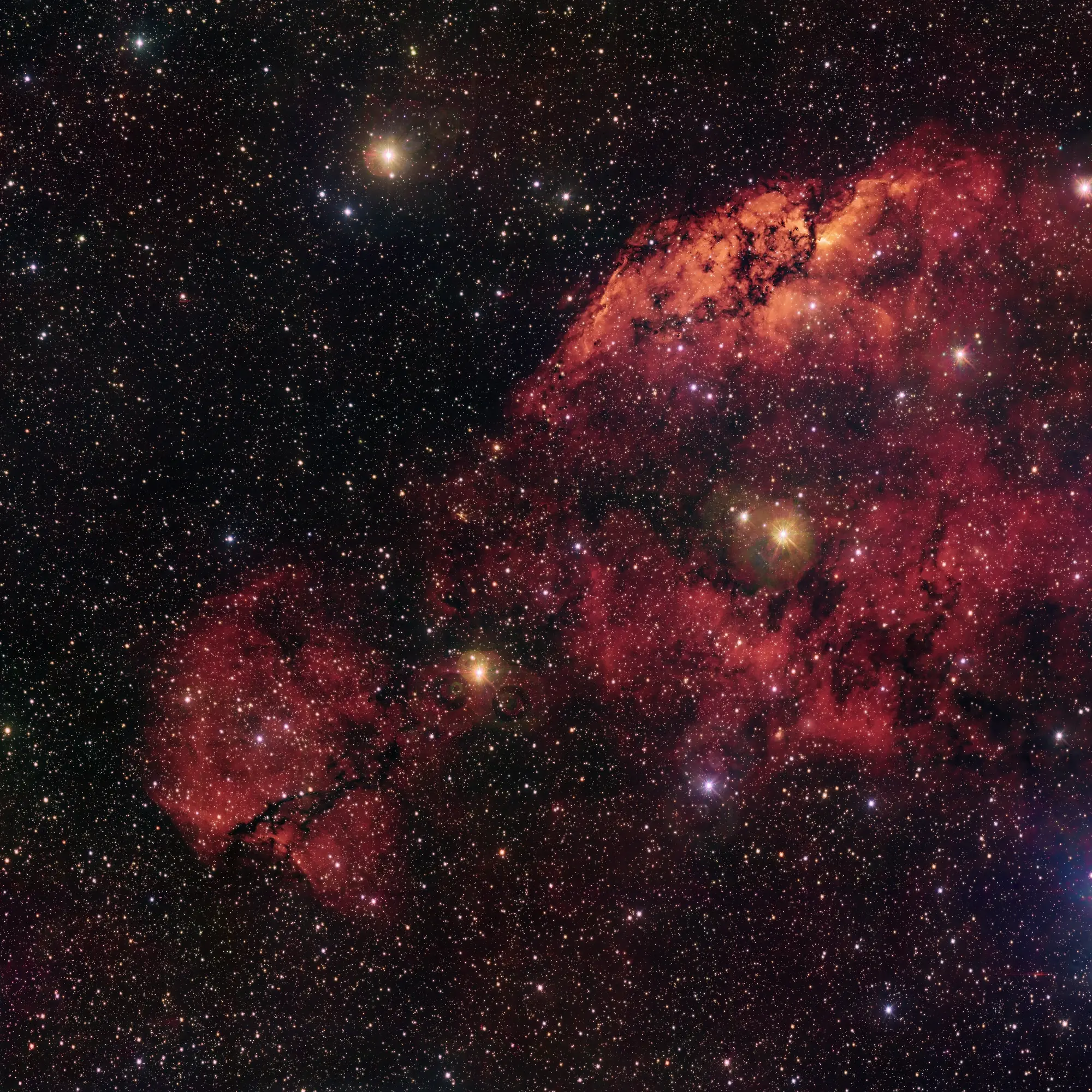
Fabian Ertl, Lotta Sonntag, Emily Hunt, João Alves | 3 September 2026 | Header image: ESO/VPHAS+ team
This edition contains the latest abstracts from August 2026.
Euclid Early Release Observations of the Barnard 30 dark cloud I. Brown dwarfs and planetary mass candidate members at the core of the association
This study aims to identify very low-mass members within the Barnard 30 dark cloud, with a particular focus on detecting objects in the substellar domain, including those within the planetary-mass regime. We employed deep photometric observations using data from the Euclid mission, incorporating advanced data processing techniques, in particular the DeNeb tool for optimized source detection. We also analyze multi-wavelength ancillary observations and perform a Spectral Energy Distribution analysis for each candidate member. In addition, low-resolution near-infrared spectroscopy was obtained for one candidate to further assess its nature and properties. Our initial photometric analysis yielded a initial sample of nearly one hundred candidate members in the substellar mass range. A subsample of 23 probable members, located close to the 3 Myr isochrone, has been identified. Thus, we have substantially expanded the known population of faint, cool sources associated with the region. Low resolution near-IR spectroscopic analysis of one candidate reveals an L2 spectral type with low gravity, consistent with a young ultra-cool dwarf. If its membership is confirmed, its estimated mass lies in the range 15-20 Mjup. These findings validate the reliability of our multi-wavelength photometric selection methodology. These results offer valuable insights into the low-mass end of the initial mass function (IMF) and demonstrate the effectiveness of Euclid in identifying brown dwarf and planetary-mass candidates in nearby, densely packed star-forming regions.
Asymmetry in the protostellar system HOPS 198: Evidence for the evolution of outflow opening angle driven by density of the surrounding core
Protostellar outflows are thought to be responsible for the low star formation efficiency of protostellar cores. However, whether outflows can disperse a significant fraction of the gas in the core depends on the outflow opening angle. It is established that the outflow opening angle increases during the early stages of the protostellar evolution, but the underlying mechanism is poorly understood. Observations of HOPS 198, a Class 0 protostar in the Orion A molecular cloud, provide insights into this question. HOPS 198 exhibits a strong east-west asymmetry in its outflow and its core. The opening angle of the eastern lobe () is more than twice wider than that of the western lobe (), while the surface density of the west side of the core is times higher than the east side. Using an analytical model in which the molecular outflow morphology is shaped by interactions between the wide-angle protostellar wind () and surrounding material in the core, we find that the difference in opening angle for the two lobes can be explained by the difference in core density on the two sides. This result supports the hypothesis that the evolution of the outflow opening angle is driven by the evolution in the density of the protostellar core.
Gas Phase Ion Species Released During Grain Collisions: Implications For Protoplanetary Disks
Grain charging and gas ionization are important processes in protoplanetary disks. Both occur in mutual collisions between grains, as charge is exchanged between grain surfaces but also released into the surrounding gas as ions. The charge carrier for tribocharging, the origin of the gaseous ions, and their composition are currently unknown. However, it is important to know to validate the significance of these processes under disk conditions. In this work, we approach these questions by detecting molecules ejected during grain collisions by mass spectrometry. As tribocharging works well under normal atmospheric conditions, we use untreated "dirty" particles here. Without collisions, our measurements show a background mix of molecules. Among these are organics, but especially water-related molecules. During collisions, the abundances of not all but quite a few molecules change. Water-related molecules account for one of the largest changing fractions. These results suggest that particle collisions release adsorbates even at very low pressure, which is relevant for protoplanetary disks. As monolayers of water and organics are present on all surfaces in cool to moderately tempered parts of protoplanetary disks, this supports the importance of triboionization in disks.
LightCube: A Parsec-Resolution 3D Model of the Local Far-Ultraviolet Interstellar Radiation Field
We present a three-dimensional model of the local interstellar radiation field (ISRF) in the ultraviolet (UV). Using UV flux measurements from the TD1 catalog and stellar distances from Gaia and Hipparcos, we construct a catalog of stars that we expect to dominate the UV flux in the nearby Galaxy. We use the radiative transfer code DIRTY to model the propagation of photons from these stars through a 3D dust map, including the effects of scattering and absorption. The result is LightCube, a model of the ultraviolet ISRF out to 1.25 kpc from the Sun, with a maximum linear resolution of 1 pc. We model the ISRF in the four TD1 bands (1565 A, 1965 A, 2365 A, and 2740 A), as well as a single value for the full FUV range, and calculate the ISRF at the Sun to be 5.6510 erg cm from 912 A to 2000 A. The modeled ISRF is quite variable, with more than an order of magnitude variation seen in dense regions, and about half that in lower density regions. By comparing LightCube to an estimate of the 3D distribution of total-to-selective extinction ratio, , we find a positive correlation between UV flux and in regions of low UV radiation.
SIRIUS Project: Dynamical Evolution of Primordial Binaries during Star Cluster Formation
Binary populations are closely linked to the star formation process; however, their primordial properties can be changed by subsequent dynamical interactions within their natal clusters. The aim of this study is to clarify how different primordial binary populations affect the evolution of multiplicity and the global structure of forming star clusters. We investigate the dynamical evolution of primordial binaries during star cluster formation using self-consistent Nbody/smoothed particle hydrodynamics simulations that follow the collapse of a molecular cloud to a star cluster. We systematically compare three star formation models: close binary (CB), wide binary (WB), and single star (SS) formation model. In CB and WB models, the multiplicity fraction decreases with time due to dynamical interactions. In particular, the fraction in the WB model drops to a level comparable to that in the SS model. The multiplicity fraction of high-mass stars is similarly high in all models, whereas only the CB model shows a relatively high fraction for low-mass stars. Due to the assumption of equal-mass binary formation, the CB and WB models exhibit an excess at q= 1 in the mass-ratio distribution, while the SS model has no clear trend. Frequent few-body interactions generate distinct stellar populations inside and outside the cluster: the multiplicity fraction within the cluster is systematically higher, while mass functions in the outside have a shallower slope. Finally, stellar density profiles in the clusters are broadly similar among all models. The primordial binary population significantly affects the final binary properties, while having only a limited impact on their host cluster structures. Our results suggest that close binaries need to form at the star formation stage to reproduce the observed multiplicity fraction of low-mass stars and the excess of equal-mass binaries.
Substructure evolution from protoplanetary to debris disks driven by mutually gravitating planetesimals and implications on Kepler resonances and free-floating planets
Motivated by recent observations suggesting rings found in debris disks are wider than those in protoplanetary disks, we consider a picture in which planetesimals formed in radially narrow dust traps radially diffuse into debris rings via mutual scattering. Under this picture, evolving the fractional widths () of resolved debris rings back to a few Myr according to the theoretical evolutionary trajectory reproduces the protoplanetary ring distribution. We inferred the product of the ring mass and individual planetesimal mass required to reach the observed debris ring widths at their ages, finding that ranges from to . The distribution of appears to correlate with the stellar mass, peaking at 1.5 to 2 , which resembles the stellar mass dependence of the giant exoplanet occurrence rate. The population of resolved debris rings lie close to the equipartition relation expected of a planetesimal ring that formed narrow, with typical resolved debris disks still expected to be broadening radially and vertically at present. If sufficiently massive (10 ), this radial broadening can send a few Mercurys to the terrestrial region within 10 Myr, making debris disks a plausible source of planetesimals disrupting resonant chains among Kepler planets. Within Gyr timescales, outer planetesimal belts can also eject 1% of their mass into interstellar space if they consist of Moon-sized bodies or above, suggesting that the slow and steady intrinsic evolution of massive debris disks could contribute to the interstellar free-floating population of terrestrial-planet-sized bodies.
Gas Flows and Mass Accretion Rates in Eight Dippers: HD 142666, HD 143006, HD 145718, V935 Sco, DoAr 25, EPIC 204638512, EPIC 205151387, and EPIC 203850058
One of the scenarios used to explain the dipper phenomenon in stars is having the innermost disk regions being close to the line of sight to the star - inclined greater than 60 degrees - regardless of the inclination of the outermost disk ("mis-aligned" or "broken" disks). If the dust and gas in these disks sample the same material, edge-on disks will be viewed through larger column densities of gas and dust than the average disk. We have examined inter-night variability of eight Kepler-discovered dipper stars using the SpeX spectrograph on NASA's Infrared Telescope facility at a spectral resolving power of R~750. The He I line at 1.083 microns exhibits a wide variety of profiles, which change from night to night. In the majority of cases, an inverse P Cygni profile, indicative of inflowing gas, is present. The line profile (and continuum flux level) often change on time scales of 1 day. The Paschen and Brackett lines also change on similar time scales. In one object, V935 Sco, Pa beta and Br gamma went from being in emission to being in absorption over the course of 5 weeks. In another, EPIC 203850058, Pa beta went from being in emission in 2017 to vanishing altogether in 2018. The accretion rates determined using Pa beta for these stars tend to be smaller than those using Br gamma, indicating that the former line is more susceptible to self-absorption than the latter, as would be expected for a highly inclined disk.
Asymmetric, variable H line profile in planetary mass object SR 12 c
Young, forming planetary-mass objects often exhibit clear signatures of ongoing mass accretion and are thought to accrete material through processes analogous to those operating in young stars. In this study, we present high-spectral-resolution observations of asymmetric and time-variable H line profiles from the planetary-mass companion SR~12~c. The H line was observed at a resolving power of —40{,}000 (corresponding to 6.1—7.5~km~s) using the High Dispersion Spectrograph (HDS) on the 8.2 m Subaru Telescope. Strong H emission is clearly detected, while higher-order Balmer lines (H, H, and H) are not detected due to their faintness. The H line profiles are well spectrally resolved and exhibit blueshifted emission peaks, which can be interpreted as arising from either (a) emission partially absorbed by redshifted accreting material along the line of sight and/or (b) geometric occultation by the inner circumplanetary disk. Moreover, the H flux shows significant variability at 43.6~~6.4~\% relative to the peak flux on hourly timescales. During a continuous 2.5-hour observing sequence, the emission component peaking at approximately ~km~s weakened over the first hour. Subsequently, an emission component centered near ~km~s became dominant and remained stable for the remaining 1.5 hours. We discuss possible interpretations of this behavior. Overall, these results support that magnetospheric accretion is operating in the planetary-mass object SR~12~c while a scenario combining boundary-layer accretion with a failed wind cannot be ruled out.
Investigating the properties of nearby young moving groups using GaiaDR3
Moving groups, which are gravitationally unbound collections of stars spread over large portions of the sky, pose challenges to their identification. Analyzing the three-dimensional spatial motion of stars is one method to identify their members. Despite several studies in the past, a reliable and conclusive catalog of moving group stars is currently lacking. Our objective is to present a most recent and updated catalog of nearby young moving group (NYMG) candidates in the solar neighborhood and investigate their properties using updated science data from the Gaia Data Release 3 (DR3). We searched for candidates of twelve NYMGs within a distance of 150 pc using Gaia DR3. To determine the membership, we employed the Bayesian algorithm BANYAN-Sigma. We compiled a total list of 3,153 NYMG candidates, of which 1,651 were new candidates. We also assessed the credibility of the literature defined 'Good-box' criterion with the latest comprehensive catalog of NYMGs from our study. We homogeneously estimated the ages of the NYMG candidates using Gaia DR3 photometry data. The analysis revealed that our NYMG candidates display a large scatter on the CMDs resulting in a large range of estimated ages from isochrones. Additionally, we conducted an infrared (IR) excess analysis to identify disk candidates among our final sample. Our spectral energy distribution (SED) analysis found 51 stars with IR excess. We present a largely inclusive list of all the NYMG candidates within 150 pc of Solar neighbourhood using Gaia DR3. The wide range of ages obtained from isochrone fitting underscores the need for more robust age analysis techniques to accurately determine the ages of NYMG members. The presence of IR excess in the 51 stars confirms the existence of disks indicating that they could be potential candidates for exoplanet detections.
Molecule-specific diffusion and desorption of interstellar ices on carbonaceous dust
Interstellar ices form on dust grains in the coldest regions of molecular clouds and preserve key volatile reservoirs that could be incorporated into protoplanetary disks during star and planet formation. However, the effect of the dust surface composition on the ice structure and spectroscopic behavior remains poorly constrained. We present a comparative laboratory study of astrophysically relevant ices (CO, CO2, and H2O) deposited on inert calcium fluoride (CaF2) substrate and carbonaceous dust analogs under interstellar conditions. Infrared spectroscopy and temperature-programmed desorption reveal pronounced molecule-specific infrared spectral responses to the amorphous carbonaceous surface. CO and CO2 both exhibit broadened absorption bands, redshifted band positions, and delayed desorption, arising from thermally activated diffusion into the porous dust matrix and indicating strong molecule-surface interactions. By contrast, H2O varies only very little spectrally and thermally, indicating weak wetting and limited coupling to the substrate. These results provide direct laboratory evidence that dust-ice interfaces can affect the ice structure and desorption kinetics of interstellar ices even in thick ice layers. These findings offer new constraints for interpreting infrared absorption bands in astronomical observations and highlight the importance of surface effects in models of interstellar ice chemistry.
Dust transport in envelopes of disk-embedded planets: I. Convectively stable envelopes
Planets embedded in protoplanetary disks accrete solids through their gaseous envelopes. The spatial distribution of these dust particles inside the envelopes of disk-embedded planets is poorly known. We present high-resolution two- and three-dimensional multifluid simulations that follow the dynamics of gas and dust around planets similar in mass to Earth. Our simulations resolve an outer recycling flow and an inner convectively stable envelope that is shielded from the recycling flow. We identify strongly dust-depleted envelopes: the dust-to-gas ratio decreases radially inward and is reduced by more than two to four orders of magnitude in the deep interior (; Bondi radius) compared to its value at the outer edge of the envelope. Small grains, with a dimensionless stopping time , remain entrained in the recycling flow and do not enter the envelope, whereas large grains () penetrate the envelope but settle rapidly onto the core along the midplane. The resulting dust depletion in convectively-stable envelopes implies a substantial reduction in dust opacity throughout much of the envelope, facilitating cooling and a more rapid transition to runaway gas accretion. These results further suggest that enriching the deep envelope () with dust or volatiles requires their delivery through large pebbles that then subsequently disintegrate, or sublimate, from their host grains in the deep envelope interior.
Dust transport in envelopes of disk-embedded planets: II. Fully convective envelopes
We perform 3D multifluid simulations of gas and dust to quantify how convection reshapes the spatial distribution of dust grains inside the envelopes of disk-embedded planets. Building on the first paper of this series, which explored convectively stable envelopes, we here consider envelopes in which convection is sustained by the accretion luminosity. The dust-to-gas ratio inside the planetary envelope is set primarily by the degree of dynamical isolation from the surrounding disk. When convection extends beyond the Bondi radius, the envelope remains connected to the disk flow and maintains a dust-rich state through continuous material exchange. Conversely, when an inner convective layer is separated from an outer recycling layer, the recycling flow filters incoming solids. The dust distribution inside the convective layer is then controlled by the competition between convective stirring and gravitational settling. This yields two regimes: a settling-dominated regime, in which large grains (typically cm) fall at the terminal velocity and the envelope becomes dust depleted, and a convection-dominated regime, in which smaller grains are trapped in convective circulation and the envelope retains its dust. The delivery and release of volatile species from accreting solids at the envelope sublimation front, together with the efficiency of convective mixing, determine how this material is distributed between the core and envelope. Our findings imply that super-Earths and mini-Neptunes inside the water snowline have volatile-depleted cores and volatile-rich envelopes, while planets at wider orbits can have a wide diversity of envelope compositions from depleted to enriched. This compositional diversity for planetary envelopes appears to be consistent with the large diversity in observed atmospheric compositions of mini-Neptunes.
Chondrule formation in the outer disk from the primary three-dimensional chemical composition of CM chondrules
Chondrules and their associated fine-grained rims record key processes in the early protoplanetary disk, yet the links between chondrule chemistry, morphology, and matrix complementarity remain poorly constrained. We investigate the major, minor, and trace element compositions of 66 chondrules and FGRs from the relatively unaltered CM carbonaceous chondrites Asuka 12236, Paris, and Maribo, together with their 3D morphology, using LA-ICP-MS and X-ray tomography. CM chondrules record systematic metal loss and evaporation of Si-rich mesostasis, driving initially CI-like precursor compositions toward more Mg- and Si-rich bulk compositions along the CI ratio line and toward increasingly Si-poor forsteritic assemblages. GEMS-like materials in pristine CM matrices closely mirror chondrule compositions and likely represent complementary condensates derived from evaporated mesostasis. Dust accreted onto chondrules is predominantly CI-like but contains about 14 wt.% complementary condensate material represented by chondritic amorphous silicates, reconciling Mg/Si complementarity between chondrules and matrix with the preservation of primordial organics and presolar grains. Morphological observations show no significant sectioning bias, consistent with CM chondrules being dominated by agglomerates of ~100 um microspherules. Many display grape-bunch textures produced by welding of smaller chondrules with metal-rich or CI-like rims. This structure may explain the chondrule moderately volatile-element plateau at about 0.3xCI. We propose a "micro-chondrule-first" scenario in which localized heating events produced small molten droplets that subsequently accreted CI-like dust and ice, aggregated, and experienced limited aqueous alteration. These observations place new constraints on chondrule formation in the outer disk and highlight the importance of localized melting and aggregation processes.
Dust Seeding Molecules in a Massive Protostar – Detection of TiO in Orion Source I
We report the first detection of TiO in star-forming regions based on Atacama Large Millimeter/submillimeter Array observations of Orion Source I, a well-characterized massive protostar. Multiple rotational transitions are identified, with emission spatially resolved within au, showing a compact distribution with a velocity structure consistent with the base of a rotating outflow. The spatial and velocity distributions of TiO are consistent with those of AlO, with both species being key dust seeding refractory molecules. \textbf{The column density of TiO is derived to be , corresponding to , higher than CI chondrites and indicative of efficient dust-to-gas conversion near the protostar.} We also identify a tentative detection of AlOH, which exhibits a more extended distribution along the disk surface, possibly indicating different conditions from those traced by TiO and AlO. The detection of TiO, a key dust seeding species, offers important constraints on refractory chemistry and the formation environments of primitive minerals, linking astrochemical processes in protostellar systems to the earliest stages of Solar System material formation.
Volatile depletion in rocky planets as a chemical fingerprint of hybrid accretion
Volatile depletion in rocky planets relative to their host stars is commonplace in both the Solar System and exoplanetary systems, yet the connections between planet formation and composition remain elusive. Here we model devolatilization during pebble accretion in combination with collisional growth from volatile-depleted planetesimals to explore the formation pathways of Earth and Mars. Using Bayesian inference, we find that bulk silicate Earth is best reproduced by 75% contribution from two protoplanets formed via pebble accretion, supplemented by up to 25% material from planetesimals that are compositionally akin to the asteroid Vesta. Using instead a planetesimal volatile-depletion curve that is not observed among known meteorite parent bodies would allow the planetesimal contribution to reach 40%. In comparison, bulk silicate Mars reflects 275% pebble-accreted material and 735% Vesta-like planetesimals. We identify volatile depletion as a chemical fingerprint of hybrid accretion, in which both pebble accretion and collisional assembly contribute to terrestrial planet growth. By quantitatively linking formation pathways to volatile budgets, our findings demonstrate how planetary accretion histories can be inferred from elemental signatures, with broad implications for interpreting the chemical diversity of rocky exoplanets.
JWST/MIRI Detection of Molecular H Winds from an Edge-on Class II Source HV Tau C
The evolution of protoplanetary disks is regulated by accretion onto the central star and mass loss through jets and winds. While atomic and ionized outflows are commonly observed, molecular winds in evolved Class II disks remain rarely detected. We characterize the spatial, thermal, kinematic, and dynamical properties of molecular hydrogen (H) emission from the nearly edge-on Class II disk HV Tau C and assess the impact of its molecular wind. We also constrain accretion using H I recombination lines detected in the same mid-infrared spectrum. Using JWST/MIRI-MRS data from the MINDS Cycle 1 GTO program, we analyze spatially resolved pure-rotational H emission. Rotational and position-velocity diagrams constrain excitation and kinematics, from which we estimate wind properties. We detect extended H emission tracing a wide-angled, biconical molecular wind extending beyond the near-infrared scattered-light disk, ALMA 887 m dust continuum, and compact CO (-) gas disk. The H rotational diagram requires warm (600K) and hot (2000K) components, similar to those in younger protostars. The gas shows outward motions of a few tens of km s and dynamical timescales of tens to hundreds of years. The inferred mass-loss rate is M yr, while accretion rates derived from H I lines are - M yr. The accretion rate may be underestimated because of the edge-on geometry. Our results show that wide-angled molecular H winds can persist into the Class II phase, with outflow rates comparable to some protostellar systems, suggesting that such winds may remain important for angular momentum removal, disk evolution, and dispersal. (Abstract modified; see the paper for the full version.)
Low-Metallicity Star Formation Survey in Sh2-284 (LZ-STAR): The Core Mass Function
We present an ALMA 1.3~mm dust continuum study of the dense core mass function (CMF) in Sh2-284, a low metallicity outer Galaxy star-forming complex with —. The observations cover six far-infrared bright subregions at 0.65" (3000~au) resolution. We identify a total of 91 candidate dense cores and define a robust catalog of 68 cores with Gaussian fitting. The high-mass CMF above 2.5 Msun is well described by a Salpeter-like slope, with a fiducial forward-modeled value of for . Together with existing constraints on the initial mass function (IMF) of Sh2-284, the Salpeter-like CMF is consistent with a resemblance between the CMF and IMF shapes in the outer Galaxy environments, suggesting that moderately low metallicity alone does not strongly reshape the high-mass CMF/IMF slope.
CO Structures with Narrow Lines in Nearby Quiescent Regions
Using CO data from Phase I of the Milky Way Imaging Scroll Painting (MWISP) survey, we present a systematic study of molecular structures with narrow lines. We identify 57 CO structures, most of which exhibit low densities and subsonic/transonic turbulence. Among them, structures with large projected areas and diffuse, sheet-like geometries are identified as veil clouds. The low LSR velocities and the concentration of these CO structures toward both the Galactic center (e.g., Ophiuchus, Aquila) and anticenter (e.g., Cepheus, Taurus) regions suggest a local origin for the sample, as supported by distance measurements of about 200—300pc for a subset with relatively large angular extents. These nearby structures likely arise from large-scale compression driven by past supernova activity within the Local Bubble. The observed low-velocity-dispersion emission may trace quiescent regions where turbulence has decayed due to a lack of sustained energy injection. For diffuse veil clouds with an assumed magnetic field of ~10uG, ion-neutral friction may provide an additional mechanism for turbulent dissipation on sub-parsec scales corresponding to their thickness of 0.1—0.3pc. Tracing the atomic-to-molecular transition, veil clouds provide a unique window into the diffuse, quiescent precursor state of dense gas. They likely represent a widespread but previously overlooked component of the Galactic molecular gas reservoir, with significant implications for cloud formation and evolution, the total mass budget and spatial distribution of molecular gas, and the initial conditions of star formation as a related consequence.
Spatially resolved thermal dust emission in the L1157 outflow reveals grain-driven molecular enrichment
Protostellar outflow shocks reshape local dust properties and molecular chemistry. The L1157 outflow is an archetypal chemically rich shocked region, but the thermal dust associated with its successive shocks has remained unresolved because molecular-line contamination obscures the broadband continuum. We obtained new James Clerk Maxwell Telescope (825—906 m) spectral-line observations and Submillimeter Array (1.1—1.4 mm) continuum observations toward L1157 B0-B1-B2, probing spatial scales from 0.4 pc to 1200 au. After removing molecular-line contamination on a pixel-by-pixel basis, we derived the dust temperature, column density, and dust opacity index from continuum data spanning 70 m to 1.3 mm. The line-corrected continuum maps reveal the dust distribution across successive shocks. The dust opacity index (—2.3) indicates that grains have not grown to millimeter sizes throughout the shocked regions. Combined with previous observations, we find that the dust emission resolves into compact clumps along the precessing jet, whereas gaseous peaks at the shock fronts, reaching abundances of relative to , even where the 0.85 and 1.3 mm dust emission is detected at only 3—5. Our newly developed physicochemical shock model shows that forms predominantly on grain surfaces and is released by shock-induced sputtering, with the highest abundances occurring where post-shock re-adsorption remains inefficient. These results establish spatially resolved dust continuum imaging as a direct observational probe of grain evolution and provide new observational constraints on dust-gas interactions in protostellar shocks.
Electron temperature and emission measure of HII regions in the central molecular zone (CMZ) from H40 αrecombination line and continuum emissions by ALMA CMZ Exploration Survey - ACES -
Star formation activity in the Central Molecular Zone (CMZ) directly manifests itself as radio continuum free-free emission (Bremsstrahlung) and radio recombination line emission from HII regions surrounding newly formed massive stars. We derive the overall distribution of the HII regions and their fundamental properties: electron temperature () and emission measure (), and hence electron density in the form of two dimensional distribution maps over the CMZ by analyzing the ACES (ALMA CMZ Exploration Survey) \h40 (99.02 GHz) recombination line and 99.6 GHz continuum emission data with synthesized beam widths of (0.097 pc at 8.2 kpc) and , respectively. We apply the 'TeEM' method (— mapping), which creates and maps from input 2D maps of the continuum and integrated line intensity. The analysis covers the entire ACES field from to and from to . The area analyzed is complete and includes previously known HII regions such as Sgr B2, Sgr B1, the Sickle, the Pistol, thermal filaments (Bridges), Sgr A HII regions, the Minispiral, and many other known HII regions. Sgr C is not included in the analysis due to the insufficient signal-to-noise ratio in the recombination line map. The mean electron temperature over the CMZ is determined to be K (SE:standard error of the mean, SD: pixel-to-pixel standard deviation). Some HII regions, such as Sgr B2 Main and the Minispiral, exhibit large scatter and an internal gradient of several thousand K per parsec. The distribution is more diverse, varying by orders of magnitude from to \emunit within the CMZ, as well as within individual HII regions.
A metallicity sweet spot for disc fragmentation and planet formation
Fragmentation of gravitationally unstable discs offers an alternate formation mechanism for gas giant planets and brown dwarfs on wide orbits. Metallicity plays a key role in disc evolution from the onset of gravitational instability to the formation of planets. We aim to determine the effect of metallicity on disc fragmentation and on the properties of disc-instability planets. We model gravitationally unstable discs with varying metallicity () using the Smoothed Particle Hydrodynamics code PHANTOM. Our simulations reveal a "sweet spot" for fragmentation at , where cooling is most efficient, with fragmentation also happening less vigorously at higher and lower metallicities. However, further away from the sweet spot, fragmentation becomes more difficult and is eventually suppressed at extreme low and high metallicities ( and , respectively), where the disc cools inefficiently. Discs with metallicities close to the sweet spot form more planets per disc, faster, and with lower initial masses than fragmenting discs with higher or lower metallicities. Our results may explain the slight overabundance of wide-orbit giant planets observed around metal-poor stars; these planets may have formed via disc fragmentation.
A Systematic Study of Quiescent and Outburst Properties of X-ray-bright Young Stellar Objects Using XMM-Newton
Young Stellar Objects (YSOs) exhibit strong X-ray emission, widely attributed to magnetic reconnection and magnetospheric accretion; however, owing primarily to limited photon statistics, observational tests of these mechanisms have often relied on simplified analyses, leaving room for more precise constraints on their emission processes. We aim to derive the X-ray properties of X-ray-bright YSOs selected from multiple star clusters and investigate their emission mechanisms through an approach from multiple perspectives based on timing and spectroscopic analysis. We performed a systematic search of XMM-Newton archival observations and constructed a sample of 51 X-ray-bright YSOs for timing and spectroscopic analyses. We identified quiescent and outburst phases through timing analysis, performed phase-resolved multi-temperature spectroscopy. Multi-temperature plasma structures are detected in both quiescent and outburst emission. The relationships among the timing and spectral parameters are broadly consistent with a magnetic-reconnection scenario. Comparison with Gaia DR3 stellar parameters suggests that magnetospheric accretion alone has difficulty explaining most of the fitted X-ray temperatures, although the coolest model components with keV may include an accretion-shock contribution. After separating these low-temperature components, the remaining quiescent components show a clearer positive correlation in the — plane, with magnetic-loop lengths distributed around cm. Neupert-like behavior, the temporal evolution of temperature and emission measure, the Rossby-number activity relation, and positive correlations between quiescent and outburst properties all suggest that magnetic reconnection plays a key role in both phases.
The Galactic Centre G+0.633-0.0604 Molecular Cloud: A New Gold Mine for Astrochemistry
Astrochemistry is living a golden age, with more than a quarter of the ~350 molecules in the current interstellar census having been detected over the last three years. One of the sources driving this progress is the G+0.693-0.027 cloud, located in the northern part of the Galactic Centre Sgr B2 complex. In this contribution, we present the astrochemical characterisation of G+0.633-0.0604, a newly discovered chemically rich molecular cloud at the southern edge of Sgr B2. With an inventory of >120 species, G+0.633 provides robust second detections of several prebiotic molecules only reported towards G+0.693, establishing it as the first confirmed astrochemical twin of G+0.693 while demonstrating that the extraordinary chemistry of this cloud is not unique. Furthermore, G+0.633 offers an observational advantage over G+0.693 since it displays half narrower linewidths. Together, G+0.633 and G+0.693 form a unique benchmark pair for unveiling molecular complexity and prebiotic chemistry in the interstellar medium.
-body simulations of the open cluster population in the Milky Way and the impact of GMC encounters
We investigate the population of open clusters in the Solar Neighbourhood and model the effect of encounters with giant molecular clouds (GMCs) over the last 1 Gyr. We combine a Galactic model with -body simulations of 20692 unique clusters in the mass range . Each cluster is simulated twice: with and without tidal forces from the GMCs. We find that an initial cluster mass function truncated at best reproduces the observed mass function evolution. For the age function, the observations show a decline in clusters for ages older than Myr, whereas our simulated clusters show a decline after Myr. The observed early disruption suggests that some clusters form supervirial, whereas our simulated clusters are created in virial equilibrium. Low-mass () clusters are most sensitive to GMC encounters, which accelerate their disruption in the first Myr. After Myr, the impact of GMCs becomes irrelevant since the clusters will have been destroyed regardless of whether they experience GMC encounters or not. The survival of intermediate-mass () clusters is significantly reduced by GMCs at ages up to 1 Gyr. High-mass () clusters survive to 1 Gyr with minimal disruption with or without GMCs. We find that clusters that have had strong GMC encounters within the last Myr should have tidal tails that are randomly orientated with respect to the Galactic centre.
The Nearby Star Formation and Supernova Histories Reconstructed from Young Star Clusters
We reconstruct the recent star formation and core-collapse supernova (ccSN) histories of the Solar Neighborhood from the past trajectories of young star clusters. Using a \textit{Gaia}-based cluster sample with newly derived ages, masses, and bulk 3D velocities, we integrate orbits backward in an assumed axisymmetric Galactic potential and combine the trajectories with IMF sampling and stellar lifetimes to infer ccSN times and locations over the past 50 Myr. The result is an all-sky, 3D, time-resolved map of nearby ccSN activity for comparison with high-resolution 3D views of the local interstellar medium. The 0—15 Myr map shows strong enhancements toward Orion, Vela, Sco—Cen, and Cepheus, many within present-day cavities and shells. At earlier times, the dominant enhancements trace the Collinder 135, Messier 6, and Alpha Persei cluster families, showing how the remnants of massive star-forming complexes have shaped the recent local feedback history. We recover a bursty star formation history followed by a delayed, smoother ccSN history. Over the last 40 Myr, the mean star formation and ccSN rates are and , respectively, corresponding to a Milky Way rate of . Present-day OB-star catalogs yield rates ranging from agreement with the cluster reconstruction to several times higher. Because the catalogs overlap weakly and require different corrections, we do not rescale the ccSN map. Our reconstruction provides an empirical framework for connecting the recent history of massive-star feedback to the 3D structure and life cycle of gas in the nearby Milky Way.
A comprehensive cluster census of Orion. An application of the Significance Mode Analysis (SigMA) algorithm
Precise astrometric surveys and modern clustering algorithms are working in step to transform our view of star-forming regions. By revealing a much richer substructure than previously accessible, they pave the way for reconstructing star formation histories by accurately resolving and age-dating individual sub-populations. The Orion star-forming complex is the best-studied stellar nursery in the solar neighborhood and the nearest one currently forming massive stars. Even so, a comprehensive characterization of its substructure, including a homogeneous age mapping and extinction analysis, is still incomplete. Here, we present the most complete census of stellar populations across the Orion complex from the newest version of the SigMA algorithm and outline our additions and improvements to the algorithm that have extended its usage to distant (>300 pc) regions. We separate the Orion complex into 47 co-spatial and co-moving stellar groups comprising 11,996 reliable members, with ages ranging from 1.5 to 25 Myr. To evaluate the statistical robustness of each group, we derive cluster persistence values and individual membership probabilities for each source from 10 independent clustering repetitions. Our group memberships agree well with the literature, but SigMA consistently finds a factor of ~2-3 more members. In particular, it resolves more very young populations, such as NGC 2024, RV Orionis, B30, NGC 1977, NGC 2068, and NGC 2071, than previous algorithms. In addition to recovering 28 known clusters and three groups previously classified as substructures, we present 16 new co-eval substructure candidates of the Orion star-forming complex. This work builds up a new high-resolution time-resolved picture of Orion. This spatio-temporal map allows us to relate its stellar content to the surrounding ISM and paves the way for a detailed analysis of its star formation history in the future.
The TOP-SCOPE Survey of Planck Galactic Cold Clumps: Molecular gas properties
We surveyed 2008 Planck Galactic Cold Clumps (PGCCs) in and —0 lines using the Taeduk Radio Astronomy Observatory (TRAO) 14 m telescope's multi-beam receiver. We detected 2784 () and 2291 () velocity components, their closely correlated centroid velocities suggest that CO and CO generally trace kinematically associated gas. PGCCs have low excitation temperatures (mean 10 K), mean optical depth 0.5, and mean -derived H column density ~cm. Gas—dust correlations are moderate, with more tightly correlated with the dust-derived H column density from the PGCC catalog than . Colder PGCCs tend to have higher CO-to-H conversion factor () and ratio. increases clearly with the dust-derived H column density, consistent with enhanced CO freeze-out in high-column-density gas. Supersonic non-thermal motions are widespread: the Mach number derived from has a mean of 4.3 and a median of 3.6, increasing slightly with dust-derived H column density. Overall, PGCCs are cold but dynamically active, serving as a valuable laboratory for studying the initial conditions of star formation.
Fragmentation and tidal locking in young quadruple systems
Young quadruple systems provide a particularly simple setting in which the connection between successive levels of fragmentation can be studied. Motivated by the recurring symmetric configurations observed in a small number of young systems, we propose a theoretical framework in which such configurations arise naturally during rapid collapse. Rotational fragmentation followed by secondary fragmentation can produce two comparable-mass components of a wide pair, each of which further fragments into an unequal-mass close pair. The combination of tidal forces and accretion-driven shear can then establish a preferred phase relation, with the lower-mass component located on the inner, preceding side of the higher-mass component in each close pair. During subsequent capture, this phase relation can shift, placing the lower-mass component on the inner, trailing side. Asymmetric partitioning of a coherent, rapidly accreting flow can also tilt the spin axes of the fragments, providing a possible origin for spin misalignments without requiring an initially incoherent large-scale flow. The proposed mechanism therefore provides a possible physical origin for the characteristic phase relations in young quadruple configurations and for stochastic spin orientations within star clusters.
EWOCS-VIII: Internal kinematics and expansion of Westerlund 1 from VVVX proper motions
Westerlund 1 (Wd1) is the most massive young star cluster known in the Milky Way and a key laboratory for studying the early dynamical evolution of massive clusters. Owing to its high extinction, the internal kinematics of its intermediate-mass stellar population remain largely unexplored. We aim to characterize the internal kinematic properties of Wd1 using a homogeneous census of near-infrared (NIR) selected cluster members and their proper motions (PMs). We considered PMs from the VIRAC2 catalog, based on multi-epoch VVV/VVVX observations. For candidate members previously identified through NIR photometry and astrometry (Paper I), we computed their PMs relative to the cluster mean motion and analyzed them as a function of position and radius. We also investigate radial trends, test the robustness of the results against the assumed cluster center, and search for preferred directions of motion. We detect a statistically significant signature of expansion in the outer regions of Wd1, with the radial component of the relative PMs increasing with distance from the cluster center. The expansion appears asymmetric, with the strongest gradient detected along a PA in the plane of the sky and with significance. We also find hints for inward radial motions in the central region, consistent with ongoing mass segregation, but only at significance. Taken together, these results are consistent with a nearly monolithic formation scenario.
A Chemical Inventory of the Disk around the Class 0 Protostar L1527 IRS with ALMA
Planet formation starts in disks that are still embedded within their natal envelopes. Here, we compile an extensive inventory of the chemical composition of the disk and envelope ( 3500 au) around the Class 0 protostar L1527 IRS. Using all publicly available ALMA (Atacama Large Millimeter/submillimeter Array) data, we report the detection of 40 molecules, including isotopologues. Of these, 23 are different molecular species and 29 are reported here for the first time toward L1527 in ALMA observations. CHOH is the only complex organic molecule detected, while the hydrocarbon CHCCH is the largest molecule detected. Overall, only a few programs are sensitive enough to detect emission unambiguously originating from the disk based on the kinematics. Nitrogen-bearing molecules are predominantly detected on more extended scales, while hydrocarbons show a distinct tail roughly along the southeastern outflow cavity wall, probably due to a stronger UV field in the eastern outflow lobe. The L1527 IRS protostellar system is not rich in sulfur-bearing molecules, with only strong emission observed for CS and SO. Overall, the envelope appears dominated by a carbon-rich chemistry, which seems to transition into an oxygen-rich chemistry in the disk. We calculate column densities of all detected species, providing a starting point to quantify the chemical diversity among young disks and the chemical evolution of the planet-forming material.
Tracing expansion-driven star formation in the Perseus molecular cloud using young stellar objects
. Recent studies have linked star formation in the solar neighbourhood to the expansion of the Local Bubble. The Per-Tau Shell (PTS), a vast 3D dust structure hosting the Perseus and Taurus clouds on its surface, is a candidate for such triggered formation. . We aim to reconstruct the star formation history of the Perseus molecular cloud and investigate its potential link to the historical expansion of the PTS. . We performed a 6D phase-space analysis of 406 young stellar objects (YSOs) of Perseus. Our approach integrates Gaia DR3 kinematics with Bayesian age inference and a heteroscedastic likelihood framework to resolve radial gradients in YSO ages and intrinsic tangential velocity dispersions relative to the PTS centre. We constructed a unified catalogue by integrating existing infrared-based classifications to examine the projected spatial segregation of different evolutionary stages and compared stellar 3D kinematics with CO and CO gas velocity fields to assess kinematic coherence. . The YSOs exhibit coherent outward motions relative to the centre of the PTS, a negative age-distance gradient with younger populations at larger radii, and a radial decline in tangential velocity dispersions. Younger YSO classes also show a stronger directional concentration towards the PTS centre. Both the coherent proper motions and the line-of-sight velocity gradients of these YSOs align with the gas velocity field, indicating large-scale kinematic coherence. . The Perseus YSOs exhibit concordant kinematic and temporal signatures consistent with an expansion-driven origin. These results provide robust evidence for a layered, inside-out pattern of star formation, suggesting that the historical expansion of the PTS triggered a sequential progression of star birth and effectively shaped the star formation history of the Perseus complex.
Preparing for the Early eVolution Explorer: Photometric Diagnostics of Magnetospheric Accretion Geometry in Young Stellar Objects
The inner disk truncation radius, , plays a crucial role in the regulation of star-disk interaction and the early evolution of star-disk-planet systems; however, measuring this parameter is observationally challenging. We present a new method for determining in young accreting systems that hinges on the color dependence of the accretion shock emission in multi-band time-domain surveys. Based on the accretion simulations of Robinson et al. (2017, 2021), we produce synthetic color-magnitude diagrams at near-UV and optical wavelengths that predict the loci of accreting stars as a function of . We test these model predictions on young stars with interferometric estimates, finding very good agreement in our results. We apply this novel technique to a pilot survey of 26 classical T Tauri stars in Taurus and Upper Scorpius. We find a predominance of sources with small truncation radii, , and an overall distribution of that is statistically similar to that inferred from interferometric studies, while differing from those inferred from emission line modeling. Finally, we discuss the application of this technique to NASA's mission concept EVE, with the goal to provide simultaneous measurements of inner disk truncation radii, corotation radii and mass accretion rates for hundreds of young stars across the Galaxy. The unprecedented survey of inner disk properties that the mission would produce would enable the first stringent test of angular momentum evolution theories in young stars and reveal the impact of the inner disk conditions on early planet architectures.
Potential sublimating exocomets around the young star PDS 70
Recent observations by the James Webb Space Telescope (JWST) have indicated the presence of water in the inner regions of the disc around the young protostar PDS 70, but the origin of this water remains unclear. Here we report the discovery of variable absorption lines of neutral sodium in archival High Accuracy Radial velocity Planet Searcher (HARPS) spectra of PDS 70. These lines vary strongly and stochastically on a daily basis, in amplitude, number, and radial velocity. Our measurements indicate that this gas tends to be optically thick, and partially cover the stellar disc, meaning this fast-moving gas is often spatially confined. We explore several hypotheses for the origin of these lines, and conclude that a likely source of the observed sodium is sublimation of planetesimals that transit the star on highly elliptical orbits, reminiscent of the exocomet phenomenon seen in other seen in other extrasolar systems. These sublimating exocomets could play a role in sourcing the previously observed water in the inner, terrestrial-planet forming region of the PDS 70 system.
Stellar Flares Rather than High As Possible Cause for the Missing Methane in Young Exoplanets: The Case Study of V1298~Tau\,b
Recent observations of V1298~Tau\,b, a warm sub-Neptune (R, M, TK) orbiting a young (10-30\,Myr) K star, show depleted methane and surprising abundances of CO in its atmosphere. This makes the planet an interesting target to study the "missing methane problem", where HST, Spitzer, and JWST have revealed many sub-Jovian planets with effective temperatures cooler than 800\,K to be depleted in methane compared to equilibrium chemistry predictions. On V1298~Tau\,b, an intrinsic temperature (T) of 500\,K is required to explain the methane depletion if strong mixing from a warm interior is the reason for the missing methane, but this T is too large for a planet of its age and size according to standard interior structure evolution theories. Here, we show that stellar flares can result in methane depletion in a warm planet's atmosphere with nominal T\,K. During a stellar flare, fast methane photolysis rates cannot be balanced by diffusion from below into the upper atmospheric layers probed by observations. Young active stars flare frequently, and we show that the timescale of diffusion for the methane to recover from a flare-induced depletion can be slow compared to the flare frequency. Over time, the atmosphere reaches a new steady state set by the average flare frequency and energy. This new steady state shows depleted methane in the 2\,mbar region, and abundant CO, CO, and HCN, which results in synthetic transmission spectra that reproduce the main features of the recent JWST observations of V1298~Tau\,b.
Triggered Fragmentation in Self-Gravitating Protoplanetary discs: Cooling, Mass Movement and Instability
Previous three-dimensional hydrodynamical simulations of gravitationally unstable discs have shown that the formation of a single fragment can trigger the formation of subsequent fragments. This behaviour was attributed to changes in the surface mass density caused by the interaction between the first fragment and the disc material. This study reanalyses those simulations to see if the surface mass density was the sole driver. Our results reveal that both surface mass density and sound speed can contribute to the formation of additional fragments. Beyond the general cooling typical of such discs, the inwards movement of cool material from the outer disc, driven by the formation of the first fragment, can enhance fragmentation in the inner regions. We also identify that interactions between the midplane gas and the cooler upper layers of the disc can facilitate additional cooling. Triggered fragmentation can create a unique planet-formation environment by redistributing material across the disc, potentially leading to chemically distinct fragments from those formed in-situ.
An analysis of the Herbig star population and their protoplanetary disks within 1 kpc
Herbig stars are intermediate mass pre-main sequence stars of 1.5 to ~M and are in between low and high-mass star formation. This work provides a catalog of all 243 known bona-fide Herbig stars with clear infrared excess and in many cases accretion signatures within 1~kpc. It contains archival, recalibrated, and newly derived stellar parameters, accretion rate properties, and disk dust mass measurements. We derive the latter by using newly obtained millimeter photometry and literature values. We find that 50\% of Herbig dust disks are more massive than 10~M, while this is only true for 20\% and 5\% of the T~Tauri disks in Lupus and Upper~Scorpius respectively. Furthermore, the Herbig disk dust mass distribution is bimodal, it consists of a high and low disk mass population with a mean dust mass of 21~M and 0.45~M respectively. We find that the catalog is near complete for within 300~pc, however, this decreases to 24\% out to 1~kpc. We observe a flat relation for Herbig disks due to objects with short disk lifetimes, caused by a combination of low disk masses and high accretion rates. Furthermore, we find the peak of the occurrence rate of massive (>10~M) disks to occur at 1-2~M stars, coinciding with the peak in occurrence rate of giant exoplanets. The small number of Herbig stars with low accretion rates (~M~yr) or low disk dust masses (~M), combined with the lack of an age dependence in the disk dust mass distribution, suggests that the observed Herbig star population represents the surviving disk-hosting phase in the optically visible late stages of intermediate-mass star formation. We argue that this is either due to the formation of deep dust traps in these disks or replenishment by late-infall, or a combination of the two.
Intra-system Uniformity through Planetary Embryo Accumulation
Intra-system uniformity is a key trend in observed exoplanet systems. Understanding the physical mechanisms which sculpt planetary systems into uniform or non-uniform configurations will help constrain theories of planet formation. Motivated by previous work showing that intra-system uniformity is a natural consequence of proto-planetary systems dissipating energy and settling into lower energy configurations, this paper explores the energy minimization hypothesis using -body simulations. We find that the accumulation of planetary embryos through inelastic mergers generally dissipates a substantial fraction of the system energy, but the systems do not always reach the global energy minimum. Analytic predictions indicate that planetary pairs have nearly equal masses in their lowest energy state when the total mass falls below a mass threshold. With larger total mass, one member of the pair tends to accrete most of the mass. Our numerical simulations show that pairs with masses above the threshold tend towards non-uniformity, but that the full realization of the effect occurs at a larger mass scale, a factor of above the threshold. In any case, however, the low-mass planet pairs are generally more uniform than pairs with high mass, in agreement with previous work. Finally, we compare our results to the observed sample of exoplanets and find overall agreement.
Dust trapping, collisional velocity and velocity dispersion in gravito-turbulent discs
High-resolution ALMA observations indicate that planet formation is already well underway in the earliest stages of disc evolution, when discs are typically massive enough to be regulated by gravitational instability (GI). In this regime, the interplay between dust dynamics and GI may enable rapid core formation, but the conditions under which this process operates remain poorly constrained. In this work, we use three-dimensional global SPH simulations to investigate the dynamics of dust particles in gravitationally unstable discs over a wide range of Stokes numbers. We focus on three key quantities that regulate early planet formation: dust trapping in spiral arms, collisional velocities between dust grains, and the dust velocity dispersion. We find that particles with Stokes numbers in the range St ~ 0.1-1 undergo the strongest concentration within spiral arms while simultaneously exhibiting low velocity dispersion. This combination makes this aerodynamic regime the most favourable for the onset of dust-driven gravitational instability and direct dust collapse. Where direct comparisons of collision velocities are possible, our three-dimensional results are in excellent agreement with previous two-dimensional studies and are consistent with a picture in which grains are partially coupled to a Kolmogorov-like turbulent velocity field in the gas. Our results indicate that, in young self-gravitating discs, dust particles in this intermediate coupling regime provide a natural pathway to the formation of planetary cores.
Large-Scale Dynamos Driven by Shear-Flow-Induced Jets
At every scale they occupy, magnetic fields affect various phenomena, including star formation, cosmic ray transport, charged particle acceleration, space weather, transport in planetary atmospheres, and laboratory plasmas. These fields are often generated and sustained by turbulent flows in a process called the dynamo. In 1955, E. N. Parker parameterized the effects of small-scale turbulence to propose a mean-field dynamo theory. The widely used theory reproduces observed large-scale fields but suffers from difficulty in tuning parameters as they are not justified from first principles: Studies of turbulent flows show tangled magnetic fields, which are folded and fragmented into small-scale structures due to shear-flow straining. Here, considering a shear flow that is unstable and driven, we develop analytic theory and perform three-dimensional (3D), advanced computer simulations of turbulence with up to 4096 x 4096 x 8192 grid points, showing ab initio generation of quasi-periodic, large-scale magnetic fields. The generation occurs via the mean-vorticity effect—-an additional mean-field dynamo process postulated in 1990. Crucial to this dynamo is the prior generation of large-scale 3D jets, robustly produced as topologically protected and exact nonlinear solutions of the magnetohydrodynamic equations. The jet-driven dynamo applies to shear-driven laboratory and astrophysical systems. These include binary neutron star mergers, where the reported dynamo likely operates on microsecond timescales to produce in milliseconds some of the strongest magnetic fields in the Universe, providing signals for multimessenger astronomy.
Exploring the survivability of higher-order multiple protostellar systems – The case of VLA1623
Higher-order protostellar systems (3 components) are commonly observed in the early stages of low-mass star formation. A persistent question in star formation and evolution is whether these higher-order protostellar systems survive as gravitationally bound systems or dissolve into binaries over time. We explore this question with a case study of the embedded quadruple protostellar system VLA1623 and its observational constraints, assuming that the components A1, A2, B, and W are gravitationally bound. Using -body simulations, we run a grid of models considering gravity, mass accretion onto protostars, the presence of the protostellar cloud core, and its dispersal. The simulations are integrated over a period of 8 Myr to take into account the evolution from the protostellar phase (Class 0 and I, 1 Myr), through the pre-main sequence (Class II and III, 2 – 3 Myr), and into the main sequence (4 Myr). Our results show that VLA1623 has a probability of 30% to remain as a gravitationally-bound quadruple system up to 8 Myr from the current state. There is also a 25—30% probability of VLA1623 dissolving into a triple system. This suggests that the dissolution of quadruple protostellar systems contributes to the formation of stable triple (proto)stellar systems. Components A1 and A2 are the most likely to be ejected, while W has a lower probability of being ejected from the system. The stability of VLA1623 depends on a combination of component mass ratios wrt the primary, separations, and eccentricities.
SMA 200-400 GHz Survey for 10 faint Class II Disks in the Taurus Molecular Cloud
We have performed Submillimeter Array (SMA) observations of 198.0-407.5 GHz broadband spectra of 10 Class II protoplanetary disks in the Taurus-Auriga region. The 337 GHz flux densities () of these objects are in the range of 8.2-34 mJy. The median and standard deviation of the 198-358 GHz spectral indices () of these 10 Class II disks are 1.9 and 0.3, respectively. Compared to the recent, similar SMA survey on another 47 Class II disks that are brighter at (sub)millimeter bands (20-730 mJy), there is no evidence that these newly observed 10 fainter Class II disks have systematically different values. At 230 GHz frequencies, the optical depths of these 10 fainter Class II disks may be as high as those of the brighter sources, which may be 5. In addition, the low (2.0) values of in some faint objects may be explained by the effect of dust self-scattering, with maximum dust grain size () 100 m, or by contamination by free-free emission.
The ALMA EGO-10 Survey of Massive Protoclusters: Correlation of 1.3 mm Continuum Source Clustering with Evolutionary State
Massive stars characteristically form in clustered environments. Characterising young massive 'protoclusters' is therefore crucial to constraining the mechanism(s) of massive star formation, and of the assembly of stellar clusters. We present 1.3 mm continuum results from the ALMA EGO-10 imaging survey, targeting ten Spitzer GLIMPSE Extended Green Objects (EGOs) - massive protostars with active outflows traced by extended 4.5 m emission. Our sensitive 1'.61'.6 mosaics reveal rich protoclusters associated with all targets. With a mean spatial resolution 22001600 AU, we identify 570 cores - between 13 and 135 per field. We quantify protocluster structure with the -parameter, finding structural diversity with 0.5 0.9. The sample is notable for the wealth of complementary high-resolution multiwavelength data available. Correlating our cores with these observations, we find only 2%, 5% and 4% of cores host 6.7 GHz CHOH masers, 22 GHz HO masers and cm- continuum sources, respectively. The massive protostars traced by 6.7 GHz masers typically reside near protocluster centres (median offset 0.045 pc), and all at 3 kpc are found in clustered locales, with 10 cores within 10,000 AU. Using VLA cm- continuum observations, we construct a new evolutionary indicator: the ratio of protocluster cm- continuum luminosity to the mass of the associated ATLASGAL clump (). This ratio correlates positively with , with the correlation driven primarily by the cm- continuum emission from MYSOs. This suggests dynamic protocluster structure, evolving from subclustered to centrally condensed, consistent with the global collapse in hierarchical, clump-fed models of massive star formation.
A Streamer Driving Misalignment in the Circumtriple Disk of GW Ori
GW Orionis is a triple stellar system with a disk featuring three misaligned dust rings. We present ALMA molecular line data of CO isotopologues, revealing a streamer feeding the disk in CO and CO. Through multi-pointing observations, we find the streamer extends to on-sky (~AU) and estimate a mass of 1.6 M using CO. Fitting the morphology and kinematics of the streamer, we estimate the mass infall timescale of 0.04 Myrs and a mass infall rate of ~M~yr, approximately an order of magnitude lower than the stellar accretion rate. Our best-fit trajectory shows that the streamer meets the disk at the outermost dust ring and that the streamer's angular momentum vector is closely aligned with this outermost ring within , in contrast to the misalignment with the innermost ring, suggesting the streamer is the likely cause of the misalignment. However, the total angular momentum of the streamer is smaller than that of GW Ori's disk; this, together with the low accretion rate, indicates that we are probably witnessing the end stages of infall. Total Power observations reveal bright emission connecting the streamer to the surrounding star-forming region, with a projected distance falling well within the Bondi-Hoyle radius, implying the streamer could have originated through Bondi-Hoyle accretion as GW Ori moves through its natal cloud. Together, these results suggest that GW Ori remains dynamically linked to its parental cloud through ongoing accretion, with the streamer serving as the likely driver of its misaligned disk structure.
GeV γ-ray emission in the star-forming region S140
We report the detection of a GeV γ-ray source in the S140 HII region using 17.75 years of Fermi-LAT data, with a source-detection significance of ~32.1σ in the 0.1-500 GeV energy band. The emission is significantly extended (AIC evidence ratio above 1 GeV is 2x10^9) and is therefore designated as 4FGL J2220.8+6319e. The γ-ray emission coincides spatially with a molecular cloud that hosts the massive young stellar object S140 IRS1. Its spectrum is best fitted by a log-parabolic spectrum (TS_cur(LP) = 104.1) and can be reproduced by both hadronic and leptonic models. The jet driven by S140 IRS1 offers a viable particle acceleration site, yielding injection timescales and maximum particle energies consistent with theoretical expectations, whereas stellar winds are energetically disfavored.
An Inclined, Eccentric Planet and an Inner Debris Disk Could Reproduce AU Mic Structure
The debris disk orbiting the M star AU Microscopii has a series of large-scale clumps that move away from the star at high velocities above the mid-plane on the southeast side. Two more bright features lie on the northwest side of the disk, localized below the mid-plane and moving toward the star. These clumps are only observed in scattered light indicating that they affect small 0.2m-sized grains. We present a mechanism for emitting periodic dust clumps by appealing to stellar forces and an inclined, eccentric planet interacting with an exterior debris disk. In our best-matching simulations, the planet exerts an impulse on the disk every orbital period, generating periodic enhancements in dust above the mid-plane. We assume that the stellar wind only acts on grains once they reach a height above the mid-planet that exceeds a threshold value (a free parameter in our model), at which point they are accelerated outward. The behavior of periodic particle ejections and trajectories depends significantly on the planet's mass, eccentricity, and inclination; separation between the planet and disk; and the ratio of stellar wind force to the star's gravitational force (). We find a promising qualitative match to observations with simulations that include an as-yet-undiscovered and observationally allowed planet with mass , semi-major axis between 3-4 au, eccentricity of 0.37, and inclination of 30, a ring of particles between 5-6 au, and a stellar wind height threshold of , where . We visualize our simulation with surface brightness maps to compare with existing observations of AU Mic. We find that a value of accelerates the clumps radially outward at velocities that are comparable to the clumps seen in the AU Mic disk and produces features similar to those observed.
Star Formation in the H II Region Sh 2-205: 3D Morphology and Kinematics from Young Stars and Molecular Gas
Using Gaia astrometry of young stars combined with CO observations, we present the first systematic three-dimensional (3D) analysis of the structure, kinematics, and evolutionary history of the star-forming regions in the environs of the H II region Sh 2-205 (S205). S205 exhibits a complex morphology and coherent expansion on both global and subregional scales. We identify several O9-B1 stars and a 0.56 Myr old pulsar that are likely associated with the region. A momentum estimate suggests that feedback from these objects may account for the observed overall expansion. Trace-back analysis of the expansion, combined with color-magnitude diagram fitting for young star clusters, indicates at least two episodes of star formation. These results reveal a complex star-formation history of S205 and provide new insights into its 3D evolution.
The Bimodal Mass Ratio Distribution of the Hyades
The distribution of stellar mass ratios, q, in binary systems provides critical insights into the dynamical history and star-formation processes of open clusters. Here, I re-evaluate the recently published mass ratio distribution (MRD) of a sample of spectroscopic binaries in the Hyades cluster, which was based on stellar positions in colour-magnitude diagrams. I demonstrate that the mass ratios derived in that work are statistically inconsistent with a random distribution of orbital inclinations. Furthermore, several systems yielded non-physical results. By applying a Richardson-Lucy deconvolution to the spectroscopic mass functions and assuming a random distribution of inclinations, I re-derive the MRD for this sample, showing that it is statistically different from a uniform distribution. I further find a significant dependence on the primary mass: systems with lower-mass primaries exhibit a peak near q~1, whereas more massive primaries show a distribution heavily skewed toward low mass ratios (q~0.15). These findings highlight the potential pitfalls of photometric mass ratio derivations and underscore the need for further verification with future data releases such as Gaia DR4.
The Zero-Age Massive Stellar Population of W49A from VLA Observations
We use all-configuration VLA data at 3.3 cm with a physical resolution of ~2000 AU to infer the embedded zero-age massive stellar population of the W49A protocluster, as traced by its compact, ultracompact (UC), and hypercompact (HC) H II regions. Our method consists of visual source identification, the derivation of stellar ionizing-photon rates from the observed emission measure, and the further derivation of spectral types and stellar masses using state-of-the-art stellar calibrations. Considering the 101 robust detections, maximum-likelihood estimation fitting of the high-mass end (M > 11 M_\odot) of the sample yields power-law slopes Gamma >= 2.56 for the logarithmic representation of the stellar initial mass function (IMF): dN/d(log M) proportional to M^{-Gamma}. The result is robust considering different assumptions for the ionizing stellar systems. The slopes remain at Gamma >= 1.85 after correction for optical depth effects at 3.3 cm. Therefore, the inferred distribution of stellar masses presents a clear deficit in the high-mass end as compared to the standard stellar IMF (Gamma = 1.35). We propose that this is due to a shorter lifetime of the radio-detected H II regions produced by higher-mass stars, but evolutionary effects in the mass distribution of star formation within embedded protoclusters cannot be discarded.
Hub-filament systems and the growth of massive stars: episodic accretion, clustered environments, and projection effects
The processes controlling the early mass growth of future massive stars remain poorly understood, particularly the connection of this growth to star clustering and hub-filament systems (HFSs). This connection is difficult to establish observationally, because projection effects and line-of-sight confusion in position-position-velocity (PPV) data can distort the information about the intrinsic filamentary structure. To investigate this connection, we used a three-dimensional magnetohydrodynamic (MHD) simulation of star formation, where stars are represented by accreting sink particles. We identify clustered stellar environments, reconstruct time-dependent accretion histories, and investigate the relation between enhanced-accretion episodes and the locations of HFSs. We also use line radiative transfer modeling to produce synthetic molecular-line observations and examine how the same structures appear in projected PPV data. In our simulation, we find that 80% of future massive stars are associated with clustered environments. Their growth is also highly episodic: typically, about 40% of the accreted mass is gained during periods of enhanced accretion that occupy only about 10% of the total growth time. Periods of enhanced accretion occur slightly closer to three-dimensional HFS proxies, suggesting a possible link between HFS morphology and episodic accretion in future massive stars. Overall, our results suggest that the early growth of future massive stars is connected to both their clustered environment and the HFS structure of the surrounding gas, and projection effects must be considered when interpreting HFS in PPV data.
Early Planet Formation in Embedded Disks (eDisk). XXIV: Systematic Investigation of Disk Structures based on Visibility Analysis
The dust continuum emission from young protostellar disks encodes key information about their mass distribution and early evolution, yet uniform high-resolution comparative studies remain limited. We present a systematic uv-plane analysis of parametric intensity models applied to ALMA Band-6 (1.3 mm) observations of 23 disks (19 protostellar systems with 4 being in binary) from the eDisk sample, spanning Gaussian profiles to power-law cores with exponential tails (PLCT), including asymmetric extensions. Gaussian models generally fail to reproduce the centrally peaked emission and extended outer structure observed in most disks, whereas the PLCT framework provides a significantly improved description of radial brightness profiles. Incorporating azimuthal asymmetries further reduces residuals in 15 of 17 inclined disks, indicating that departures from axisymmetry are common at early stages. Only two disks, L1489 IRS and Oph IRS63, exhibit clear gap and ring substructures, while most appear smooth at the spatial resolution and sensitivity of our observations. These systems are among the most evolved in the sample, and the absence of flat-spectrum sources limits the evolutionary range probed, {suggesting that the detection of prominent gaps and rings is not common} in the earliest phases of disk evolution. Using a uniform definition of disk radius based on the 95\% enclosed flux, we find a positive correlation with stellar mass, , with disks in binary systems systematically smaller than those around isolated protostars. While the models capture overall morphology and large-scale asymmetries, distinguishing intrinsic structures from radiative transfer effects in optically thick regions remains challenging.
The Isotopic and Elemental Abundances of Planet-Host Star TRAPPIST-1
Elemental and isotopic abundances are key tracers of planet formation, stellar evolution, and Galactic chemical evolution. Very low-mass stars are particularly interesting in this regard, because unlike more massive or evolved stars their photospheric abundances retain the star's natal composition. Cool dwarf spectra have historically been challenging to use for measurements of chemical abundances because of the blending of molecular and atomic features. However, recent advances in molecular line lists, atmospheric models, fitting techniques and IR spectrographs have enabled the successful measurement of elemental and isotopic ratios in a few dozen very low-mass stars. Here, we present near-infrared high-resolution spectroscopy of TRAPPIST-1 covering the fundamental and overtone bands of carbon monoxide and its prominent isotopologues. From the joint analysis of the -band (CFHT/SPIRou) and -band (Keck/NIRSPEC) spectra, we derive the first stellar C/O ratio and the first carbon and oxygen isotope ratios for this star. We obtain a metallicity of , a C/O ratio of , , and . TRAPPIST-1 has generally solar-like elemental abundances, with a ratio that is higher than the solar value and may be modestly elevated relative to some nearby cool dwarfs at similar metallicity. While C/O is most tightly constrained by the -band, the isotopic detections are driven by the -band data.
A Broken Clock Is Right Twice a Day: [Ce/Mg] Is Not a Universal Chemical Clock
The ratio of -process to -element enrichment () has been proposed as a ``chemical clock,'' or a means to estimate stellar ages. However, the age— relation varies with metallicity and location in the Galaxy, and the observed trends are not well predicted by galactic chemical evolution models. We quantify the age—[Ce/Mg] correlation across the Galactic disk in roughly 100,000 red giant stars observed with APOGEE in the SDSS-V Milky Way Mapper survey. We find that the slope of the correlation varies significantly with metallicity and guiding radius in the chemical thin disk. The trend is steepest in the outer disk and below Solar metallicity, while the most metal-rich stars and those in the inner disk show no correlation with age. In contrast, [Ce/Mg] patterns in the chemical thick disk are consistent across the Galaxy. Halo stars have higher [Ce/Mg] than the chemical thick disk, suggesting that asymptotic giant branch (AGB) enrichment is important even at low metallicity. Overall, patterns in [Ce/Mg] trace both the local star formation history and AGB nucleosynthesis. The complex interplay between [Ce/Mg], age, metallicity, and Galactic position means that [Ce/Mg] (and by extension ) is not a universal chemical clock.
PDS 70 c and SR 12 c: Observational Constraints on Giant-Planet and Satellite Formation
PDS~70~c and SR~12~c are the only bound planetary-mass objects with secure cold submillimeter disk detections. Together, these systems constrain giant-planet growth and satellite formation. The PDS~70 planets exhibit remarkable parallels to the Jupiter—Saturn pair in our Solar System. Both PDS~70 planets accrete within one shared gap, which links their final masses, the material reaching each Hill sphere, and the properties of the circumplanetary disk. Planetary torques deplete the finite interplanetary reservoir, causing circumplanetary supply to decline as the protoplanets open a circumstellar gap. SR~12~c separates the planetary-growth and satellite-formation timescales: gas and solids survive even though its current mass-growth timescale is ~yr. For PDS~70~c, the 855-m flux implies — of dust at 26~K in the optically thin limit. A fully dust-dominated, uniform 22—26-K optically thick emitter has an equivalent coplanar radius of —~au, while a fiducial radial temperature profile yields an equivalent radius of approximately 0.46~au. The continuum constraints overlap the 0.5—1.5~au circularization range estimated by ballistic calculations of late-stage gap-fed inflow. We find that the PDS~70 constraints are consistent with our \SEMM{} satellite-formation model (Mosqueira \& Estrada 2003a,b, submitted in 2001). Thus the observations provide strong support for a quiescent, solids-enhanced satellite-forming environment, coupled in the early stages to planetary-gap evolution.
PDRs4All XXII. Near-Infrared continuum in the Orion Bar
Conspicuous excess emission is present in the near-infrared (NIR) region in various objects, including reflection nebulae, planetary nebulae, and nearby galaxies. However, the spatial distribution and spectral shape of the excess emission remain poorly understood. We studied the NIR continuum emission spectroscopically and obtained its spatial distribution relative to the aromatic infrared band (AIB) at 3.3um in the Orion Bar prototypical photodissociation region (PDR). We aim to characterize its spectral shape and discuss its origin. We employed 3D spectroscopic data of the Orion Bar taken with the integrated field unit of NIRSpec on JWST from the Early Release Science program "PDRs4All." Contribution from the foreground ionized gas was estimated using the Cloudy code and subtracted. The observed regions were divided into nine physically distinct regions and an average spectrum was derived for each region. The nine regions, including the ionized gas, atomic PDR, and molecular PDR, clearly show remaining continuum in the region 1—4.5um. The continuum at wavelengths longer than 2.7um shows good correlations with the 3.3um AIB, while the correlation of the continuum at 1.2um is not significant. We further find that the NIR continuum in the Orion Bar can be approximated by a summation of two blackbodies. The low-temperature component correlates with the AIB well, while the high-temperature component does not. The average spectra also show absorption features at 3.0 and 4.27um, which are attributed to the presence in the spectra of water ice and CO2 ice. We discuss possible origins of the NIR continuum, among which recurrent fluorescence from carbon clusters better explains the observed low-temperature component. The presence of ice species suggests a contribution from a deeper layer of the PDR along the line of sight producing characteristic ice absorption features.
ALOHA IRDCs Molecular Line Follow-up: I. Gas properties and kinematics
Infrared Dark Clouds are ideal sites for investigating the initial conditions of massive star and cluster formation. The A Lei Of the Habitat and Assembly of Infrared Dark Clouds (ALOHA IRDCs), a James Clerk Maxwell Telescope (JCMT) Large Program, has mapped nearby IRDCs with SCUBA-2. Complementary molecular line observations are needed to characterise the physical, kinematic, and chemical properties of the dense gas. We aim to determine the thermal, kinematic, and chemical properties of clumps identified in the ALOHA IRDCs, and to assess their evolutionary status and level of star-forming activity. We performed single-pointing K-band and W-band observations towards 56 ALOHA IRDCs clumps using the Effelsberg 100-m and Yebes 40-m telescopes, respectively. We derived NH3 kinetic temperatures using the hyperfine group ratio (HFGR) method and identified infall and shock signatures from HCO+, H13CO+, SiO, and HNCO profiles. Water masers and NH2D emission were used as complementary tracers of chemical evolution and star formation. The clumps exhibit kinetic temperatures of 15-29 K. We detect NH2D emission towards 18 sources, with NH2D centroid velocities consistent with NH3, indicating both species trace the same dense gas component. More than half of the clumps display blue-asymmetric HCO+ profiles, identifying them as infall candidates. Water masers are detected in 22 sources, with prominent velocity ranges and variability. Broad SiO emission (>~20 km/s) indicates strong shocks, while narrower extents (<~6km/s) likely trace large-scale interactions or low-velocity shocks. The widespread infall signatures, shock tracers, masers, and NH2D emission suggest that relatively quiescent, chemically young material can coexist with dynamically active gas affected by early protostellar feedback, providing insight into the coupled physical and chemical evolution of massive IRDC clumps.
Expanding stellar associations as Galactic accelerometers
The gravitational potential of the Milky Way is fundamental for understanding the evolution of our Galaxy and the nature of dark matter. We introduce a new method to constrain the Galactic potential using expanding young stellar associations. We exploit the physical constraint that these stars share a common, compact origin to reconstruct their most likely orbits and infer the gravitational potential in which they have evolved. We define the size of an association using the trace and determinant of its position covariance matrix. By integrating synthetic associations backward in different trial potentials, we show how the true potential can be identified as the one that minimises these metrics. We demonstrate that, while current observational errors are still too large, upcoming observations will allow us to distinguish between different potentials. Our results suggest that with Gaia DR4 astrometry and radial velocity errors below 0.2 km/s, the halo mass can be constrained with a precision of 0.6 trillion solar masses and the concentration with a precision of < 0.8 using a single association, albeit with significant degeneracies. In addition, we show that the inferred dynamical traceback age is sensitive to the gravitational potential, suggesting that independent age information can help break existing degeneracies, but also that traceback-age estimates are not independent of the assumed potential. Expanding stellar associations carry information about the gravitational potential in which they have evolved. With the arrival of next-generation astrometry and high-precision radial velocities, they will provide a complementary tool for constraining the Galactic potential.
Geometry of dust rings in protoplanetary disks: the case of LkCa 15
Dust properties in proto-planetary disks shape the pathways for planet formation. Here, we present a method to measure these properties in moderately inclined dust rings. Our method exploits the simple geometric fact that, for such a ring, its ansae appear brighter because our line of sight traverses a longer path through the ring material, and appear broader because the minor axis are foreshortened by projection. The resultant patterns of apparent brightness and width can used to constrain three parameters: the intrinsic ring width, its vertical thickness and its optical depth. We apply this method to ALMA archival images of the LkCa 15 disk, in Bands 7, 6 and 3. We find that the optical depth of its main ring drops from 1.6 at 0.89mm to 0.4 at 3mm. Simultaneously, both the ring width and the ring height decrease from about two to one gas scale heights. Such wavelength-dependent morphology can only be explained by the presence of multiple grain populations. If we adopt a simple two-size model, we infer that the ring contains a massive population of small grains (size < 20 micron; total mass ~ 100 earth masses) that are broadly distributed, and a less massive population of large grains (size > 200 micron) that are more spatially concentrated. This large surplus of small grains is not predicted by models of dust coagulation, but it naturally explains the fluffy ring in LkCa 15, and possibly rings in other disks.
Hot molecular cores in the W49A molecular cloud complex
We present a comprehensive dataset of hot molecular cores (HMCs) in the W49A molecular cloud complex based on high-resolution ALMA observations, including the 1.3~mm continuum, 12 molecular lines, and the H30alpha recombination line. In total, 18 HMCs are identified in the CHCN () map, together with 20 continuum sources in the 1.3~mm map. Ten HMCs have peaks coincident within 0\farcs1 of the 1.3~mm continuum peaks, indicating that thermal dust emission dominates the 1.3~mm emission for these sources. Correlation analyses of the line luminosities suggest a common structural picture for HMCs, in which five distinct regions with different physical and chemical properties coexist: hot and dense gas (CHCN, HCN, HNCO, OCS, HCO), outflow gas (SiO, SO), envelope gas (SO, CHOH), extended gas (CS, DCN, CO), and ionized gas (H30alpha). We find an empirical relation between the fractional abundance and rotation temperature of CHCN, suggesting that —300~K is required to achieve high abundances of . We find that HMCs without embedded H/UCHII regions are more numerous than, or at least comparable in number to, HMCs with such regions, suggesting that the former may have longer lifetimes (10~yr) than the latter (10~yr). We discuss the implications of these results for the core accretion and competitive accretion models.
Hot water emission during an outburst in a classical T Tauri star
In this paper, we present observations of an eruptive young star in the Rosette Nebula, identified by the Gaia Science Alerts system using Gaia time series data. We aim to investigate the evolution of the brightness and mass accretion rate of V557 Mon throughout its outburst and subsequent decline. In addition, we trace the evolution of the inner accretion disk during the outburst by monitoring molecular emission features. We compiled multi-band photometric time series from Gaia, ZTF, and several 1 m-class ground-based telescopes and obtained optical and near-infrared spectra at multiple epochs covering the outburst and fading phases. Stellar parameters were derived from quiescent colour/spectra and spectral energy distribution (SED) fitting. We also measured the mass accretion rate and fit models to molecular emission bands. Since late 2024, V557 Mon has undergone a year-long outburst consistent with EXor variability. Based on quiescent photometry, V557 Mon has a spectral type of M1 with an extinction of AV = 1.8+_0.3 mag, consistent with a 0.4-0.5 M_sol star at an age of 2 Myr. Our multi-epoch spectra and u-band photometry indicate a peak accretion rate of 6.3x10^(-7)M_sol/yr during the outburst, roughly 70 times higher than in quiescence. We report the detection of hot water vapour emission bands, together with TiO, VO, and CO emission features. Using ExoMol models, we measured the inner-disk temperature changed from 3000 K to 2000 K during the fading phase of the outburst. We report a recent EXor outburst in a low-mass Class II YSO. Our observations reveal the transient formation of a hot molecular inner disk, traced by variable water vapour emission during the EXor event. A positive correlation is found between the molecular excitation temperature and the overall stellar brightness.
SMA Observations Reveal Abundant HNC Chemistry in Transition Disks
The physical and chemical conditions of protoplanetary disks shape the properties of nascent planetary systems. The line ratios and relative abundances of the HCN-HNC isomer pair are well-suited for tracing these gas conditions, since isomer chemistry is linked to the underlying temperature, elemental abundances, and irradiation environment of the emitting gas. While HCN emits bright lines regularly observed in disks, the fainter HNC lines are targeted significantly less often, precluding our ability to calibrate the HNC-to-HCN ratio as a tracer of disk properties. Here, we present new Submillimeter Array observations of five transition disks around the T Tauri stars GM Aur, J1604, LkCa 15, GG Tau, and V4046 Sgr, covering the J=3-2 and J=4-3 lines of HCN and HNC. We detected at least one line of both HCN and HNC in each source and measured disk-integrated HNC-to-HCN flux and column density ratios of 0.1-0.7 and 0.1-0.4, respectively. For all sources, measured HNC fluxes exceed predictions from models of full (non-transition) disks by 3-10x, while HCN fluxes appear typical. The relative brightness of HNC vs. HCN in transition disks strongly suggests a link between the presence of a cavity and efficient HNC production. We corroborate this trend using chemical models of the DM Tau transition disk, showing HNC production and destruction are connected to the radiation environment. In our sample, disk-integrated HNC-to-HCN column density ratio shows no trend with disk gas temperature but positively correlates with disk mass due to increased HNC abundance in the larger reservoirs of cooler gas in more massive disks.
Hydrodynamics modeling of the water snow line in young protoplanetary disks with dust-size-dependent opacities
Aims. We investigated the properties of the water snow line during the early stages of disk evolution, paying particular attention to the effects of gravitational instability and dust growth on the snow line's shape and position. Methods. We used the FEOSAD numerical hydrodynamics code to simulate the disk formation and evolution in the thin-disk limit. The simulations incorporate the coevolution of gas, dust, and volatiles, including dust growth, volatile phase transitions, and dust-size-dependent opacities. Results. The position of the water snow line is highly nonsteady during the considered disk evolution period, first moving outward during the disk build-up and then retreating back as the disk cools. Its form in the disk midplane deviates strongly from a circular shape in the early gravitationally unstable phase of disk evolution. An increase in the amounts of grown dust and water ice as well as in the maximum dust size just beyond the snow line, as is readily observed in one-dimensional viscous disk evolution models, in our hydrodynamic models occurs only after gravitational instability diminishes. Dust-growth-induced opacity changes have a profound effect on the position of the water snow line, shifting it closer to the star by almost a factor of two compared to models that do not take this effect into account. Conclusions. The shape, position, and properties of the water snow line in young, gravitationally unstable disks differ from those of older, axisymmetric disks. Our results highlight the importance of taking into account the dependence of opacity on dust size when studying disk evolution.
The Radcliffe Wave is not alone in the Local System
The spatial distribution of open star clusters (OSCs) younger than 30 million years old in the Local System was studied. It was shown for the first time that a significant number of OSCs belong to the recently discovered Vela Ridge gas and dust supercloud. The most intriguing property of this sample of OSCs is the presence of periodic perturbations in their vertical coordinates with a maximum amplitude of 47 pc and a wavelength of 1.1 kpc. Thus, the discovered chain of young OSCs is analogous to the Radcliffe Wave, but with a lower amplitude of vertical perturbations, a shorter wavelength, and is, on average, 2 million years older.
Complex morphology and kinematics at the heart of the very low luminosity object IRAM 04191+1522
The formation of the majority of brown dwarfs (BDs) remains uncertain. They may form in molecular cloud cores in a process akin to low mass star formation, or via fragmentation in circumstellar discs. Studying the youngest, most embedded sources is crucial for distinguishing these scenarios. We investigate molecular gas morphology and kinematics around one young & embedded very low luminosity object (VeLLO), IRAM 04191+1522, utilising archival ALMA observations of 13CO, C18O, and SO. We trace gas on scales of a few 10s to 100s of au around the source to search for outflowing and/or infalling structures. The red and blueshifted 13CO (3-2) emission show distinct morphologies and kinematics. The blueshifted emission to the north-west may trace shocked material oriented differently from the previously reported approx. 0.1 pc CO outflow. Redshifted emission mainly to the south-east and south-west may trace the base of an outflow cavity. The position angle of this cavity suggests the presence of a second outflow, which supports the possible binary nature of this VeLLO. The C18O (2-1) emission is highly complex, comprising structures at different spatial scales and distances from the source. These may trace a mix of molecular outflow, outflow cavity, and disc emission. SO 65-54 reveals evidence for anticlockwise rotation around the central source, together with a northern structure of uncertain origin. We have identified a complex set of 13CO (3-2) and C18O (2-1) structures alongside evidence of a new outflow cavity at a distinct position angle from previously detected outflows. This supports the scenario that IRAM 04191+1522 is a binary system. The northern SO gas structure remains unexplained. Higher spectral resolution observations at intermediate scales are needed to characterise these substructures, their connection to larger scale structures, and to determine this system's final fate.
Setting the Stage: The Early History of the Solar System
This article reviews the early history of our solar system from an astrobiological perspective and presents evidence from meteorites and astronomical observations. The purpose is to trace the formation of key molecules that participated in the building blocks of life. The Sun and its planetary system started from a section of a molecular cloud that collapsed into a protoplanetary disk. In the center of the protoplanetary disk, the protosun heated the surrounding material. The dust and gas inherited from the cloud remained pristine farther away from the protostar, while new compounds were created in the gas and on the icy mantles of the dust. The dust accreted into pebbles, pebbles formed planetesimals, and planetesimals collided and accreted pebbles to create planets. Meanwhile, the protosun became the Sun when its core reached the pressure and temperature required to transform hydrogen into helium. During this process, the Sun emitted high-energy radiation and particles that impacted the chemistry in the disk and the early evolution of the terrestrial planets.
IPA: Morphology and Kinematics of Molecular Hydrogen Winds in Five Young Protostars across the Mass Spectrum Observed with JWST
Molecular winds may play a key role in governing angular momentum transport and accretion during the early evolution of protostars. We present the morphology and kinematic properties of the H emission in five young, envelope-dominated, protostars across a broad bolometric luminosity range, from 0.2 to , observed with the NIRSpec/IFU and MIRI/MRS onboard JWST as part of the Investigating Protostellar Accretion (IPA) program. A rich set of pure rotational lines of H, up to S(18), and a few ro-vibrational lines are detected in the winds, revealing bipolar structures. The H lines show a stratified/onion-like structure morphologically and kinematically, where the lines with higher show a higher degree of collimation and higher velocities. Additionally, the wind velocity scales with the of the host protostellar system. In 4 out of 5 protostars, H emission fills the outflow cavity without showing pronounced limb brightening. We also report a tentative detection of H wind rotation in IRAS 16253, which suggests a launch radius of au and the magnetic lever arm parameter of . Taken together, these properties of the H winds can be explained by the magnetohydrodynamic disk wind models. We detect a collimated, high-velocity H jet toward HOPS 370, which is more evolved than the extremely young source HH 211, but is accreting at a high accretion rate. This suggests that the presence of collimated molecular jets in protostars is more closely connected to accretion rate than system age.
Nascent Embedded-protostar Survey in Taurus (NEST) I: Protostellar Multiplicity
We present new ALMA 0.9 mm and VLA 9 mm observations in the Taurus Molecular Cloud (TMC) of 25 protostellar systems, containing 40 protostars, observed at 0.3" (~20 au) resolution. Within separations of 18-10,000 au, the ALMA/VLA-observed Taurus sample has a multiplicity fraction (MF), defined as the fraction of systems with at least one companion, of 0.50 +/- 0.07, and a companion fraction (CF), defined as the average number of companions per system, of 0.58 +/- 0.20. To build a more complete census of protostellar multiplicity in this region, we supplement the observed sample with 24 protostars (12 protostellar systems and 5 additional companions associated with systems we observed) previously identified through archival infrared or ALMA observations. Together, these 64 individual protostars (37 systems) define our Taurus+ sample, for which we measure higher values of 0.53 +/- 0.06 and 0.72 +/- 0.19 for the MF and CF, respectively. These multiplicity statistics in the TMC are notably higher than those reported in the more clustered star-forming regions of Orion and Perseus at the ~3-4 sigma level, suggesting that Taurus may preserve a larger fraction of primordial multiples. The separation distributions in our samples show populations of both close and wide multiples, but a deficit at intermediate separations of 200-300 au. This pattern may suggest two distinct formation pathways: close binaries (<200 au) arising primarily from disk fragmentation, and wide multiples (>1000 au) from core fragmentation.
Nascent Embedded-protostar Survey in Taurus (NEST) II: Measuring Dust Mass, Disk Size, and Gas Mass
Envelope-embedded protostellar disks represent the earliest stage of protoplanetary disk evolution, but their masses and sizes are difficult to measure because disk emission is entangled with the envelope. We analyze 26 protostellar disk systems in Taurus using ALMA Band 7 (345 GHz; ~0.3'') and VLA Ka-band (33 GHz; ~0.2'') continuum observations, together with molecular-line data to constrain disk gas masses. At 345 GHz, the median flux density, dust mass, and radius are 71 mJy, 5.5 M_Mearth, and 28 AU, with 68% ranges of 54-107 mJy, 3.9-9.4 M_Mearth, and 25-39 AU. At 33 GHz, the corresponding medians are 0.43 mJy, 39 M_Mearth, and 32 AU, with ranges of 0.41-0.80 mJy, 34-52 M_Mearth, and 29-33 AU. Taurus Class I disks are fainter and less massive than those in Orion, comparable to Perseus Class I disks but fainter than Perseus Class 0 disks, and brighter and more massive than those in Ophiuchus. Within Taurus, Class 0/I disks are brighter than Class II disks at both frequencies, although their inferred dust masses are comparable at 345 GHz and slightly higher at 33 GHz. Radiative-transfer modeling of CO isotopologue emission yields a median gas mass of 6.7 x 10^-4 M_Msun. The resulting CO-inferred gas-to-dust ratios span a broad range, with a mean of 147 +/- 75, a median of 26, and a 16th-84th percentile range of 8-147. This distribution overlaps the Taurus Class II population at the low end and ISM-like or higher values, including the AGE-PRO Ophiuchus Class 0/I population, at the high end.
Exoplanet System Architecture: Sculpting the Inner Regions
In this study, we seek to improve our understanding of the competing roles of disk-driven and planet-planet dynamical migration in sculpting planetary system architecture in the inner au of protoplanetary disks. Over a range of host star masses, we compare the orbit semimajor axis values of transiting multi-planet and resonant systems to observationally-derived estimates of protoplanetary disk inner truncation radius , corotation radius , and dust sublimation radius . We find that disk-driven migration is primarily responsible for setting the inner edge of planetary systems near and that subsequent dynamical migration shapes the distribution of planetary semimajor axis values over the range . If multi-planet systems form in a way similar to the resonant chain systems, either a zone of highly efficient planet formation at , followed by subsequent disk-driven migration, is implied, or a modified in-situ mechanism operating over a region from and incorporating disk-driven migration is needed. There are indications that after disk dispersal, dynamical migration causes a subset of planets to migrate to locations inside .
A Pre-Main Sequence Binary Viewed Through its Circumbinary Disk: A New Phase for KH 15D
The binary T Tauri system, KH 15D, is poised to provide unprecedented detail of gas and ices located between 3-5 AU of its circumbinary disk over the next few years. We analyze for the first time a complete set of ground-based time series photometry of the KH 15D system for which the 2022 October - 2025 April data have never been presented. By combining the latest -band data with historical measurements, we show that the era of large amplitude photometric variability has ended. We define a revised photometric period of = 48.365 0.005 days, which accurately phases data over a time span of seventy-five years. We adopt magnitudes and colors for the stars that define the epochs when either star A (1995-2008) or star B (2010-2012) is the primary source of the out-of-eclipse brightness of the system. We determine for the first time the effective optical depth for the system between 2002 and 2025 assuming gray extinction. The current out-of-eclipse system color is consistent with a combination of the light from both stars, supporting the previously suggested model in which the trailing edge of the circumbinary disk is more transparent than the leading edge. We continue to see evidence for ``clumps'' and variable transparency along ingress and egress when the stars are probing the occulting material and suggest that observations made during these phases should permit studies of the physical and chemical nature of the planet-forming zone with the circumbinary disk.
Accretion across scales: streamers, surface-layer transport, and rapid replenishment in young protoplanetary discs
Protoplanetary discs evolve around newly-formed stars through an interplay of infall from surrounding turbulent cloud material, accretion towards the young star, and outflow driven mass-loss. It has been challenging to determine if discs are fed predominantly through infall along the disc midplane, or along the poles, and if accretion occurs in a steady or burst-like fashion. Here, we present a suite of 3D ideal magnetohydrodynamical simulations of protoplanetary disc formation and evolution in a dynamic, large-scale molecular cloud environment using the adaptive mesh refinement framework DISPATCH. We focus on nine stellar systems, where we resolve discs down to a scale of 0.8 au. Across the sample, stellar accretion proceeds at rates of 10 M yr over 10 yr, with significant variability. Discs grow to 100 au scales and remain gravitationally stable in time, with disc-to-star mass ratios below 10 %. Transient high-density streamers, with 10 kyr infall times, can drive anisotropic mass delivery at rates comparable to the background accretion flow. Their interaction with discs typically results in a temporary reduction of the disc size by half, and disc mass by 40 %. During later quiescent disc evolution stages (50 kyr), accretion predominantly occurs through the midplane and disc surface layers. This is associated with the development of a toroidal magnetic field morphology, which includes field reversals across both disc surfaces. In this way, the full disc mass reservoir is replenished on 10 kyr-timescales. These findings support that the outer parts of very young discs, when well-ionised and close to the ideal MHD regime, are not yet conducive to planet formation, due to high replenishment rates, strong turbulence, and disruptive streamer infall events.
Exploring the long-term temporal variability in polarization through multi-epoch optical spectro-polarimetry - Part I: A sample of Herbig Ae/Be and classical Be stars
Polarization signatures across emission line features, together with their temporal evolution, offer a powerful probe of the circumstellar environments of astrophysical sources, on spatial scales otherwise inaccessible to direct imaging techniques. However, the photon-hungry nature of spectro-polarimetry has significantly limited the availability of such datasets in the literature. This work reports a multi-epoch spectro-polarimetric monitoring campaign targeting a sample of Herbig Ae/Be and classical Be stars. The initial observations were obtained during the commissioning and performance-verification phase of ProtoPol, a recently developed medium-resolution echelle spectro-polarimeter mounted on the Physical Research Laboratory (PRL) 2.5m telescope, Mt Abu, India. Given the limited number of comparable datasets available for this class of objects, follow-up observations of the same targets were carried out repeatedly over more than 28 months (December 2023-March 2026), enabling an investigation of the temporal behavior of their polarimetric properties. Our sample comprises 11 Herbig Ae/Be stars and 10 classical Be stars. Our observations found that, while the H polarization remained relatively constant for the classical Be stars, they showed significant variability for most of the Herbig stars in the sample. The observations presented here constitute one of the rare multi-epoch spectro-polarimetric datasets spanning more than two years and should be of considerable interest to the broader astronomical community. This paper is Part-I of a two-part series of sample studies; corresponding results for symbiotic and red giant stars are presented in Part-II.
The Nobeyama 45 m Survey of Shocked Molecular Gas in the Central Molecular Zone. I. Survey Data, Cloud Catalog, and SiO Line-Ratio Trends
We present large-scale molecular line maps of the Central Molecular Zone (CMZ) in our Galaxy obtained with the Nobeyama Radio Observatory 45 m telescope. The observations cover a 3.5 deg x 0.5 deg region with 20 arcsec resolution in eight molecular lines including SiO J=2-1, CS J=2-1, H13CN J=1-0, and HCN J=1-0. We release the calibrated data cubes and a catalog of SiO-emitting clouds identified by the SCIMES algorithm. For each cloud, we provide cloud-integrated intensities of the observed lines and derive an H13CN-based molecular gas mass and a cloud-averaged H2 number density. We compare SiO intensity ratios with the density, dynamical time, and their product n_H2 t_dyn. We find that SiO intensity ratios relative to six other molecular lines all decrease systematically with increasing n_H2 t_dyn. The tightest correlations are found for SiO/H13CN (r_s = -0.82) and SiO/CS (r_s = -0.70). The released data cubes and cloud catalog enable systematic studies of SiO enhancement, shock chemistry, and gas dynamical evolution across the CMZ.
A High Velocity SiO Jet from S255N SMA3
We present ALMA Band 6 observations of the compact source SMA3 in the S255IR region, analysing both SiO (J = 5-4, 6-5) and CS (J = 5-4) emission to characterise the structure and kinematics of its outflow. The data reveal a highly collimated bipolar jet traced by SiO, reaching line-of-sight velocities of up to 60 km s and de-projected velocities of ~80 km s, with a collimation ratio of ~4.7 over a spatial extent of ~5800 au. The inferred dynamical age is 343 yr. Position-velocity diagrams exhibit a continuous velocity structure with triangular morphology, consistent with a steady disk wind rather than an episodic or X-wind-driven flow. Excitation analysis yields a characteristic SiO temperature of ~42 K, and we derive the jet mass, momentum, and kinetic energy which are indicative of a dense, mass-loaded molecular outflow. The emission shows clear chemical and kinematic differentiation: SiO traces the high-velocity jet spine, while CS is observed at lower velocities close to the protostar, and only reaches high velocities at larger distances. Despite forming within a clustered high-mass star-forming region, the jet exhibits a high degree of symmetry, collimation, and dynamical coherence more commonly associated with protostars forming in isolation or less crowded star-forming regions. This demonstrates that well-ordered, narrowly collimated, disk-driven jets can be launched and maintained even in the dense, competitive environments characteristic of high-mass star formation.
Supernova feedback in porous photoionized Giant Molecular Clouds
We present a new suite of numerical simulations of Type II supernovae (SNe) detonating in Giant Molecular Clouds with a variety of density structures shaped by photoionization feedback. Ionizing radiation sculpts cavities and channels that guide SN energy to emerge from the cloud as shock-driven blowouts, rather than as a coherent spherically expanding shell as assumed in most sub-grid SN models adopted in galaxy or cosmological simulations. We investigate how such outflows differ to the 1-D descriptions, and whether or not the perturbations induced by the blowouts are sensitive to the host cloud's structure. A channelling parameter is introduced to characterise the cloud's porosity and boundness using the morphology of the ionized channels. Our results reveal that the outflow velocities, whilst consistently higher than that of the spherical blasts, are in fact rather independent of the porosity of its local environment. The total kinetic energy and momentum deposited also appear similar across all runs. What is most sensitive to is the mass of the materials carried in the outflows and their migration distances. It implies that SNe exploding in compact clouds with distinctive channel structures may have more confined metal injection radii and shortened turbulent driving scales, which consequently lead to a clumpier interstellar medium with higher density and metallicity fluctuations. We argue that molecular cloud structures play an equally important role to SN rates and energy budgets in stellar feedback sub-grid modelling.
Inventories of Rich Carbon-Chain Chemistry in Prestellar and Starless Cores in the Perseus Molecular Cloud
Carbon-chain molecules serve as an important reservoir of reactive organic matter that will eventually be incorporated into protoplanetary disks, planets, and cometary material. Prestellar and starless cores are composed of cold (~ 10 K) and dense (~ 10 cm) clumps of gas and dust within molecular clouds, and are nurseries for low-mass stars and planetary systems. Surveys of starless cores have focused on the study of complex organic molecules, COMs, whereas observations of carbon-chains in starless cores are limited. We analyze the carbon-chain inventories of 15 prestellar and starless cores in the Perseus Molecular Cloud. Using Yebes 40m single-dish observations, we detect CS, CCS, CCCS, HCN, DCN, and HCN in at least 10/15 cores and HCN in 4/15 cores. Our study also finds related isotopologues, where CS, CS, CCS, CCS, HCCCN, HCCCN, HCCCN, HCCCCCN, HCCCCCN, HCCCCCN, HCCCCCN, and DCCCCCN are detected. We report detection statistics, compare column density ratios with Taurus, Serpens, and protostar sources, examine DCN/HCN deuterium fractionation, and investigate the relative abundances and correlations between cyanopolyyne (HCN) and sulfur-bearing (CS) carbon-chains. The diverse suite of species detected reveals the richness of carbon-chain chemistry in Perseus and illustrates how local environmental conditions, such as density, temperature, and proximity to protostellar activity, shape each core's molecular inventory and relative evolutionary phase. Our findings provide a glimpse into the carbon-chain reservoir of starless and prestellar cores in the Perseus, which may ultimately be inherited by emerging protoplanetary disks and later integrated into planetary systems and biologically relevant material.
HURACAN: A comparison of stellar and interstellar proper motions inside L1688
The assumption that molecular clouds are kinematically coupled to the young stellar populations forming within them is observationally still poorly constrained. With the transverse component of the interstellar medium (ISM) motion being largely unknown, the three-dimensional kinematic state of even the closest clouds remains incomplete. We provide the first direct measurement of the transverse motion of the ISM inside the Ophiuchus cloud L1688 and compare it with the kinematics of the surrounding young stellar populations. The measurement was obtained using intensity-based image registration applied to archival data, allowing us to generate a proper motion field of the studied regions and determine the cloud's bulk motion, mas yr. This motion differs from the kinematics of the youngest population in Upper Scorpius by km s, highlighting the possibility of a bias when using stars as a proxy for the ISM motion near star-forming regions. By comparing the cloud's motion with that of the youngest stellar population in the region and the B-star Oph S1 located within the cloud, we find that stellar feedback must have dynamically shaped the motion of the ISM over the last few million years. Furthermore, by studying a shell-like ISM structure appearing in L1688, we find evidence suggesting that this object is likely neither a typical Herbig-Haro object nor a supernova remnant, with its origin remaining a mystery. Our results demonstrate that archival and future high-resolution near-infrared observations can and will continue to enable measurements of ISM transverse motions in nearby clouds, opening a new window for studying ISM dynamics that is not accessible when using radial velocities alone.
The superclumps of the local Milky Way. Supercloud fragmentation and the sites of star formation
Using a Gaia-based 3D dust map of the solar neighborhood, we analyze the internal structure of the seven local superclouds. We identify quasi-periodic density enhancements along their spines, which we term "superclumps" and show that 73% of the known star-forming regions in the dust map volume can be associated with them. Across the six superclouds with more than one recovered superclump, the spacings are characteristic per cloud: 150-250 pc for the Split, Malpolon Cloud and Vela Ridge Cloud, and 250-380 pc for the Radcliffe Wave, Natrix Cloud and Sagittarius Spur Extension. The observed separations are two to three times smaller than the 560 pc predicted for an isolated self-gravitating cylinder of the same effective diameter, indicating fragmentation under external pressure rather than in isolation. The recurring spacing suggests that giant molecular cloud assembly is not a local, stochastic process, but is instead influenced by the large-scale gravitational fragmentation of the parent superclouds. Regardless of the precise formation mechanism, the superclumps occupy a critical intermediate scale in the hierarchical organization of the interstellar medium, bridging the gap between the kiloparsec-scale gas lanes and the 10-100 pc scale of individual giant molecular clouds.
Search for a Globular Cluster whose Passage through the Galactic Disk could Trigger the Radcliffe Wave
Using a catalog of 152 globular clusters (GCs), their orbits were constructed to determine their intersections with the Galaxy's plane of symmetry. Young open star clusters (OSCs) were selected from the selection zone characteristic of the Radcliffe wave. The Hunt and Reffert catalog served as the source of data on these OSCs. A grouping of 17 OSCs with an average age of 32.7 million years was found. It is compact in coordinate, velocity, and age space. This grouping is shown to be a good candidate for the hypothesis that the Radcliffe wave is generated by the passage of an impactor through the Galaxy's plane of symmetry, with the impactor being the GC NGC~4372. The last time it crossed the galactic plane was 55.5 million years ago, and 22.2 million years later, a burst of star formation occurred at this location, forming a whole group of open-clustered stars, and possibly the Radcliffe wave as a whole.
A superflare of BP Tau simultaneously caught by EP X-ray and TESS optical observations
Multiwavelength observations of stellar flares trace the activity of different components of the stars' outer atmosphere, providing insight into their interactions. In the present paper, we report a superflare from BP Tau, simultaneously observed with the Wide-field X-ray Telescope (WXT) on board the Einstein Probe (EP) satellite and TESS. While we attribute the X-ray flux increase to a magnetically powered flare, the optical light curve likely results from the superposition of the flare and an accretion burst. The X-ray flare has a mean flux of erg cm s in the WXT energy band (0.5-4.0 keV), with e-folding times of ks and ks for the rise and decay phase, respectively. The corresponding time-integrated flare energy is erg. The optical flare has an e-folding time of ks for the rise phase, but the data do not constrain the decay timescale. Assuming a decay phase equal to the rise phase, the resulting optical flare energy is erg in the TESS band (- Å), corresponding to a bolometric energy of erg (assuming a blackbody at 11000 K). The Follow-up X-ray Telescope (FXT) on EP triggered an observation day after the flare, with a flux of erg cm s (0.5-10.0 keV), indicating that BP Tau had returned to quiescence. This work demonstrates the potential of jointly analyzing EP and TESS data for superflares. WXT is expected to detect superflares per year, with FXT capable of slewing to the flaring star within -5 minutes. The large field of view of both missions offers us the opportunity to study multiwavelength variability during energetic flares.
Revisiting gravitational instability in protostellar discs with improved radiative cooling models
Young discs are expected to be significantly more massive than those observed at Myr and it is at this earliest stage that planet formation likely begins. Such massive discs may be susceptible to the gravitational instability (GI), therefore we need to determine the disc and stellar properties for which the GI is active to understand its role in early disc evolution and planet formation. Prior work has been limited by model assumptions and inaccuracies due to the complex nature of the thermodynamics of protostellar discs so we now revisit this question using an improved method to approximate radiative cooling within hydrodynamics simulations. We have explored a wide parameter space, representative of young protostellar discs of 0.1 to 1 M and include irradiation from the host star. The parameters for which discs form spirals and fragment were found to differ to those obtained from earlier simulations. The outer regions of discs with radii of 50 au may be susceptible to fragmentation, meaning that GI-driven planet formation is not restricted to only the most extended discs. The additional thermal support due to stellar irradiation increases the disc mass that remains stable against GI: discs may reach up to M without fragmenting, providing a considerable quantity of material for building planets. Large scale spiral arms only developed for 0.3 M, except in the most compact discs. Furthermore, the long-lived spiral structures that form tend to be flocculent and compact, indicating that large-scale spiral arms should not be considered a typical outcome of GI.
3D simulations of magnetospheric accretion in T Tauri stars: I. Disk truncation, stellar torques, and application to observations
Young stars accrete material from their circumstellar disk through their magnetosphere while still contracting, two processes that impact their rotational evolution. We investigate stable and unstable accretion regimes (due to the interchange instability) and examine the associated stellar torques to assess the spin evolution of young stars. We perform 3D MHD simulations of disk accretion onto an inclined stellar dipole. We run 21 simulations with varying stellar stellar rotation rates, dipole field strengths and obliquities, and mass accretion rates. We find that stars with a ratio of truncation to corotation radius accrete via a stable regime, while accretion becomes unstable otherwise. Besides, our parametrization weakly depends on the mass accretion rate and the dipolar intensity, while strongly on the stellar rotation rate. We derive torque formulae for each flow component affecting the stellar rotation, i.e. accretion, magnetospheric ejections and stellar winds. Finally, we apply our results to a sample of young stars with measured magnetic fields, mass accretion rates, and rotational periods and find that most of them should currently accrete in an unstable regime and undergo spin-up torques. Our study comforts and expands upon previous results. Unstable accretion should lead to a net spin-up torque on the central star, while stable accretion can lead to stellar spin-down. When applying our truncation radius and torque prescriptions to observational data, we find that most young stars in our sample should be in a spin-up state. Thus, the angular momentum problem for young stars remains.
JWST's Constraints on the Substellar IMF in NGC 2024
A recent study has reported the detection of a turnover in the initial mass function (IMF) below 12 Mjup and the possible detection of a minimum mass near 3 Mjup in the heavily embedded cluster NGC 2024 (<1 Myr), which was based on a sample of brown dwarf candidates in NIRCam images from the James Webb Space Telescope (JWST). I have used those NIRCam data in conjunction with archival spectra from JWST's Near-Infrared Spectrograph (NIRSpec) to constrain the substellar IMF in NGC 2024. I present NIRSpec data for 87 sources, 67 of which are within the NIRCam field. Based on those spectra and data from previous studies (e.g., X-ray emission), I have classified 45 of the NIRSpec targets as members of NGC 2024, 17 of which have spectral types indicative of brown dwarfs (M6.5-L; 13 are within NIRCam). The latter have mass estimates as low as 4 Mjup according to theoretical evolutionary models. There remain a few photometric candidates lacking spectra that extend down to the completeness limit of the images (>=2 Mjup for Ak>=1), so the minimum mass of the IMF has not been detected. It is not possible to measure a reliable substellar IMF from the NIRCam images because of the small number of brown dwarfs encompassed by them, a bias against objects at lower masses due to the high extinctions, and incompleteness at >=10 Mjup due to the saturation limit. Thus, there is no evidence in the JWST data for a turnover below 12jup.
Host—Non-host Differences in Stellar Chemistry, Activity, and Birth Radius: Hints of Distinct Formation Environments for Earth-like Planets and Sub-Neptunes
Host-star properties provide important clues to planet formation and evolution, yet it remains unclear whether the observed differences between planet-hosting stars and stars without detected planets reflect genuine signatures of planet formation or underlying differences in stellar populations. Using a homogeneous sample of 28,383 Kepler-LAMOST-Gaia dwarf and subgiant stars, including 629 host stars with 865 planets, we compare host stars with age-mass matched non-host stars after correcting for distribution-induced matching biases. Most host-non-host differences disappear when the full planet sample is considered. However, separating planets by radius reveals distinct trends. At the high-abundance end of the [O/Fe], [Mg/Fe], and [Si/Fe] distributions, Earth-like hosts tend to be more O-rich but more Mg-poor and Si-poor than their age-mass matched non-host stars, whereas sub-Neptune hosts tend to show the opposite behavior. Sub-Neptune hosts also tend to exhibit lower chromospheric activity and smaller birth radii than comparable non-host stars. These results suggest that host-non-host differences become apparent primarily after separating planets by size and that Earth-like planets and sub-Neptunes may be associated with distinct formation environments and evolutionary pathways. We also find that hot-Jupiter hosts are tentatively more metal-rich, chromospherically active, and formed at smaller Galactic birth radii than hosts of longer-period Jupiters.
MIAO-ALMA: Shocks and Protostellar Outflows in 70 m-dark clumps with 1 /
To investigate the initial conditions of high-mass star-forming regions, we use SiO (2-1) emission to trace early shock-related kinematics toward sixteen 70 m-dark and massive clumps with luminosity-to-mass ratios () , as part of the Multiwavelength Line-Imaging Survey of the 70 m-dark and bright clouds (MIAO) project. Using ALMA observations at a spatial resolution of 0.06 pc and a velocity resolution of 0.21 km s, we identify a total of thirty-seven outflows with a variety of morphologies. Outflow parameters were derived by integrating the HCO (1-0) line wings, excluding the quiescent dense core component traced by HCO (1-0). We find that outflow masses and velocities show moderate positive correlations with the masses of their driving cores. Owing to the high sensitivity of our observations, which yield longer projected outflow lengths compared to previous studies, the derived outflow dynamical ages span - yr. We detect six narrow-linewidth (0.6-1.4 km s) and three broad ( 2 km s) SiO (2-1) features not associated with outflows driven by clearly identified protostars. Lacking coincident 3 mm dust continuum cores, their origins may be young outflows from undetected low-mass protostars, dissipating shocks, cloud-cloud collisions, or projection effects when the outflows lie close to the plane of the sky. The detection of these shocks and outflows in such extremely young environments demonstrates that protostellar activity has already begun.
The IMF package: a toolkit implementing mass functions and statistical tools to analyze them
Mass functions are used in all areas of astrophysics. The stellar initial mass function (IMF), in particular, plays a central role in modeling stellar populations in galaxies. However, few dedicated tools for working directly with the IMF and its precursor functions are widely available. We present the imf package, a Python library integrated into the wider scientific Python ecosystem that implements common and variant forms of mass functions, especially the IMF and its pre- and protostellar equivalents, as probability distribution functions based on SciPy's statistics architecture. This package enables the performance of operations such as sampling and integration on a wide array of highly customizable mass functions. imf is publicly available on the Python package index pypi under the project name initial_mass_function.
Chemistry of Dark Molecular Clouds
Recent molecular line surveys, particularly toward the starless core TMC-1 CP, have greatly expanded the inventory of interstellar molecules, revealing numerous isomers and even aromatic species. Their diverse formation pathways—-from ion-molecule reactions to the possible fragmentation of carbonaceous grains—-remain under debate, linking chemistry to the life cycle of the interstellar medium. Simple tracers such as carbon chains and deuterated ions are used to probe the physical conditions and evolutionary state of nearby filaments and cores, as well as in massive infrared dark clouds. Ice chemistry has also entered a new era with JWST: spatial distributions of ices indicate a connection between catastrophic freeze-out, established in the prestellar core L1544, and formation of complex organic molecules. Overall, TMC-1 CP and L1544 are not outliers but representative laboratories of molecular cloud physics and chemistry. Extending these findings across diverse environments, from the Central Molecular Zone to low-metallicity galaxies, is essential for a unified picture of how interstellar chemistry regulates the path from clouds to stars and planets.
The efficient star-forming regions of stripped-envelope supernovae
Massive stars () play a key role in shaping the interstellar medium of galaxies through stellar feedback. However, how these stars form and evolve before exploding as core-collapse supernovae (SNe) remains elusive. We compute for the first time the star-formation efficiencies (SFEs) at the locations of hydrogen-rich (H-rich) SNe and stripped-envelope SNe (SESNe) to constrain their progenitor properties. We used VLT/MUSE and ALMA observations of H/H and CO(2-1) emission lines to trace the components of the warm ionised gas and cold molecular gas, respectively. Both observations resolve individual H II regions and giant molecular clouds at spatial resolutions on cloud-scales (100 pc). This combined data allows us to compute the SFE from the star formation rate (SFR) and the molecular gas mass (M) as SFE = SFR/M. We find that SESNe explode in environments that are currently forming stars eight times more efficiently than those of H-rich SNe (higher SFR for SESNe with similar M). On one hand, this is consistent with the scenario in which the majority of SESNe are produced from very massive stars () if the initial mass function is top-heavy. On the other hand, most of SESN progenitor channels are formed from interacting binaries () if an increased binary system formation rate is connected with turbulences and, in turn, with the boost to SFE. Then, an increased binary fraction could explain the enhanced H luminosities. In summary, SESNe preferentially occur in regions of intense, efficient star formation rather than simply higher gas content.
A radio view on Gamma-Loud Protostars: Derivation of jet mechanical luminosity
Context. Gamma-Loud Protostars (GLPs) have been recently reported as Galactic hadronic accelerators whose acceleration site is situated in their protostellar jets. Theoretical and observational analysis situate radio cm luminosity as a thermal tracer of jet activity, presenting an unique opportunity to study jet properties as accelerators. Aims. We aim to develop a way to estimate the kinetic power of protostellar jets and compare their energetics with those extracted from the non-thermal gamma-ray side of GLPs. Methods. We combine theoretical and phenomenological relations to estimate the jet mechanical luminosity based on the radio cm luminosity. We relate the resulting values to the non-thermal contribution of GLPs, studying its behaviour and efficiency. Results. The derivation of the jet power successfully reproduces infrared and radio observations. The cosmic-ray energy correlates to the injected mechanical energy, implying an acceleration efficiency of 1—10%. Future radio observations are needed to find the definite accelerators and obtain reliable efficiencies.
Ammonium salt formation and abundance in protoplanetary disks
Ammonium salts may represent an important reservoir of volatile species in Solar system primitive bodies, but the question of how and when these salts can form during the star formation process remains unknown. In this paper, we use thermo-chemical models to study the formation of ammonium salts during the protoplanetary disk stage. We show that ammonium salts form efficiently in the inner disk midplane (i.e. au), inside the comet forming region. In this region, our model predicts that almost all the available nitrogen is in the form of salts (i.e. mainly in ammonium cyanate) at the surface of grains after evolving for 10 Myrs. For sulfur, we show that almost all the available S is in the form of ammonium hydrosulfide in the inner disk midplane. We show that inside au, ammonium salt formation is enhanced by a cosmic-ray-driven sink effect that progressively converts gas-phase CO and N into carbon dioxide and salts, respectively, at the surface of grains on a timescale Myr. This impacts the location of the CO and N radial snowlines which both shift closer to the star as a function of time.
Bernhard-1: An Eccentric Binary Periodically Obscured by its Misaligned Circumbinary Disk
Bernhard-1 is a proposed KH 15D-like circumbinary disk occultation (CBO) system, but its binary nature and disk geometry have not previously been confirmed. We present new optical and near-infrared spectroscopy together with multi-band photometric monitoring of the system. The radial velocities confirm that Bernhard-1 hosts a highly eccentric binary with , confirming that the periodic photometric variability arises from occultation by a misaligned circumbinary disk. Joint modeling of the spectra and phase-dependent spectral energy distributions yields pre-main-sequence components with masses of and . Combining stellar isochrones with the measured lithium abundance yields a system age of 10 Myr. Together with the spatial, astrometric, and metallicity properties of Bernhard-1, this suggests that Bernhard-1 is probably a member of the open cluster Dolidze 42. By combining the RV orbit with a semi-transparent occultation-screen model, we infer a disk—binary mutual inclination of roughly or , with the degeneracy arising from the unknown disk rotation direction. This geometric method can be applied to any CBO system once radial velocity monitoring yields an orbital solution. The new light curves deviate from earlier model predictions, consistent with ongoing disk precession, while the phase-dependent H profiles indicate pulsed accretion near periastron. Bernhard-1 therefore joins KH 15D and Bernhard-2 as a rare spectroscopically confirmed CBO system.
Effects of Pebble Accretion Isolation Mass on Observable Exoplanet Properties
The Kepler Mission has discovered a plethora of planetary systems with super-Earth sized planets. These systems exhibit many properties, from widely-spaced planets with non-negligible eccentricities and inclinations, to tightly-spaced, coplanar, and nearly circular multi-planet systems. The observable properties of these systems, such as planet-planet spacings, multiplicity and orbital morphology, can be strongly influenced by the initial conditions of formation. These conditions affect the early growth of planetary embryos in the gas disk phase through pebble and/or planetesimal accretion, which then affects the final growth of planets during the giant impact stage. In this work, we investigate how assumptions of different limiting embryo isolation masses during early stages of planet formation affect the final properties of super-Earth planets within the inner disk, comparing our mock-observed results to each other, as well as to the Kepler sample. We test several models of pebble accretion isolation mass, including pebble isolation, flow isolation, and migration feedback isolation and otherwise adopt the same parameters for the gas disk. We find that while each model can match at least one distribution of observables in the Kepler catalog, they fall short of matching all distributions simultaneously, even with extreme reweighting. Our inability to match all observations suggests that the initial conditions and/or modeled effects in our simulations that we held fixed should be investigated. This exploration sheds light on how planetary systems evolve and the processes that influence the wide range of system parameters we observe today, helping place our own Solar System in context.
ABYSS. IV. Identifying signatures of stellar youth in APOGEE spectra
We develop a convolutional neural network classifier that performs spectroscopic identification of stellar youth (<40 Myr) in APOGEE spectra. This classifier is sensitive to several youth-related features, including rotational broadening, which is common in younger stars, and to several discrete lines that appear to be indicative of a very spotted photosphere. The model is successful at identifying youth across a wide range of stars, achieving its strongest performance at discriminating young M and K dwarfs, while maintaining useful discriminatory power for hotter stars as well. This work enables more robust separation of pre-main-sequence stars from more evolved sources in the field even when they have comparable Teff and log(g), providing a reliable means to substantially reduce contamination in photometrically selected YSO candidates. In addition to constructing a classifier for APOGEE spectra, we also perform classification of young stars in optical BOSS spectra.
Evolutionary tracks of giant planets formed by disk instability
The evolution of giant planets depends on their formation history. While several evolutionary models self-consistently link planet formation by core accretion to long-term evolution, such models for planets formed by disk instability are lacking. We simulate the evolution of giant planets formed by disk instability and follow their evolution including the pre-collapse phase, dynamical collapse, and long-term contraction in a unified numerical framework. The evolution is simulated using the MESPA code with modifications that allow us to model gas clumps in the pre-collapse phase. We consider masses between 1 and 12 Jupiter masses and metallicities ranging from 0.5 to 2 times the protosolar value. We confirm that the pre-collapse timescale strongly depends on the planetary mass, and that after dynamical collapse the objects reach a state of long-term contraction which lasts for billions of years. We show that metallicity is a major source of uncertainty in mass estimates derived from the age-luminosity relations. For the metallicity range considered here, we find that for a given measurement of age and luminosity the difference in the inferred mass can be up to 1.5 Jupiter masses. We find that our evolution tracks predict masses that are consistent with the measured dynamical mass constraints for HR 8799 e, AF Lep b, Beta Pic b and Beta Pic c. We also show that both core accretion and disk instability can lead to very similar long-term evolutionary tracks. The agreement between our models and dynamical mass measurements suggests that disk instability remains a viable formation pathway for giant exoplanets. The luminosity evolution alone cannot distinguish between the two formation pathways. Finally, we suggest that planetary metallicity must be taken into account when inferring the masses of young giant planets from their luminosities, as it significantly affects their evolution.
JWST-MIRI's multi-dimensional view of mass loss in the irradiated disks of NGC 1977
The evolution of protoplanetary disks, and consequently the outcomes of planet formation, are thought to be significantly altered in regions containing massive stars. Extreme cases in the Orion Nebula Cluster (ONC) demonstrate the impact of external irradiation (FUV G) on disk evolution, but intermediate environments remain less observationally constrained. We present JWST/MIRI Medium Resolution Spectroscopy (MRS) observations of seven proplyds in NGC 1977 exposed to an external FUV field of G from the B1V star 42 Orionis (42 Ori). We characterize emission from molecular (H) and atomic (e.g., [Ne II], [Ar II], HI) species, and in some cases, MIRI reveals extended emission tracing the proplyd ionization front and wind. The closest disk to 42 Ori, KCFF#1, is undergoing extreme mass loss, traced by a 1000s-of-au-long dusty tail, and lacks clear H or HI emission, indicating an advanced stage of dispersal. The remaining six disks exhibit two-temperature components of H emission (500—700 K and 1000—1500 K), likely tracing the disk molecular layer and a photoevaporative wind, alongside HI lines which are used to estimate mass accretion rates. When comparing KCFF#2 and #6, which have similar host stars, KCFF#2 (closer to 42 Ori) is dominated by externally driven mass loss, with extended molecular and atomic emission, whereas KCFF#6 only shows extended H emission, with roughly equal contributions from accretion and external mass loss. While the sample is small, this work demonstrates how JWST/MIRI can assess environmental impacts on disk evolution, with NGC 1977 bridging strongly irradiated disks in the ONC and the more local population.
The Milky Way Joins the Extragalactic World: I. PHANGS
Complete catalogs of molecular clouds in the Milky Way allow analysis of the molecular medium and the star formation properties of the Milky Way that closely follows the method used for nearby galaxies, in particular in the PHANGS project. The dependencies of the depletion time on other properties of molecular gas in the Milky Way are similar to those of other galaxies when analyzed in an analogous way. They exhibit a large scatter and relatively weak correlations. The strongest correlation is a decrease in depletion time with increasing velocity dispersion. We explore the effects of spatial resolution, sensitivity, cloud identificaton method, averaging method, and tracer choice on our results. Metallicity effects in converting observations to mass can have a substantial impact. Somewhat fortuitously, differences in conversion methods between PHANGS and the Milky Way do not affect the current comparison. Inadequate spatial resolution, resulting in unresolved cloud structure, has the most important effect on interpretation of both extragalactic observations and existing catalogs of Milky Way clouds.
Gas-phase and Surface Chemistry in the Massive Star-Forming Region RCW\,120
We analysed broadband emission spectra of a dense molecular clump in RCW 120, obtained with the APEX telescope in the 200—260 GHz range, in order to investigate molecular formation pathways in regions of massive star formation at an early evolutionary stage. We examined the correlations between the molecular column densities derived under the LTE assumption. An excess of methanol was found in the southern part of the dense clump relative to its northern part, while the abundances of other molecules, such as CHCN and CHCCH, remain comparable. The methanol abundance is also elevated relative to that of other oxygen-bearing molecules, such as OCS and SO. To identify possible causes of the enhanced methanol abundance in the southern part of the clump, we carried out simulations with the astrochemical model Presta in a two-phase approximation, accounting for chemical processes both in the gas phase and in the mantles of dust grains. The modelling shows that the enhanced gas-phase methanol abundance may be due to photodesorption from icy mantles. At Av values between and , methanol desorbs efficiently from the ice mantles of dust grains upon interaction with photons, but is not yet destroyed by UV radiation in the gas phase. A strong linear correlation between molecular column densities indicates that the molecules form in the same phase —- either in the gas phase or on dust. Their integrated intensity maps may nevertheless differ, as is the case for CCH and CHCN. If two molecules form in different phases —- one in the gas phase and the other in dust mantles —- no correlation is observed, as for CCH and CHOH. The weak correlation between methanol and the oxygen-bearing molecules that form on dust suggests that only the upper part of the dust mantles, rich in CO ice, is destroyed in the southern part of the clump.
The dust-rich, gas-depleted protosolar disk as the birthplace of chondrules
Chondrules are the primary components of primitive meteorites known as chondrites, and understanding their formation and accumulation is essential for elucidating the history of planet formation in the Solar System. Although a variety of chondrule formation mechanisms have been proposed, it remains challenging to satisfy the key constraints on chondrule abundance, formation timing, and mineralogical and chemical characteristics within a single model. In particular, the planetesimal bow-shock model, once considered one of the leading candidates, now faces a fundamental difficulty: Jupiter's formation likely depleted gas in the protosolar disk, potentially lowering the gas density below that required for efficient chondrule formation by planetesimal bow shocks. Here we propose an alternative mechanism that can occur in a gas-depleted environment: heavy bombardment of eccentric planetesimals by debris dust. After Jupiter formed in the protosolar disk, the region interior to its orbit became gas-depleted, leading to the formation of a geometrically thin debris-dust layer. When planetesimals enter the dust layer at high speed, large quantities of molten silicate droplets are produced. These droplets cool and solidify into chondrules and are reincorporated into the dust layer. Using analytical calculations, we find that our model can potentially explain the abundance, formation timing, and mineralogical and chemical characteristics of chondrules. This study links the formation of Jupiter and the accompanying evolution of the protosolar disk to the origin of terrestrial planets, asteroids, and meteorites, thereby offering a new framework for the formation of the Solar System.
Dense Cores in the Vicinity of an HII Region
Massive stars strongly influence their surroundings through radiative and mechanical feedback, but its effects on dense gas structures at sub-pc scales remain poorly constrained. We investigate how feedback from a newly formed massive star affects dense cores in the filamentary molecular cloud IRAS 18530+0215. We analyze ALMA Band 6 observations of 1.3 mm dust continuum and DCN, ND, and CS line emission, together with VLA K-band continuum and NH observations. Dense cores are identified with astrodendro, and their temperatures, masses, velocity dispersions, and virial parameters are derived. The dynamical state of the ultra-compact H II region is examined through energy and pressure estimates. The H II region has a radius of 0.1 pc and an expansion velocity of 2.5 km s, corresponding to a shell dynamical age of 0.06 Myr. DCN and CS cores are concentrated near the H II region, whereas ND cores preferentially lie farther away. Core temperatures and velocity dispersions decrease with projected distance from the H II region. Virial parameters increase within the inner 0.3 pc but decline sharply beyond this scale, while core masses show no significant trend with distance. Strong star formation signatures are found at 0.2 pc, whereas more distant regions still host quiescent, cold dense cores. The compact H II region appears trapped or choked within 0.1 pc, while its feedback extends to at least 0.3 pc. Within this region, feedback enhances core velocity dispersions, gas temperatures, and virial parameters, with no evidence that it promotes the formation of more massive dense cores.
Effects of Outer Giant Planets on In Situ Formation of Inner Super-Earths
Recent studies have found an observational correlation between the presence of outer giant planets and inner super-Earths, which implies that outer giants do not suppress the formation of super-Earths. We simulate late-stage in situ planet formation in the presence of outer giant planets using -body simulations. We investigate the effects of two sets of outer giants: the four Solar System giant planets and three dynamically active giant planets. Compared to systems without outer giants, we find that systems with the Solar System giants tend to form inner super-Earths that are more compact, coplanar, and circular, while the systems with the dynamically active giants form inner super-Earths that are more eccentric, inclined, and widely spaced, with lower intrinsic multiplicity. Including a contribution from systems that form with dynamically active giant planets allows us to match observable quantities of super-Earths, including their two component eccentricity distribution. However, matching the observed population requires different formation conditions prior to the giant impact stage for systems with vs. without giant planets. In our model, observed super-Earths that form in the presence of dynamically active outer giants emerge from disks with lower solid surface densities and without a depleted gas stage, suggesting that the giant planets may have reduced, but not prevented, delivery and/or accretion of solids in the inner disk. With a large enough sample of inner and outer systems, we could break down occurrence rates of inner super-Earths based on the properties of outer giants, and vice versa, and then compare these conditional probabilities with simulations.
An ALMA study of hub-filament systems II.Quiescent filaments converging towards highly dynamic hubs
Hub-filament systems are networks of converging interstellar filaments, often with active star formation at their centres, that may play an important role in high-mass star formation. In Anderson et al. (2021) we found that the mass fraction that ends up in a clump's most massive core is significantly higher in IR-dark hubs than IR-bright clumps, suggesting that the most-massive cores form early on. Such early massive core formation requires large inflow rates and dynamically active IR-dark clumps. We now present NH(J=1-0) observations of six IR-dark hub-filament systems mapped with ALMA 12m+7m+TP at resolution, to trace the kinematics of the dense gas. The data show intricate emission structures and complex spectra. To characterise their kinematics, we have developed mwydyn, a fully-automated, multiple velocity component, hyperfine line-fitting code. Our results reveal that the emission invariably consists of quiescent individual filaments in the outskirts that converge towards the hub centres where a systematic increase in velocity dispersion and number of components is observed. We also find that the distribution of centroid velocities is remarkably similar between clumps, despite spanning more than one order of magnitude in mass. We propose that our results are best explained by the mixing of gravitationally-driven multi-directional inflows, resulting in highly complex and dynamic hub centres. We also discuss the implications of the observed differentiated filament and hub gas kinematics in the context of the 3D morphology of hub-filament systems.
Herbig AeBe Star AS442A as a UXOR-type system
Detailed studies of the physical characteristics of young intermediate-mass Herbig Ae/Be (HAeBe) stars require extensive sets of homogeneous observational data collected over long periods. In this paper, we present the results of a multi-year study focusing on the faint Herbig Ae/Be star AS 442A. The goal of this study was to investigate the spectral and photometric variability of the star, utilizing long-term archival photometry alongside our own spectroscopic observations. The long-term photometric variability was statistically investigated using approximately 3,500 archival measurements spanning 1984 to 2025. Additionally, we examined the star's spectral variability using data obtained at the Shamakhy Astrophysical Observatory (ShAO) between 2020 and 2024. The three deepest brightness minima were detected in 1990, 2013, and 2023, with amplitudes of approximately ~2 mag in the U-band and up to ~1 mag in other bands. All three observed deep minima were accompanied by smaller brightness dips occurring both before and after the main event. The main light curve and color-magnitude diagrams show the "blueing" effect, which is characteristic of UXOR stars. A quasi-periodic occurrence of deep brightness minima with a period of P = 3759 +/- 35 days was detected for the first time. Our spectral observations were performed before the last deep light fading, which occurred in 2023. We show that the observed spectral variability, specifically the strengthening of emission lines and the reduction in depths and widths of absorption lines, is primarily related to the star's brightness variations. We have shown for the first time that the main reason for the UXOR-like brightness dip of the HAeBe star AS 442A can be explained by a periodic eclipse in a binary system. A close companion as a late-type secondary star with an orbit semimajor axis (a>7.5 au) likely drives the observed stellar variability.
Non-ideal MHD and protostellar feedback effects on disc formation and evolution in numerical simulations of star cluster formation
While recent surveys have resolved hundreds of nearby protostellar discs, numerical simulations assuming ideal magnetohydrodynamics (MHD) have historically struggled to achieve disc formation due to efficient angular momentum removal by magnetic torques. Non-ideal MHD effects, relevant at the low ionization fractions typical of molecular clouds, have been shown to reduce the effectiveness of magnetic braking and promote disc formation. In this work, we present the results from a suite of calculations following the gravitational collapse of 50 turbulent molecular cloud cores down to the formation and evolution of stellar systems and protostellar discs. We use the radiation-MHD code GIZMO including non-ideal MHD (Ohmic resistivity, ambipolar diffusion, and the Hall effect) and the STARFORGE numerical framework for modeling star formation and stellar feedback. We compare the effects of assuming ideal vs. non-ideal MHD and including sub-grid protostellar jet feedback on disc formation and evolution. Discs form in all of our models but are least massive in the model with ideal MHD and sub-grid jet feedback. Apart from the ideal MHDjets model, we do not observe any significant differences in disc properties between the ideal and non-ideal MHD models; however, ideal MHD discs are embedded in smaller rotating envelopes. Disc sizes are in general agreement with those of observed discs. Jet feedback increases core fragmentation and reduces final stellar masses. Our results suggest that magnetic braking does not efficiently suppress disc formation, regardless of whether ideal or non-ideal MHD is assumed, under the dynamical conditions in which multiple stellar systems form.
Trace the Self-Gravitating Gas Using CO Isotopologues
Recent studies have shown that the star formation rate (SFR) correlates tightly and linearly with the mass of gravitationally bound gas, which can be delineated from the power-law tail of the column-density probability distribution function (-PDF) derived from dust emission observations. This relationship holds across four orders of magnitude within the Milky Way—spanning low-mass to high-mass star-forming regions and encompassing the extreme environment of the Central Molecular Zone. Building on this framework, we present a new approach for estimating the mass of gravitationally bound gas in molecular clouds using multi-line CO isotopologue observations. Our sample includes 16 molecular clouds with robust detections in CO, CO, and CO = 1-0, spanning both massive inner Galaxy clouds and nearby star-forming regions. We find that the -PDFs derived from combined CO isotopologue data recover the characteristic log-normal plus power-law profiles seen in dust-based studies. The mass and spatial distribution of the self-gravitating structures estimated from both dust-based and CO-based methods agree well throughout the sample. This indicates that the CO isotopologue combination can robustly trace the self-gravitating component via the -PDF method and provides a reliable, scalable, and velocity-resolved alternative to dust emission for identifying the star-forming gas in molecular clouds.
Cloud Scale Star Formation and Gas Scaling Relations in the Milky Way
We investigate cloud-scale star formation in the Milky Way using a sample of 45 molecular clouds (sizes of pc) in the inner Galactic plane, spanning heliocentric distances of kpc. Masses of these clouds are derived from CO and CO emission, while stellar masses are estimated using the young stellar object (YSO) population. The studied molecular clouds have masses ranging from to , with star formation efficiencies (SFE) up to 0.33. We find a tight, nearly linear scaling of the star formation rate (SFR) with the cloud mass, indicating that more massive clouds form proportionally more stars. The SFE, however, shows a declining trend with cloud mass. The relation between the star formation rate surface density () and gas surface density () exhibits substantial cloud-to-cloud scatter, indicating that the canonical Kennicutt—Schmidt law is not strongly recovered at the scale of individual molecular clouds. Incorporating the cloud free-fall time () into the star formation scaling relation highlights its important role in regulating star formation, although the observed relations suggest that the star formation efficiency per free-fall time is not universal. In particular, the SFE decreases with increasing gas mass available per free-fall time. We discuss the implications of our results in the context of recent theoretical models of molecular cloud evolution and star formation.
Angular momentum in isolated disc galaxies: Insights from TNG100
Angular momentum is a fundamental property that shapes the evolution of disc galaxies, strongly influencing the internal mechanisms that regulate star formation. Its content within disc galaxies is predicted to change over time, mainly as a result of external processes that regulate galaxy evolution. While several numerical studies paint a complex picture of angular momentum variation with environmental mechanisms, a recent observational finding suggests that galaxies are subject to angular momentum loss when they undergo interactions. By studying the stellar angular momentum of simulated disc galaxies selected at various degrees of isolation, we aim to investigate whether isolation affects the stellar angular momentum content of disc galaxies and assess whether the environmental trends previously reported for baryonic angular momentum may also be reflected exclusively in the stellar component. We selected star-forming disc galaxies in the IllustrisTNG simulation suite, for which we computed an isolation parameter based on local density. Using a density threshold, we identified isolated discs from non-isolated galaxies and performed a comparative study of their angular momentum content against other evolutionary parameters. We find that isolation alone does not define the angular momentum content of a galaxy. Rather, whether a disc is gas-rich or gas-poor is directly linked to the specific angular momentum content, , of its stellar disc.
Formation of multiple dust rings and gaps in protoplanetary discs by a single migrating planet. A parameter study in locally isothermal discs
ALMA observations show that large protoplanetary discs usually contain multiple concentric dust rings separated by dark gaps. A natural explanation is dust-trapping at the edges of gaps opened by newly formed planets. However, planets typically migrate inward on timescales shorter than disc lifetimes, seemingly at odds with rings at large radii. We aim to investigate the conditions under which migrating planets can form long-lived, multi-ringed structures out to au to constrain the parameter space for the planetary origin hypothesis of rings. Using the FargoCPT hydrodynamics code, we ran two-dimensional, locally isothermal disc models with a single migrating planet, varying disc aspect ratio, viscosity (), and planetary mass. In all models, the planet eventually stalls in a deep gap. At , secondary spirals launched by the planet can open additional gaps at smaller radii. When planets exceed twice the local thermal mass before stalling, they enter a regime of alternating slow and type-III rapid migration, leaving partial gaps outside their orbit. The gap edges consistently feature pressure maxima that trap dust. These begin as large vortices at , but gradually smear out into rings before dissipating. The type-III remnant rings dissipate quickly at , but persist for at least 300-500 kyr at . Both smear-out and dissipation timescales increase with lower . Our results show that migrating planets can reproduce observed multi-ringed structures in discs with through their stall ( au), secondary gap-opening ( au), and type-III migration remnants (extending to au for Jupiter-mass planets in sufficiently massive discs). Longer simulations will be required to compare the statistics of ring-to-vortex occurrence to observations.
Want to see a paper in The Star Formation Newsletter next month?
Submit abstracts
to our submission form.
― Since the previous SFN ―
Loading...