Star Formation Newsletter #403
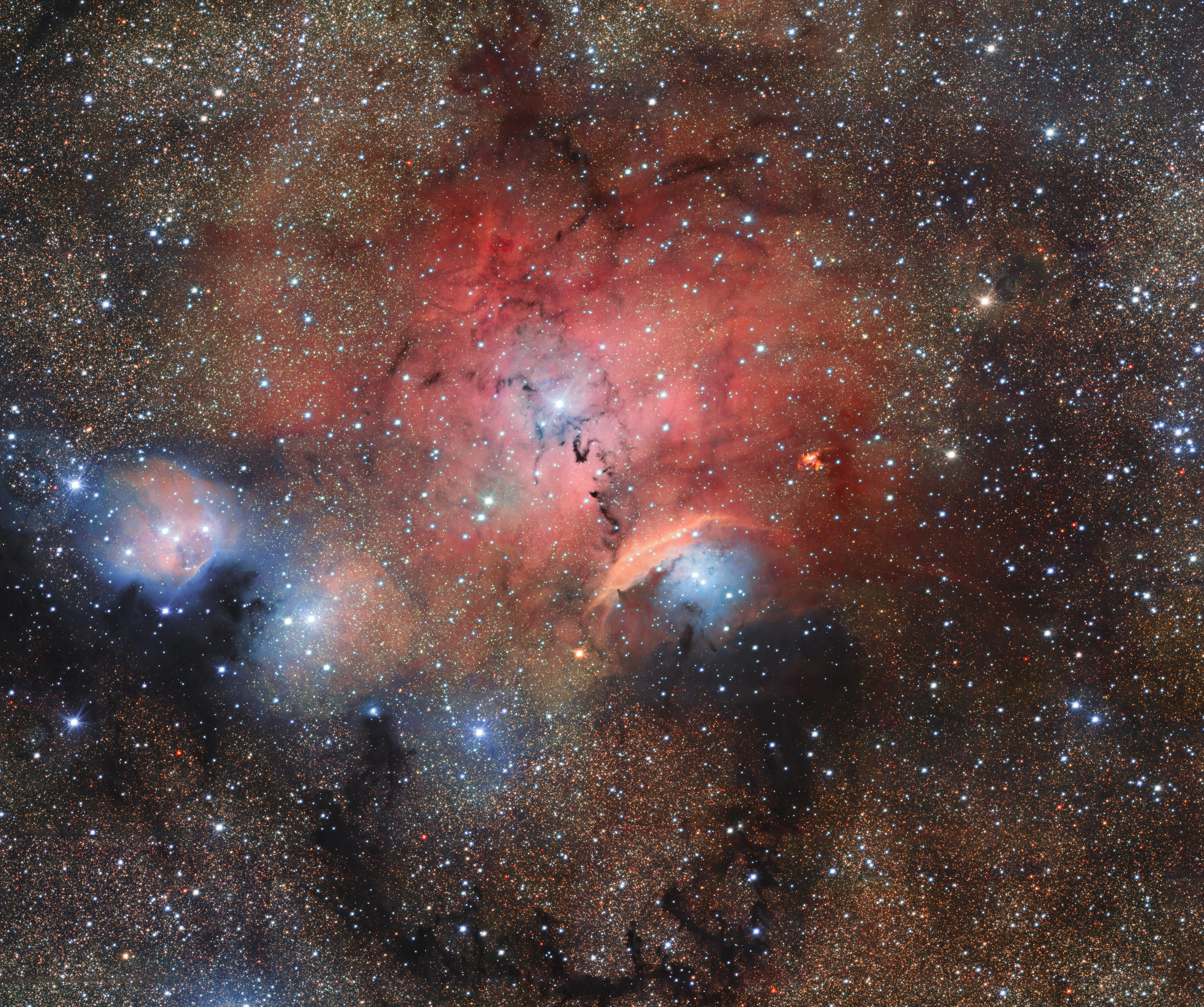
Tobias Berger, Lilly Kormann, João Alves | 5 August 2026 | Header image: ESO
Our PhD announcements can now link directly to the online version of each thesis. If you have previously submitted your PhD, please send us the link per mail and we will add it to the post.
This edition contains the latest abstracts from July 2026.
Accretion Burst Crystallizes Silicates in a Planet-Forming Disk
Crystalline silicates form at high temperatures (> 900 K; Fabian et al. 2000; Hallenbeck et al. 1998). Their presence in comets (Hanner et al. 1994; Hayward et al. 2000; Wooden et al. 2002; Shinnaka et al. 2018) suggests that high-temperature dust processing occurred in the early Solar System and was subsequently transported outward to comet-forming regions. However, direct evidence for this crystallization and redistribution in Sun-like protostars has remained elusive. By comparing James Webb Space Telescope (JWST) mid-infrared spectra of the periodically bursting protostar EC 53 (Lee et al. 2020), we detect crystalline silicate (forsterite and enstatite) emission features that appear only during the burst. The emergence of these features indicates active crystal formation via thermal annealing in the hot inner disk during the accretion burst. We also detect a nested outflow-a collimated atomic jet enclosed by slower molecular outflows, consistent with magnetohydrodynamic (MHD) wind models (Pascucci et al. 2025). This configuration provides a mechanism for outward transport of freshly crystallized silicates (Giacalone et al. 2019). Our results provide the first direct observational evidence of in-situ silicate crystallization during episodic accretion bursts in a very young star still embedded in its dense envelope. Although we do not directly detect grains transported to the outer disk, the observed trends are consistent with outward redistribution, indicating that both dust processing and transport occur during the earliest and most dynamic stages of star formation.
From 2D to 3D: Recovering Turbulent Density Dispersions from Noisy Data
Turbulence plays a central role in shaping the structure and dynamics of the interstellar medium (ISM), governing the star formation rate (SFR) and the initial mass function (IMF). A key consequence of turbulence is the generation of density fluctuations, which regulate the amount of dense gas available for star formation. Accurate measurements of the three-dimensional (3D) turbulent density dispersion are therefore essential for understanding molecular-cloud structure and star formation. However, observations typically provide only two-dimensional (2D) column densities and are often affected by measurement/detector noise. The Brunt method estimates the 3D density dispersion from 2D column-density maps, but it does not account for finite signal-to-noise ratio (SNR). Here, we extend the method to recover the 3D turbulent density dispersion from noise-contaminated observations. Using numerical simulations spanning a range of density perturbation amplitudes and noise types, we identify a characteristic noise wavenumber, k_noise, corresponding to the intersection of the signal and noise spectra. Restricting the Brunt reconstruction to wavenumbers below k_noise yields a denoised density-dispersion estimate that closely reproduces the noise-free result. We provide a practical prescription to determine k_noise directly from the measurement SNR and image resolution. Alternatively, if the noise spectrum is known, it can be subtracted directly from the observed spectrum, eliminating the need to estimate k_noise. The proposed correction recovers the noise-free density dispersion with errors of <~5% for SNR>=3 and <~15% for SNR>=1, enabling substantially more reliable estimates of turbulent density fluctuations from noisy column-density data.
Disc Candidates in IC 2395: A WISE Survey of the Kinematically Confirmed Membership
Circumstellar disc dissipation timescales constrain the window available for planet formation. At approximately 9 Myr, IC 2395 lies at a critical epoch in primordial disc evolution, yet no kinematically selected disc census exists beyond the inner cluster core. A wide-field survey of IC 2395, extending to a 2 degree radius, establishes a kinematically selected disc census and evaluates the frequency of planet-forming environments in the outer cluster field. Using a high-purity catalogue of 173 members identified via Gaia DR3 kinematics, mid-infrared excesses are identified using AllWISE photometry. Candidates are classified into two tiers: Crossvalidated (corroborated by Gaia variability) and Single-band detections. Twenty-one disc candidates are identified, 90% of which lie beyond the footprint of prior Spitzer surveys. The candidates are concentrated among low-mass members (0.31-0.68M), with no significant correlation between mass and excess (Spearman rho = +0.07, p = 0.84). A secure disc fraction of 4.0 p/m 1.5% is established by the Cross-validated subsample, independently confirmed by Gaia DR3 YSO variability classification; a photometric 3 sigma significance cut yields a consistent estimate of 2.9 p/m 1.3%. An upper bound of 12.1 p/m 2.5% is derived from all 21 W1-W2 excess candidates, with a background subtracted value of approximately 10.1%. Gaia DR3 epoch photometry reveals diverse variability morphologies, including a dramatic dipper and multiple bursters, confirming ongoing magnetospheric accretion. By extending the survey radius, this work demonstrates that infrared excess sources indicative of inner-disc emission in IC 2395 are more abundant and widely distributed than previously recognised. The survival of these discs in the lower-density outer field provides a well-characterised sample for studying the final stages of disc evolution and planet formation.
A Quiet Host in an Active Planet-Forming Disk: Optical Spectroscopy of WISPIT 2
WISPIT 2 is a young pre-main-sequence star hosting a multi-ringed transition disk and two directly imaged protoplanets, including the accreting WISPIT 2b, making it the closest known analogue to PDS 70. We present the first optical spectrum of its central star, obtained with HFOSC on the 2-m Himalayan Chandra Telescope, and derive its atmospheric parameters, test its youth, and constrain its accretion state. We analyse low-resolution spectra with iSpec and validate the pipeline at HFOSC resolution against Gaia FGK Benchmark Stars and K-type pre-main-sequence templates. We measure T_eff = 4551 +/- 150 K, log g = 4.32 +/- 0.18, and a low-resolution, model-dependent global metallicity [M/H] = -0.17 +/- 0.16. The surface gravity and Li I equivalent width support the pre-main-sequence nature of the host. H-alpha remains in net absorption but is partially filled by weak emission at only 1.5-2.0 sigma, approximately 1.1 dex below the expected chromospheric-noise level and therefore consistent with chromospheric activity rather than detectable accretion. We place a 95% upper limit on the stellar accretion rate of 3.6 x 10^-11 solar masses per year, below even the lowest monitored value for PDS 70 and implying a host-to-planet accretion-rate ratio below approximately 18. Both known double-protoplanet hosts therefore show strongly suppressed or undetectable stellar accretion. Larger spectroscopic samples are needed to determine whether this is common in multi-protoplanet transition disks.
A survey for variable young stars with small telescopes - XI. Spot Lifetimes and Coverage Distributions
We present a homogeneous analysis of rotational variability and spot properties in young stellar objects across multiple star-forming regions observed by the Hunting Outbursting Young Stars (HOYS) project. From over 2000 candidate members, we identify 144 YSOs with robust periodic signals and well-constrained multi-band amplitudes. The sample has a median age of 1~Myr, effective temperatures of 3500—6500~K (masses 0.6—2~M), and is dominated by Class~2 objects, one third of which exhibit inner disc dust emission. The rotation period distribution is strongly bimodal, with 55 percent fast rotators (~d) and 45 percent slow rotators. Fast rotators are predominantly inner disc-less, whereas slow rotators include both disc-bearing and disc-free systems, indicating that disc braking alone cannot explain the observed rotational states. We derive spot properties from multi-band amplitudes and find that, after correcting for observational biases, the intrinsic cold-spot coverage distribution of fast rotators is well described by an exponential function. This implies that small spot coverages are intrinsically much more common than large ones, consistent with stochastic magnetic flux emergence governing spot formation. In contrast, slow rotators show a pronounced deficit of small cold spots. After considering observational biases and alternative physical explanations, we conclude that small spots on slowly rotating YSOs have significantly shorter lifetimes. These results provide new evidence that magnetic surface structure and its evolution depend on stellar rotation, placing new empirical constraints on models of magnetic activity and angular momentum evolution in young stars.
Ice Deposition Fronts In Porous Bodies From Transient Heating Events In a Protoplanetary Disk
Using a 1D mass and heat transport model, we numerically integrate heat flow and gas transport in a porous body exposed to a transient heating event while embedded in a protoplanetary disk. When small icy grains are heated, volatiles sublimate, enriching the disk with volatile gases. When a porous body enters this heated, volatile-rich environment, volatile gases diffuse throughout the cool, porous body and deposit ice where the partial pressure of a volatile exceeds its vapor pressure. We simulate sublimation and deposition fronts of water, carbon dioxide, and carbon monoxide. Our simulations show that an ice deposition front forms and moves deeper into the porous body as the body warms. The amount of nebular gas deposited in an initially dry body is usually extremely low; however, in an initially icy body, an ice deposition front contains locally sublimated volatiles. In this case, the front can increase the ice volume fraction (by a factor of 2) in a thin layer below the surface. We find that the propagation speed, propagation strength, and final depth of an ice deposition front primarily depend on pore size. We propose that nebular heating events can alter the subsurface morphology and physical properties of porous icy objects embedded in a protoplanetary disk.
Shared star formation in the Milky Way and Magellanic Clouds
We investigate the structural and evolutionary similarities between star formation patterns in different environments by comparing the dense clump populations in the Milky Way (MW) from the ATLASGAL survey with those from the \textit{Herschel} HERITAGE survey in the Magellanic Clouds (MCs). Our analysis reveals that MW and MC clumps behave as physical analogs, sharing consistent dust temperature distributions, mass spectra, and luminosity evolutionary trends. We establish that the warmest MC clumps and the most distant MW clumps share an identical fiducial parent structure bounded by a natural spatial scale of ~parsec, serving as the direct precursors to open clusters. Closer MW clumps are resolved into discrete sub-clumps, whereas colder MC clumps suffer from peripheral envelope mass blending. Furthermore, the global spatial layout of clumps in the LMC and the MW shares a remarkably similar pattern when adjusting for galaxy size, suggesting a nested, hierarchical distribution. The clump-based star formation rates are calibrated to be for the LMC and for the SMC, confirming that the LMC is currently experiencing an active, ongoing star formation burst captured within a short (~yr) snapshot timescale.
Star Formation in the NE-Circinus Molecular Cloud Complex
This paper presents the first dedicated characterization of the NE-Circinus Complex (TGU H1984, DCld 320.7-03.6), a previously unstudied star-forming dark cloud complex serendipitously identified in archival Herschel SPIRE observations targeting the foreground Bok globules BHR 99 and BHR 100. Using Herschel SPIRE photometry, Planck Galactic Cold Clumps data, near-infrared 2MASS colour excess mapping, AllWISE photometry, Gaia DR3 photometry, and a 3D dust extinction map, the complex, and its embedded YSO population are characterized for the first time. Two independent photometric methods place the complex at 750 +/- 50 pc. Three morphologically distinct components are identified: a dense main cloud body, a diffuse eastern component, and a northern filamentary extension. The main cloud body has a SPIRE-derived dust temperature of 14.5 +/- 0.5 K. Near-infrared H-K colour excess mapping yields a core gas mass of ~277 Msun and a total gas mass of ~439 Msun, consistent with the Planck PGCC column density. An AllWISE YSO census identifies 39 candidates across all three components, confirming active star formation throughout the complex. Multi-epoch NEOWISE-R photometry reveals three significantly variable sources, including one aperiodic dipper - a previously uncatalogued YSO exhibiting dimming consistent with inner-disc occultation. Two previously uncatalogued compact Bok globules are identified on the western edge of the northern extension, both detected in SPIRE continuum emission. That this complex went uncharacterized despite Herschel data being publicly available since 2013 underscores the scientific value of archival examination and the incomplete state of southern sky molecular cloud inventories.
A closer look at the WISPIT 2 host star. Evidence for a spectroscopic binary
While hundreds of protoplanetary discs have been studied in great detail, the detection of protoplanets still embedded in their native discs remains rare. WISPIT 2 is only the second laboratory allowing for direct study of planet formation while in progress. The recently discovered system hosts two giant protoplanets in a multi-ringed disc. Here, we aim at characterising the WISPIT 2 host star spectroscopically to determine its stellar properties, accretion rate, and inner disc diagnostics, providing a more complete picture of the system. We present optical and near-infrared spectroscopic observations obtained with the ESO VLT/X-Shooter and 2.2 m/FEROS instruments. We model the stellar spectrum to determine the spectral type and effective temperature, analyse the emission lines to estimate the accretion rate, and search for evidence of a close stellar companion using radial velocity measurements. Our observations reveal that WISPIT 2 is a spectroscopic binary. The binary has a period of days, which corresponds to a semi-major axis of au or , assuming co-planarity with the disc and a circular orbit. The binary system consists of a primary of spectral type K3 (), and a secondary (mass ratio 0.34). We detect weak H emission, implying an accretion rate of . However, this value is below the chromospheric level, suggesting little to no ongoing accretion onto the young stars. This discovery makes the WISPIT 2 disc the first circumbinary system with directly imaged protoplanets, establishing this system as a unique benchmark for studying planet formation and disc evolution around binary stars.
A JWST, ALMA and VLA survey of the Ophiuchus-A star-forming region: Unveiling hidden dust mass and connecting infrared outflows to their radio origins
We present an infrared, millimetre, and radio survey of 20 Class 0-III young stellar objects in the Ophiuchus A L1688 star-forming cluster, combining high-resolution (7-25 au) VLA and JWST observations with archival ALMA data. We implement physically motivated models to derive dust and ionised gas properties, spectral behaviour and their relative contributions through the millimetre-centimetre radio spectral energy distribution. Our models reveal circumstellar dust disks that are, on average, tens to hundreds of times more massive than millimetre-only estimates (subject to uncertainties arising from the choice of dust opacity) and contain millimetre-sized grains even at the Class 0 stage. Owing to the VLA's high resolution we are able to connect outflows to their origins, detecting protostellar jet emission on scales of 10s-1000s au. Our results represent a homogeneous characterisation of the dust and ionised gas properties in Ophiuchus and present a potential solution to the long-standing 'missing disk mass' problem. However, our understanding is still limited by resolution and sensitivity at frequencies <40 GHz. Future facilities like the SKA and ngVLA are needed to provide the necessary capabilities to fully spatially resolve this emission (<0.18") even in one of the closest star-forming regions.
Angular Momentum of Planet-Forming Disks: Implications for Infall Driven Misalignments
Context. A significant fraction (>30%) of planet-forming disks and planetary are misaligned with respect to the rotational axis of their host stars, yet the dominant mechanism responsible for these misalignments remains unclear. Aims. We aim to observationally constrain the angular momentum of Class II protoplanetary disks and assess whether late-stage infall of material can bring sufficient angular momentum to tilt them. Methods. We first computed the angular momenta of 15 disks with surface density profiles inferred from dynamical modeling of high angular resolution ALMA observations. Based on this sample, we derived a relation linking disk angular momentum to stellar mass, disk mass, and the radius enclosing 90% of the 13CO flux and used it to estimate angular momenta of 18 more disks. We then compared disk values with theoretical predictions for late-stage accretion from clouds and observed streamers. Results. Angular momentum for most disks is lower than what theoretical models predict for late infall. This is also in qualitative agreement with comparison with streamer observations, however, characterization of mass of reservoirs feeding the streamers is needed to confirm this picture. Conclusions. Interactions with nearby clouds, resulting in late-stage infall of material onto Class II disks, can potentially explain the observed misalignments within disks and planetary systems.
Interpreting ALMA Multiwavelength Continuum Observations of PDS 70 c: An Optically Thick Dust Ring in the Circumplanetary Disk
Giant planets form small gas disks, called circumplanetary disks (CPDs), during gas accretion. The CPD of PDS 70 c has been detected by the Atacama Large Millimeter/submillimeter Array (ALMA) in (sub)millimeter continuum emission, which is interpreted as thermal emission from dust in the CPD. The resulting spectral index suggests that the disk is optically thick over a wide range of wavelengths. However, this is inconsistent with previous CPD dust models, which predict that the disk is optically thin because of radial dust drift. Here, we present a new interpretation of the multiwavelength observations: the CPD hosts an optically thick dust ring, whose existence has been discussed in the context of satellite formation. We demonstrate that a dust-ring model that incorporates gas accretion, dust evolution, and dust thermal emission, is consistent with the observations under reasonable conditions, whereas a conventional ring-less model requires more stringent conditions. We also show that the dust ring inferred from the observations potentially satisfies the conditions for exomoon formation via streaming instability and subsequent gravitational instability.
How Should We Understand the Core Mass Function? A memo of the CMF2IMF conference at ESO Garching
The origin of the stellar initial mass function (IMF) remains one of the central questions in astronomy. Nearly three decades ago, the resemblance between the core mass function (CMF) and the IMF inspired the community to suggest that the stellar mass spectrum might be imprinted early in molecular-cloud cores and then mapped to the IMF through a simple efficiency factor. It has become gradually clear, however, that this apparent mapping involves multiple non-linear physical processes. Motivated by the spirit of the CMF2IMF conference at ESO Garching, this memo first reviews the historical quest to understand the origin of the IMF, and then sets the stage for building a shared understanding of current CMF measurements. We therefore compile several observational core catalogues at various environments and evolutionary stages into a common framework, implemented in the public Python package CMF4All. We show that the inferred high-mass CMF slope depends strongly on the adopted minimum fitting mass. A significantly steeper slope is observed in the early-stage sample, indicating a potentially evolving mass function at the highest masses. We conclude by outlining future directions to spare more efforts for both the observational, numerical simulation, and theoretical sides.
Runaway OB stars within 1 kpc of the Sun
Runaway stars are high-velocity stars ejected from their birth environments that can provide insights into the kinematic history of the stellar cluster they were ejected from. We derived runaway star probabilities for 40 O-type stars and B-type stars taken from a recently published volume-complete sample of OB stars within 1 kpc of the Sun. We fit a Galactic rotation model to the observed proper motions of these stars and identify runaway stars using both a fixed 2D peculiar velocity threshold of and by comparing individual peculiar velocities to the dispersion of the whole sample. We find runaway fractions of for O-type stars and for B-type stars; both using the fixed velocity threshold method. These values are consistent with previous studies, but with differences that are largely attributable to the underlying samples of OB stars used in various studies to identify runaway stars and to variations in the methods used to select them.
Ionized gas emission in protoplanetary disks with the SKAO
Protoplanetary disks represent a crucial stage in the evolution of Young Stellar Objects towards the formation of fully formed planetary systems. While substantial progress has been made in the last decades in the characterization of the dust and molecular gas in these systems, the ionized component remains poorly understood. Ionized gas traces important processes such as photoevaporation, accretion, disk winds, and jets, and therefore is key to studying disk dynamics, evolution, and ultimately planet formation. In this paper, we investigate the capabilities of the forthcoming SKA telescope to probe this component in protoplanetary disks within nearby star forming regions. We present state-of-the-art simulations of photoevaporative, magneto-thermal, and magnetohydrodynamic winds, and generate theoretical predictions and synthetic SKAO observations to assess its potential in detecting and characterizing free-free emission and Hydrogen recombination lines. Finally, we discuss synergies with complementary facilities and how they will provide a comprehensive, multi-scale view of disk winds and offer critical insights on the mechanisms driving disk evolution and the onset of planet formation.
Constraining young massive cluster properties with radio-continuum observations: The Arches cluster
The Arches cluster, located in the Galactic Centre (GC) is one of the best astrophysical laboratories to study the properties of massive stars and young massive clusters (YMCs). However, several fundamental parameters of the Arches cluster remain uncertain. Our goal is to constrain key cluster parameters (cluster age, mass, and initial mass function, IMF) by comparing the observed stellar radio flux density distribution of the Arches cluster to those derived from a set of synthetic clusters. We use the deep X-band (10 GHz) Very Large Array data from our previous radio continuum study of the Arches cluster. We model each simulated cluster with three parameters: age, mass, and IMF slope. We use three different stellar evolutionary models: GENEC, PARSEC, and MIST at two different metallicities, solar () and super-solar (). We run Markov-chain Monte-Carlo simulations for each model/metallicity combination in order to explore parameter space. All models and metallicities return preferred ages in the range. We obtain an IMF slope of , averaged over all models, where uncertainties are dominated by the degeneracy between cluster mass and IMF slope. If we use the IMF slope from previous infrared studies as prior, the cluster mass distributions peak at and we can establish a lower limit at for the Arches cluster mass. Radio continuum observations of their most massive stars can be used to constrain YMC parameters. In the case of the Arches cluster, age can be determined regardless of prior spectroscopic information, which can be useful to characterise newly discovered YMCs in the GC. Our results support the idea that a top-heavy IMF may be preferred in the GC or in YMCs in general.
The ALMA-QUARKS Survey: Properties of Hot Molecular Fragments in the Massive Protocluster IRAS 17233-3606
To investigate the physical mechanisms of fragmentation within the hot molecular core of the massive protocluster IRAS 17233-3606 (G351.78-0.54), we carried out a detailed analysis of continuum and lines, using the ALMA Band 3 data from the ATOMS survey and Band 6 data from the QUARKS survey. The low-resolution 3 mm data reveal a massive hot core MM1 with a mass of ~81.3 Msun, and a prominent ultracompact (UC) HII region MM2, while the high-resolution data resolve MM1 into 11 hot molecular fragments (HMFs). These HMFs exhibit hot (Trot = 100-310 K) CH3CN and CH3OH emission and high column densities (NH2 > 10^23 cm^-2), indicating their potential to form massive stars. Based on outflows, masers, HII regions, and f[CH3CN/CH3O] abundance ratios, the evolutionary sequences of the 11 HMFs are categorized as phases I to IV. The mean minimum-spanning tree (MST) separation (~1.8 x 10^3 au) of the HMFs is nearly half of the thermal Jeans length (~3.3 x 10^3 au). Together with the Q parameter Q = 0.77 and virial parameter alpha_vir = 0.84 of MM1, these results suggest an evolutionary scenario in which fragmentation is initially driven by thermal instability, followed by global gravitational contraction and growth through active accretion. Meanwhile, feedback from the B2-type zero-age main-sequence (ZAMS) star and the UC HII region significantly influence the morphology and chemical properties of MM1 and MM2. This heterogeneity highlights the role of diverse physical processes taking place in high-mass protoclusters.
Extreme Debris Disks: Insights into Violent Collisions in Planet Formation and Destruction
Debris disks are dusty structures around mature stars, primarily identified by infrared excesses in the stellar spectra. A subset, known as extreme debris disks (EDDs), exhibits stochastic infrared variability, believed to result from large-scale violent collisions that contribute to the formation or destruction of rocky planetary bodies. We analyze JWST and Spitzer mid-infrared spectra for 21 EDDs to investigate the connection between impact-produced dust mineralogy and the age and dynamical state of these systems during various stages of planet formation and evolution. Our findings indicate that EDDs contain significantly more optically thin, small dust grains compared to those typically seen in protoplanetary and debris disks. Predominantly submicron in size, these grains are thermally altered, as shown by their high levels of silica and crystalline silicate composition. Along with stochastic infrared variability, these features define EDDs as a subclass of debris systems where dust is generated from large collisions between Moon- and Mars-sized bodies. Our results not only provide diagnostic information about the physical conditions of violent events during terrestrial planet formation, aiding in differentiating the complex outcomes of these impacts, but also offer a potential marker for identifying planetary systems experiencing dynamical instability.
Detection of the Polycyclic Aromatic Hydrocarbon Phenalene (CH) in the Very Low Luminosity Object (VeLLO) MC27/L1521F
To date, 14 polycyclic aromatic hydrocarbons (PAHs) ranging in size from two to seven (including five- and six-membered) carbon rings have been detected in the starless dense core TMC-1 CP within the Taurus molecular cloud. Their detection raises questions about the distribution of PAHs in the cold interstellar medium (ISM) and their evolution during star formation. Here, we present the first interstellar detection of a three-ring PAH outside of TMC-1 CP. We detect phenalene (CH), a compact, peri-fused PAH, in the dense core MC27/L1521F, a molecular cloud in Taurus containing a very low-luminosity object (VeLLO). We compare the abundances of phenalene in the two sources with respect to the single-ring aromatic benzonitrile, and find that it is enhanced by a factor of four in MC27/L1521F. We discuss the implications for possible formation and destruction pathways in the two sources. These findings further support the widespread abundance of PAHs throughout the cold ISM and are consistent with survival, inheritance, or replenishment during the earliest stages of star formation.
Determination of kinematic distances of WISE & SMGPS H II regions in the Galactic plane using SEDIGISM cloud association
One of the fundamental requirements for studying and understanding Galactic structure and massive star formation is accurate distances to H II regions. However, most distance assignments are hampered by kinematic distance ambiguity (KDA), sparse parallax measurements, and the large number of radio continuum sources lacking velocity and distance measurements. We present a kinematic distance determination method via cloud association, linking H II regions from the Wide-field Infrared Survey Explorer (WISE) catalogue and the South African Radio Astronomy Observatory (SARAO) MeerKAT Galactic Plane Survey (SMGPS) with molecular clouds from the Structure, Excitation and Dynamics of the Inner Galactic Interstellar Medium (SEDIGISM) 13CO (2-1) survey. The associations are established through spatial overlap and velocity coherence, and the molecular cloud velocity and distance are then assigned to the associated H II region. The method yields 741 H II regions with adopted CO-based systemic velocities, of which 640 have reliable kinematic distances based on the SEDIGISM distance reliability criteria. We validate the method using 329 H II regions with independent radio recombination line (RRL) velocities, finding excellent agreement with a median absolute velocity difference of 3.46km/s. Our analysis resolves ambiguous velocities for 40 H II regions with multiple WISE RRL velocity measurements. Compared to the unassociated clouds, the associated molecular clouds exhibit significantly higher masses, gas surface densities, linewidths, star formation efficiencies and dense gas fractions, and slightly lower virial parameters. This work provides a large, homogeneously-derived catalogue of H II region distances and establishes a framework for further studying massive star formation and Galactic structure in general.
CARPP: Parametric Radiative-Transfer Fitting of Molecular Cores from Dust Continuum Data
The density profiles of dense molecular cores are important indicators of their physical and evolutionary states. Multi-wavelength dust continuum data offers excellent constraints on the density profile of cores. Here we introduce CARPP (Core Analysis via Radiative Transfer and Profile Parameters), a publicly available fitting package that generates optimized core density and temperature profiles based on parameterized radiative transfer calculations. CARPP assumes spherical symmetry and adopts physically motivated parametric forms for the density and temperature profiles, and uses dust continuum data for fitting. Tests on synthetic data show that CARPP achieves high accuracy, namely averaged relative errors of CARPP's seven parameters being , when the data quality satisfies , where is the core's characteristic radius. We select the low-mass core TMC-1C and the high-mass core Ori2-2 to demonstrate CARPP's performance on real data. It classifies TMC-1C as a Bonnor-Ebert sphere in near-hydrostatic equilibrium, while Ori2-2 exhibits a power-law-dominated profile indicative of a collapsing envelope. This capability establishes CARPP as a powerful and versatile tool to classify the dynamical states of individual cores. It offers an optimal balance between physical fidelity and computational efficiency, serving as a practical, standardized alternative to both over-simplified SED analyses and complex, time-intensive 3D radiative-transfer modeling.
Magnetic fields in Massive Star-Forming Regions (MagMaR). VIII. Magnetic field overrun by gravity in GGD 27's accretion streamers
Context. Accretion streamers connected to protostellar disks and/or envelopes are thought to transport material across several thousand of au. Whether the motions of the gas comprising these streamers are dominated by gravity, large scale external turbulence or the action of magnetic fields is still under scrutiny. Aims. The aim of this work is to understand the role of the magnetic fields in the star-formation processes, in particular the role that magnetic forces have in potentially leading flows of gas and the accretion onto the envelopes and disks orbiting protostars. Methods. First, we try to identify the large-scale accretion streamers toward the high-mass Young Stellar Object GGD 27-MM1 and fit their trajectories using the so-called Mendoza's model, a modification of the classical model of pure gravitational infalling motion of fluid particles in a potential well. Second, we estimate the strength of the magnetic field associated with the streamers. Then, we determine if the streamers are dominated by magnetic or centrifugal forces. Results. Inspecting the Atacama Large Millimeter/submillimeter Array (ALMA) HCO cube we were able to identify four accretion streamers spreading up to 7,000 au and fit their trajectories in the position-position-velocity space. The polarized continuum emission reveals a good alignment of the magnetic field and the trajectory of the streamers. Using the Davis-Chandrasekhar-Fermi method, we derive estimates for the magnetic field strength, find that the streamers are sub-alfvénic, and discuss (after estimating energy terms for turbulence, ordered motions, magnetic forces and gravity) a possible qualitative scenario in which, the gravitational well of the GGD 27-MM1 protostar dominates streamer gas motions over turbulence and magnetic forces at distances of au.
Peering through the disc of HD 98800 BaBb. Precise timing predictions for the HD 98800 AaAb occultation
HD 98800 is a young hierarchical quadruple system composed of the tight binaries AaAb and BaBb on a wide, highly inclined outer orbit. The B subsystem hosts a circumbinary disc in a polar configuration, and the geometry of the system offers a rare opportunity to observe the passage of the disc around BaBb in front of AaAb. We aim to update the overall orbital solution to offer precise time windows of the main occultation features by combining the orbit with the state-of-the-art knowledge of the disc's structure. We combine new and published radial-velocity measurements and multi-wavelength astrometry for the outer AB orbit and both inner subsystems, AaAb and BaBb, in a joint orbital fit. The revised solution is consistent with previous dynamical masses and improved the outer orbit, reducing the uncertainties in the period and periastron epoch by about a factor of two. It also narrows the predicted crossing-phase windows to 5—15 days at the 1σ level, improving the timing of ingress, egress, and the first cavity-crossing predictions. These results provide a more accurate timing framework for future observations of the occultation, although the predicted epochs remain model-dependent because of uncertainties in the disc structure.
JWST NIRCam Reveals the Largest Known M-dwarf Debris Disk Around TWA 10 and New Scattered-Light Observations of the TWA 25 Debris Disk
We present JWST NIRCam observations of two M-dwarf systems located in the TW Hydra association, TWA 10 and TWA 25. Both systems harbor detected debris disks in the F200W and F444W filters. Whereas the TWA 25 disk has been previously imaged, these observations represent the discovery and first images of the TWA 10 disk. In addition to planet searches within these systems, we also conduct an analysis of each debris disk, where the TWA 10 debris disk is characterized for the first time. We find that the TWA 10 debris disk is very large, with a radius of 191 au, significantly greater than other known M-dwarf debris disks. The TWA 25 disk hosts a sharp inner dust surface density power-law and a moderate brightness asymmetry present at 2 m, suggesting potential sculpting from inner planets and potentially enhanced collisional activity. Finally, we find one potential companion candidate within the TWA 10 system and two within the TWA 25 system, although the measured F200W-F444W color suggests that these candidates are likely background objects. Both systems do not have measured IR-excesses in their SEDs, where radiative-transfer modeling suggests that these disks (and potentially more M-dwarf disks) were likely missed by previous disk detection surveys due to having low luminosity fractions.
A Momentum-Regulated Model For Star Formation Efficiency in Giant Molecular Clouds
We present a minimal analytic framework to investigate the star formation efficiency per free-fall time, , in giant molecular clouds (GMCs), focusing on the origin of the observed clustering around . We model the time evolution of the turbulent velocity dispersion through a momentum balance between stellar feedback and turbulent dissipation, and show that this generically leads to a stable low-efficiency equilibrium with only weak dependence on global cloud properties. We extend the framework by including a phenomenological contribution from gravity-driven turbulence and find that both feedback- and gravity-driven motions converge to similar equilibrium states under typical GMC conditions. The efficiency can be expressed as the ratio between a gravitational velocity scale and an effective feedback velocity scale, providing a physically transparent interpretation of self-regulated star formation. The model provides a simple, physically motivated interpretation of observed gas-star formation scaling relations, including a Schmidt-like scaling at cloud scales and a Kennicutt-like scaling when averaged over cloud populations. Comparison with observed GMC properties shows agreement within a factor of a few and highlights the weak sensitivity of to cloud parameters. Despite its simplicity, the framework captures the leading-order interplay between turbulence, gravity, and feedback, and provides a physically transparent explanation for the origin and robustness of low star formation efficiencies in GMCs.
JWST/MIRI Reveals the Evolution from Molecular to Atomic Disk Winds
The evolution and dispersal of protoplanetary disks—governed by accretion, magnetically launched jets and winds, and photoevaporative winds—fundamentally shape planetary systems. Determining how these mass-loss processes co-evolve is crucial for constraining planet formation pathways. We analyze archival JWST/MIRI/IFU data of 72 inclined (i>40deg) mostly ClassII disks to identify and characterize spatially resolved jets and winds, focusing on [NeII] and H2 lines. Extended emission in H2 S(1), S(3), S(5), S(7) and/or [NeII] is detected toward 66 disks, revealing diverse morphologies. We develop a framework to identify conical H2 winds and high-velocity [NeII] jets perpendicular to the disk, detecting them toward 46 and 40 disks, respectively. All sources with [NeII] jets exhibit a corresponding wind traced in either H2 (85%) or [OI], establishing a connection between jets and winds. The detection fractions of [NeII]-jets and H2-winds correlate positively with mass accretion rate, with no dependence on disk inclination or stellar mass. Conversely, marginally resolved low-velocity [NeII] winds are found preferentially toward lower accretors. Among sources with H2 winds, detection of hotter winds traced by S(7) and S(5) declines more rapidly with decreasing accretion rate than the colder S(1) component. Comparison with high-resolution [OI]6300\textÅ spectroscopy reveals [OI] LVC and extended H2 wind detections preferentially toward moderate-to-high accretors (>~10^{-8.5}~Msun/yr), whereas lower accretors exhibit only [OI] and [NeII] winds. Together, these results indicate that atomic jets and atomic+molecular winds, consistent with an MHD disk-wind origin, dominate during early, actively accreting disk phases, while at lower accretion rates, jets weaken and winds become predominantly atomic.
Dust Growth in Binary Systems: Inhibition of dust settling and growth in circumbinary discs
Stellar multiplicity alters the density structure of protoplanetary discs and thereby the initial conditions for planet formation. Yet, the interplay between companion-disc interactions and dust growth remains poorly understood. The goal of this work is to investigate to what extent the density structure of a disc undergoing tidal interactions with a companion star promotes or inhibits the growth of dust grains. We perform a set of hydrodynamical simulations of protoplanetary discs orbiting one or both stars of a binary, including dust growth and fragmentation. We explore a range of companion orbits and compare the results with a single-star reference case. We find that dust growth is mainly driven by local accumulations of dust. In circumbinary discs, the maximum grain size is up to five times smaller than in isolated discs. This result likely originates from the perturbations caused by the inner binary, which prevent dust grains from properly settling and drifting. As a consequence, the conditions required to trigger strong clumping driven by the streaming instability are difficult to achieve. In contrast, circumstellar discs in binary systems exhibit grain sizes similar to those in isolated discs, leading to comparable conditions for strong clumping by the streaming instability. Planet formation through core accretion seems challenging in circumbinary discs harbouring binaries larger than a few au, suggesting that circumbinary planets observed near the dynamical stability limit did not form in situ. Conversely, perturbations from external companions only marginally affect density-driven dust growth compared to isolated systems.
Unveiling the Milky Way with a Gaia DR3 census of OB-type stars within 2 kpc. I. Tracing local Galactic structure, massive star-forming regions and core-collapse supernova progenitors
O- and B-type stars are young and hot, thereby serving as vital tracers of the star formation and spiral arm structure of the Milky Way. At the dusk of the \textit{Gaia} DR3 era, a high-confidence and accurate catalogue appears timely. Here we have characterized a population of 105,971 OB-type stars (T 10,000 K; hereafter OB stars) within 2 kpc from the Sun, using an astro-photometric Bayesian inference tool. Our resulting map unveils a complex view of the young stellar populations across the thin disk, with prominent large-scale features such as the Cepheus Spur, the Giant Oval Cavity, and a segment of the Sagittarius-Carina spiral arm all visible. Their inhomogeneous spatial distribution implies that massive star formation has taken place clustered across a few highly concentrated regions. We find a correlation between the overdensities of OB stars and young open clusters (20 Myr), although OB stars can be better detected in high-extinction regions. We identify over 4200 OB stars as core-collapse supernova (ccSN) or direct-collapse black hole (BH) progenitor candidates, and therefore targets of interest for spectroscopic follow-up. Furthermore, we find no OB-type star ccSN progenitor to explode within the next 1 Myr within 100 pc, at which such an event could be harmful to Earth's biosphere. Finally, we identify more BH progenitors to collapse within the next 1 Myr than ccSN to explode, despite the former's much scarcer number - which could be indicative of a recent massive star formation burst in the local Milky Way.
Beyond the model: scaling the wind-driven accretion rate in protoplanetary disks using systematic non-ideal magnetohydrodynamical simulations
Magnetically driven mass accretion plays a key role in protoplanetary disk evolution and planet formation. However, the alpha prescription remains phenomenological, and how the accretion rate depends on basic disk quantities is still poorly understood. While local shearing-box simulations are computationally efficient, they suffer from a fundamental problem: the toroidal magnetic field generated by Keplerian shear accumulates within the computational domain, disrupting a field-line geometry consistent with global wind-driven accretion. In this study, we use the super-box-scale diffusion (SBD) scheme in non-ideal MHD shearing-box simulations. By damping the horizontally averaged horizontal magnetic fields, this scheme successfully mitigates the artificial field accumulation and maintains the field-line symmetry required for global wind-driven accretion for more than 500 orbital periods. Comparison with self-similar solutions supports the quantitative usefulness of the SBD method, showing good agreement in both the vertical structure and the plasma-beta dependence of the accretion rate. We then conduct a parameter survey using a magnetic diffusivity table, covering a wide range of disk radii, surface densities, magnetic field strengths, and dust-to-gas ratios. We demonstrate that the mass accretion rate follow power-law scaling relations in terms of three local disk properties: the midplane plasma beta, an effective ambipolar Elsasser number in ionized surface layers, and the thickness of the magnetically active layer. The scaling relations reproduce the numerical results to within a factor of 2-3 across the explored parameter space. The present scaling relations provide a framework for predicting the mass accretion rate from local disk physical quantities without invoking an alpha parameter.
Kinetic temperature of massive star-forming molecular clumps measured with formaldehyde VI. The photodissociation region M17SW
The kinetic temperature structure of the photodissociation region M17SW was mapped using the IRAM 30 m telescope. This mapping employed the para-H2CO triplet (J(KaKc) = 303-202, 322-221, and 321-220) near 218 GHz on a scale of ~0.2 pc. The kinetic temperatures were derived by modeling the average H2CO line ratios (322-221/303-202 + 321-220/303-202) with the RADEX non-local thermodynamic equilibrium approach. These temperatures range from 28 to 181 K with an average of 54.2 +/- 0.3 K at a spatial density of 5.5x10^5 cm^-3. Comparing with the temperature measurements obtained from multiple transitions of NH3 (1,1)-(6,6) and the far infrared (FIR) dust continuum, the H2CO lines show temperatures similar to those measured by NH3 but slightly higher than values derived from FIR observations. The high kinetic temperatures observed from H2CO are associated with the ultracompact H II region UC1, dense clumps, as well as H2O and CH3OH masers, showing a similar distribution as NH3. This indicates that dense gas in the M17SW region is heated by star formation activity. The presence of a significant gas temperature gradient across the M17SW region, as measured by H2CO and NH3, provides direct evidence for gas heated predominantly by radiation emitted from the OB star cluster NGC 6618. On a smaller scale, the dense gas surrounding the dense clumps experiences significant heating from internal protostars and/or young stellar objects. Higher temperatures traced by H2CO are linked to turbulence on a scale of ~0.2 pc. The complex temperature structure of the M17SW region is revealed by H2CO and NH3, which may be attributed to both large-scale external radiative heating and small-scale internal radiative and turbulent heating.
Extending dynamical mass measurements: probing GI as a possible origin of mm-dust spirals
Constraining the total mass of protoplanetary disks is crucial to determine the availability of material for planet formation. Yet, providing accurate and precise measurements of the disk mass is challenging. Investigating the gas dynamics is a powerful, tracer-independent method to precisely characterize disk masses. By fitting the velocity rotation curves of different molecular tracers with an accurate model including the disk thermal stratification and self-gravity, we constrain the stellar masses, disk masses, and scale radii for the disks around HD 97048 and WaOph 6. We obtain , and au for HD 97048, and , and au for WaOph 6. We also measure the corresponding gas-to-dust and disk-to-star mass ratios. We efficiently extend the dynamical method to characterize embedded sources exhibiting features of absorption, for which a careful analysis is required to avoid biases in the retrieved velocity profiles. We prove the importance of including a beam smearing correction to the curves: if not, this observational effect can systematically bias the velocity profiles, altering the disk mass estimates up to . We provide comprehensive estimates of the systematic uncertainties on the best-fit parameters by bootstrapping over both the retrieved geometry and 2D thermal structure of the two disks: the overall uncertainty on the disk masses is . Finally, we investigate the connection between disk stability and the appearance of spiral morphologies in the mm continuum emission, by comparing the Toomre parameter of all dynamically weighed disks to date, showing that disks with mm-dust spirals have systematically lower values of Q.
GRACE-DG: A Discontinuous Galerkin method-based code for general non-linear coagulation-fragmentation equations
Dust plays a crucial role in protoplanetary disks (PPDs) evolution and planet formation, influencing disk dynamics through gas-dust coupling, regulating disk temperature by dominating continuum opacity, and altering disk ionization fraction by capturing free electrons. In this work, we develop a high-order discontinuous Galerkin (DG) method-based open-source code GRACE-DG to solve the collision-induced coagulation-fragmentation equations. In particular, we have derived a new conservative formulation for the non-linear fragmentation term, which enables the DG method to capture the mass transfer process. The new solver exhibits good convergence in coupled aggregation and breakage simulations, making it highly suitable for future integration into hydrodynamic codes.
Magnetohydrodynamical opening of dust traps in protoplanetary disks
Observed ring-like structures in protoplanetary disks are often interpreted as local pressure maxima, which induce efficient dust concentration. We revisit this paradigm, considering the effect of the large-scale magnetic field stresses on the gas rotation speed. Our simulations show that the magnetic field can be dynamically strong and cause % deviation from the Keplerian rotation at the periphery of a typical turbulent disk with dust grains of size m. This effect increases the inward drift speed of large grains characterized by Stokes number of by up to two times in our simulations. Importantly, such MHD deviation from the Keplerian rotation does not depend on the local gas pressure gradient and leads to drift towards the star only. The fast drift induced by this effect can cancel out the outward drift caused by the positive pressure gradient at the inner edge of a ring and open up the dust trap. For the disks with turbulence parameter , this effect appears in the rings with a half-width of au and a density contrast up to % (% for ). Thus, the presence of a large-scale magnetic field in protoplanetary disks either completely prevents or imposes stricter conditions for dust accumulation and the onset of the streaming instability in the density rings in protoplanetary disks.
Chondrite Parent Bodies as Escaped Satellites of Proto-Planetary Embryos
Chondrites are composed of formerly partially molten material, known as chondrules, surrounded by fine-grained matrix. They date from the earliest times in Solar System history. However, their role in the formation of the planets is uncertain because, in part, it is not clear how they were produced. Here, we show a robust pathway for forming meteorite-producing asteroids that contain chondrules through embryo-embryo collisions during the late stages of terrestrial planet formation. Melted material from these impacts cool into chondrules and mix with unmelted material in embryo-centric disks that formed from the ejecta. This material accretes into numerous asteroid-sized satellites. These objects are later ejected onto heliocentric orbits because of gravitational encounters with other embryos, thereby becoming the parent bodies of chondrites. This mechanism provides a pathway to form chondrites in Solar System history at times commensurate with measured chondrule ages, while explaining many of their physical properties.
The Galactic Centre G+0.633-0.0604 molecular cloud: a new astrochemical gold mine. I. Gas physical properties
In the Central Molecular Zone (CMZ), shocks play a key role in triggering star formation and driving chemical enrichment. The Sgr B2 complex is a prime template, hosting massive protoclusters (N, M, S) and the northern G+0.693 cloud, which exhibits shock-induced prestellar signatures. We report on G+0.633-0.0604, a newly identified shock-dominated and chemically rich cloud at the southern edge of Sgr B2, where the next star formation episodes are proposed. We characterise its physical properties and the shocks shaping it. We present analyses on CHCCH, CHCN, HCN, HNCO and several isotopologues of CO to infer the gas and density, using high-sensitivity spectral surveys from the Yebes 40m, IRAM 30m and APEX radio telescopes that covered ~100 GHz across the 31-275 GHz range. We also used 3 mm IRAM 30m mosaics (13'13') of Sgr B2 in HCN, HNCO and CHOH to probe G+0.633 environment. We identify three velocity components: a narrow main one (C1, ~48.5 km/s; FWHM~10 km/s), and two broader, fainter components at higher velocities, C2 (~61 km/s; ~13 km/s) and C3 (~89 km/s; ~18 km/s), all showing similar properties (~55-90 K, ~(3-7)10 cm, ~(0.5-2.5)10 cm) and extended distributions. C1 delineates G+0.633 physically and coincides with a peak in HNCO, supporting a shock-driven origin likely rooted in the cloud-cloud collision shaping Sgr B2 and also traced by C2, which extends north to G+0.693. C3 is kinematically unlinked and related to large-scale CMZ dynamics. Of the three, C1 may represent a very early protocluster phase, yet to be confirmed. G+0.633 thus emerges as a new shock-dominated CMZ cloud resembling G+0.693, providing another unique laboratory to investigate how shocks drive molecular complexity and regulate the onset of cluster formation in the CMZ.
Evolution of Chemistry in the envelope of HOt corinoS (ECHOS). III. Sulphur chemistry in the Class 0 objects HH 212 and NGC 1333 IRAS 4A
Our goal is to find chemical diagnostics to determine the physical conditions in protostellar envelopes and help establish the development of matter during the formation of a low-mass star, as well as investigating a possible variation of sulphur depletion during the star formation process at the scale of the cold envelope. With observations with the Yebes-40m and IRAM-30m telescopes, we estimate column densities of sulphur-bearing species in the Class 0 objects HH212 and NGC1333 IRAS4A. A neural emulator of the chemical code Nautilus is used to constrain the chemical time, density, gas temperature, cosmic ray ionization rate, and sulphur elemental abundance in the cold envelope of these objects. We compare the resulting abundances of these species with those towards the Class 0 object B335. While sulphur-bearing species containing carbon chains are between 3 and 7 times more abundant in B335 than in the other two objects, sulphur oxides and nitrogen-bearing species are 3 times more abundant in NGC1333 IRAS4A. Our chemical modelling shows that, while the chemistry of HH212 and NGC1333 IRAS4A is well reproduced considering a gas temperature of 25 K and a sulphur depletion of a factor of 100 in their envelopes, significant differences are found in their average density and cosmic ray ionization rate. Comparing with similar studies in pre-stellar and protostellar cores, we derive an increase in the SO/CS and SO/CS ratios of about two orders of magnitude and a potential decrease in the HCS/CS ratio of a factor of 10 in the transition from the pre-stellar to the Class 0 phase. Sulphur compounds are good evolutionary tracers of the pre- to protostellar phase transition, with oxygen-bearing species being more abundant than those containing carbon in the evolved sources. Nonetheless, sulphur depletion in the cold envelope of Class 0 objects remains similar to that in starless cores.
Accurate proper motions of the protostellar system VLA1623-2417
We present a detailed astrometric analysis of the quadruple protostellar system VLA1623-2417, deriving accurate absolute proper motions for components A, B, and W, as well as, for the first time, individual motions for the compact binary components of A (Aa and Ab). Our study combines 37 archival interferometric observations from the Atacama Large Millimeter/submillimeter Array (ALMA) and the Karl G. Jansky Very Large Array (VLA) at centimeter and millimeter wavelengths, supplemented with additional data from the Submillimeter Array (SMA) and the Berkeley-Illinois-Maryland Association (BIMA) millimeter array taken from the literature. Together, these data provides time baselines of ~34.5 years for component B, ~32.5 years for component W, and ~11 years for the individual components Aa and Ab. The relative proper motions of Aa/Ab indicate significant orbital motions, but cover too small a fraction of the orbit to provide a reliable mass estimate. The relative proper motions of W with respect to components A and B indicate that their projected separations are decreasing at a rate of 1 to 2 km/s. These inward motions are inconsistent with scenarios in which component W has been dynamically ejected from the VLA1623-2417 system. Instead, we argue that W is either not bound to the A/B components or is moving on a highly inclined orbit.
Puffed-up Edges of Planet-opened Gaps in Protoplanetary Disks. II. The Role of the Planet's Orbital Eccentricity
Eccentric planets constitute a large population of known exoplanets and may drive significant substructures in protoplanetary disks through planet-disk interactions if their eccentricities are excited early in the planet formation process. In this paper, we investigate the impact of a planet's orbital eccentricity on gas and dust structures in protoplanetary disks using three-dimensional multifluid hydrodynamic simulations. We find that an eccentric planet can drive stronger meridional gas circulation around the planet-opened gap, which significantly enhances the dust puff-up feature at the gap edge relative to the circular-orbit case. The planet-induced gap can also become highly leaky to dust grains when the planet is eccentric, allowing dust grains to be transported radially and thereby fill the gap. Furthermore, dust rings composed of pebble-sized grains are expected to become both larger and radially wider when the planet is eccentric, with this trend becoming more pronounced at higher planet eccentricities. Overall, our results suggest that a planet's orbital eccentricity can play a significant role in shaping gas and dust structures in protoplanetary disks, with important implications for planet formation theory and disk observations of the WISPIT 2 system.
Chemical modelling of interstellar MgS
The detection of magnesium sulphide (MgS) and sodium sulphide (NaS) towards the Galactic Center molecular cloud G+0.693 constitutes the first detection of metal sulphides in the interstellar medium (ISM). However, there is scarce information about the key reactions (either in the gas phase or on grains) involved in their formation. In this paper, we model the chemistry of MgS simulating the passage of a low-velocity shock to recover the abundances recently measured towards G+0.693. Through this chemical modelling, we analyse the dominant reactions involved in the formation and destruction of this molecule, their associated chemical time-scales, and the depletion factor needed to recover the observed abundances. We build the initial chemical network of MgS by using SiS as a proxy for this metal sulphide, and we investigate the exothermicity of these and additional, uniquely proposed reactions through quantum chemical computations. We run a three-phase model (initial translucent cloud, cloud collapse phase and shock interaction stage) that mimics the evolution and physical conditions of G+0.693. Our results show that a depletion factor of 1000 is required for elemental Mg to recover the observed abundances of MgS. This implies that potentially more than 99.9% of Mg is locked in dust grains. The dominant reaction leading to the formation of MgS is the neutral-neutral reaction between MgH and S in the gas phase. This work represents the first analysis of the chemistry of the metal-sulphide MgS and suggests that Mg is largely incorporated into dust grains, most likely in the form of silicates. However, additional laboratory and/or theoretical studies of the key MgS formation reactions are essential to obtain more reliable constraints. Future missions, such as PRIMA, will provide insights into the amount of metal-sulphides locked into interstellar dust grains.
The Milky Way Atlas for Linear Filaments III: Giant filaments and magnetic fields as evidence of a bubbly Galactic disk
Linear filamentary structures are fundamental constituents of the interstellar medium and play a central role in star formation. Their relative orientation with respect to the ambient magnetic field (B-field) provides key constraints on filament formation mechanisms. We investigate the relative orientation between Milky Way linear filaments (MWLFs) and the plane-of-sky B-field using polarization observations from the Atacama Cosmology Telescope (ACT) DR6, complemented by Planck data. Filament orientations are compared with the local B-field and the Galactic plane, while projection effects and statistical significance are quantified using Monte Carlo simulations of vector pairs in three-dimensions. We find no strong preferential alignment between MWLFs and the ambient B-field. Although the B-field is preferentially aligned with the Galactic plane with relative angles , filament orientations exhibit a bimodal distribution, being either parallel or perpendicular to the plane ( and ). Filaments located far from the Galactic midplane ( pc) preferentially show perpendicular alignment with both the plane and the B-field, whereas those near the midplane exhibit a bimodal orientation. These results indicate that large-scale B-fields do not dominate the formation of MWLFs and instead favor a super-Alfvénic regime in which magnetic forces are dynamically subdominant, as expected for filaments associated with supernova-driven shells. Overall, our findings suggest that a face-on view of the Milky Way would resemble nearby disk galaxies such as M74, as observed in JWST images, with its disk structured by a network of supernova-driven bubbles (i.e., a bubbly disk).
Chemical diversity of dense cores in Orion B: The role of the environment
Prestellar cores are the sites of the earliest stages of star formation. Dust continuum observations are often used to identify and characterize their properties yet only a small fraction of them was observed and studied in terms of their composition and dynamical status. We explore the chemical diversity of prestellar cores and protostellar cores residing in the Orion B giant molecular cloud selected on their dust continuum emission to provide an unbiased view of their line emission properties and how they vary as function of the core parameters and environment. We make use of the large scale maps of Orion B in 25 molecular lines from which we extract information for a sample of 1001 cores selected using positions extracted from \textit{Herschel} dust continuum observations. The main properties of the core sample are derived using the Principal Component Analysis and additional maps of physical parameters: column density , far-ultraviolet (FUV) radiation field and mean volume gas density . Additional high spectral resolution observations of serve to evaluate the dynamical status of cores. The average line width of the cores is larger than what is typically expected for prestellar cores of closer star forming regions, which suggests that cores in Orion B are subjected to stronger turbulence affecting their stability. The first factor of the PCA analysis explaining the variation of the detected line intensities is the core column density of molecular gas. The second factor explains how the core chemical composition is strictly linked to their environment, which can be traced by the ratio of the external FUV radiation field over the core volume density, . The third factor explaining the core chemical diversity is the mean density along the core line of sight, which is also associated with freeze-out and fractionation signatures.
Dust and Gas Transport in Substructured Nonideal MHD Wind-Launching Disks with Embedded Planets
Radial dust transport in protoplanetary disks is a key process shaping planet formation and disk chemistry. We investigate how this transport, along with gas transport, is regulated in wind-launching disks with embedded planets using three-dimensional nonideal MHD simulations. We find that disk substructures do not act as absolute barriers to transport. Low-mass planets leave the disk structure dominated by the magnetic wind, while a Jupiter-mass planet opens a deep gap and drives spiral shocks. However, even in this regime, wind-driven accretion persists; the planet reshapes rather than replaces the magnetically driven flow, leaving the gap intrinsically time-dependent and partially permeable. Early-phase suppression of inward transport is followed by the development of localized, azimuthally intermittent inflow channels that enable continued cross-gap transport. This transport is strongly size-dependent: small grains remain coupled to the gas and readily penetrate the gap, whereas larger grains are efficiently trapped outside the planet. Consequently, a giant planet acts as an efficient but incomplete filter rather than a perfect barrier. These results support a "leaky gap" scenario, where radial transport is regulated rather than halted by substructures. Volatile-rich material can be delivered to the inner disk both before gap opening and via continued leakage, providing a natural explanation for the diverse inner disk compositions inferred from JWST. Similarly, pebble isolation during core growth should be viewed as a gradual filtering process rather than a binary transition. More generally, disk substructures are dynamically evolving features whose transport efficiency depends on their physical origin (magnetic versus planet-driven).
Dust masses of Upper Scorpius disks and their statistics
The total dust mass of protoplanetary disks is a key property that determines the potential for planet formation. Upper Scorpius (USco), with an age of ~5-12Myr, provides an important laboratory for investigating the evolution of dust reservoirs on timescales comparable to those of planet formation. In this work, we analyze the dust mass distribution of 136 full and transitional disks in USco using the largest ALMA 0.88mm continuum sample currently available for the region. To improve the accuracy of dust mass estimates, we construct a grid of 918 self-consistent radiative transfer models that account for stellar-mass-dependent disk sizes, accretion rates, and porous dust properties. The models yield a new calibration between dust temperature and stellar luminosity, predicting systematically higher dust temperatures for low-mass stars than commonly adopted prescriptions. Using these revised dust temperatures together with porous dust opacities, we derive dust masses for the USco disks and compare them with those of a younger sample in the Chamaeleon~I star-forming region. We find a median dust mass of 0.95M_E for the USco disks, approximately six times lower than that of the Chamaeleon I disks (5.69M_E), providing strong evidence for substantial depletion of millimeter-sized dust grains over the first several Myr of disk evolution. We confirm the previous finding of a highly significant correlation between stellar mass and dust mass, with a slightly steeper relation in USco than in Chamaeleon I. The low dust masses observed in USco, together with their comparison to mature exoplanetary systems, suggest that a large fraction of the primordial solid reservoir has already been incorporated into larger bodies, removed by radial drift, or hidden from millimeter observations by ages of 5-12 Myr.
Probing Planet Formation with JWST Spectroscopy of IC348: Sustained Diversity but Limited Chemical Evolution and Pebble Drift
Inner disk chemistry offers a valuable window onto disk evolution and planet formation. Key planet formation processes, including pebble drift, planetesimal and planet formation, dust traps, and snow lines, determine the delivery rates of oxygen and carbon to the inner disk. As a result, measurements of molecules sensitive to the gas-phase C/O ratio, in disks over a range of ages, can constrain the relative importance and time evolution of these processes. Here we report JWST/MIRI observations of T Tauri disks in the young cluster IC 348, extending to older ages previous studies of disks. Like younger disks, IC 348 sources show a broad range of molecular ratios, indicating diverse planet formation histories. However, the similar HCN/HO and CH/HO flux ratio distributions of IC 348 (2—5 Myr old) and Taurus (1—2 Myr old) sources imply little to no evolution in the inner disk C/O ratio over this time interval, even as disk masses decline by a factor of 5 on average. This result contradicts the general prediction of increasing C/O ratio with time in models of disk chemical evolution, indicating the need to better understand the interplay between (and efficiencies of) planet formation and disk evolution processes. We also find that the cold-to-warm water flux ratios show no evolution and do not correlate with the hydrocarbon-to-water ratios. These results suggest that most inner T Tauri disks are not dominated by rapid icy pebble drift and avoid the ''meter-size barrier problem'' once thought to be an obstacle to planet formation.
Planetesimal Formation Across the Stellar Mass Spectrum and its Influence on Exoplanet-Inherited Volatile Budgets
Protoplanetary discs emerging from collapsing molecular clouds are capable of forming planetesimals at the water snowline during both the cloud collapse and Class II disc phases; such a scenario could be responsible for creating the carbonaceous/non-carbonaceous (CC/NC) heterogeneity observed in the Solar System, and bears important implications for emergent planetary compositions. We use 1D simulations of a viscously evolving disc coupled with cloud collapse and planetesimal formation to explore how planetesimal formation during disc build-up varies across the stellar mass spectrum. We find a keen sensitivity of planetesimal formation timing, location, and outcomes on stellar mass. Discs around all investigated stellar masses form planetesimals in the Class II phase, but only the disc around low-mass M-dwarfs () fails to form them during the infall phase. There is also a clear chemical heterogeneity in planetesimal populations (water-wet and dry) in discs born from clouds of . Discs around low-mass M-dwarfs form and undergo extremely fast pebble drift (t < 2 Myr), forming planetesimals well within the half-life of Aluminium-26. This leads to dehydrated planetesimals in all M-dwarf disc formation cases considered. We argue that the variation in disc evolution across stellar mass makes it hard to pinpoint a common t = 0 for all discs, and that exoplanets emerging from dehydrated planetesimals around low-mass M-dwarfs will be born volatile-poor - potentially explaining the lack of rocky world atmospheres seen by JWST.
Exploring the radial velocity variations of RY Lup with VLT/ESPRESSO: Binary versus spot hypotheses
Stellar multiplicity is a possible cause for creating protoplanetary disc substructures, as tidal forces from a close-in spectroscopic companion can carve out gaps and shape disc architecture. However, in young, active systems, the radial velocity (RV) signatures are often complicated by stellar activity. We investigate RY Lup, a classical T Tauri star hosting a disc with a ~60 au cavity, where studies with Gaia astrometry and VLT/SPHERE imaging hinted at an unseen companion. Using high-resolution VLT/ESPRESSO spectra and the least-squares deconvolution (LSD) technique, we analyse RV variations over 327 days. We detect significant line profile variations with a periodic signal of ~3.75 days, aligning with prior photometric estimates. The variations are compatible with a close-in binary system at ~0.04 au and a mass ratio of q ~ 0.6. Combined analysis of RV data and ALMA dynamical mass estimates, using 13CO and 18CO, reveals a highly misaligned system. The nearly face-on binary i ~ 13 deg is misaligned to both the inner and outer discs i ~ 50 deg and ~70 deg, respectively. The derived orbital separation is compatible with the inner disc size, with the inner rim at a = 0.12 au, measured from VLTI/GRAVITY, which suggests a highly warped disc structure. Nonetheless, the short orbital period conflicts with the derived eccentricity (e ~ 0.23). To explore alternative explanations, we assess the impact of stellar spots on RV signals. While the LSD deformations can be modelled by different cool spot configurations, a 15% dispersion in retrieved v sin i values – coupled with the lack of a significant periodic signal – suggests that spots alone cannot explain the observed variability. As neither hypothesis is ruled out, we recommend future combined RV and interferometric monitoring to clarify the nature of the spectroscopic variability.
Pre-main Sequence B Stars Surrounding the Orion Nebula
Pre-main sequence (PMS) early-type stars are rare due to their rapid evolution. Confirming PMS B stars is accordingly valuable for constraining higher mass star formation scenarios. Although the Orion Nebula (ON) region offers an ideal laboratory for such studies, its population of B stars remains poorly characterized. We aim to determine spectral types, masses, and ages of B and early A stars surrounding the ON, to identify robust PMS candidates. We combine optical and near-infrared spectroscopy to estimate spectral types using Brackett, He, Si, and Mg lines. Photometry from Gaia, 2MASS, and WISE is used to construct colour-magnitude diagrams to fit isochrones via chi-square minimisation, yielding stellar ages and masses. Dynamical masses from eclipsing binaries are employed as independent constraints on the mass range allowed for each spectral subtype. We derive stellar ages and masses for 53 stars and spectral classifications for 48 of them, identifying 30 PMS candidates, including some that were previously assigned to luminosity classes I-III. Several stars show spectroscopic variability, potentially linked to circumstellar material or binarity. Our combined spectroscopic and photometric approach identifies robust PMS B-star candidates and provides a validated framework for distinguishing them from evolved counterparts - in this instance, refining the census of early-types young stars in Orion. The age distribution of the PMS candidates offers preliminary clues about the star formation history of the ON region.
Azimuthal molecular variations in the AB Aur planet-forming disk
Late infall episodes are emerging as an important driver of disk evolution. Observed as filamentary streamers in molecular lines and scattered light, such accretion perturbs disk structures, yet its chemical consequences remain unconstrained. We present NOEMA 1.2 mm observations of AB Aur, a structured young Herbig disk showing evidence for ongoing infall and planet formation. We detect azimuthal chemical diversity: SO emission is enhanced in the northern disk near the inferred streamer-disk interaction region, while CH peaks on the opposite southern side; CS forms a nearly axisymmetric ring. HCN and HCO peak near the dust continuum overdensity in the dust ring. Rotational diagram analyses show higher SO rotational temperatures and column densities in the north, whereas CS remains axisymmetric with lower rotational temperatures, suggesting that the species probe different disk layers. For CH, temperature variations may contribute to but cannot fully explain the asymmetries. The HCO/HCO line ratio indicates that HCO is optically thick across the molecular ring, while the elevated ratio inside the cavity suggests enhanced gas-phase C/C, consistent with isotope-selective photodissociation. Comparison with chemical models favors gas-phase C/O ratios near or above unity, with higher effective C/O in the CH-bright sector. We discuss two origins for the chemical asymmetries: (i) infall-induced heating and desorption of O-bearing ices enhance SO and lower gas-phase C/O near the streamer's impact site, and (ii) planet-driven substructures and localized heating or enhanced UV irradiation promote hydrocarbon-rich chemistry in the southern disk. These results highlight that environmental accretion and planet formation can jointly imprint azimuthal variations in disk chemistry, with potential impacts on forming planets' compositions.
LBT-MODS spectroscopy of young stellar objects in the distant metal-poor star forming region Sh2-284: Stellar and accretion properties
We present a spectroscopic survey of young stellar objects (YSOs) in Sh2-284, a distant (~4.5 kpc), low-metallicity (Z~1/3 Zsun) star-forming region (SFR) toward the Galactic anticenter. Candidate YSOs were selected using mid-infrared Spitzer/IRAC data with optical and near-infrared photometry. Follow-up spectroscopy was conducted with MODS at the Large Binocular Telescope. We characterize the stellar and accretion properties of the disk-bearing population in a metal-poor environment, probing stellar masses from ~2.95 Msun to ~0.35 Msun. This work constitutes the first wide-field (~45'x45') spectroscopic investigation of YSOs in Sh2-284, providing a comprehensive view of star formation in this Galactic environment. We provide tentative first estimates of iron abundance for three low-mass targets and lithium abundance for a limited number of objects, offering an initial characterization of the chemical properties of these stars. We adopt a multi-diagnostic approach based on nine tracers, exploiting the spectral coverage of the instrument, using H_alpha, H_beta, H_gamma, CaII infrared triplet, Pa_eta, Pa_zeta, and Pa_epsilon emission lines. We derive key accretion properties and compare them with those measured in nearby, solar-metallicity SFRs to explore potential metallicity-driven differences in accretion behavior and disk evolution. We tentatively find indications of a flattening in the flux-flux relations of the metal-poor YSOs compared to solar-metallicity samples, a behavior that is recovered across diagnostics. Our observations indicate that the selected disk-bearing YSOs in this metal-poor environment exhibit resilient accretion activity, spanning from ~2.3x10^(-10) Msun/yr and ~1.0x10^(-6) Msun/yr, and a median rate of ~2.2x10^(-8) Msun/yr. Overall, this demonstrates that gas accretion can be efficiently sustained in sub-solar metallicity environments.
Late-infall-induced formation of giant planets, multi-generational planetesimals, and disk substructures
Late infall can replenish the building materials of planets in protoplanetary disks and dramatically alter their structural evolution. The resulting pressure bumps effectively accumulate dust, facilitate grain coagulation, and trigger planetesimal formation via the streaming instability. In this work, we investigate the potential for planetesimal and planet formation, as well as the emergence of observable substructures, in disks undergoing late-stage infall. We utilize a comprehensive modeling framework that couples dust coagulation and dynamics, planetesimal formation, N-body gravity, planetary growth, and planet-disk interactions. Our results show that the abundant dust supply and the migration barrier created by the infalling gas enable the rapid formation of gas giants via pebble and gas accretion within one million years, even at large orbital distances (~70 au). These giants, in turn, exert torques that generate multiple secondary disk substructures, fostering multi-generational planetesimal formation and resulting in diverse planetary system configurations. The planetesimals exhibit distinct dynamical properties that are determined by their formation epoch and environment, which are analogous to the small-body populations in the outer Solar System. Both the infall- and planet-induced substructures are clearly visible in synthetic 1.3-mm continuum observations, closely resembling the multi-ring disks detected in ALMA surveys. Our model provides a new perspective on the origin of distant giant planets, long-lasting planetesimal formation, and the prevalence of disks with multiple substructures.
A search for circumstellar gas in pre-main-sequence debris discs using absorption spectroscopy
Gas in debris discs is thought to be either inherited from the protoplanetary stage or released from the solid, rocky content of planetesimal belts. Its presence can impact planetary atmospheres and their potential for habitability, which stresses the need to ascertain its origin and composition. Most detections to date are around main-sequence stars, with only a few gas-bearing debris discs identified around pre-main-sequence stars, mainly through millimetre CO line searches. We investigate narrow gas absorption features superimposed on the photospheric Ca II K & H and Na I D1 & D2 lines in a sample of 125 pre-main sequence and 5 relatively young (<17Myr) stars. All stars are associated with IR excess emission indicative of presence of a debris disc. By comparing their residual spectra (photosphere-subtracted) to those of nearby stars, interstellar cloud velocities, and stellar radial velocities, we test whether interstellar absorption is the culprit and ascertain circumstellar gas origin. Using these methods, out of the 130 targets, we identified two new gas-bearing debris discs: TYC7879-1373-1, which exhibits stable absorption, and HIP30414, which shows variable gas absorption features linked likely to ongoing accretion. Both these systems are pre-main-sequence stars younger than 5Myr. TYC6822-283-1 has absorption features of inconclusive origin. This study increases the number of currently known very young (<10Myr) debris discs with circumstellar gas to eight, paving the path to future systematic studies of objects caught in transition from protoplanetary to debris disc stages.
Unstable magnetospheric accretion on the T Tauri star TW Hya
In this paper we present new spectropolarimetric and velocimetric observations of the prototypical classical T Tauri star TW Hya obtained with SPIRou at the Canada-France-Hawaii Telescope, expanding our previous monitoring over two new seasons (2024 and 2025). We confirm that the large-scale magnetic field of TW Hya varied with time, and find that it showed fluctuations on a timescale of about a year in addition to the longer term variations outlined in the previous study. Using Zeeman-Doppler imaging, we obtain that the large-scale field of TW Hya mostly consisted of a poloidal dipole of mean polar strength 0.83 kG, inclined at an average 17degr to the rotation axis. We also find that the radial velocities of TW Hya, once fully filtered from telluric contamination, were dominated by rotational modulation induced by activity, with residuals of 32 m/s rms. No signal from a putative close-in planet is found, with an upper limit on the planet mass ranging from 0.33 to 0.98 Mjup for distances of 0.053 to 0.41 au from the central star. Emission lines indicate that the mass accretion rate was equal to Msun/yr on average, with peak-to-peak fluctuations by a factor of ~5 from season to season. This confirms that accretion onto TW Hya is unstable, with the magnetospheric gap carved by the large-scale field at the center of the disk extending on average no further than 33-40% of the corotation radius where the disk Keplerian angular velocity equals the rotation rate at the stellar surface.
The dynamical environment of the high-mass star-forming region G28.2880.364
Massive stars form within deeply embedded dust cores, and the development of hypercompact and ultracompact H II regions characterizes their early evolution. Identifying and analyzing such regions is essential for understanding the physical processes that govern massive star formation and the transitions between early evolutionary stages. In this article, we investigate the physical and kinematic properties of the massive star-forming region G28.2880.364 to constrain the evolutionary stages of embedded H II regions and the surrounding cores. We analyze multiwavelength observations, including uGMRT radio continuum data; archival continuum and radio recombination line data from the GLOSTAR-D survey; high-angular-resolution ALMA Band 3 radio recombination line and 1.36-mm dust continuum data from the ALMAGAL survey; and complementary molecular line tracers. We derive spectral indices, measure linewidths and velocities of the radio recombination line emission, identify compact dust cores using dendrogram analysis, and estimate their physical properties. The radio continuum emission exhibits a positive spectral index, consistent with partially optically thick free-free emission. High-resolution observations resolve the ionized gas into two distinct components with physical sizes of 0.06 pc, and their RRL linewidths ( 37 and 32 km s, respectively) indicate that one component is in a transitional stage between hypercompact and ultracompact H II regions, while the other is more evolved. The 1.36-mm dust continuum data reveal five dust cores with surface densities consistent with the theoretical threshold for massive star formation. In summary, these results highlight the complex and sequential nature of massive star formation in clustered environments and demonstrate the importance of high angular resolution observations for resolving the early evolution of massive stars.
A tale of two isotopes: Spatial variation in HCN fractionation toward young cores
Context. Isotopic fractionation can serve as a powerful tracer of the chemical evolution during star and planet formation. To accurately interpret observations, it is crucial to identify the dominant pathways of nitrogen and carbon fractionation at different evolutionary stages. Aims. We aim to study nitrogen and carbon fractionation in a sample of young cores at the onset of star formation. Methods. We map HCN and HCN around one starless and three pre-stellar cores. We compute the (HCN)/(HCN) column density ratio across the cores and compare the distribution with (H) maps from /SPIRE. In addition, we calculate N/N maps using the double isotope method for comparison with earlier studies. The results are compared with astrochemical modeling of carbon and nitrogen fractionation for a one-dimensional pre-stellar core model. Results. The computed (HCN)/(HCN) ratio exhibit clear spatial variation across the maps. This variation is correlated with (H) in three out of four cores. Conclusions. Our analysis reveals a correlation between the HCN/HCN ratios and the (H) maps. According to the astrochemical model, the correlation is mainly due to variations in the C/C ratio. Consequently, the results caution against applying the double-isotope method to derive N/N ratios without independently assessing possible spatial variations in the C/C ratio. Furthermore, the leading cause of the isotopic variation in the model is not isotope-selective photodissociation, but rather more efficient fractionation through exchange reactions at lower temperatures in the denser regions of the cores.
Preferential alignment of Class 0, Class I protostellar disks in multiple systems across nine nearby molecular clouds
Protostellar disk orientations in multiple systems provide critical insights into the primary mechanisms that govern the formation of multiple-star systems, their subsequent dynamical evolution, and their impact on planet-forming disks. We present a disk alignment study of 512 Class 0, Class I, and flat-spectrum protostars across nine nearby molecular clouds within 500 pc, utilizing data from the CAMPOS and VANDAM surveys. Our sample includes 74 binaries and 31 high-order multiple systems. We find that multiple systems with projected pair separations up to 6000 au exhibit preferential disk alignment with respect to each other across all evolutionary classes, deviating significantly from the random distribution predicted by turbulent fragmentation models. This suggests that the formation of multiple systems cannot be explained by turbulent fragmentation alone. Disk alignment on scales of a few thousand au is also difficult to explain by disk fragmentation as the dominant origin. We further find that the degree of nearest-neighbor disk alignment in higher-order multiples is comparable to that in binaries. Finally, we identify a significant deficit of flat-spectrum protostellar disks in high-order multiple systems as compared to younger Class 0 and Class I phases. The decline is consistent with rapid dynamical evolution, in which most higher-order systems dissolve by the end of the Class I phase.
Dust characterization of the HD 163296 disk with high-resolution multi-wavelength ALMA observations
Context. Planets form through the growth and accumulation of dust grains in protoplanetary disks. Characterizing dust properties such as size, surface density, and temperature is key to understanding planet formation. Aims. We characterize the dust properties of the protoplanetary disk around HD 163296 by performing spectral energy distribution (SED) fitting of multi-wavelength high-resolution observations. Methods. We present new high-resolution ALMA Band 9 (0.45 mm) observations, which are sensitive to the temperature. We performed SED fitting at a common resolution of 0.066 arcsec using these new Band 9 observations along with archival ALMA Band 3, 4, 6, and 7 observations. We compared the fitted results with VLA observations and explored multiple dust models with different optical constants and porosities. Results. The Band 9 image shows the central disk, two rings at 0.67 and 1.00 arcsec, and outer extended emission previously seen at other wavelengths. At higher frequencies, the rings appear wider, the gaps appear shallower, and the extended emission appears brighter, which can be explained by optical-depth effects and/or size segregation. We characterized the dust properties, including temperature, surface density, and dust size, for each dust model. However, the inferred dust properties are dependent on the dust model, and the ALMA data alone do not allow us to determine which dust model is preferred. We identified the DSHARP Zubko (porous) model as the preferred model based on VLA profiles and physical and observational constraints. The outer ring temperature is lower than predicted by a passively irradiated disk model, suggesting shadowing by the inner ring. Although the surface density and dust size depend on the dust model, the preferred model indicates that the central disk, both rings, and the extended disk each contain more than a few Earth masses of dust.
Probing disk dynamics and dust evolution through shadows in protoplanetary disks: A case study of the HD 142527 disk
Planet formation begins with dust growth and planetesimal formation within protoplanetary disks surrounding young stars. To understand these processes, it is essential to estimate dust grain sizes from disk observations. In this study, we develop a new method to constrain grain size based on the estimation of cooling timescales. Our approach applies to transitional disks that possess an inclined inner disk casting shadows on the outer disk, whose temperature variations serve as a tracer of dust properties. By constructing a three-dimensional model of the disk surface using near-infrared scattering light images and comparing it with submillimeter dust continuum maps, we estimate the spatial offset between the irradiated and shadowed regions to derive the cooling timescale. We then build an analytic model that calculates the cooling timescale at the dust thermal emission height with an assumed turbulent diffusion intensity to infer the dust surface density and dust grain size. Applying this method to the protoplanetary disk around HD~142527, we find that the disk's northern shadowed region cools on a timescale of a few percent of the orbital period and that the maximum grain size consistent with the observations is approximately 0.1-1 mm. We also find that the conditions required for the vertical shear instability, which needs a short cooling timescale, are satisfied, allowing turbulence with an intensity consistent with near-infrared observations. This study demonstrates that estimating cooling timescales is an effective tool for constraining dust grain size. Our approach can be generally applied to other transition disks with inner-disk-induced shadows.
Probing the Innermost Region of the V883 Ori Disk Using ALMA Band 1 Methanol Line Observations
The snowlines of major volatiles in protoplanetary disks play a pivotal role in dust evolutions and volatile delivery to nascent planetary systems. In this paper, we report the Atacama Large Millimeter/submillimeter Array Band 1 () observations of methanol (CHOH) emission lines in the disk around the FU-Ori type star V883 Ori, where accretion outburst heats the disk and the majority of ices has sublimated. We detect three CHOH emission lines at an angular resolution of . The stacked CHOH image exhibits a centrally-peaked morphology in contrast to the previous (sub-)mm observations that show a central depression. By fitting radially-resolved line profiles, we derive the radial intensity profile of the CHOH emission where we find a steep increase at . The column density of CHOH reaches at least at . This provides direct evidence that a significant amount of warm gaseous methanol is present in the innermost region of the disk where its emission has been suppressed in previous (sub-)mm observations due to the optically thick dust emission. The steep increase in the intensity profile may indicate that the CHOH snowline in the midplane is located at , or that the CHOH emission traces the temperature structure given that the emission is likely optically thick. Our results demonstrate the capability and significance of (sub-)cm observations in probing the innermost opaque region of disks, paving the way for the future observations with upcoming facilities.
Modeling the Evolution of Protoplanetary Disks: Two Pathways from Gravitational Instability to MHD Wind-Driven Accretion
The global evolution of protoplanetary disks sets the initial conditions for planet formation. However, most models focus on individual evolutionary phases, with idealized initial conditions and oversimplified prescriptions for angular momentum transport and thermodynamics. We present a more realistic semi-two-dimensional (D) model incorporating gravitational instability (GI), magnetohydrodynamic (MHD) winds, magneto-rotational instability (MRI), stellar irradiation, self-shadowing, and radiation transport. The radial distribution of large-scale magnetic flux drives two different pathways of disk evolution. When the vertical field is spatially uniform, a puffed-up, MRI-heated inner rim shadows the disk beyond it, sustaining a massive, gravitationally unstable region for Myr and, for several Myr, a compact ( AU), cold ( K), low-turbulence (), high-density (), optically thick reservoir, so that the disk mass inferred from mm-continuum emission can be greatly underestimated. When the field instead scales with midplane gas pressure, it drives stronger transport in the inner disk and eventually strips the shadow, leaving an extended, flared disk whose observable mass closely traces the true mass. Our results connect GI-dominated Class~0/I disks to MHD wind-driven Class~II disks, and point to three broader conclusions: (i) disk physics is strongly inhomogeneous in space and time, so constant- treatments miss essential physics; (ii) thermodynamics plays an active role, with self-shadowing simultaneously preserving GI and weakening MHD winds; and (iii) the distribution of large-scale magnetic flux is the key uncertainty, closely linked to whether the shadow is maintained. The two pathways align, respectively, with observations of compact, shadowed disks and extended, irradiated disks.
Azimuthal brightness modulation reveals hidden rings in CI Tau
Protoplanetary disks often host substructures such as rings and gaps, which trace key processes in planet formation and dust evolution. However, narrow rings may remain unresolved due to limited observational resolution, hiding critical information about early planetesimal formation and the amount of dust present. We apply the azimuthal brightness modulation method, based on the modulation produced by multiple unresolved optically thick rings embedded in an optically thin background Scardoni+2024, to multi-wavelength ALMA observations of CI Tau to identify unresolved rings and constrain their geometry and optical depth. We analysed CI Tau archival ALMA continuum observations in bands 3, 6, and 7, extracting azimuthal brightness profiles along narrow annuli and comparing them with forward modeled synthetic observations of inclined disks containing unresolved rings. We detect the azimuthal signature at au in all three bands, consistent with unresolved, optically thick rings embedded in a lower optical depth background. Multi wavelength modelling constrains the rings' geometry and optical depth, consistent with conditions expected for streaming instability and early planetesimal formation. Our results demonstrate the applicability of this azimuthal signature technique to real disks, reveal fine scale dust substructures in CI Tau, and illustrate a new method to study the early stages of planet formation below the nominal resolution limit.
SKAO-ALMA Synergies in Star Formation Science
We highlight the potential for synergies between the SKA telescopes and ALMA, which will begin to be significant already with SKA Early Science. Broadly within star formation science, we focus on 1) (simultaneous) time domain and variability studies (e.g., of (proto-)stars), which is systematically opening a new observing window that will enable us to better constrain the physics of extreme stellar flares and their interplay with mass accretion in young stars, 2) possibilities for complementary coverage of different transitions of molecules as tracers of the ISM (e.g., H2CO to trace density and temperature), and 3) radio recombination lines to trace ionised gas at different densities. Furthermore, we address synergies in terms of the spatial resolution of both observatories and new capabilities not only on the SKAO side but extending to the ALMA2030 wideband sensitivity upgrade.
Sutra : An integrated framework for identification and characterization of filaments in the interstellar medium
Observations of the interstellar medium (ISM) at Far-infrared(FIR) and sub-millimetre (sub-mm) wavelengths reveal a complex filamentary structure of dust and gas, which plays a pivotal role in both low and high mass star formation. Large scale identification and characterization of filaments is crucial to establish a link between the ISM and the star formation. We present Sutra, a machine learning based framework that unifies filament identification and beam-scale physical characterization within a single automated pipeline. The framework employs a U-Net architecture to perform supervised segmentation on column density maps and is trained on five nearby (<500pc) molecular clouds from the Herschel Gould Belt Survey (HGBS), using consensus skeletons constructed from the union of filaments identified by DisPerSE and getsf. Rather than reproducing broad intensity-based masks, Sutra predicts crest-likelihood maps focused on filament spines. Beyond identification, Sutra characterizes the filaments at the beam resolution by extracting radial profiles perpendicular to the crest and deriving local structural parameters. The framework provides a parameter-free, computationally efficient approach for consistent filaments identification and systematic investigation of their local properties and shows stable behaviour across varying background conditions in controlled synthetic tests. We demonstrate its application on selected regions from Aquila, Orion and Polaris molecular clouds, and compare the derived filament characteristics with those obtained using existing algorithms. Sutra robustly recovers filamentary structures consistent with cylindrical profiles, including in relatively low-intensity and low-contrast environments, making it well suited for both region-specific studies and large-scale statistical analyses of early-stage star formation and ISM structure.
Unveiling the enigma of the Nakashima-Deguchi object (IRAS 19312+1950): a candidate Orion KL analog
The Nakashima-Deguchi object (NDO; aka IRAS 19312+1950) has been recognized as an enigmatic object, exhibiting characteristics of both an evolved star and a star-forming region. However, the actual nature of this object remains a topic of ongoing debate. We conducted observations of this object in (sub)millimeter continuum and molecular line emission using the IRAM-30m and APEX telescopes as well as the SMA. Based on SED fitting of single-dish continuum observations, we determined that the cloud hosting NDO has a dust temperature of K, a source-averaged (24) H column density of cm, a dust emissivity index of , and a total gas mass of . SMA continuum observations resolve the cloud into at least four dust continuum cores. The centrally peaked core MM1, associated with an SiO maser, is the primary mass reservoir. Single-dish spectroscopic observations of NDO led to the detection of 59 spectral lines attributed to 12 species and their isotopologues. This includes the first detection of deuterated molecules, DCO, DCN, DNC, and HDCO, indicating substantial deuterium abundance. SMA spectroscopic observations detected 75 spectral lines toward MM1, assigned to 12 species and their isotopologues. These lines exhibit diverse morphologies on a scale of 0.1 pc, likely due to outflow feedback. The observed high-velocity outflow is inconsistent with a spherical morphology and rather resembles a wide-angle bipolar outflow. The presence of deuterated species, and the overall large mass of the complex, the surrounding material of NDO appears more naturally associated with a star-forming environment than with a purely evolved-star scenario. Our investigations led us to postulate that this enigmatic object may represent an Orion KL analog about ten times farther away.
The JDISC Survey: Inner Disk Chemistry of Class I/FS Disks and Tentative Evidence for Early Pebble Drift
We present the first chemical survey of Class I and Flat-Spectrum (I/FS) disks using JWST MIRI/MRS, targeting sixteen sources in the Ophiuchus star-forming region. Through empirical line luminosity measurements and multi-component slab modeling, we characterize the molecular reservoir of these young systems and compare them to twelve Class II disks of similar stellar mass. Water, HCN, CH, and CO are frequently detected in I/FS sources with inclinations , whereas edge-on systems show significantly suppressed emission. Compared to Class II disks, I/FS sources show suggestive—-though not yet statistically significant—-evidence for elevated cold water (200\,K) mass and lower CO excitation temperatures. Statistical analyses identify accretion luminosity as the primary correlate of molecular mass across both evolutionary stages. Once this dependence is removed, cold water and CO masses anti-correlate with mm-dust disk radius, while hot water remains insensitive to disk size. These patterns are qualitatively consistent with pebble drift models that predict early water enrichment followed by delayed CO delivery, suggesting an evolutionary progression from molecular-poor Class 0 sources, through water-rich Class I/FS disks, to Class II disks with reduced cold water excess. This work provides an initial evolutionary framework for disk chemistry that requires larger, multi-region samples to confirm.
Angular Momentum Evolution from Core to Disk Scales in the Early Phase of Star Formation: Constraints from HH 212, HH 211, and B335
I investigate the angular momentum evolution from core to disk scales in the early phase of star formation using three protostellar systems: HH 212, HH 211, and B335. Observations show that the specific angular momentum follows a power-law dependence at core scales and transitions to an approximately constant value at smaller radii, indicating dynamical collapse in the inner envelope. I model this behavior using the inside-out collapse solution of Shu (1977) and its rotating extension, the Terebey-Shu-Cassen model, including modest magnetic effects through a flattened, magnetized core. I find that the observed angular momentum profiles in all three sources are broadly consistent with an inside-out collapse scenario with approximate conservation of specific angular momentum in the collapsing region. The inferred collapse ages and mass infall rates yield total masses accreted onto the center that are broadly consistent with the central masses derived from kinematics, allowing for a fraction of the material to be ejected by jets and winds. The predicted midplane densities at typical radii, including the effect of magnetic flattening, are also consistent with observational estimates. The three systems exhibit a similar pattern of angular momentum evolution despite large differences in the magnitude of their specific angular momentum. In particular, the small disk in B335 can be naturally explained by its lower initial specific angular momentum, although alternative explanations, such as magnetic braking or different initial conditions, cannot be excluded. These results suggest that inside-out collapse, with modest magnetic modification, provides a plausible first-order description of angular momentum evolution from core to disk scales in the early phase of star formation.
Bipolar HII regions Produced by Cloud-Cloud Collisions
We use numerical experiments to explore two possibilities: (i) that Bipolar H II Regions are the result of Cloud-Cloud Collisions (CCCs), and (ii) that – when allowance is made for the chaotic nature of such collisions, the short duration of the bipolar phase, and different viewing angles – a large proportion of all H II Regions might be the aftermath of CCCs. To reduce the parameter space, our experiments only consider head-on collisions between two M clouds, with three different levels of turbulence, and two different collision velocities; the collision velocities define the `collision axis'. In all experiments, OB stars only condense out after a Shock-Compressed Layer has formed (perpendicular to the collision axis), and fragmented to produce a Hub Filament System, with the OB stars forming in the Hub. Ionising radiation from the OB stars excites an H II Region, which tends to expand more rapidly in directions close to the collision axis, and more slowly in directions orthogonal to the collision axis, where it encounters the dense gas of the Shock-Compressed Layer. Consequently, the H II Region may appear bipolar, for a short period during its evolution, if observed at sufficiently large angle to the collision axis. Viewed from smaller angles, the waist appears as a Bright-Rim, similar to conventional approximately spherical H II Regions. Under this circumstance, there are other metrics – based on the extent of diffuse freefree emission, the velocity dispersion of Radio Recombination Lines, dust emission at mid-infrared wavelengths – that might indicate the aftermath of a CCC, and establish CCCs as a dominant trigger for high-mass star formation.
JWST Edge-on Disk Ice (JEDIce): Vibrationally hot, rotationally cold H in the outer disk of Oph 163131 non-thermally excited by UV and cosmic rays
Constraining ionization and excitation processes in protoplanetary disks is essential for understanding the chemical structure and evolution of disk material, shaping planet formation pathways. We present JWST/NIRSpec IFU observations of the edge-on disk Oph 163131, which reveal a unusual ro-vibrational H spectrum dominated by the 1—0 O(2) line (2.627 m), with suppressed higher- emission despite excitation to and . This vibrationally hot, rotationally cold H emission is spatially extended, broadly following the molecular disk traced by CO(—1), with emission increasing above and below a thin midplane dark lane and extending radially beyond 200 au, where near-IR scattered-light emission is no longer dominant. We interpret the observed H emission as arising from non-thermal excitation in cold, dense outer-disk gas, where collisions depopulate higher- rotational levels within each vibrational manifold prior to emission, producing the characteristic ``-hot, -cold" spectrum. We consider both ultraviolet irradiation and cosmic-ray excitation as contributors to the H emission and find that their combined action, together with collisional de-excitation of high- level populations, broadly reproduces the observed line ratios and morphology. Within this framework, we infer a rather high effective cosmic-ray ionization rate of - s in the presence of a moderate UV field (, in Draine units). These results for disks, together with the recent findings by Bialy et al. 2025 for the lower-density starless core B68, highlight the potential of ro-vibrational H emission as a novel probe of cosmic-ray ionization.
Structure of the Stellar Neighborhood of CQ Tau in the Presence of a Companion in an Elongated Orbit
There are indirect signs of the presence of a companion near the star CQ\,Tau. A period of 10\;years was found in the brightness changes. The image of the disk shows an extensive cavity with a size of about 25~AU, surrounded by a dust ring with a distribution maximum near 53~AU. A simulation of the interaction of dust and gas in the vicinity of the star with the CQ\,Tau parameters was carried out, assuming the existence of a companion in an orbit with a period of 10\;years. It was shown that an M-class star in a highly elongated orbit is capable of forming a region of reduced density around the center of mass of the system, with a size close to the observed one. However, the dust ring-like structure in this case is located noticeably closer to the star than observed. Evidence has been obtained that a massive planet in an outer, relatively binary orbit, could form a ring-shaped dust structure at a distance similar to that observed.
A Retrieval Framework for Observationally Constraining the Parameters of Circumplanetary Disks
As they form, giant planets are surrounded by disks of gas and dust sourced from the background circumstellar disk. Although there have been few detections to date, upcoming instruments are likely to discover many more of these systems in the coming decades. Accurate spectral modeling will enable these observations to constrain the properties of these forming systems. Towards this end, we have constructed a semianalytic model for the structure and radiative signatures of geometrically thick circumplanetary disks and their planet hosts. Fitting these radiative signatures to synthetic observations of a two-dimensional disk model then quantifies the parameter constraints that can be derived (subject to model assumptions). This machinery provides estimates of the values and uncertainties in system parameters, and some combinations of parameters have significantly smaller uncertainties than others. This model is then used to fit observations of real protoplanets, with good results. The derived parameters provide useful context about the local extinction, formation history, and initial entropy of these objects.
Tracing grain growth in the forming prestellar core L1506C with 3D modeling of Herschel, IRAM, and CFHT observations
In the early phases of star formation, properties of prestellar cores are commonly inferred from observations of thermal dust emission and thus depend on dust properties, which must be carefully characterized. Our target, L1506C, is part of the filament L1506 in the Taurus molecular cloud. The spectral energy distributions over the whole spectral range (from 160 μm to 2 mm), built from Herschel PACS and SPIRE and IRAM-NIKA2 data, have been fitted with a modified blackbody. These data were also modelled using the 3D radiative transfer code SOC and the latest THEMIS 2 dust model using extinction observations from WIRCam at CFHT and from Spitzer as additional constraints. The MBB modeling reveals that L1506C is fragmented into two low density cores with masses smaller than their Jeans masses. The dust color temperature and the emissivity spectral index show clear anti-correlation and change in grain properties. Grains more evolved than the diffuse interstellar medium are needed to model the densest part showing that grain growth already occurs at very early stage of star formation, even before the onset of gravitational collapse.
A Face-on View of Interstellar Dust in the Galactic Plane
Interstellar dust is a fundamental component of the Milky Way, influencing star formation, galactic evolution, and observations across the electromagnetic spectrum. Using red clump stars selected from near- and mid-infrared photometry, together with stellar catalogs from previous studies, we construct dust density maps of the Galactic plane ({}\,pc) covering the full in longitude and reaching distances up to \,kpc. By applying a U-Net convolutional neural network to invert the line-of-sight extinction distribution, we obtain dust density maps at resolutions of , , and \,pc, which reveal detailed structures including spiral arms, inter-arm spurs, and giant cavities. The dust distribution in the Galactic plane exhibits a morphology closely resembling that of the so-called Phantom galaxy M74. The derived exponential scale length of the Galactic dust disk is \,kpc, slightly larger than that of the stellar thin disk. Our publicly available dust maps provide a new benchmark for extinction correction, studies of Galactic structure, and the investigation of the interplay between star formation and the interstellar medium.
Emergence of high-mass stars in complex fiber networks (EMERGE) VI. Turbulence dissipation and the formation of dense fibers
(Abridged) The turbulent cascade naturally generates a hierarchy of filaments within molecular clouds, with fibers suggested to be the first (tran-)sonic components formed out of it. We aim to investigate the diffuse gas kinematics and its interaction with the dense gas composing fibers using HNC as molecular tracer. We use high-resolution (4.5" or 2000au) large-scale ALMA+IRAM-30m mosaics to survey five star-forming regions in Orion, as part of the EMERGE Early ALMA Survey covering a wide range of stellar activity, cloud morphology, and evolutionary stages. We observe our targets in HNC(1-0) as probe of diffuse gas in the regions and compare it to the N2H+(1-0) emission tracing the dense gas. Our high resolution observations reveal that HNC traces lukewarm, diffuse ( cm) material around dense fibers. The properties of the diffuse gas appear to be similar across our sample, despite the wide range of different environments. Compared to the quiescent and subsonic gas inside fibers, the diffuse gas is, however, more turbulent (). Understanding the dissipation process is crucial to mark the transition between the dense subsonic gas and diffuse turbulent material occurs. We investigated the turbulence dissipation through the statistical analysis of the HNC velocity gradients. We identified high-shear regions showing higher gradients with concentrated in small features of 0.1-0.3 pc in size located near the dense gas. These high-shear structures appear to be major contributors of the turbulence dissipation in our targets. Our results suggest that in Orion the transition to coherence occurs at the fiber level, as suggested by the turbulence being effectively dissipated before the formation of cores and during the formation of these first dense structures.
Radiation-Driven Evolution and Gas Kinematics of the Bright-Rimmed Cloud SFO 25
Bright-rimmed clouds (BRCs) are valuable laboratories for investigating how ionizing radiation from massive stars reshapes molecular clouds and influences star formation. We present a kinematic and dynamical study of the BRC SFO 25 using archival JCMT-HARP observations of the CO, CO, and CO () transitions at an angular resolution of about 14-15 arcsec (0.051-0.054 pc). Gaia parallaxes of young stellar objects associated with the cloud yield a revised distance placing SFO 25 behind the ionizing O7V star HD 47839, implying that ultraviolet radiation can directly affect both the head and tail. The molecular gas exhibits a pronounced head-tail velocity gradient, with the tail systematically redshifted relative to the head, inconsistent with the expectations of classical radiation-driven implosion (RDI) and suggestive of an evolved phase dominated by radiative dispersal and photoevaporation. The head is moderately denser than the tail, while a compact CO clump associated with IRAS 06382+1017 reaches densities of . Virial and energy analyses indicate that the head, tail, and dense clump are gravitationally unbound, with kinetic energy exceeding both the gravitational binding energy and the external ionized gas pressure. Class II young stellar object candidates identified in the tail demonstrate that star formation is not confined to the dense head. Although RDI may have triggered earlier star formation in the head, it cannot readily explain the activity observed in the tail, pointing to a more complex evolutionary history than predicted by the classical RDI scenario.
Detection of a large-scale organized 2 kG order magnetic field in the Herbig Ae star HD179218
While about two dozen Herbig Ae/Be stars have been reported to be magnetic, only two of them, HD101412 and HD190073, have had their magnetic field geometries studied in the past. The knowledge of the magnetic field structure is important to understanding how magnetospheric accretion works in these stars. We aim to study in detail the spectral and magnetic variability of HD179218, which is necessary to put constraints on its magnetic field geometry. We measured the mean longitudinal magnetic field, , from newly acquired and archival high-resolution spectropolarimetric observations of HD179218 using the least-squares deconvolution technique. Additionally, we studied the spectral variability of the hydrogen lines using dynamical spectra. Based on our analysis of the Stokes V spectra of HD179218, we report for the first time the definite detection of a magnetic field. Using a slightly refined rotation period of P = 1.34102 d, we constrained its geometry as follows: an estimated magnetic obliquity angle of = 79.9 0.7 deg and a dipole strength of B = 2142 52 G. The variation is best fitted by the superposition of a sine wave and of its first harmonic, but more spectropolarimetric observations are necessary to test the impact of the limited measurement precision and the uneven coverage of the rotation cycle. The strongest emission in the H and H line profiles in the medium-resolution spectra acquired in 2025 was detected close to the phases of the best visibility of the magnetic poles. HD179218 is the second Herbig Ae/Be star after HD190073 for which a first snapshot of a magnetosphere is presented.
The relation in the multi-phase ISM: Exploring the density PDF with the Cloud Factory simulations
The density probability distribution (PDF) of molecular clouds is a crucial component of analytical theories of star formation. In idealised simulations of isothermal turbulence, the width of the density PDF, , is dependent on the sonic Mach number of the medium, . The relation is widely used to connect cloud-scale turbulence to the density PDF, and further to star formation activity, yet its validity within individual phases of the multi-phase interstellar medium (ISM) remains untested. In this study, we evaluate whether the relation is applicable to individual phases of the ISM. We study the density PDFs of molecular cloud complexes in the Cloud Factory simulations; a suite of detailed zoom-in simulations that self-consistently generate a turbulent, multi-phase ISM. We test whether the relation holds in the hot ionised medium (HIM), warm ionised medium (WIM), warm neutral medium (WNM), cold neutral medium (CNM), the molecular phase, and the highly-shielded molecular phase traced by CO. We find the applicability of the classical relation to vary between phases and depend strongly on how and are measured. The relation fails to capture the widths of the WNM and CNM density distributions, with possible contributing factors including non-isothermality and large-scale coherent motions. In contrast, we find the relation to tentatively hold for the log-normal portion of the H distribution. The width of the CO density PDF is systematically overpredicted by the classical relation, resulting from the selective nature of CO as a molecular gas tracer.
Using Scattered Near-Infrared Light to Map Water Ice in Prestellar Cores with SPHEREx
We present the first coreshine-derived, spatially-resolved maps of the 3 m HO ice absorption feature in four prestellar cores, using SPHEREx spectra. Ices are a key component of dense cores in molecular clouds, playing a central role in the chemistry of planet formation around young stars. However, spatially resolved abundance studies remain limited, typically relying on unevenly distributed background star sightlines. Here, we take advantage of the all-sky spectrophotometric capabilities of SPHEREx to construct ice absorption maps with uniform spatial resolution using the illumination of dense cores by scattered Galactic radiation, or coreshine. To demonstrate proof of concept, we analyse the spatially varying HO ice absorption in four nearby (~140 pc) prestellar cores - L1544, CrA 151, L260 and L1512. Two cores follow the expected spatial trend of ice absorption peaking at the centre, but the two densest cores show a surprising drop in observed ice absorption in the innermost regions. To interpret the absorption maps, we construct analytical and simulated models of a Bonnor-Ebert sphere illuminated by scattering. We study the effects of different geometric configurations, ice mass fractions, and spatial differences in ice composition. None of these can explain the reduced central absorption, pointing to an unexplained physical or chemical effect operating in the densest prestellar regions. Our simulations further show that spectra derived from coreshine provide a robust tracer of spatially varying ice density and composition, establishing SPHEREx scattered-light spectroscopy as a powerful new probe of ice in dense cores.
Explosive Molecular Outflows
About fifteen years ago a new type of extreme (with kinetic energies of ) molecular outflows associated with very luminous () and massive (10 M) young clusters was confirmed, the Explosive Molecular Outflows. This new class of outflows is largely different from the classical bipolar protostellar flows, with spatial distributions made of numerous narrow straight filament- or streamer-like ejections in an almost isotropic arrangement and with clear Hubble—Lemaître-like expansion motions. Straight filaments point directly to the center of expanding molecular or ionized shells, which exhibit expansion velocities of about 10—50 km s. However, no young massive stars are clearly located there, probably because they moved to other places. These physical characteristics suggest that explosive outflows are short-lived in nature and possibly generated by an energetic single and brief disrupting event. The most up-to-date theoretical model for explaining their nature involves the disruption of non-hierarchical massive protostellar systems, where members may either form a close binary (with separations of a few au) or merge into a single massive star, as recently proposed for the nearest high-mass star-forming region, Orion BN/KL.
Challenges in probing turbulent and magnetic support in cores: the W43-MM1 protocluster case study
Estimating the level of non-thermal support in cores is both challenging and crucial for constraining the earliest stages of star formation. We quantify the kinetic and magnetic support operating within the cores of the high-mass protocluster W43-MM1, and test the assumptions behind the virial theorem used to interpret observations. We used ALMA 12m molecular line observations of DCN (3-2), 13CS (5-4), and CH3CN (5_3-4_3) to estimate kinetic support. The plane-of-sky magnetic field strength (B_POS) was derived from dust-polarization observations using the Davis-Chandrasekhar-Fermi method, obtained at the three-beam scale (~12500 au) and extrapolated to core scales (~2500 au) using the density-field strength relation. We derive kinetic support estimates for 45 cores (21 prestellar and 24 protostellar), of which 21 also have magnetic field estimates. Velocity dispersions range from 0.34 to 4.48 km/s, and B_POS values span 1.1-49.3 mG at core scales. Using the virial theorem, ~70% of cores appear stable against collapse when considering turbulence alone, and ~85% when combining both kinetic and magnetic support (alpha_vir,B > 1). These are unexpectedly high values, particularly for protostellar cores expected to be undergoing collapse. We conclude that contamination of linewidths by organized motions (1-3 km/s, consistent with previous observational studies), together with the omission of surface terms in the observational virial theorem, prevents accurate measurement of non-thermal support in cores. This highlights that simplified virial analyses can introduce significant biases when assessing physical support mechanisms within cores.
Euclid Q1 reveals spatial variations of the extinction law in the dense cloud LDN 1641
Dust extinction laws are essential for precision photometry and provide a direct probe of grain properties, but their behaviour in dense molecular clouds remains poorly constrained at high extinction. Using Euclid Quick Data Release 1 (Q1) imaging of the Orion A dark cloud Lynds Dark Nebula 1641 (LDN 1641), we measured the extinction law from the broad Visible Instrument (VIS) band and the Near-Infrared Spectrometer and Photometer (NISP) , , and bands along sightlines reaching mag towards the cloud core. We derived colour-excess ratios from linear fits to colour—colour diagrams of versus and converted them into relative extinctions, . The near-infrared extinction in LDN 1641 is well described by a power law, , with , corresponding to , , and . We further find significant spatial variations: changes by up to , with systematically smaller values and therefore flatter extinction curves in higher-extinction regions. This flattening is consistent with an enhanced large-grain population and supports substantial grain growth from the diffuse outskirts to the dense core of a single molecular cloud.
Effects of low resolution on the column density PDF of molecular clouds
Observational resolution significantly impacts the interpretation of column density probability distribution functions (N-PDFs) in molecular clouds, which are essential for understanding turbulent structures and star formation processes. This study quantifies how low spatial resolution truncates the high-density power-law tails of N-PDFs by simulating distant observations (2-10 kpc) of 17 local massive molecular clouds/regions using Herschel-based column density maps. We propose a parameter-free model, assuming proportional embedding of dense regions within lower-density gas, to predict the truncation column density where the survival function equals the beam-to-threshold area ratio. Comparisons with simulations show good agreement, with deviations up to 0.3 dex attributed to cloud multiplicity in large complexes and flatter power-law tails in coherent structures. Characteristic cloud scales, derived from Delta-variance spectra, indicate that global smearing dominates when beam sizes exceed these scales. We further develop a reverse method to recover the intrinsic high-density tail from low-resolution data. Our findings link N-PDF shapes to morphologies, suggesting that feedback-compressed extended structures resist smearing, while multiplicity accelerates truncation. These insights caution against biases in N-PDF decompositions and provide a framework for correcting resolution effects in distant cloud studies, enhancing constraints on star formation theories.
ALMA observations of Magnetic Fields in the Massive Star-forming Region IRAS 18360-0537
Assessing the significance of magnetic fields in high-mass star formation remains one of the most challenging topics in astrophysics. In this study, we present full polarization observations obtained from the Atacama Large Millimeter/Submillimeter Array (ALMA) of the high-mass star-forming region IRAS18360-0537. The polarized dust emission at 1.3 mm reveals a clear hourglass-shaped morphology of the magnetic field. Interestingly, the magnetic field orientation is nearly perpendicular to both the outflow and core rotation axes, while it aligns with the elongation of the core. This orientation poses challenges for interpretation, particularly in light of the strong magnetic field strength estimated using the Davis-Chandrasekhar-Fermi method. Several scenarios provide insights into the underlying reasons for this magnetic field morphology. A clear velocity gradient seen in high-density tracing of molecular spectral lines indicates that the core is fast-rotating. The curved outskirts of the magnetic fields coincide with the outflow cavity, suggesting a possible influence from the outflow. The accretion flows along the core's elongation are also notable. Our study shows that the morphology of the magnetic field is probably highly influenced by the gas bulk motions.
Long-Slit Spectroscopy Of Herbig-Haro Outflow System, Associated With IRAS 01166+6635
We present long-slit spectroscopic observations of the outflow associated with an infrared source IRAS 01166+6635, conducted with the 6-m telescope of the Special Astrophysical Observatory using the SCORPIO-2 focal reducer. The structure of the flow as investigated in detail, its position-velocity diagrams are constructed. The electron densities of the several knots in the outflow were estimated, revealing a decrease in its density with increasing distance from the driving source.
JWST/NIRCam Imaging of Young Stellar Objects. IV. Detailed Imaging of the Protoplanetary Disk around TW Hya
As the nearest protoplanetary disk to Earth ( pc), TW Hya is one of the most studied protoplanetary disks and a critical benchmark for testing planet formation theories. We present high-contrast coronagraphic imaging of the TW Hya disk from JWST/NIRCam across four filters (F187N, F200W, F356W, and F444W). We detect the disk's scattered-light emission in F200W, F356W, and F444W. An elliptical fit to the disk image yields an average inclination of degrees and a position angle of degrees. We find tentative evidence for radial variations in these parameters, a trend consistent with a disk warp. Our companion search yields no new detections, placing the lowest mass limits yet on companions that might be responsible for carving out the dust gap. Assuming no local extinction and a system age of 10 Myr, the F444W data are sensitive to masses down to at separations of arcsec ( AU). Accounting for local disk extinction analogous to the AS 209 system, our limits reach sub-Jupiter masses beyond arcsec. Furthermore, our analysis provides a detailed view of a previously detected feature in the outer disk at AU, confirming its morphology as a distinct bifurcation structure. This feature may indicate the presence of complex substructures arising from dynamical planet-disk interactions. These results demonstrate JWST's ability to characterize the architecture of protoplanetary disks and constrain the properties of forming worlds.
Distance Estimates to Five Bok Globules Using Gaia DR3 Parallaxes and Near-Infrared Photometry: Validation with 3D Dust Maps
Accurate distances to small, opaque Bok globules are difficult to obtain due to their compact sizes and lack of embedded standard candles. We estimate distances to five globules – CB4, CB24, CB56, CB60, and CB188 – using a near-infrared (NIR) extinction technique applied to 2MASS photometry, combined with stellar distances from \textit{Gaia} DR3 parallaxes. Extinction-distance profiles reveal distinct rises marking each cloud, yielding median distances of 766~pc (CB4), 354~pc (CB24), 483~pc (CB56), 1143~pc (CB60), and 926~pc (CB188). Weighted-mean values agree within , supporting the internal consistency of the method and interquartile-range-based uncertainties span 3-9\% across the sample. Independent validation with Bayestar19 3D dust maps supports the CB4 and CB188 results. These refined distances provide an improved basis for future determinations of cloud masses, densities, and star-formation efficiencies, including the first robust measurement for CB56 and a revised upward distance for CB188.
Planet formation in chemically diverse and evolving discs II. Chemical fingerprints in planetary atmospheres
Giant planets form in protoplanetary discs, where the coupled dynamical and chemical evolution of gas and solids determines the composition of the material they accrete. We investigate how planet formation and migration shape the primordial elemental makeup of giant-planet atmospheres. Our aim is to link atmospheric compositions to planets' formation pathways and the time-dependent chemical properties of their natal discs. We couple 1D models of viscously evolving discs - incorporating radial dust drift and volatile chemistry - with N-body simulations of planetesimals interacting with a growing and migrating giant planet. Four chemical scenarios and three representative grain sizes (0.1, 20, and 100 micron) are explored. We track the accretion of carbon, oxygen, nitrogen, and sulphur to derive atmospheric elemental ratios normalised to stellar values (* denotes stellar normalisation). We identify three atmospheric classes corresponding to distinct accretion regimes: gas-dominated, characterised by N/O* > C/O* > C/N* and unconstrained or substellar S/N* (near-stellar C/S*); planetesimal-dominated, showing N/O* < C/O* < C/N*, S/N* >= C/N*, and C/S* <= C/O*; and drift-enhanced, exhibiting N/O* < C/O* < C/N* and markedly superstellar volatile-to-refractory ratios. N/O*, C/N*, and S/N* vary systematically with migration extent, although degeneracies arise for planets forming beyond the CO and N2 snowlines; C/O* remains largely insensitive. Metallicity alone does not uniquely trace the solid-to-gas accretion balance in drift-dominated regimes. Variations in the disc's chemical state and dust size imprint distinctive volatile-ratio patterns across these classes, providing complementary constraints on disc properties. This multi-element framework establishes predictive trends to guide the interpretation of atmospheric spectra from facilities like JWST and Ariel.
Direct Retrieval of Protoplanetary Disk Dust Properties using Auto-differentiable Gaussian Processes and Its Application to the HD 169142 Disk
Retrieving dust properties in protoplanetary disks, including the surface density distribution, temperature, and grain size distribution, is a fundamental task in observational studies of planet formation. While multi-wavelength analysis of the spectral energy distribution (SED) using interferometers such as the Atacama Large Millimeter/submillimeter Array (ALMA) is a powerful diagnostic tool, traditional methods are often hindered by strong biases arising from a limited imaging beamsize. In this paper, we present a new retrieval framework for dust disk properties designed to overcome this challenge. We assume that the underlying physical structures are expressed as sample paths from Gaussian processes, compute the radial intensity distributions at observed wavelengths, and produce one-dimensional visibility models. The models are compared with the observed data and the posterior distributions are sampled via the Markov-Chain Monte-Carlo method. The whole procedure is implemented in JAX, which enables end-to-end auto-differentiation and significantly accelerates the inference. We validate our methodology using mock datasets, and find that the results are not strongly biased and better reproduce the input profiles. We also demonstrate its capabilities through an application to ALMA Band 3, 6, and 9 observations of the HD 169142 disk, revealing a new complex structure. Our developed code is publicly available as a Python module, FRAP (Flexible Radial Analysis of Protoplanetary disks). This framework provides a next-generation infrastructure for disk SED modeling, enabling high-precision studies of the physical environments in which planets form.
Want to see a paper in The Star Formation Newsletter next month?
Submit abstracts
to our submission form.
― Since the previous SFN ―
Loading...