Star Formation Newsletter #402
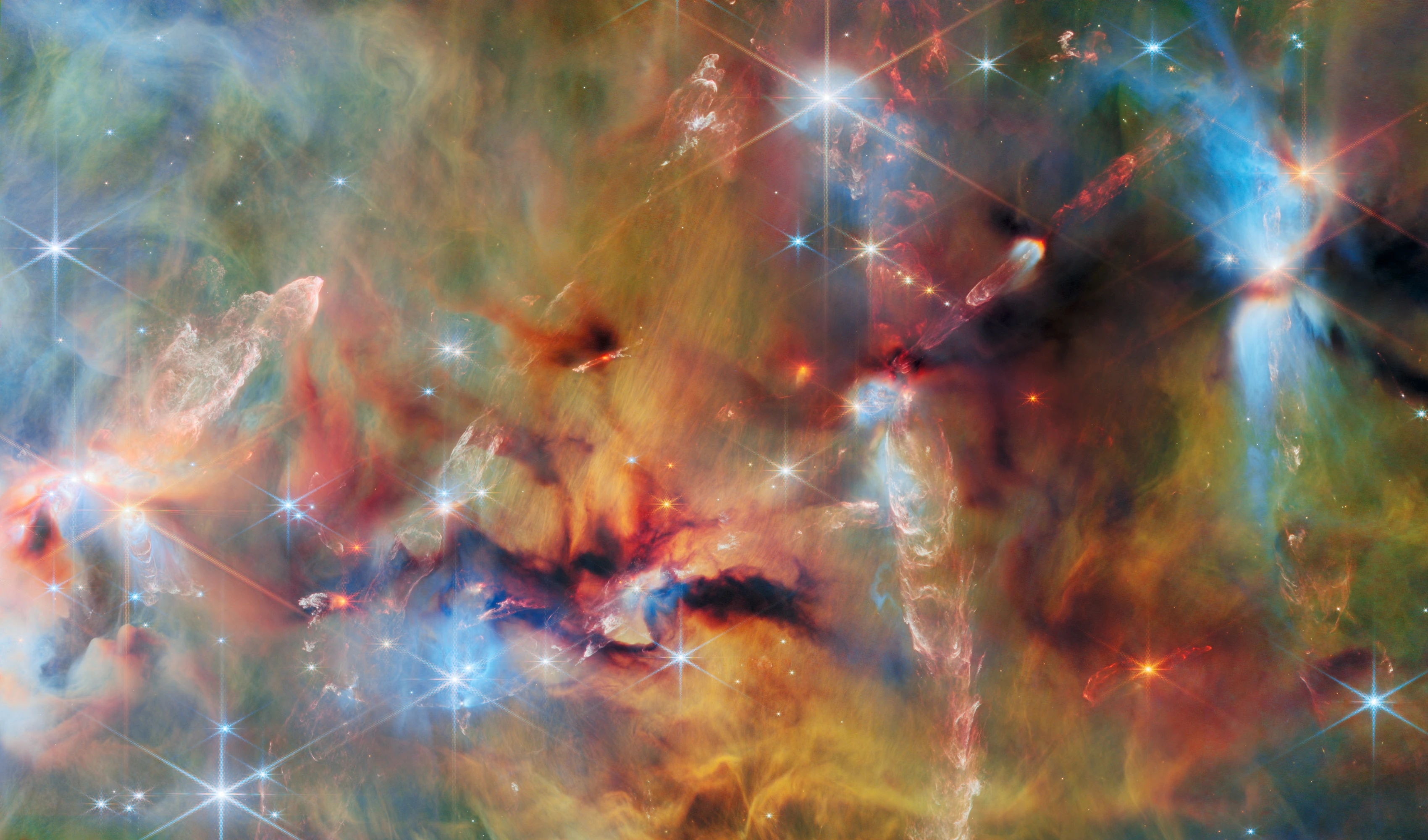
Alena Rottensteiner, Lilly Kormann, João Alves | 3 July 2026 | Header image: ESA/Webb, NASA & CSA, T. Megeath, M. Zamani (ESA/Webb) Acknowledgement: M. Özsaraç
This edition contains the latest abstracts from June 2026.
Far-ultraviolet flux distribution in Orion and its relation to stellar accretion
Orion is the closest region hosting active star formation and young OBA stars. Computing far-ultraviolet (FUV) fluxes at its stars is essential to connect stellar and protoplanetary disc properties to the environment. We (1) accurately estimated the FUV flux at a large sample of stars in Orion by statistically accounting for the uncertainty in parallax measurements, and (2) investigated the relation between stellar accretion and external FUV flux by comparing observations and disc evolution models. We selected a large stellar population in Orion, assigned sub-cluster memberships and used 2D dimensional sub-cluster geometry to infer 3D separations from OBA stars and compute the FUV flux at stellar positions. We studied the accretion luminosities Lacc inferred from Ha emission in Gaia XP spectra of Orion sources and determined their detection fraction as a function of age and FUV flux. We compared the results with population synthesis models of viscous discs experiencing external photoevaporation. We provided a publicly available table of FUV fluxes at ~8600 stars in Orion. Most of the stellar population is weakly irradiated <10^{2} G0, ~35% is intermediately irradiated 10^{2}-10^{4} G0, and ~5% has FUV fluxes >10^{4} G0. Gaia-based Lacc decreases with age, and Ha detection fraction declines more rapidly in regions with strong FUV fluxes than in regions exposed to weaker FUV fluxes, broadly consistent with the model. This may suggest that external photoevaporation efficiently depletes strongly FUV-irradiated accretion discs, but it is not sufficient to reliably confirm this conclusion. The provided tools for computing FUV fluxes at Orion stars will be essential for future observations aimed at assessing the role of external photoevaporation on discs. We encourage measurements of stellar and disc properties in Orion, covering FUV fluxes 1-10^5 G0.
Substructures in Planet-Forming Disks with the SKAO
Disks of gas and dust orbiting young stars are the arenas and material reservoirs for planet formation. Over the past decade, multiwavelength observations, from infrared to radio, have resolved the spatial distribution of hundreds of protoplanetary disks in nearby star-forming regions, revealing a diverse zoo of substructures. These substructures are morphological features such as rings, gaps, spirals, vortices, asymmetries, warps, or clumps that trace variations in density, temperature, or composition relative to an otherwise smooth distribution of gas and dust. Many unknowns persist as to the origin of these substructures, their role in planet assembly, and their true properties. SKA-Mid Band 5b continuum observations, offering angular resolutions of () with AA4 (AA*) at GHz / cm, will enable new progress at this frontier. In this chapter, we outline the open questions in the field of disk substructure that SKA-Mid is uniquely poised to address, with a lens on dust thermal emission.
Chemical Complexity in the Early Stages of Star Formation in the SKAO Era
About 350 molecules have been identified in the interstellar medium (ISM), including complex molecules relevant to prebiotic chemistry. A remarkable level of molecular diversity has been observed from the earliest stages of star formation, providing the initial chemical inventory inherited by planetary systems. Radio observations have played a pivotal role in these discoveries, starting with the identification of the first polyatomic molecule, (Cheung et al. 1968). (Sub-)millimeter observations have revealed complex organic molecules of prebiotic relevance, including formamide (), glycolaldehyde (), and even urea (), and hydroxylamine (), which are possible precursors of RNA nucleotides (Ceccarelli et al. 2023; Jiménez-Serra et al. 2020). However, in dense protostellar regions, dust opacity hampers the detection of molecular emission. Additionally, large molecules and those containing heavy atoms, which have rotational transitions at lower frequencies, often remain inaccessible to current instruments. The Square Kilometre Array Observatory (SKAO) will provide an unprecedented combination of sensitivity and angular resolution at radio wavelengths. This will allow for the detection of prebiotic species and offer new insights into the chemical pathways that shape emerging planetary systems (Jiménez-Serra et al. 2022). This chapter details the scientific questions and advancements that the SKAO, and more specifically, SKA-Mid equipped with the Band 5 receivers, will pursue in the field of astrochemistry, focusing on the chemical complexity in both high-mass and solar-type star-forming regions.
From filaments to clumps: filament properties with synthetic Herschel observations
Systematic surveys of filaments have been conducted to study their properties and their relationship to the process of star formation. In this paper, we use synthetic Herschel observations derived from 3D numerical simulations to compute column density maps, then use the \texttt{FILFINDER} algorithm to identify filaments. We obtain a large sample of 8,832 filaments that we further decompose into 110,193 branches. We characterize the physical properties of these filamentary structures and explore their correlations with embedded clumps. Furthermore, we directly compare our synthetic results with an observational catalogue of 32,059 filaments from the Herschel Infrared Galactic Plane Survey (Hi-GAL). Our results show that filaments are central to the star formation process, hosting of clumps from synthetic observations and of stars from our 3D numerical simulation. Filaments that host clumps have higher median column densities () than those without (). We find power-law distributions for our synthetic filament masses and lengths, with power-law indexes of and , respectively. We also find that the relation between the density of filaments and the background density is . The measured properties of the filaments from the 2D synthetic observations are qualitatively consistent with those of the filaments from the Hi-GAL survey.
Class I CH3OH Maser Emission from Bar-Driven Inflow Colliding with the Central Molecular Zone
The Central Molecular Zone of the Milky Way is shaped by the interplay of bar-driven inflows, shocks, and star formation. At Galactic longitude l=1.3, gas inflowing along the near-side dust lane has been proposed to interact with the CMZ boundary and overshoot above the Galactic plane, making this a key site to investigate how large-scale gas dynamics regulates star formation. We aim to investigate the presence of Class I methanol maser emission in this transitional region, testing whether large-scale gas interactions in the CMZ can trigger widespread maser activity via star formation or shocks. We conducted a dedicated search for the 36.2 and 44.1 GHz Class I CH3OH maser lines, along with the 48.4 GHz thermal transition, using the Yebes 40m telescope. We complemented these data with archival data from the Herschel-HiGAL survey and the CHIMPS2 survey to explore links between masers, shocks, and star formation. We detect widespread 36.2 GHz maser emission and two candidate 44.1 GHz masers in a region extending several parsecs. The brightest maser has an isotropic luminosity 0.9x10^-3 L_Sun, placing it among the most luminous Galactic Class I masers. Thermal CH3OH and SiO emission extend over mapped area of 24 pc, with both species showing enhanced fractional abundances. CO position-velocity analysis further shows that the masers are associated with an extended velocity feature at VLSR~100 km/s. We conclude that the observed masers are primarily associated with shock-processed gas in a kinematically complex bar-CMZ interface region. Large-scale gas interactions are likely to play an important role in producing the maser emission, although a subset of the masers may also be linked to shocks driven by local star-formation activity. This region therefore provides a promising Galactic analogue of shock-dominated Class I CH3OH maser environments observed in nuclear regions of barred galaxies.
Simple cyanides and formylium ions isotopologues in early star-forming molecular cores
Understanding the chemistry related to the early stages of star formation is of great importance, as it is linked to the beginnings of the most complex chemistry in the interstellar medium. In this context, we investigate the chemical behaviour of simple cyano-bearing molecules and formylium ions isotopologues in a sample of massive infrared-quiet molecular cores. Using archive ALMA Band 7 data of 37 early molecular cores embedded in ATLASGAL clumps, we obtain abundances of HCN, HCN, HNC, HCO, and HCO. We used various statistical methods, including hierarchical clustering, to analyse the correlations between molecular abundances, ratios and temperature. We find that HNC, HCO, and HCO abundances correlate positively with kinetic temperature, suggesting temperature-driven chemical regulation in young massive cores. A similar trend is observed for HCN, although the limited number of detections prevents a definitive conclusion. HCN abundances show no dependence on temperature within the 40-100 K range, suggesting a chemical steady state between gas-phase production and grain-surface depletion. Similarly, the HCN/HNC ratio, measured in only six regions, suggests no correlation with temperature, differing from findings at lower temperatures. Using a hierarchical clustering method based on abundance ratios, novel in astrochemistry, we identified chemically distinct core groups that align with thermal conditions. Additionally, we provide HCO detections for 28 cores-a significant expansion of existing literature-and find evidence that HCO transitions may have higher optical depths than commonly assumed. These results are important because characterizing the chemical state of early star-forming stages is essential for understanding the onset of the most complex chemistry.
Magnetic Fields in Massive Star-forming Regions (MagMaR). VII. On the dynamical importance of B-fields in massive protocluster W33 A
Magnetic fields (B-fields) are likely important in massive protocluster formation, but their role remains poorly constrained. We present 1.2 mm ALMA full-polarization observations of W33 A, a massive star-forming region at 2.4 kpc, with an angular resolution of 0.3 arcsec (730 au). The region is resolved into 20 dense cores and 9 filaments. The plane-of-sky B-field, inferred from linearly polarized dust emission, shows diverse structures: two nearly perpendicular large-scale components oriented northwest-southeast (NW-SE) and northeast-southwest (NE-SW), and two localized features toward the millimeter peaks MM1 and MM2. The NW-SE component could be shaped by a molecular outflow. The NE-SW component is coherent along the main filaments F1, F-Main, and Tail, all of which show trans-Alfvenic turbulence. In F-Main, the line mass exceeds the turbulent critical value, implying that magnetic support is required to prevent radial collapse and suppress fragmentation. In F1 and Tail, turbulence alone can support the gas against gravity, although B-fields may provide additional support. Toward MM1, the B-field follows a spiral-like infalling streamer traced by CH3CN. The trans-Alfvenic state of the accreting gas suggests efficient magnetic damping of turbulence and a magnetically regulated, laminar accretion flow feeding the core. Toward MM2, the B-field shows an hourglass morphology fitted by parabolic curves. Two independent methods give a consistent field strength of about 8.1(1.9) mG, and virial analysis indicates that the B-field is dynamically important in delaying collapse of MM2. Within a single protocluster, B-fields can stabilize filaments, regulate accretion, and delay core collapse, highlighting their diverse dynamic role in high-mass star formation.
Small-scale Magnetic Fields in the Milky Way and Nearby Galaxies
Magnetic fields in galaxies span decades in physical scale, from the coherent magnetic fields on galactic scales (> kpc) to the random magnetic fields from 100 pc to the resistive scale of the galactic plasma (i.e. ~1e6 cm). While many radio studies to date have placed more emphasis on the large-scale galactic magnetic fields than the small-scale counterparts, the emerging SKA will greatly facilitate accurate, detailed studies of the small-scale (< 100 pc) galactic magnetic fields. In this Chapter, we highlight the importance of understanding the small-scale galactic magnetic fields in furthering our understanding of star formation, galaxy evolution, and the fundamental physics of magnetohydrodynamics. Furthermore, we discuss some open questions in the research field and outline several possible large observation programmes with the SKA Array Assembly 4 (AA4).
The magnetic field of the Milky Way: an observational perspective
Magnetic fields are an important and enigmatic component of the Milky Way's ecosystem. Mostly frozen into interstellar plasma, they play key roles in (turbulent) gas dynamics, star formation, energy household, evolution of interstellar objects, and cosmic-ray propagation. This paper reviews recent progress on measuring and characterizing these Galactic magnetic fields, limited to the larger-scale fields in mostly diffuse media, and to an observational perspective. On Galaxy-wide scales, the magnetic field roughly follows the spiral arms in the Galactic disk, and includes an additional component perpendicular to the disk away from the Galactic plane. The field configuration is different in the Galactic disk and the Galactic gaseous halo, qualitatively consistent with different dominating dynamo modes. Deviations from this idealized model are ubiquitously observed and include anomalously high Faraday rotation, variable magnetic field orientations and field reversals on kiloparsec scales. On smaller scales, the magnetic field is turbulent, anisotropic and intermittent. Much used descriptions of the turbulent magnetic field such as power laws and Gaussianity are being replaced by higher-order statistics that better capture the complexities of the field. Magnetic field orientations and possibly strength are correlated with both cold and warm components of the multi-phase interstellar gas, and with the interstellar dust distribution. The near future will bring a large increase in observational data in rotation measure grids, Faraday Tomography data and measurements of interstellar polarization of optical starlight, promising exciting developments in characterizing and understanding magnetic fields in the Milky Way in the next few years.
Evidence for protostellar jets as a population of hadronic gamma-ray sources
Stars are born in darkness, deep within cold, dense molecular clouds where gravity drives the collapse of gas and dust, giving rise to protostars, the earliest stages of stellar evolution. Once considered purely thermal sources, these young systems are now emerging as sites of energetic non-thermal activity. While radio synchrotron jets hinted at the presence of relativistic electrons, direct confirmation of proton acceleration remained elusive. Here we report a statistically significant detection of gamma rays from a population of young stellar objects, revealing a Galactic class of Gamma-Loud Protostars. Observations point towards particle acceleration within protostellar jets, where gamma-ray emission arises from protons interacting with surrounding molecular clouds via pion decay. We find a correlation between cosmic-ray output and bolometric luminosity, suggesting that particle acceleration scales with the system's mechanical power. These findings open a new observational window into the role of non-thermal processes in protostellar evolution and suggest that gamma-ray studies of protostars can provide critical insights into accretion, ejection, and feedback in star formation. This previously overlooked emission traces the energetic feedback that young stars inject into their surroundings, shaping the conditions for subsequent star and planet formation.
A Framework to Model Stellar Irradiated Disks with Frequency-dependent Absorption and Scattering Opacities in Athena++
The frequency dependence of opacity is crucial for determining the thermal structure of protoplanetary disks, which in turn influences disk dynamics and planet formation. Yet many disk models adopt simplified thermodynamics, and common radiation-hydrodynamic approaches often use gray opacities, ignore scattering, and yield inaccurate results in regions with intermediate optical depth. We present a comprehensive framework that models stellar irradiation with frequency-dependent absorption and scattering across all optical depths using the Athena++ finite-volume code, extended with multigroup radiation transport and newly implemented radial rays to more accurately represent the stellar flux. To calibrate this framework, we focus exclusively on hydrostatic disk models, allowing us to isolate radiative effects and evaluate the method without additional dynamical complexity. Because dust opacity increases strongly with frequency, ultraviolet stellar irradiation heats the tenuous disk atmosphere while the optically thick midplane remains cooler. This vertical temperature gradient is captured more accurately when more frequency bands are used or when scattering is included. Our hydrostatic models achieve equilibrium temperatures that differ from Monte Carlo radiative-transfer benchmarks on average by 2—5% with 64 frequency bands and 7—11% with 3 bands. Reducing the number of bands lowers computational cost by at least an order of magnitude while increasing the maximum possible temperature deviation only from 8% to 19%. This calibration demonstrates the accuracy and efficiency of the framework and provides a solid foundation for future self-consistent studies of irradiated protoplanetary disks, including fully dynamical simulations and applications involving chemical processes and time-dependent stellar luminosity.
Pristine composition or size evolution: Can current dust models reproduce emissivities observed in nearby protostars?
Interstellar dust is a crucial asset in many astronomical observations. Characterising grains present in the dense gas and in star-forming environments is also key to constrain the pristine conditions for planetary formation. However, dust properties remain poorly characterised and are still debated: low dust emissivities observed in nearby protostars are not completely explained to this day. In this study, we aim to determine whether it is possible to retrieve the dust properties from multi-wavelength observations of the dust emission towards embedded protostars, and the extent to which current dust models can reproduce the observed values of the dust emissivity index in young protostars. We perform radiative transfer computations of the thermal dust emission from a model protostellar envelope, considering different dust optical properties commonly used in the community. This allows us to explore the effects of dust composition on the spectral index, to try and explain the variation in the emissivity index in nearby protostars observations. We find large variations in the spectral index as the sole result of different dust models, without the need for dust grain size evolution. However, our work does not allow us to reproduce the lowest emissivity index values found in some protostellar envelopes without including unexpectedly large millimetre-sized processed grains. We show that appropriate methods permits to measure the dust emissivity from observations of the spectral index at millimetre wavelengths with very little uncertainty. Variation in emissivity index between the different observed sources and the dust models most commonly used by the community implies that the intrinsic composition of dust is not sufficient to explain the lowest spectral index values. Thus, early dust evolution producing larger dust grains may have to be taken into account to obtain a complete picture.
Mapping Interstellar Ice Inventory toward Class 0 Protostars in Star-forming Region Orion A with JWST Data
We present a detailed study of the spatial distribution and chemical composition of interstellar ices toward six Class 0 protostars (HOPS-56, HOPS-60, HOPS-73, HOPS-91, HOPS-96, and HOPS-108) in the Orion A molecular cloud. Using high-resolution spectroscopic data from the JWST NIRspec and MIRI MRS instruments (4.3 - 8.1 m), we have constructed the first pixel by pixel absorption maps with a resolution of 100~AU for key ice species, including CO, OCN, CO, HO, NH, and HCO. CH and OCS were analyzed toward the continuum peaks. The column densities were derived by fitting the observed spectra with laboratory ice analogs. We employed radiative transfer modeling, which confirmed the reliability of our column density estimates within the protostellar envelopes. Our analysis reveals significant variations in ice abundances and distributions, reflecting the physical structure and energetic processes within the envelopes. Specifically, we observe the influence of protostellar heating and outflows on the ice mantles, most notably in HOPS-60. The total ice composition is consistent with astrochemical models and covers 90% of observed ice inventory suggesting that ice is primarily formed during the prestellar stage and subsequently inherited by the protostellar envelope. Based on the abundance relative to water, the sources can be categorized into two distinct groups, possibly indicating evolutionary differences or variations in envelope density and temperature profiles.
SHARPing accretion and outflows in young stellar objects in star forming regions of the outer Galaxy and beyond
As part of the science book of SHARP, we present here the science case of star-disk interaction of low-mass (\Mstar2\Msun) young stellar objects (YSOs), in low-metallicity (Z 0.2 \Zsun) star forming regions (SFRs) and supermassive star clusters, using the SHARP instrument mounted on the ESO-ELT. Extreme adaptive optics (AOs), with a spatial resolution a factor 3 better than JWST, as well as sensitive multiplexing capabilities, uniquely offered by SHARP, are essential to efficiently survey the whole area of low-Z SFRs and massive clusters in the outer Milky Way (MW) Galaxy and in the Magellanic Clouds (MCs). Using the SHARP exposure time calculator (ETC) we demonstrate that SHARP can achieve the required signal-to-noise, both for the continuum and emission lines, to investigate accretion and outflows in YSOs in distant (d5\,kpc) SFRs, including those relatively embedded. SHARP will be able to observe very faint YSOs (\,24\,mag), allowing us extending studies to very low-mass YSOs in distant SFRs. The performance of SHARP in terms of sensitivity and spatial resolution in the NIR will provide significant insights into the evolution of protoplanetary disks in low-metallicity and massive environments: studies of accretion, jets/winds and photo-evaporation processes, down to the very low-mass (0.2\,\Msun) regime in the MCs, and down to substellar YSOs in SFRs of the outer MW Galaxy (d\,\,10\,kpc), will be possible. SHARP will also be able to observe jets/outflows in targets that are several magnitudes fainter than those reachable with current instruments, and will facilitate studies in low metallicity environments of wide binaries and multiple systems, with separations of 1600\,au, at a distance 50\,kpc scale, and of 150\,au, in regions of the outer MW Galaxy (d 10\,kpc).
DiskMINT-GARDEN: Self-consistent Models to Estimate Disk Masses
We present DiskMINT-GARDEN, a grid of self-consistent models together with a fast, open source inference tool for disk masses. The grid is built on DiskMINT, a tool which couples hydrostatic disk structure, continuum/line radiative transfer, and a reduced CO chemical network including freeze-out, grain-surface conversion, and isotope-selective photodissociation. DiskMINT-GARDEN model grid spans a large range of stellar mass (), gas disk mass (), dust-to-gas ratio (), and characteristic radius (), and provides synthetic ALMA observables. We train a machine-learning regression model to infer the disk mass, dust-to-gas mass ratio, and disk size from the dust continuum and line observations. Applying DiskMINT-GARDEN to archival ALMA data of 34 disks, we find gas masses in good agreement with dynamical and HD-based estimates. Comparing our results with estimates from chemical modeling using DALI, we find that their need for large-scale elemental or CO depletion can be accounted for by grain-surface chemistry implemented in DiskMINT, with CO conversion to CO being one of the main reactions. Therefore, extant data suggest little chemical processing due to disk evolutionary processes.
Complex organic molecules in the young hot core RCW 120 S2
We analyse physical and chemical structure of the hot molecular core RCW120 S2, based on high-sensitivity (2-4 mK) APEX observations at 1.3 mm. The analysis reveals a rich molecular inventory, including complex organic molecules (COMs) such as CHOH, CHCHO, CHOCHO and CHOCH. We derive gas temperatures (20-300 K), H densities (10-10cm), and molecular column densities. The detected emission probes a radially stratified envelope, with cooler (<= 60 K) and less dense (10-10cm) outer layers traced by SO, SO2, and c-CH, while warmer (60-100 K) and denser (10-10cm) inner regions are traced by HCO, OCS, and low-excitation CHCN. The hot gas (<= 100 K) exhibits broad (8-10 km/s) lines from high-excitation CHOH, CHCN, HDO, and CHOCH. Relative molecular abundances of COMs generally agree with astrochemical hot-core models, while methanol appears underabundant and CHCN overabundant compared to predictions. We attribute these discrepancies to the need for interferometric observations at intermediate spatial scales to resolve the core's true filling factor and radial gradients.
Hydrodynamical Simulations of Resonant Breaking in Multi-Planet Systems via Rebound Migration During Disk Dispersal
This study extends the investigation of rebound outward migration to multi-planet systems near an inner expanding disk cavity driven by stellar X-ray photoevaporation. Using 2D hydrodynamical simulations, we explore how systems of two and three planets that span masses from super-Earths to Jupiters evolve as the disk disperses from the inside out. Our results show that rebound migration can substantially reshape multi-planet architectures in the final stages of disk clearing. Owing to the strong, positive corotation torque exerted onto the planet near the cavity edge, divergent migration of the neighbouring planets can break resonant configurations and trigger dynamical instabilities, producing non-resonant orbits with widened period ratios. However, the outcome depends critically on planet mass and the disk dispersal timescale. In lower-mass disks where cavity expansion is too rapid, rebound migration is suppressed, and systems tend to preserve resonant chains. These findings suggest that the rebound mechanism can provide a compelling pathway to explain the prevalence of widely separated, non-resonant architecture observed in the exoplanet population.
The 10-15 GHz radio continuum survey of the Galactic Plane with SKAO
Star formation emerges from the complex interplay between gravity, turbulence, magnetic fields, and stellar feedback, all of which vary across spatial scales and Galactic environments. Over the past decades, extensive multiwavelength surveys of the Galactic Plane have progressively unveiled this complexity. Far-infrared and sub-millimetre surveys have identified and characterized tens of thousands of star-forming regions, revealing their mass, temperature, and evolutionary stage. Complementary molecular-line surveys, spanning several CO transitions and isotopologues, have mapped the gas kinematics from giant molecular clouds down to sub-parsec structures. The advent of interferometers such as ALMA has revolutionized this field, enabling systematic studies of gas dynamics, fragmentation, and collapse in dense clumps at scales of a few thousand astronomical units. At the same time, mid-infrared and radio surveys at frequencies 0.8 <= nu <= 5 GHz have traced ionised gas associated with the earliest and latest phases of massive-star evolution, including thermal radio jets, hypercompact and ultracompact HII regions, supernova remnants, planetary nebulae, and evolved massive stars. Yet, a uniform, Galaxy-wide census of ionised structures and feedback processes remains elusive. A transformational leap forward requires a sensitive, high-resolution radio survey of the Galactic Plane at 10-15 GHz, capable of resolving physical scales smaller than 0.05 pc at distances up to 20 kpc. This is precisely the goal of the SKA-Mid Galactic Plane survey, which will, with its unprecedented sensitivity, angular resolution, and mapping speed, provide the first panoptic view of ionised gas and stellar feedback across the Milky Way.
Globular cluster formation with multiple stellar populations: A comprehensive overview of a star-cloud interaction scenario
We present a new scenario of globular cluster (GC) formation with multiple stellar populations (MPs) in which both the first and second populations (1P and 2P, respectively) of stars form from giant molecular clouds (GMCs) polluted by asymptotic giant branch (AGB) stars within and around the GMCs. Unlike previous GC formation scenarios with AGB stars being the primary polluters, the new scenario alleviates tensions with the mass-budget and dilution-timing problems The principal results based on idealized analytic models of the formation scenario are as follows. The observed fraction of 1P stars and the helium abundance spreads between the 1P and 2P as a function of GC masses can be well reproduced. The modelled GCs show O-Na, C-N, and Mg-Al anticorrelations and Si-Al, 25Mg-Al, 26Mg-Al correlations. The observed Mg-K anticorrelation can be reproduced, only if super AGB stars make a significant contribution to chemical enrichment within GMCs. The lack of correlations of Li abundances with [Na/Fe] and [Al/Fe] can be reproduced, only if about 20% of the polluting AGB stars produce Li-rich ejecta, which disfavours scenarios with polluters incapable of Li production. Iron-complex, Type-II GCs can be formed through merging of two GCs formed from two GMCs within a host dwarf galaxy at different epochs. The new scenario predicts young massive clusters formed in galaxy environments with surface star formation rate densities well below 1 M_sun/yr/kpc^2 are unlikely to evolve into GCs with MPs. It also predicts low 12C/13C ratios of 2P (~5), a [Na/Fe]-[F/Fe] anticorrelation, and P-rich star formation with [P/Fe] and [N/Fe]>0.5. These predictions are tested against more than 30 observed properties of GCs with MPs, representing one of the most comprehensive observational benchmarks against a specific GC formation scenario to date.
Formation of a Protostellar Multiple System via Rotational Fragmentation
We present a multi-scale analysis of the dense core G205.46-14.56-N2 and its host filament G205.46-14.56 using ALMA, Herschel, JCMT, and PMO observations. The filament exhibits a hierarchical fragmentation process primarily governed by thermal Jeans instability. The central region of the dense core G205.46-14.56-N2 hosts a remarkable mirror-symmetric twin binary protostellar system. We detect well-collimated, aligned outflows from all four protostars. Velocity fields traced by HCO emission reveal clear gradients, and the ratio of rotational kinetic energy to gravitational energy increases with spatial resolution, indicating fast differential rotation within the core. The morphology and kinematics of the quadruple system bear striking resemblance to pure hydrodynamic simulations of rapidly rotating core collapse. These findings (ordered fragmentation and aligned outflows) are inconsistent with the stochastic expectations of turbulent fragmentation and instead may provide direct observational evidence that rotation-driven fragmentation is a viable pathway for forming compact protostellar multiple systems. To our knowledge, this study presents the first high-order (N4) protostellar multiple system whose formation can be attributed to rotational fragmentation.
Demographics of planet-forming disks with the SKAO
Understanding how solid material in planet-forming disks evolves from micron-sized dust to planetary cores is a central challenge in modern astrophysics. This study has advanced dramatically in the past decade, largely driven by ALMA and high-contrast imaging facilities. However, major uncertainties remain regarding the presence, evolution, and role of centimeter-sized grains (the pebbles) in planet formation. The SKAO will fill this gap by enabling the first large-scale, high-resolution survey of disk emission at centimeter wavelengths. This chapter presents the scientific rationale and observational strategies to detect and characterize pebbles in the planet-forming disks of nearby star-forming regions. By resolving their spatial distribution, spectral properties, and evolutionary trends, SKA will offer essential constraints on dust growth and disk dynamics. This work provides observational strategies, target selection, and predictions on the detectability of hundreds of nearby disks. The chapter also explores SKA's potential to uncover the actual dust mass in disks, protoplanets and their circumplanetary disks, and other aspects of the planet formation. Together, these capabilities will establish SKAO as a cornerstone facility for planet formation science in the coming decade.
EPISODE II: Variability in the CO and HO rovibrational absorption lines in a periodically variable protostar EC 53
We present two-epoch JWST NIRSpec and MIRI observations of the young protostar EC 53 (V371 Ser), a periodically variable source with well-characterized quiescent and burst phases. The spectra in both epochs show absorption in the CO overtone (2.3 m) and fundamental (4.6 m) bands and the HO stretching (2.7 m) and bending (6.0 m) modes. We also obtained high-resolution () IGRINS spectra during the burst to constrain the CO overtone line profiles. LTE slab modeling yields gas temperatures of 1800 K (CO overtone) and 1200 K (CO fundamental), consistent with the overtone tracing hotter gas at smaller radii. The HO stretching-mode absorption shows no compelling evidence for variability, and the current JWST CO overtone data do not provide a robust constraint on overtone variability. In contrast, the CO fundamental and HO bending-mode features weaken by a factor of 2 during the burst, which is most naturally explained by continuum changes rather than large variations in absorbing gas. To quantify continuum dilution, we introduce a ``relative veiling'' that treats the quiescent spectrum as an internal reference and measures the change in the continuum excess between the two epochs. This formalism yields burst-to-quiescent hot-continuum ratios of for the CO overtone and for the CO fundamental. Using a viscous-disk prescription, these imply representative accretion-rate ratios of 3.6 and 2.0, respectively. The differing ratios suggest that inner-disk regions traced at different temperatures, and thus radii, respond differently across the burst cycle, consistent with episodic mass buildup in the inner disk during quiescence followed by more efficient transport through the innermost disk onto the protostar during the burst.
Bridging the UV Gap: The HST Ultraviolet Foundation for Star Formation Science in the Era of Roman, Euclid, and HWO
As we enter the 2030s, the astronomical landscape will be dominated by large-scale infrared (IR) and optical surveys led by JWST, Euclid, and the Nancy Grace Roman Space Telescope. While these facilities provide unprecedented views of the dusty environments of nearby star-forming regions, they are fundamentally limited in their ability to probe the high-energy physics of accretion, magnetospheric activity, and disk photoevaporation. This white paper argues for the critical continued use of the Hubble Space Telescope (HST) Space Telescope Imaging Spectrograph (STIS) and Cosmic Origins Spectrograph (COS) to bridge the "UV Gap." We demonstrate that UV spectroscopy is the only direct method for characterizing the feedback mechanisms that determine planet habitability and stellar maturation, serving as a mandatory scientific bridge toward the Habitable Worlds Observatory (HWO). The study of star formation stands at a critical intersection of multiple scientific disciplines, linking the high-energy physics of stellar birth to the chemical evolution of protoplanetary disks and the eventual habitability of exoplanets. As such, it represents one of the most compelling and essential science cases for the continued allocation of HST resources. Ensuring that HST provides high-resolution UV spectroscopic data now is a fundamental requirement for the success of future flagship missions, as these data provide the unique physical context that infrared observations alone cannot achieve.
Individual Star Sampling in Star Formation Simulations: A Semi-Deterministic Model
In modern simulations that include star formation, it is common to use a universal and invariant initial mass function (IMF) to represent star populations or sample individual stars. However, stellar masses are determined by local and environmental processes that operate over a wide dynamical range and remain unresolved in simulations. We introduce a semi-deterministic (SDT) scheme for sampling individual stars from star-forming gas in numerical simulations. We represent unresolved molecular cores and protostellar disks with reservoir particles (RsvPs) and employ an on-the-fly friends-of-friends algorithm to identify star clusters. The instantaneous IMF for newly formed stars is then derived from the current cluster mass. We test the performance of this method in simulations of isolated molecular clouds and a major merger between two dwarf galaxies. Compared to existing IMF sampling methods, our SDT scheme naturally reproduces the observed - relation and yields numbers of massive stars consistent with optimal sampling theory. It also exhibits the smallest run-to-run variation among simulations with different random seeds. The regulated star formation results in a small ( Myr) but coherent time delay in the emergence of massive stars, reduces the large scatter arising from Poisson noise, and produces initial mass segregation within the clusters. On galactic scales, the SDT method predicts a steeper high-mass IMF slope at low star formation rates (SFRs), with the slope negatively correlated with the SFR. As the specific abundance of massive stars declines, we predict that H-based SFR diagnostics will systematically underestimate the intrinsic SFR due to IMF sampling effects.
Multi-epoch scattered-light analysis of HD 135344B: new evidence for a spiral-driving protoplanet
The HD 135344B (SAO 206462) disk exhibits strong signposts of planet formation. ALMA images in the sub-mm revealed a gap-crossing dust filament whose position coincides with a twist detected in the scattered-light spiral structure. Analysis of the spirals in polarized light also hints at a spiral-driving protoplanet in the sub-mm gap. We aim to study the spirals dynamics, as well as the twist, over a 10-year baseline, in different bands. We also seek to assess the authenticity of a recently claimed candidate protoplanet. We use high-fidelity post-processing algorithms such as IPCA to minimize the biases induced by ADI on extended sources and analyze archival VLT/NACO, VLT/SPHERE, VLT/ERIS and JWST/NIRCam datasets to obtain the spiral traces and measure their orbital motion in multiple scattered light bands. We measure an average spiral orbital motion of 0.810.05 deg/yr, in agreement with the literature value of about 0.850.05 deg/yr at all wavelengths. With simple modeling of the twist morphology, we confirm that it is co-moving with the spiral in which it is embedded. While the position angle of the twist coincides with the dust filament, it is located at a smaller angular separation from the star, which we attribute to the fact that the spiral trace moves away from the central star with increasing wavelength. We find that a recently claimed protoplanet candidate can be explained as a post-processing artifact. Our confirmation that the motion of the scattered light twist is consistent with the orbital velocity of a planet at 694 au over a 10-year baseline suggests that the spirals, the gap, the dust filament, and the twist, could indeed be attributed to the same hypothetical protoplanet embedded within the spiral. A perplexing trend for a wavelength-dependence of the angular distance of the spiral traces to the central star remains to be explained.
Late infall of molecular cloud material reshaped the outer Solar System
Understanding the physicochemical evolution of the outer protoplanetary disk is critical because it governed the distribution and delivery of key volatiles such as water and organic compounds to the inner, initially hot and volatile-poor terrestrial planet-forming region. These materials are essential for establishing potentially habitable environments and directly influence the emergence of life on rocky planets. Here, we move beyond the traditional building blocks of the outer disk, the carbonaceous chondrite groups, and examine their ungrouped counterparts, the anomalous chondrites, to constrain a coherent model of disk evolution using Si, Mg, Fe, and Cr nucleosynthetic isotope systematics. Our results show that the outer disk was replenished through the addition of isotopically distinct molecular cloud material that contributed a significant fraction of mass (>30%) to the building blocks of the gas giant accretion region. This late infalling material did not contribute to the main accretion phase of the terrestrial planets, which instead derived their volatile inventory solely from Ivuna-type planetesimals such as Ryugu and Bennu. In our model, these bodies formed at the inward-migrating water ice line. The inferred accretion of these icy planetesimals in the inner disk represents a fundamental shift in our understanding of the evolution of the Solar System.
Modeling the curved dust sublimation front in protoplanetary disks: a potential probe of midplane turbulence
We present a new approach to calculate the geometry and emission of the dust inner wall in disks around T Tauri stars. This calculation follows a self-consistent approach given the disk structure and adopts a density-dependent sublimation temperature for the dust. We built spectral energy distributions (SEDs) of disk models with curved walls around a star, finding that the curved wall starts at a radius of au and extends to au. The dependence on mass accretion rate, dust settling, and disk inclination on the resulting SEDs is explored, as well as the impact of the height of the midplane layer containing large millimeter-sized grains. To test our models, we compare synthetic near-IR colors from a grid of disk models with observed colors for a large sample of disk-bearing T Tauri stars located in Taurus, IC 348, and the Orion complex. Most of the observed colors can be explained by combinations of mass accretion rates, dust settling, and inclinations within the expected ranges for T Tauri stars. However, populating the regions where observed JHK colors are most concentrated, requires the millimeter-size grains be spread up to 0.5—3 scale heights above the midplane. This result contradicts expectations of rapid dust settling and suggests a high degree of turbulence capable of lifting large grains toward the upper disk layers. These findings provide insight into the dynamical conditions of the disk midplane near the star.
Reassessing the low- massive sequence stars in Gaia RVS
Recently, a chemically depleted young massive stellar population was identified using the spectroscopic catalogue of Gaia DR3. To explain its characteristics, a recent enhanced star formation event, via a third infall occurring within the last 2 Gyr, has been evoked. In this paper we reassess the low alpha sequence of massive stars identified in the Gaia spectroscopic catalog and investigate their presence in other Milky Way spectroscopic survey catalogs. We select massive sequence stars and RGB stars from the Gaia DR3 catalogue using the same filtering strategy adopted in previous chemical cartography studies. These samples are then cross matched with APOGEE DR17, GALAH DR4, and Gaia CNN to enable a detailed comparison of stellar parameters and alpha abundances. Stellar masses are estimated by projecting their atmospheric parameters and infrared magnitudes onto PARSEC isochrones. For the massive star sample, we find large discrepancies in stellar parameters and calcium abundances between Gaia DR3 and the three external surveys. The external catalogues do not show a low ca sequence but rather resemble those of thin disc RGB stars. Other alpha elements (si in APOGEE and GALAH, and mg in GALAH) also do not show depleted values. In APOGEE, however, massive sequence stars with metallicities above -0.5 dex display lower mg abundances. We attribute this to APOGEE's use of macroturbulence velocities calibrated solely on metallicity. Our analysis does not show any evidence for alpha element depletion in massive sequence stars. Alpha abundances of massive sequence stars derived from the Gaia RVS spectra should therefore be used with caution. Nevertheless, the previously proposed three infall chemical evolution models remain plausible: even without a chemically depleted young massive population, scenarios involving only mild dilution could still account for recent star formation episodes.
Chemical Divergence and Water Depletion: Gas Properties of Evolved Upper Scorpius Disks Revealed by JWST/MIRI
Tracing the chemical evolution of protoplanetary disks over time requires observations of disks at different ages. However, most JWST/MIRI surveys published to date have targeted younger (1-3 Myr) rather than older systems. We present the results of a JWST/MIRI MRS survey of the inner regions of 10 protoplanetary disks (ages 2-6 Myr, spectral types M0-M4.5) in the Upper Scorpius region previously characterized by the ALMA AGE-PRO large program. Using MCMC slab modeling, we fit to a wide variety of detected molecules, including HO, CO, CH, CCH, HCN, HCN, CO, CO, CH, CH, and OH, as well as CH, CH, and H visually. We classify each disk along two independent axes-a Water Classification based on HO line luminosity (Water-Rich, Water-Poor, or Water-Absent) and a Chemotype based on the dominant non-water chemistry (Organic-Rich, CO-Dominated, or Molecule-Absent)-and find an unexpectedly high diversity of distinct chemical compositions within our population. We leverage the heterogeneity of detected molecules in our sample to present new characteristic "diagnostic" wavelength regions for most species. We find that carbon-based molecules consistently exhibit markedly lower excitation temperatures (300 K) compared to younger (1-3 Myr) star-forming regions (600-1000 K), hinting at relatively colder molecular reservoirs. We also determine that Upper Scorpius disks show systematically lower water luminosities by factors of 10-1000. In particular, disks with strong carbon-based molecular features but no observed HO defy expectations of an inner-disk dust cavity or a low () ratio, instead suggesting that the presence of a strong outer-disk dust trap largely controls the chemical outcome of the terrestrial planet-forming region.
3D Magnetic Field Vectors in Space: Bubbles, Clouds, and Filaments
Magnetic fields play important roles in the star-formation process across different spatial scales. The interplay between magnetic field strength (a key component of the interstellar medium's energy budget) and field orientation relative to density structures impacts how interstellar material evolves toward star formation. To understand galactic evolution toward stars, planets, and ultimately life, we need to map three-dimensional (3D) magnetic field vectors in 3D space. However, determining full vector information remains challenging due to projection effects and the complex relationship between observable tracers and field geometry. We outline the observational techniques that can be used to probe the 3D magnetic field structures of objects such as supernova remnants (SNR), superbubbles, HII regions, and HI filaments in the diffuse interstellar medium (ISM), and objects in the dense ISM such as molecular clouds, filaments, and cores. The main SKA-specific observational techniques include synchrotron emission and Faraday rotation of both compact sources and the diffuse emission. We discuss how SKA AA4 will allow implementation of the techniques we describe, leveraging the vastly improved sensitivity, resolution and uv-coverage compared to existing datasets. This will enhance our ability to reconstruct 3D magnetic field vectors, advancing our understanding of magnetic fields in Galactic evolution and star formation.
Interstellar filament detection and characterization: methods and implications for studies of magnetized interstellar medium
Filamentary structures are ubiquitous in the interstellar medium and play a key role in the evolution of molecular clouds and star formation. Their morphology and relative orientation with respect to magnetic fields have been widely used as a diagnostic of magnetohydrodynamic processes, turbulence, and gravitational accretion. In recent years, the growing availability of large continuum, spectroscopic, and polarization data stimulated the development of various filament detection techniques. In this review, we present a systematic overview of filament detection methods applied to observations of the interstellar medium. We classify the existing approaches into methodological categories, discuss underlying principles, illustrate their application on a same observational field, discuss limitations and advantages, in particular with respect to the studies of the relative alignment between magnetic fields and filaments. We conclude with presenting a point of view on the perspectives for filament studies in the era of ever-growing astronomical data volume.
Formation of Isotopically Heterogeneous Molecular Cloud Cores in Filamentary Molecular Clouds
Meteorite analysis shows that the older solids of the solar system, such as the calcium-aluminum-rich inclusions (CAIs), have isotopic inhomogeneity. This indicates that the isotopic inhomogeneity could originate from parental molecular clouds. We investigate the evolution of the isotopically heterogeneous molecular cloud cores formed from filament fragmentation using the smoothed particle hydrodynamics method. We show that the effect of the variation of isotopic ratio along the minor axes of the filament is smaller than that along the longitudinal axis of the filament due to the filament geometry. Our results also suggest that isotopic inhomogeneities remain in the resulting cores, although the amounts of initial inhomogeneities are reduced by a factor of 100 from those over the initial filament length of 1 pc. This fraction corresponds to 1-10% of the maximum isotopic ratio that the core can acquire from the filament in each model. The origin of the isotopic inhomogeneity of the shells could be attributed to the initial difference in the center-of-mass of shells caused by the turbulent velocity field. Our model indicates that the isotopic inhomogeneity could survive even in the circumstellar disk.
The gas kinematics in 70 μm dark molecular clumps with ammonia
We present the investigation of the gas kinematics and assess the evolutionary stages of dense cores embedded in four infrared dark clouds (IRDCs) using the NH(1,1) and NH(2,2) lines obtained from the VLA and GBT observations. There is no 1.3 cm continuum emission counterpart in 1.3 mm continuum emission revealed by the SMA toward these IRDCs. The low production rate s of Lyman continuum photons, indicates that the four IRDCs are in very early evolutionary stages, in which free—free emission is still absent. We have identified 61 dense cores at the size scale of 0.1 pc using the inner satellite groups of NH(1,1) line. Among them, 38 dense cores exhibit a single velocity component, while 23 dense cores show multiple velocity components. We find that the nonthermal velocity dispersion () increases with increasing radial distance from the center of dense core within the inner 0.1 pc toward eight dense cores, indicating that the turbulence is likely dissipated toward the center of these dense cores. In addition, two dense cores in AGAL031.024+00.262 and one core in AGAL024.314+00.086 exhibit nearly sonic motions on a small scale of 0.01 pc. The weakening of nonthermal support against gravity suggests that these dense cores are close to gravitational collapse or are already collapsing. Conversely, there are seven dense cores in AGAL031.024+00.262 showing a decrease in with increasing radial distance from the center. By comparing this trends with the outflow revealed by CO J=2-1 line, we find that these cores are likely associated with embedded star formation activities. Higher angular resolution observations on sub-parsec scales are essential to reveal the transition from thermal to nonthermal-dominated regions, especially in dense cores associated with multiple velocity components.
Oxygen in the protostellar clump OMC-2 FIR4
Atomic oxygen (OI), OH, H2O, and CO are the main carriers of oxygen in dense interstellar gas and important coolants of shocks associated with protostellar outflows. We determine the relative abundances of these species in the warm inner parts of the protostellar clump OMC-2 FIR4 in Orion A. The clump contains several young stellar objects. The upGREAT receiver including the High Frequency Array (HFA, operating at 4.74 THz, 63 micron) onboard the Stratospheric Observatory for Far-Infrared Astronomy (SOFIA) was used to observe OMC-2 FIR4 in the lines of OI, OH, OD, HDO, and CO. Additional HDO lines were observed with the Atacama Pathfinder Experiment (APEX). Archival H2O and CO spectra observed by the Herschel satellite were included in the analysis. The observed lines were reasonably well reproduced by an expanding spherical shell model. The OI spectrum at 63 micron towards OMC-2 FIR4 is dominated by a broad line component, on top of which medium-wide and narrow line components can be discerned. The same components are present in the OH, H2O, and high-J CO spectra towards this source. We find that OI is more abundant than H2O in the shocked gas. In the broad line component, the following abundance ratios are derived: OI/H2O ~ 700, OI/OH ~ 300, OI/CO ~ 4. The high relative abundance of atomic oxygen there suggests an origin in dissociative J-shocks that are associated with strong ultraviolet radiation. The OI/CO ratio decreases below unity in the components with a smaller velocity dispersion, and these components also have higher abundances of H2O than the broad line component, although remaining below that of CO. The HDO/H2O ratio in the low-velocity components corresponds to the average ratio in the icy mantles of dust grains, and the presence of water there could also be understood in terms of sublimation without invoking high-temperature chemistry.
Primordial Binary Stars, Mass segregation and Fractality Effects on the Early Evolution of Young Open Clusters
We want to understand how the combined effect of initial substructure, primordial mass segregation, and primordial binaries affects the dynamical evolution of the cluster, and which one of these features is the most important to agree with observations. Methods. We use Nbody6++GPU to simulate the dynamics of star clusters with initial substructure, primordial mass segregation, and primordial binaries, and we also study the relative importance of the processes. Initial models were generated by a modified version of McLuster, and we compared our results with observational data from Pang et al. 2022 database of open clusters. Our results show that primordial mass segregation and binaries do not change the result already obtained in previous works, as the time scale on which initial substructure disappears is of the order of few Myrs. However, we also find that in the presence of initial substructure, primordial mass segregation does not lead to an early expansion of the cluster. The processes in the core, discussed in previous works, lead to a loss of low mass stars and early expansion, are postponed in the presence of initial substructure. Finally, we find from comparison with observed clusters that primordial mass segregation is not a fundamental process to reproduce observational data.
Molecular cloud dispersal traced by the ionized carbon 158 micron line
Feedback from massive stars in the form of radiation and winds impacts the associated host molecular cloud. Feedback can disperse cloud material and lead to the destruction of the cloud. Recent observations of the ionized carbon CII 158 micron line in high-mass star-forming regions have demonstrated that this line is an excellent tracer of the gas dynamics in such environments. Expanding CII shells have been detected, along with high-velocity gas escaping the natal cloud through low-density channels. Motivated by these results, we conducted a systematic analysis of spectrally resolved CII maps obtained with SOFIA towards ten high-mass star-forming regions hosting at least one O-type star. Across all regions, we identify high-velocity CII line wings with velocities that exceed the cloud escape velocity, indicating that this gas is not gravitationally confined. We show that the high-velocity gas exhibits a complex velocity structure and cannot be attributed solely to a single, coherent expanding CII bubble. The amount of material in these erosion flows depends on the evolutionary stage of the molecular cloud and its associated HII region. Once the initial bubble around the cluster ruptures, typically after 0.1 Myr, gas is expelled from the cloud. The resulting cloud erosion timescales based on these directly observed mass ejection rates typically vary between 2 and 10 Myr after the formation of the first O stars, similar to other indirect measures of molecular cloud life times. These results suggest that stellar feedback is able to remove enough molecular gas to terminate the star formation in the host cloud.
Rotational Modulation and Long-Term Variability of Magnetic Fields in T-Tauri Stars with IGRINS
Magnetic fields play a central role in the evolution of pre-main-sequence (PMS) stars, yet direct observational constraints on their variability over rotational and multi-year timescales remain scarce. We investigate the temporal behavior of surface magnetic fields in a sample of nine PMS stars observed with the Immersion GRating INfrared Spectrometer (IGRINS), using 489 high-resolution near-infrared spectra drawn from the Raw and Reduced IGRINS Spectral Archive. We fit each epoch with magnetic synthetic spectra to derive the mean surface magnetic field strength and detect correlated magnetic and thermal variability in six of the nine stars while being able to recover the known stellar rotation period in at least one observing season for all six. We find that not only the mean magnetic field strength and effective temperature evolve on year-long baselines, but so does the amplitude of the rotational modulation signal (which in some cases weakens or disappears entirely). This behavior indicates that magnetic variability is driven by both changes in the total magnetic flux and the spatial distribution and contrast of surface magnetic inhomogeneities. For two stars in the sample with starspot measurements, we find that the magnetic filling factors are systematically larger than those inferred from temperature, implying that magnetic regions extend beyond the coolest spotted areas and occupy a broader fraction of the stellar surface (i.e., plages). These results provide direct evidence that PMS magnetic variability is structured, rotationally modulated, and evolves on year timescales.
A semi-analytic model of the bouncing barrier for protoplanetary dust aggregates
Collisional bouncing limits the growth of dust aggregates in protoplanetary disks, but its dependence on aggregate size, collision velocity, and filling factor remains poorly understood. Here we develop a semi-analytic model for the sticking probability of colliding dust aggregates. We divide each aggregate collision into two phases: a compression phase and a separation phase. The compression phase is described with an elastoplastic contact model, which determines the maximum contact radius and repulsive energy after compression. The separation phase is treated as fracture of a stochastic network of interparticle bonds, whose fracture energy is evaluated using weakest-link statistics. The model naturally predicts that larger aggregates bounce more readily because larger contact regions are more likely to contain weak bonds. Comparison with distinct element method simulations shows that the model reproduces the simulated sticking—bouncing boundary. Furthermore, applying the calibrated model to moderately porous aggregates inferred from ALMA observations of protoplanetary disks, we find that the predicted bouncing barrier passes through the observationally inferred size—velocity range. Thus, our semi-analytic model provides a useful framework for predicting the collisional evolution of protoplanetary dust aggregates.
Ring Spacing from a Fourth-Order Radial Feedback Green Function in a Keplerian Accretion Disk
ALMA observations of protoplanetary disks reveal ubiquitous concentric ring structures whose origin remains debated. We present an exactly solvable local model for ring spacing in a Keplerian disk. The passive advection—diffusion problem with a general vertical diffusivity profile separates into a vertical Sturm—Liouville spectrum and a radial modified-Bessel Green function. This passive kernel is smooth and does not by itself generate a periodic ring train. We therefore introduce a minimal fourth-order radial feedback closure for the ring-averaged surface density. For a localized steady ring source, the resulting Green function has a damped oscillatory exterior branch whenever the decaying spatial roots are complex. Under an observationally motivated AU scaling, the same dimensionless solution gives an illustrative spacing of order ~AU, distinct from the fastest-growing temporal wavelength. The model separates the passive transport kernel from the feedback mechanism that selects the observable radial scale. Because this mechanism is internal to the disk, it does not require pre-existing planets. The vertical diffusivity profile affects the background kernel but is not the source of the Green-function oscillation.
ALMA High-resolution Observation of the HH46/47 Outflow/disk/envelope System
We present 0.1" (~ 50 au) resolution Atacama Large Millimeter/submillimeter Array (ALMA) observations of the HH 46/47 molecular outflow and its envelope-disk system. The 1.3 mm continuum emission reveals a compact central source surrounded by a circumbinary disk with substructures. The companion, identified in optical and infrared observations, is not detected in the millimeter continuum but coincides with a local intensity minimum. Two spur-like features extending from the primary source toward the companion are identified and are likely induced by gravitational perturbations from the companion. The envelope-disk system is traced by C18O, SO, H2CO, and CH3OH. C18O primarily traces the extended envelope, while SO probes the inner envelope, and H2CO and CH3OH trace compact, faster-rotating structures near the centrifugal barrier. The observations are well reproduced by a rotating-infalling envelope transitioning to an inner disk at a radius of ~30 au around a 0.3 Msun protostar. The 12CO emission, together with JWST NIRCam images, reveals multiple shell structures in the outflow. Using C18O and 13CO to correct for optical depth, we derive the spatial distributions of outflow mass, momentum, and kinetic energy, as well as their corresponding rates. A model-independent analysis of a well-defined redshifted shell yields its three-dimensional velocity field, showing that the shell expands radially rather than flowing along its surface. Although a transverse velocity gradient is detected, interpreting it as rotation implies an unphysically large magnetic lever arm, disfavoring a direct disk-wind origin. Instead, the shell kinematics support an entrainment scenario.
A nine-member protostellar system forming via filament fragmentation in the high mass protocluster NGC 6334-43
We present the serendipitous discovery of a nine-member system comprised of protostellar and candidate prestellar sources in 350 au-resolution images from Complex Chemistry in hot Cores with ALMA (CoCCoA). The system is bound in a stability analysis, has a mean separation between pairs of 7930 au, and appears to have formed via the fragmentation of a single large-scale filamentary structure traced by 1.20\,mm continuum and HCO J = 3-2 emission. Two multiples within the nine-member system, a triple and a binary, have properties consistent with formation by core fragmentation on 1500-1700 au scales. The hot core NGC 6334-43 is resolved into two components (ALMA2a/ALMA2b) separated by 618 au and driving a bipolar outflow traced by CO J = 2-1 and SiO J = 5-4 in 1250 au-resolution archival Atacama Large Millimeter/submillimeter Array (ALMA) data. Only one other source in the nine-member system is clearly protostellar: ALMA6a, which drives an outflow traced by CO. The outflow properties of ALMA2a/ALMA2b and ALMA6a are consistent with high-mass and low-mass Class 0 sources respectively. By fitting the CHCN J = 13-12 emission towards ALMA2a, ALMA2b and ALMA6a, we derive M = 4.5, 5.4 and 2.6 M respectively. The other six sources in the nine-member multiple have M = 0.50-1.87 M and appear young, as indicated by their sparse mm-wavelength line emission and non-detection in published cm continuum observations. Our results highlight the potential of serendipitous discoveries in ALMA surveys to add to the small observational sample of young high-mass protomultiple systems.
Analysis of the young disk around WRAY 15-1880: does it contain a primitive planetary system?
Observations of (giant) planets accreting material within their natal environment are crucial to constrain models for their formation. WRAY 15-1880 (aka RX J1842.9-3532) in the Corona Australis (CrA) complex has a prominent pre-transitional disk, and an age of ~2.8+-0.7 Myr, computed by comparison with isochrones using the accurate dynamical mass derived from disk kinematics. Hence, this star is in the late phases of disk evolution and might host accreting planets. We acquire new polarimetric imaging data with VLT-SPHERE and analyze archive observations taken with VLT-SPHERE, VLT-MUSE, and ALMA, finding a candidate Jupiter-like companion within the disk gap from high-contrast imaging. The mass estimates of the candidate companion, derived from various methods, are consistent with an object in the range of 0.3-7.6 MJup. The spectrum of the candidate companion is consistent with a T3 spectral type, in agreement with expectations of an object of a few Jupiter masses. We find an emission blob North-West of the star in the ALMA data rotating solidly with the candidate companion, that can be interpreted as a vortex/dust trap at the m=1 Lindblad resonance of the planet. Accretion on the candidate planet is not detected from the VLT-MUSE archival data. This may be due to insufficient contrast, an observational geometry that is unfavorable for viewing the planet's surface, or it could indicate that we are merely observing irregularities within the disk. Finally, we identify a microjet extending from the star perpendicular to the disk in these data.
MRI-triggered instability at the inner dead zone edge: disc evolution and burst modes tied to magnetic field strengths
The inner edge of the dead zone (DZIE) in protoplanetary discs is prone to episodic instability caused by the activation of the magneto-rotational instability (MRI) in the weakly turbulent regions. We show how different magnetic field configurations set the inner disc structure and regulate the morphologies of instability cycles. We performed 2D and 3D radiation hydrodynamic simulations of the regions around the DZIE of a Class II disc over a thousand-year timescale. We implemented MRI activation criteria based on ambipolar and Ohmic diffusion coupled to magnetic field strength profiles comprising stellar and disc components. The properties and consequences of the episodic accretion events are highly sensitive to the magnetic field strength. We recover previously reported behaviour by considering relatively strongly magnetised discs. A new burst mode is revealed, in which the midplane MRI activity is restricted to small radii in the presence of weak magnetic fields. In this narrow mode, the pressure bump at the DZIE does not remain static even during quiescence. A distinct dichotomy between the wide and narrow modes is established by the hydrodynamic (in)stability of the ionisation front. Both modes are additionally separated into a reflaring and a non-reflaring version. Our setup does not lead to the classical thermal instability by hydrogen ionisation. In quiescence, the MRI active region shows a layered structure that converges towards the midplane near the star. Our 3D model reveals the breaking of density features produced in the narrow mode, leading to vortices at radii smaller than 0.5 AU. Coupling MRI activity directly to different magnetic field strengths, rather than using simple temperature thresholds, enables a variety of burst modes. Each mode exhibits characteristic accretion burst signatures and has different consequences for planet formation and migration conditions.
Resolving the smallest scales of massive star formation: A case for next-generation thermal-infrared interferometers
This white paper was submitted to the European Southern Observatory (ESO) as part of the "Expanding horizons: transforming astronomy in the 2040s" call. Understanding how massive stars assemble their mass is a major astrophysical challenge, primarily because the critical accretion, ejection, and fragmentation processes occurring within the innermost 100 au remain largely inaccessible. Current facilities, such as ALMA and near-infrared interferometers, either lack the resolution to probe the compact high-mass star-disk interaction zone or are severely hindered by high extinction and marginal spectral resolution. To bridge this observational gap, this white paper advocates for next-generation thermal-infrared interferometers operating in the L, M, N, and Q bands to directly observe warm dust, hot gas, and embedded protostars at sub-milliarcsecond scales. These advanced capabilities will provide unprecedented access to a rich molecular inventory and spatially resolved spectroscopy, which are crucial for disentangling accretion streams, disk winds, and fragmentation mechanisms on dynamical timescales. We propose that developing heterodyne-based, long-baseline interferometry at high, dry sites represents the most transformative and realistic pathway to finally unveil the complete picture of massive star formation.
Evolution of starless cores in massive clumps seen by the ALMA ASHES and QUARKS surveys
We present a systematic comparative analysis of 324 starless cores in early-phase infrared-dark clouds (IRDCs; ASHES survey) and evolved-phase infrared-bright clouds (IRBCs; QUARKS survey) using 1.3 mm continuum and line data by the Atacama Large Millimeter/submillimeter Array (ALMA). Despite having comparable sizes (2500 au),starless cores in IRBCs exhibit systematically higher median mass ( vs. ), number density, and surface density—enhancements of approximately a factor of two relative to starless cores in IRDCs. Starless cores in IRBCs also display relatively stronger non-thermal motions ( vs. ), higher total virial parameters (median 2.3 vs. 1.0), and steeper density profiles, indicating more centrally concentrated structures in feedback-driven, turbulence-enhanced environments. These findings support a dual evolutionary origin: (i) new core formation in evolved IRBCs under altered initial conditions, and (ii) subsequent dynamical mass growth via accretion from extended reservoirs. The prevalence of low-mass starless cores—even in late-stage IRBC environments—challenges models requiring massive prestellar cores and instead favors competitive-like dynamical mass accretion scenarios for high-mass star formation.
CO snow lines are stabilised by the vertical transport of volatiles
Volatile evolution in protoplanetary discs determines the compositional evolution of forming planets. Below their sublimation temperatures, volatiles freeze out from the vapour phase onto dust grains in the disc and transition to being dynamically-coupled to the dust component as opposed to the gas. The boundary between the ice and vapour phases is referred to as the snow line, when thought of as the mid-plane radius at which the phase transition occurs, or the snow surface, when viewed as a 2D (radial and vertical) structure in the disc. We investigate whether the CO snow line (and therefore snow surface) is thermally unstable and therefore liable to changes in its location during disc evolution using the disc evolution code cuDisc, to which we have added an ice-vapour chemistry solver. We find that the instability does lead to there being two steady-state stable equilibrium solutions for the snow surface when including the vertical structure. However, in dynamically-evolving simulations, the disc does not enter a limit-cycle - as seen in previous 1D models - due to the shape of the 2D snow surface and the vertical transport of volatiles. We therefore expect that dynamically evolution of snow lines due to instability is limited to transient, stochastic events rather than oscillatory behaviour with a regular period. However, we also expect the snow surface to evolve substantially during the disc lifetime solely due to changes in the thermal structure driven by evolution of the dust spatial structure and grain-size distribution - this we will explore in future models.
V7995 Sgr: A New FU Orionis Accretion Outburst Near NGC 6589/6590
We announce a new FU Orionis type outburst that reached peak brightness in late 2024, following a steep 4.6 month photometric rise of -2.85 mag in the band. This rapid brightening at all wavelengths was preceeded in the infrared by a much shallower rise over 4 years. The progenitor object was an unstudied young stellar object having a flat-spectrum type spectral energy distribution, and extended nebulosity. We present multi-wavelength lightcurves covering the photometric low-state, the outburst, and early post-outburst epochs. Optical imaging shows a concurrent brightening of the extended nebular environment. We also present follow-up optical/near-infrared spectroscopy taken 1.5 years after the inferred photometric peak. The spectra confirm an FU Ori type outburst. The outburst source exhibits a mixed-temperature absorption spectrum, formed in an accretion disk, and it shows several line species with blueshifted absorption profiles that are formed in a strong wind.
Star Formation at the Periphery of a Molecular Superbubble: The Case of G12.79+0.43
We present a multiwavelength investigation of the molecular cloud complex G12.79+0.43, which extends over on the sky. Several infrared- and radio-bright regions are arranged along an irregular rim, surrounding a central region characterised by diffuse 24~m emission. CO molecular line observations reveal three prominent velocity components along the line of sight. Low-frequency radio continuum observations at 666 and 1300~MHz show diffuse emission spanning (7.3~pc), predominantly filling the central region enclosed by the infrared-bright structures. We identify 70 compact radio sources and six \hii~regions across the cloud complex, which are likely powered by early B-type ZAMS stars. Using infrared data, we identify a total of 82 YSO candidates, including 28 Class~I sources, distributed across the cloud complex. On larger scales, the kinematics of the molecular gas over a field indicate that G12.79+0.43 is located along the rim of a larger molecular superbubble (diameter ~pc) that also encompasses the well-known W33 region. The inferred expansion age of this superbubble is ~Myr. While the spatial association between G12.79+0.43 and the superbubble is evident, the current data do not allow us to establish a clear causal connection between the superbubble evolution and the ongoing star formation within G12.79+0.43.
Virial-based extraction of structures in numerical simulations: The vibes tool
The processes that determine the stellar initial mass function (IMF) and its connection to the core mass function (CMF) are among the major open questions in star formation. The definition of a core remains unclear, yet the way they are extracted from simulations and observations critically shapes the CMF. Nowadays, cores are mostly detected through their density or intensity only. We aim to explore a new way to define cores in 3D numerical simulations based on a direct application of the virial theorem, and break free from some limitations induced by density-based methods. We intend to improve the accuracy and the physical meaning of the extracted cores. We developed vibes, an innovative method that makes full use of the virial theorem to extract overdensities in simulation snapshots. It works by building structures iteratively around density peaks, and applying the virial theorem to the structure at each iteration. Then, the structure boundary is set from the evolution of the its energy as it spatially grows. We used STARFORGE simulations to test the sensitivity of the extraction process to the main working parameters (constraints on the structure shape, iteration step, and peak selection criteria). This sensitivity is observed to be low. We compared our extraction with two density-based extraction algorithms, hop and dendrogram, that are observed to be very sensitive to their input density threshold parameter. Vibes returns structures that are coherent to each other and physically motivated, and it appears much more stable than existing 3D extraction tools. By defining the boundary of the cores on a physical criterion rather than on a user-defined set of density parameters, we expect such extracted cores to be closer to their forsaken definition: gas reservoirs that will form a single star or a close multiple system.
The effect of variable stellar magnetic fields on the spin state of T Tauri stars
Understanding the stellar spin evolution of young stars is crucial for understanding the evolution of protoplanetary disks and, consequently, the formation of exoplanets. According to stellar spin models, T Tauri stars should evolve toward a spin equilibrium in which the external spin-down torque balances both the external spin-up (accretion) torque and the spin-up due to stellar contraction. A useful reference point along the way to this equilibrium is the "zero-torque state" (ZTS), at which only the external torques cancel out. Recent observations, however, have shown that the spin state of a considerable number of stars is shifted out of the spin equilibrium and the ZTS. We investigate the effects of variable stellar magnetic fields on the stellar spin state of T Tauri stars. [Abstract shortened for arXiv] Temporal variations in the stellar magnetic field can significantly affect the stellar spin state of T Tauri stars. The strength of the effect on the stellar spin state depends on the relation between the timescale of the changing magnetic field, the spin-up timescale, and the viscous timescale of the accretion disk. A developing radiative core on a timescale shorter than the spin-up timescale has a strong effect on the spin state. Stellar magnetic cycles on timescales shorter than the viscous timescale of the inner disk have a weaker effect on the stellar spin state due to a slow back-reaction of the accretion disk. Our results can explain (at least) a part of the stars that are observed out of both states. Further theoretical and observational work is needed to connect accretion, stellar rotation, and magnetic properties in T Tauri stars.
ALMA 2D super-resolution imaging survey of Ophiuchus Class I/flat spectrum/II disks. II. Statistical analysis of stellar and disk properties
We present a statistical study of stellar and dust disk properties for young stellar objects in the Ophiuchus star-forming region. Building on our previous paper (Shoshi et al. 2025b), which applied two-dimensional super-resolution imaging with PRIISM to ALMA archival Band 6 continuum data and spatially resolved 78 disks, we analyze a sample of 67 systems with robust dust-radius measurements. We combine stellar parameters from the literature, including bolometric temperature , stellar mass , and mass accretion rate , with disk parameters derived from the super-resolution images, including inclination , millimeter luminosity , and dust radius . We quantify pairwise correlations and compare their behavior across evolutionary stages (Class I/FS and Class II) and between disks with and without detectable substructures. We identify substructure dependencies in and , indicating that substructures tend to be found preferentially in relatively massive and extended disks. Moreover, we find a tight size-luminosity relation between and . In particular, only Class II disks with substructures exhibit a steeper scaling, , while the other subsamples are broadly consistent with . This behavior is qualitatively consistent with disk evolution models in which disks with planet-induced pressure bumps follow a steeper size-luminosity relation than smooth disks. Overall, our results suggest that disk substructures play an important role in shaping the evolution of dust and global disk properties, while providing empirical constraints on accretion, dust trapping, and possible gravitational instability in young disks.
Evolution of the stellar mass function in open clusters from a universal and unsegregated initial state
The stellar mass function (MF) and its spatial variation (mass segregation) within star clusters encode signatures of early formation physics and subsequent secular evolution. Yet, a coherent evolutionary picture remains elusive due to conflicting reports regarding the universality of the initial mass function (IMF) and the prevalence of primordial mass segregation. These discrepancies often arise from unresolved binaries, field contamination, and completeness bias. Here, we resolve these issues by analyzing 163 high-fidelity open clusters via a Bayesian forward-modeling framework. We reveal a remarkably simple initial state: young clusters ( Myr) share a mean IMF slope of in the mass range , consistent with the Salpeter slope but with an intrinsic scatter of 0.17, and exhibit minimal mass segregation at the onset of gas-free evolution (10 Myr). This broadly universal "zero-point" for secular evolution disfavors star-forming scenarios that predict strong primordial segregation or significant IMF variations, and suggests that chaotic cluster assembly and gas expulsion efficiently erase any mild primordial inhomogeneities. By tracing the evolutionary sequence from to yr, we demonstrate that dynamical processing operates on distinct timescales: mass segregation proceeds rapidly via internal relaxation, whereas global MF flattening due to tidal evaporation becomes dominant only after 600 Myr. These findings impose robust observational constraints on the physics of star formation and early feedback and establish an empirical baseline for modeling secular stellar dynamics.
A study of the Physical Properties and Star Formation Activity of a Large Sample of Molecular Clouds: I Distances
Accurate distances to molecular clouds are crucial for determining their physical properties, understanding star formation, and tracing Galactic spiral structure. A number of 103,517 molecular clouds has been identified by the DBSCAN algorithm in the MWISP Phase I CO survey (l = 9.75-229.75 deg, |b| <= 5.25 deg), most of which lack reliable distances. In this work, we propose three independent methods, all of which match the molecular cloud's velocity-integrated intensity maps of 12CO lines from the MWISP with the three-dimensional dust extinction maps derived from Gaia, Pan-STARRS 1, and 2MASS, to determine molecular cloud distances. We present a catalog of 1,573 molecular clouds with robust distances ranging from approximately 150 pc to 3000 pc, 90 percent of which are measured for the first time, with typical statistical and systematic uncertainties of approximately 20% and 10%, respectively. We also derive their physical properties, such as their mass and sizes. This publicly available catalog of molecular clouds with distances provides a foundation for testing molecular cloud scaling relations and probing how cloud conditions influence star formation across diverse Galactic environments.
Environmental interactions in Class II systems and their impact on the disk-planet architecture
Protoplanetary disks evolve in clustered environments where interactions with nearby stars and interstellar gas are common. Such environmental processes, including stellar flybys and gas infall, can significantly perturb disk structures over the disk lifetime and potentially influence the evolution of embedded planets. We investigate how environmental interactions affect the architecture of Class II systems that host both a disk and already-formed planets, and assess their impact on disk structure and dynamics, as well as planetary evolution. We performed 3D simulations using the Phantom SPH code, including multiple dust species treated with a dust-as-particles approach that accounts for dust back-reaction on the gas. We modeled a disk hosting two planets in a 2:1 mean-motion resonance and subjected the system to two types of perturbations: an infalling gaseous cloudlet and a stellar flyby. Infall and flyby perturbations change the disk morphology and dynamical state. Infalling gas increases the disk mass and angular momentum, dynamically exciting the dust and producing eccentric, multi-ring dust structures. The stellar flyby truncates the disk, compacting the dust distribution radially and enhancing episodic radial migration of dust grains. These processes excite eccentricity in both gas and dust, leading to distinct accretion pathways for the planets. In particular, the flyby promotes inward dust migration, which may enhance solid accretion onto the planets, while infall preferentially increases the accretion rate of the inner planet. Environmental interactions during the Class II phase can reshape disk-planet systems, imprinting dynamical signatures that may persist into later evolutionary stages. Both late infall and stellar flybys influence the growth and composition of planets; in particular, infall events can lead to the formation of eccentric, narrow debris disks.
Two inner dust clumps in PDS 70. A third protoplanet traced by trojan material or a substructured inner disk?
The PDS 70 cavity hosts two confirmed directly imaged protoplanets and a third inner planet candidate (~13au). Despite its Keplerian motion, its unusually blue spectrum challenges a planetary interpretation. We further investigate the presence and nature of a third inner planet using new SPHERE and GRAVITY+ observations. Using the star-hopping strategy, we obtained coronagraphic IRDIS polarimetric observations in the H-band, and non-coronagraphic observations with IRDIFS in the YJHK-bands. We also searched for a planetary signal with GRAVITY in the 4UT configuration. We consistently detect two elongated inner emissions with SPHERE: the previously proposed planet candidate and another feature that appears to share the same orbit while leading it by ~120. Both features show dust-scattered-light spectra but different colors, possibly indicating different grain sizes. Such configuration is consistent with co-orbital dust accumulated at the stable Lagrangian regions of a distinct and yet undetected planet. GRAVITY yields a marginal (3) detection at the predicted location along the same orbit (mas, PA=), and consistent with a ~3 planet. This new planet candidate is aligned with a narrow shadow that we detect in the outer disk. We also detect polarized emission very close to the star likely arising from the inner disk (, PA ). The apparent embedding of the two dust clumps within it motivates an inner-disk origin as an alternative scenario. We conclude that the previously reported third planet candidate traces a dust clump either trailing an unseen planet on the same orbit or a rotating substructure within the inner disk. Further observations are needed to test these scenarios. Confirming the new GRAVITY planet candidate would support co-orbital substructures as indirect tracers of protoplanets.
The efficiency per free-fall time as a ratio of the Star Formation Rate to the gas-infall rate in collapsing cores: dependence on the core definition, accretion, and radial structure
A parameter used to characterise star formation activity in MCs is the efficiency per free-fall time, , although commonly referred to as an efficiency, it is formally the ratio between the star formation rate (SFR) and the gas-infall rate. Here we numerically study the collapse of cores and define , where is the average SFR, is the gas mass within the core (as the gas cells above a density threshold), and is the free-fall time of the core gas. We perform simplified numerical experiments of the gravitational collapse of an isolated core, varying the initial mean number density ( and ) and adopting closed/open BCs to (dis)allow fresh gas accretion into the domain. The simulations start with a slight central Gaussian overdensity that evolved into a power-law profile, with . As the collapse proceeds, a sink particle forms in the center of the core. We find that both the BCs and the adopted core definition modify the measured core properties and, consequently, the inferred . Low-density models have less mass available, and their accretion histories are therefore much more sensitive to the choice of BCs, while high-density runs, with their larger mass reservoirs, maintain similar accretion histories regardless of the BCs. In all models, after sink formation, rises and then remains relatively stable while accretion continues to replenish the core's mass, but increases once the gas reservoir is exhausted. Somewhat counterintuitively, is higher in the low-mass cores, since the larger gas infall rates onto the high-mass cores compensate for their higher SFR. We conclude that the inferred depends sensitively on both the adopted core definition and external mass supply
Planet formation at the inner edge of the dead zone II. Outbursts, rings, vortices, and suppression of planetesimal formation
Accretion outbursts have been observed in a variety of young stellar objects, but models of their dynamical evolution have been largely limited to axisymmetric models due to their computational cost. We investigate the azimuthal stability of accretion outbursts and the formation of planetesimals during these events. We performed high-resolution 2D, vertically integrated multifluid radiation-hydrodynamical simulations of the inner 10 au of protoplanetary disks with a dynamically growing dust population, including radiation transport and a realistic dust opacity model. Accretion outbursts are highly unstable to the Rossby-wave instability, with the burst front quickly diffusing into a large number of small-scale vortices that coalesce over time into a single, compact vortex and inducing azimuthal asymmetries. Vortices act as a source of vigorous turbulent diffusion, strongly suppressing planetesimal formation. Our results suggest that azimuthal asymmetries associated with accretion outbursts should be both common and detrimental to planet formation. Nevertheless, planetesimal formation will resume post-burst, as the burst-induced vortices eventually decay and the disk returns to a quiescent state featuring a pressure bump at ~1 au.
Early phases of star formation with SKAO: synchrotron emission from dense starless cores in molecular clouds
Magnetic fields play a central role in the star-formation process, from diffuse gas to the dense, starless, molecular cloud cores that represent the first gravitationally bound structures on the path to star formation. Yet, the evolution of magnetic fields during this critical phase remains poorly understood. Recent studies suggest that cosmic-ray electrons interacting with magnetic fields in prestellar cores can produce detectable synchrotron emission at low radio frequencies, offering a novel probe of their magnetization in tandem with existing observational techniques. However, current instruments lack the angular resolution and sensitivity to exploit this signature. The Square Kilometre Array Observatory (SKAO) will provide the required capabilities enabling detections in nearby star-forming regions within a reasonable number of observation hours in AA* and AA4. Thanks to its large field of view, observations of low- to high-mass star-forming regions within the first kiloparsec from the Sun will enable both targeted studies of individual objects and statistical analyses over several hundreds of prestellar cores per pointing, marking a breakthrough in our understanding of their magnetic field properties. This chapter outlines the scientific context, observational challenges, and prospects for probing magnetic fields in prestellar cores with SKAO, and highlights synergies with complementary facilities such as ALMA, as well as cross-disciplinary collaborations within the SKAO community.
Magnetic Field Alignment of Young Stellar Object Motions in Nearby Star-Forming Regions
Magnetic fields are widely believed to play an important role in molecular-cloud evolution and star formation. However, the extent to which newly formed stars retain a dynamical relationship with the magnetic environments in which they formed remains poorly understood. In this study, we investigate the relationship between the proper motions of young stellar objects (YSOs) and local magnetic-field orientations in seven nearby molecular-cloud regions. Proper motions were obtained from Gaia Data Release 3, while magnetic-field orientations were derived from Planck 353 GHz dust-polarization measurements. For each YSO, we computed the angular separation between the projected proper-motion vector and the local magnetic-field orientation in Galactic coordinates. A total of 2,037 YSOs were analyzed across Chamaeleon I, Perseus, Ophiuchus, Orion South, Orion North, Taurus, and Lupus. Significant departures from random orientation distributions are detected in every cloud. However, the preferred alignment varies strongly among regions. Chamaeleon I, Perseus, Ophiuchus, and Orion South exhibit preferential alignment between stellar motions and magnetic fields, whereas Orion North, Taurus, and Lupus exhibit preferentially perpendicular orientations. The median angular separation spans a continuous range from in Chamaeleon I to in Lupus. These results demonstrate that the relationship between YSO motions and magnetic fields is not universal but depends strongly on the local star-forming environment. The findings suggest that young stellar populations retain measurable kinematic signatures of their natal magnetic environments and provide a new observational framework for investigating the role of magnetic fields in star formation.
A millimeter Survey for Disks around Herbig Be Stars
We present a survey of 24 Herbig Be stars (young stellar objects M) within 3 kpc at 1.3~millimeters using the Submillimeter Array at about resolution to identify circumstellar disks and assess planet forming potential. We detect 1.3 mm emission toward 5 Herbig Be stars that range in mass from 4.3 to 12.9 M. Follow-up observations at 0.87 mm show spectral indices consistent with partly optically thick dust emission. These millimeter detections are compatible with an extrapolation of the scaling relation derived for lower-mass T Tauri and Herbig Ae stars between millimeter luminosity and stellar host mass, and also millimeter continuum size, suggesting these detections represent emission from circumstellar disks. The implied disk masses are sufficient for giant planet formation. No decrease in the millimeter detection fraction with stellar host mass is evident within this sample that would implicate rapid disk dissipation by the radiation fields of the higher mass stars. The high fraction of millimeter non-detections is likely due to the survey sensitivity limits together with photoevaporation and the dynamical impact of stellar companions.
ExoplaNeT accRetion mOnitoring sPectroscopic surveY (ENTROPY) III. Optical He I line profiles of the accreting super Jupiter Delorme 1 (AB)b
High-resolution spectroscopic observations of helium emission lines provide a powerful probe of accretion geometry in classical T Tauri stars, revealing regions not well traced by hydrogen lines. Parallel studies in the planetary-mass regime are lacking. In this work, we investigate helium emission from the nearby (47 pc), wide-orbit (~84 au), ~13 accreting circumbinary companion Delorme 1 (AB)b and use resolved line profiles to constrain their origin. We analyse 33 high-S/N VLT/UVES spectra spanning near-ultraviolet to optical wavelengths at R~50,000. We detect seven He I lines at >5 confidence - 3890, 4027, 4473, 4923, 5017, 5877, and 6680 Ȧ - with significant epoch-to-epoch variability. The He I 5877, 4923, 4473, and 4027 Ȧ lines are asymmetric, showing a narrow component near 0 km/s and a broad component redshifted by ~15 km/s. The accretion luminosity () and mass accretion rate () inferred from the median He I line luminosities are broadly consistent with, but slightly higher than, estimates from the ultraviolet excess. We conclude that protoplanet Delorme 1 (AB)b shows asymmetric He I profiles analogous to those of classical T Tauri stars, but with much smaller narrow- and broad-component widths. The triplet-singlet line ratio, a strong correlation with ultraviolet excess and the near-zero, redshifted velocities obtained for the narrow component suggest that it originates within the post-shock region, close to the planet surface. The persistent redshift of the broad component, its line width, and velocity correlation with the narrow component imply an origin within the shock structure, closer to the shock front. Emission seems to be dominated by accretion based on the obtained accretion luminosities, but a contribution from chromospheric activity may be present.
Planet or brown dwarf? Constraints on the formation of H-type objects in IC348
The formation mechanism(s) of substellar objects, such as brown dwarfs and free-floating planets, remains an ongoing puzzle in stellar and planetary physics. Recent observational and theoretical work points towards a star-like origin for brown dwarfs, though several authors posit that they could form like planets in a circumstellar disc, and then subsequently be ejected into a star-forming region or the Galactic field. Recently, JWST observations have discovered nine substellar objects in the IC348 star-forming region with a spectral absorption feature at 3.4m from an unidentified aliphatic hydrocarbon, detected for the first time in planetary atmospheres outside of the Solar System. It is unclear whether these hydrocarbon absorption features in these 'H-type' objects indicate a different formation mechanism compared to more massive brown dwarfs. We quantify the spatial distribution of these objects and find they are indistinguishable from the spatial distribution of stars and other brown dwarfs in IC348. We use N-body simulations to test whether the H-type objects could have formed as planets in circumstellar discs and then been dynamically ejected by stellar fly-bys. We show that a similar number of free-floating planets could be produced if those planets initially resided at ~5au from their host stars. However, these free-floating planets have a much more dispersed spatial distribution than the stars and brown dwarfs, inconsistent with the spatial distribution of the H-type objects in IC348. We therefore conclude that the H-type objects are unlikely to have a planetary-like origin.
Projection Is All You Need: Interpreting Polarization Measurements in the Orion Clouds with Sub-Alfvénic MHD Simulations
Dust polarization observations are widely used to diagnose the relative importance of magnetic fields and turbulence in star forming molecular clouds, often through summary statistics such as the mean polarization direction and dispersion . Recent multi-scale polarization observations of the Orion Integral-Shaped Filament (ISF) reveal substantial diversity in polarization morphology among its dense cores, raising questions about the underlying Alfvénic nature of the cloud. In this work, we develop a statistical framework to compare polarization-based summary statistics from observations with those derived from projected three dimensional MHD simulations, explicitly accounting for projection effects. Using globally sub-Alfvénic simulations that naturally produce slightly super-Alfvénic dense cores, we show that modest deviations of core-scale magnetic fields from the parent cloud field, when combined with projection, can generate a wide range of plane-of-sky polarization dispersions. Applying hypothesis testing, we find that the observed values in the Orion ISF are statistically consistent with sub-Alfvénic cloud models over a broad range of viewing angles. This broad degeneracy implies that and alone cannot provide precise information about the three-dimensional magnetic-field distribution, and hence the Alfvén Mach number, of an individual cloud. While the observations can provide evidence against certain projection geometries, we demonstrate that polarization statistics based solely on are insufficient to provide evidence against sub-Alfvénic cloud models. Our results highlight the necessity of explicitly incorporating projection effects when interpreting polarization observations of molecular clouds.
Geometry and Kinematics of Molecular Cloud Substructures in the Second Galactic Quadrant
We analyze the geometry and kinematics of substructures within molecular clouds identified in an unbiased catalog from the MWISP survey. These substructures are defined as spatially connected regions enclosed by the 20% peak-integrated-intensity contour of each cloud. After applying selection criteria on voxel size and excluding structures truncated by map boundaries, we construct a sample and quantify their projected morphology using the projected scale ratio . This ratio essentially measures where is the plane-of-sky angle of an elongated filament relative to the Galactic plane. The resulting sample exhibits a median , indicating a slight but systematic preference for elongation along Galactic longitude. This tendency becomes more pronounced at larger spatial scales. We further investigate the relative orientations among the structural major axes, velocity-gradient directions, and plane-of-sky magnetic-field orientations derived from Planck data for a subsample of well-defined structures. We find that, for cloud structures within our sample, with physical scale to pc, velocity gradients tend to be perpendicular to the major axes, while magnetic-field are generally aligned parallel to them. This scale range differs from those typically probed in studies of dense cores ( pc) and GMC-scale structures ( 10 to 100 pc), which have reported scale-dependent variations in relative orientations. In addition, the alignment between velocity gradients and magnetic fields shows a gradual weakening with increasing physical scale. These results suggest that the observed anisotropy of molecular cloud substructures may arise from a combination of large-scale Galactic dynamics, anisotropic gas motions, and magnetic fields, with the relative importance of these effects varying with scale.
Centrally concentrated star formation in young clusters II: Jet feedback
Protostellar jets are one of the earliest forms of stellar feedback, but their impact on star formation and cluster assembly in centrally concentrated molecular clouds remains poorly understood. We study how protostellar jets affect the star formation efficiency, the temporal variability of star formation, star cluster structure, and the early dynamical state of centrally concentrated, newly forming star clusters using the Torch star cluster formation framework. We adopt a centrally concentrated initial cloud model with mass M = 2.5 x 10^3 solar masses and compare six pairs of simulations with and without protostellar jets, supplemented by one additional higher resolution pair of simulations. We analyze our simulations using global star formation diagnostics together with structural and dynamical measures of the stellar population. Models with jet feedback achieve star formation efficiencies of 12-16%, while the corresponding models without jets yield higher efficiencies of 19-33%. Jets also cause star formation to occur in discrete bursts rather than continuously, to produce more extended and substructured stellar systems, and to leave behind stellar populations that are less tightly bound and have higher virial parameters. In our centrally concentrated initial conditions, runs with jets form stellar systems that better reproduce the observed range of the projected structural parameter Q_2D in young clusters than runs without jets, indicating that protostellar jets are an important early feedback channel even in centrally concentrated clouds that regulates star formation efficiencies and shapes the emerging cluster structure.
Expansion kinematics of young clusters. III. The kiloparsec sample
We combine Gaia DR3 5-parameter astrometry with calibrated radial velocities for 23 nearby (<1 kpc) young (<60 Myr) clusters, with membership lists from Cantat-Gaudin et al. (2020). We characterise the plane-of-sky structure of the clusters using Q-Parameter and Angular Dispersion Parameter (ADP) methods. We measure plane-of-sky expansion using several methods. We determine plane-of-sky orientations along which expansion is maximised. We also estimate expansion timescales and traceback ages and compare to isochronal ages. We then look for correlations between cluster properties and discuss sample-wide trends. We find that most young clusters are more smoothly structured in their centers where the rate of dynamical interactions is highest, while hierarchical structure can survive in the sparse outskirts for >10 Myr. We also find that the majority of nearby young clusters exhibit clear signatures of expansion in the plane-of-sky, which in many cases is significantly anisotropic, even at ages >30 Myr. We find evidence that older clusters tend to have directions of maximum expansion oriented closer to parallel with the Galactic plane. The high degree of spatial structure and significant expansion anisotropy imply that the majority of these young clusters have formed with significant spatial and kinematic substructure and not as dense, monolithic clusters. Kinematic ages estimated from expansion timescales and on-sky traceback are generally in good agreement with estimates inferred from stellar evolution models for clusters <10 Myr old. However, many clusters with older isochronal ages appear to have significantly younger kinematic ages. We discuss potential reasons for this discrepancy, including a prolonged embedded and/or gravitationally bound phase in the early stages of the clusters.
The CepA disk-outflow system at <=0.2'' or <=100au resolution
Context: Although there has been significant progress, the physical properties and potential fragmentation of accretion disks around high-mass protostars remain poorly constrained. Aims: We characterize at high angular resolution one of the most nearby (~700pc) high-mass accretion disk candidates CepA HW2. Methods: Using the new long baseline array configuration (~1700m) of the Northern Extended Millimeter Array (NOEMA), we study CepA HW2 with a resolution of <=0.2'' or <=100au at 1.3mm in dust continuum and spectral line emission. Results: The mm continuum emission resolves the central disk candidate into several sub-structures. Conducting a Toomre Q stability analysis based on CH_3CN and continuum data, and a comparison to 3D radiation hydrodynamic simulations shows that the data are consistent with an almost edge-on disk where the observed sub-structures may represent fragments within the disk. The CO and SiO spectral line data confirm a second bipolar outflow (in addition to the well-known jet) emanating from the central peak position. This indicates that this central peak should host at least a binary if not even a higher order multiple system. The usually assumed dense gas tracer CH_3CN shows also contributions from the outflows which complicates further kinematic analysis of the disk. Conclusions: The high-resolution outflow-disk data of CepA reveal a multiply fragmented disk that drives several outflows. These observations enforce the picture of high-mass star formation where multiplicity and fragmentation can happen on the smallest spatial scales related to the inner accretion disks.
The Nearest Galactic Nucleus: Studying the Galactic Centre with SKA-Mid
The Galactic Centre is the nearest nucleus of a galaxy and the most extreme environment that we can observe down to physical scales of a few hundred astronomical units. There is no other region in the Milky Way that can match its unique characteristics, such as its stellar density, turbulence and temperature of the interstellar medium, strong large scale magnetic field, concentration of stellar remnants, or mean star formation rate. The Galactic Centre is a unique target to understand the physics of galactic nuclei and study a large number of rare objects, such as extremely massive stars and stellar remnants, at a well-defined distance. The Galactic Centre has been and is being studied intensively with the most advanced facilities. In this chapter, we advocate for a large-area, multi-wavelength continuum survey with the Square Kilometre Array of an area of about 2.0deg x 0.4deg (~290pc x 60pc), centred on the massive black hole Sagittarius A* and for repeated deep observations of the nuclear star cluster over a decade, which will allow the community to address multiple science problems with single dataset.
First detection of HDO ice in a protoplanetary disk
Protoplanetary disks are the birthplace of planets and planetary systems. Investigating the molecular inventory of disks is key to linking the chemical evolution of the interstellar medium and the makeup of planets and their atmospheres. In particular, tracing the history of the deuterium enrichment of water along the journey from interstellar clouds through protoplanetary disks to planetary systems provides critical insights into the chemical inheritance. We aim to investigate the chemical composition of ices in protoplanetary disks; specifically, the presence of HDO ice that ought to be present, but has not been detected in disks thus far. We analyzed JWST/NIRSpec observations of the 132-1832 edge-on disk located in the Orion Nebula Cluster using the ENIIGMA fitting tool and unique laboratory data. We report on the first detections of HDO ice in a protoplanetary disk. The estimated upper limit for the HDO/HO ratio for 132-1832 is much higher, compared to HDO/HO ratios obtained for chondrites, comets, and embedded young stellar objects. In the disk ices, beyond HDO, we detected HO, CO, CO, CO, OCN, and OCS, species, whose presence has also been detected in other disks. The HDO ice detection may point to the efficient ice processing in the disk and confirm the findings of laboratory experiments on deuterated ices.
Simulating winds in the Galactic centre: I. Supernova-driven multiphase outflows and HI cloud acceleration
The centre of the Milky Way (MW) hosts powerful multiphase outflows, as evidenced by the Fermi and eROSITA bubbles, and by cold atomic hydrogen (HI) gas clouds detected up to a few kiloparsecs above the disc. In this paper, we investigate the process of launching gaseous outflows in the nuclear region of our Galaxy from supernova feedback. Using the PIERNIK code, we perform a simulation of the Galaxy with 3 pc resolution in both the Central Molecular Zone (CMZ) and the surrounding outflows. Our model follows the entire gas dynamics, from accretion onto the central star-forming ring through the dust lanes to star formation, feedback and the launching of outflows. Star formation occurs in cycles of starbursts followed by quiescent periods, mainly driven by intermittent gas inflows along the dust lanes. Stellar feedback generates hot ( K) winds launched from the CMZ at velocities of order 1000 km/s, as well as colder ( K) Hi gas clouds with velocities of km/s at heights of 1 - 2 kpc from the mid-plane. The spatial distribution, kinematics, and masses of our simulated clouds are broadly consistent with observations. Their properties indicate that they are accelerated out of the disc by entrainment from the hot phase. At least 20% of these clouds return to the disc in fountain flows, while the majority are disrupted by interaction with the hot phase. While periods of intense star formation and supernova activity lead to more numerous outflowing clouds with higher masses and densities, quiescent phases with star formation rates close to that observed in the CMZ still produce Hi clouds consistent with data. These results suggest that stellar feedback alone, operating in a time-variable nuclear environment, can account for the observed population of cold clouds in the Galactic centre outflow.
The complex kinematics of the young stars orbiting the supermassive black hole in the Galactic center can be explained by the presence of an intermediate mass companion of Sgr A
The sub-parsec proximity around the Sgr A supermassive black hole (SMBH) in the center of the Milky Way contains an inner cluster of eccentric S-stars with randomly oriented orbits, a midway-disk of clockwise-rotating stars (CWSs), and a surrounding population of off-the-disk stars (ODSs). Despite their diverse kinematic properties, all three-populations appear to be massive (WR/O/B types) and have similarly limited life span Myr. Several scenarios, including star formation induced by SMBH's close encounters with one or more gas clouds as well as impulsive close scattering by a putative intermediate-mass companion (IMC) of Sgr A possible an intermediate-mass black hole (IMBH), have been proposed to explain piecemeal for the origin and dynamical evolution of S-stars, CWSs, ODSs, as well as hyper-velocity stars in the Galaxy. But, their coexistence and the origin of a recently discovered zone of avoidance in S-stars' eccentricity-peri-centric-distance distribution remain enigmatic. Here, we construct a unified model to comprehensively take into account these stars' interaction with each other, their single natal disk, and an independent IMC. We show their disparate present-day orbits would only be concurrently attainable, within their multi-Myr age, under the combined influence of IMC's secular perturbation and these stars' resonant relaxation in a depleting gaseous-disk environment.
Characterising magnetic fields at the onset of star cluster formation: From giant molecular clouds to infrared dark clumps
The role of magnetic fields in the observed inefficiency of star formation in Galactic molecular clouds is a widely debated topic, with the past decade seeing an explosion of observational characterisation of magnetic fields in star-forming regions. However, few have studied the spatial evolution of magnetic fields from entire molecular clouds down to parsec-size cluster-forming clumps. In this work, the plane-of-sky morphology of the magnetic fields of eight infrared dark clumps and their parent molecular clouds are derived from Planck and JCMT POL-2 polarisation data (including some from the BISTRO survey). We also use this data to test multiple methods of calculating B-field strengths. Our study shows that the morphologies of magnetic fields in clumps and their parent molecular clouds systematically, and significantly, differ, supported by a line-of-sight correction of the cloud-scale magnetic fields using the velocity gradient technique. We find a strong correlation between gas velocity dispersion and the alignment of magnetic field lines with column density gradients from scales of tens of parsecs to a few parsecs. This correlation is clear evidence of a link between the kinematic properties of the gas and the dynamical importance of magnetic fields. Conversely, the higher magnetic field strengths we measure on cloud scale compared to clump scale contradict magnetic flux conservation and thus highlight the unreliability of such measurements. Altogether, our analysis supports a picture in which magnetic fields have little impact on the dynamical evolution of cluster-forming clumps but do play a role in providing support on larger scales.
A Hybrid Origin for the Multiple Ring-Gap Structures in the Large Protoplanetary Disk V1094 Sco: A Low-Mass Planet and Secular Gravitational Instability
High spatial resolution observations reveal that some protoplanetary disks host multiple ring-gap pairs at large stellocentric radii, yet their physical origin remains unsettled. We present a multi-wavelength analysis of the V1094~Sco disk using Atacama Large Millimeter/submillimeter Array Band~6 continuum and CO and CO emission, together with a Very Large Telescope/SPHERE near-infrared scattered light image. The continuum image shows four narrow dust ring-gap pairs extending to exceptionally large radii ( au), while the CO isotopologues trace a spatially extended gas disk ( au) in Keplerian rotation. From the dust ring widths, we place conservative upper limits on the turbulent viscosity parameter, and potentially , implying weak turbulence. The ensemble of gap widths and depths is inconsistent with a simple one-planet-per-gap interpretation. At ~au, a double gap and its scattered light counterpart are consistent with multi-gap excitation by a single low-mass companion of . At -~au, the outer ring system shows regular spacing and no clear scattered light counterpart, indicating mechanisms that operate primarily at the disk midplane. These outer rings are quantitatively compatible with secular gravitational instability. V1094~Sco therefore supports a hybrid pathway in which weak turbulence in an extended disk allows secular gravitational instability to assemble long-lived midplane dust concentrations that can cradle planet formation beyond ~au, alongside planet-driven substructures at intermediate radii.
Ultraviolet Imaging of SR 12 c with HST/WFC3: Accretion and Variability of a Giant Planet at the End Stages of Growth
Many details of the gas accretion phase during giant planet formation remain untested. We present new 0.2—0.7 m UV-through-red optical imaging of the young, wide-orbit planetary-mass companion SR 12 c from the Wide Field Camera 3 (WFC3) instrument on board the Hubble Space Telescope. SR 12 c exhibits strong accretion-related continuum excess blueward of 5000 and clear signs of the Balmer jump at 3646 . We derive a total accretion luminosity of 1.65 and a mass accretion rate of 8 M yr. Based on its mass and age, SR 12 c will not grow by an appreciable amount at its current accretion rate; it is at the end stages of assembly. No accretion variability is evident between the two epochs of the WFC3 observations spanning a month-long baseline, but the H emission line strength decreases by 90% compared to the reported flux from five years earlier. Combined with previous observations of SR 12 c, we assemble one of the most complete spectral energy distributions of a young giant planet to date, spanning the UV through sub-mm wavelengths (0.2—880 m). This adds SR 12 c to the small yet growing sample of planets with detailed accretion and disk constraints, which together are beginning to establish the diversity of timescales and physical processes governing the formation of giant planets.
A broadband view of the thermal and non-thermal emission from the embedded massive star cluster RCW 38
Gamma-ray emission has now been detected from a variety of source classes in the Galaxy, including clusters of young massive stars. RCW 38, a very young embedded massive star cluster, is a case of particular interest: its gamma-ray emission detected up to hundreds of GeV, provided the first observational evidence of high-energy particle acceleration powered exclusively by stellar winds. In this work, we aim to characterize the emission mechanisms responsible for the gamma-ray flux in RCW 38 and to provide estimates of the acceleration efficiency, as well as the fraction of accelerated electrons compared to protons, . We present the most comprehensive multi-wavelength study of a single star cluster to date. Our analysis ranges from MHz radio observations obtained with the GLEAM-X survey from the Murchison Widefield Array (MWA) to GeV gamma-ray data from Fermi-LAT, and includes GHz and THz measurements from Parkes, Planck, and IRAS. We model the thermal and non-thermal emission of RCW 38 using an eight-parameter model constrained by the Markov chain Monte Carlo method. Our results support an interpretation in which the gamma-ray emission from RCW 38 is produced by hadronic interactions with the host molecular cloud. We derive robust constraints on the electron-to-proton ratio, with , and on the acceleration efficiency, estimated to be 1%, consistent with the values required to explain the cosmic-ray composition, and in particular its Ne anomaly. These results strengthen the idea that stellar clusters play a significant role as contributors to cosmic-ray protons in our Galaxy at least up to energies of a few TeV. Future investigations with the next generation of ground-based detectors will determine whether they also play a relevant role at higher energies, particularly in the context of the cosmic-ray knee.
Direct Optical Evidence of Late-Stage Infall in AB Aurigae: A Stagnant [O I] Reservoir and a Crushed Magnetosphere
Massive planet-carved cavities in transition disks should theoretically throttle inward gas transport, challenging our understanding of how central stars maintain vigorous accretion. To investigate how macro-scale late-stage infall traverses these gaps, we present multi-epoch, extreme-resolution (R ~ 107,000) PARAS-2 optical spectroscopy of the benchmark Herbig Ae system AB Aurigae. By resolving the kinematics of H-alpha, He I 5876, [O I] 6300, 6363, and Na I D, we map the innermost accretion environment. We find that the [O I] emission is centered near the stellar rest velocity with symmetric broadening of ~ 35 km/s. Restricted to T <= 3800 K, this profile traces a stagnant, gravitationally bound Keplerian gas reservoir at ~ 1 au. Therefore, it provides strong optical evidence that late-stage infall accumulates in an inner gas reservoir and subsequently feeds the innermost dust cavity. From this reservoir, gas is transported inward and crashes onto the star, driving a highly active accretion rate of dM/dt ~ 4 x 10^-7 M_sun/yr. The associated ram pressure crushes the stellar magnetosphere to R_mag ~ 1.2 R_star, which explains the restricted He I free-fall velocities and the highly variable inner wind. We also isolate a stable, slow H-alpha wind component, likely tracing an extended photoevaporative disk wind.
When bars and spirals conspire: recurrent build-up of the nuclear regions of disc galaxies
The assembly history of the central regions of disc galaxies is regulated by dynamical processes that trigger gas infall events, leading to active star formation in nuclear stellar discs (NSD) and in nuclear stellar clusters (NSC). In the Milky Way, recent studies of its nuclear regions have revealed a complex star formation history (SFH), with an initial burst associated to the formation of the Galactic bar, followed by a non-constant star formation rate. In this work, we aim to study the formation and evolution of nuclear structures and their link with the formation of large-scale structures. Our goal is to investigate the effects of the bar and spiral arms on the gas dynamics and, as a result on the SFH of NSDs and NSCs. We run a simulation of an isolated Milky Way-like galaxy with the SWIFT N-Body+hydro simulation code, including star formation and stellar feedback from SNIa & SNII. We start from a live DM halo and a pre-existing stellar & gaseous disc with 20% gas fraction, which form a bar, a boxy/peanut bulge, spiral arms and nuclear structures. We study the SFH of these regions and how they relate to variations in the bar length, strength and pattern speed. We investigate the role of spiral arms and their interaction with the bar. We find that the SFH of the nuclear regions display a main burst at bar formation time, due to bar-driven gas inflows. After bar formation, we find secondary periodic formation bursts, that do not appear in the disc SFH. These bursts occur when the spiral arms and the bar, rotating at different pattern speeds, reconnect, triggering secondary gas inflow events. The interaction of spiral arms and the galactic bar can enhance non-axisymmetric features in the disc, triggering bar-driven gas infall even after the bar has formed. These bar-spiral reconnection events are imprinted into the SFH of the NSCs and NSDs as episodic star formation bursts.
The Multi-phase HI of the Milky Way and Nearby Galaxies
Atomic hydrogen (HI) is the dominant baryonic component of the interstellar medium (ISM) in Milky Way-like galaxies and the reservoir from which molecular clouds and stars ultimately form. The condensation of diffuse HI into cold structures is governed by a complex interplay between radiative cooling, turbulence, magnetic fields, stellar feedback, and galactic dynamics, acting over scales ranging from astronomical units to kiloparsecs. Understanding how these processes regulate the thermal structure of the HI, the formation of cold clouds, and the transfer of matter and energy across scales is essential for connecting the small-scale physics of the ISM to the evolution of galaxies. Recent advances from SKA precursors have transformed our view of the atomic ISM, revealing a highly structured and filamentary cold medium, increasing the density of HI absorption measurements by orders of magnitude, and enabling new approaches to infer the thermodynamic and magnetic properties of the gas from spectral-line datasets. SKA-mid will provide the first comprehensive characterization of HI as a multi-phase, turbulent, and magnetized medium across the Milky Way and nearby galaxies. Its combination of sensitivity, angular resolution, spectral resolution, and survey speed will enable matched emission-absorption studies, dense optical-depth grids, and detailed mapping of the atomic-to-molecular transition over a broad range of environments. Combined with polarization, Zeeman, recombination-line, and multi-wavelength observations, SKA-mid will establish a unified observational framework to study the evolution of diffuse matter in galaxies, in connection with star formation, from the Solar neighborhood to galactic scales.
Jets and Outflows in Young Stellar Objects with the SKAO
Jets and outflows are ubiquitous phenomena associated with the formation of young stellar objects (YSOs). They play a crucial role in removing angular momentum from the accreting system and in regulating star-formation efficiency. Theoretical studies and observations with ALMA and VLA have shown that jets and winds may have a crucial role in promoting dust growth in the envelope-disc system and in shaping the physical and chemical properties of the surrounding environment. Despite these significant advances, many fundamental questions remain unanswered regarding the acceleration, collimation, and chemical impact of jets and outflows from YSOs. The SKA-project will overcome the limitations of current mm/cm-facilities by enabling high-angular resolution and high-sensitivity cm-observations, crucial for probing jets/outflows near YSOs. Radio recombination lines, combined with proper motions, offer a unique opportunity to study the 3D-kinematics of jets. Non-thermal linearly polarised synchrotron emission will allow measuring magnetic field strength and morphology at unprecedented scales of a few au. Observations of dust emission in outflow cavities will allow studying how dust grows and is eventually transported from the disc to the envelope and back. Finally, the SKA-project will allow exploring the dust composition and chemical enrichment in shocks, where sputtering/shattering of grains cause the release of their mantles and refractory cores in the gas-phase. Complementary to ALMA's detection of simple and complex organic molecules, the SKAO will probe, for the first time, long carbon chains/rings, several Cl-, Al-, Mg-, and other metal-bearing species (missed by current sub-mm facilities).
The ALMA Survey of Gas Evolution of PROtoplanetary Disks (AGE-PRO): Formaldehyde (HCO) emission and its links to disk properties
Protoplanetary disks are rotating structures of gas and dust surrounding young stars, serving as the birth places of planets. Understanding the chemical evolution of organic materials in these disks is key for tracing the origins of organics in planetary systems. Formaldehyde (HCO) is the most commonly detected organic molecule in protoplanetary disks. In this study, we investigate the emission of HCO and its link to disk properties, using a sample of 20 Class II disks in the Lupus and Upper Sco star-forming regions spanning over 1-6 Myr. We analyze the HCO lines at 218.222 and 290.623 GHz observed as part of the AGE-PRO ALMA Large Program. Within this sample we achieve a detection rate of HCO of 45% (9/20), and set robust upper limits for the non-detections. We measure the excitation temperature and column density of the HCO gas in the sources with HCO detections. We combine our sample with 13 additional disks with archival HCO detections and search for correlations between HCO properties and disk parameters. Notably, we find strong correlations between HCO line luminosity and dust radius, gas radius, dust mass, gas mass, stellar mass, and stellar luminosity. This suggests that HCO emission is brighter for extended massive dust disks where HCO can form via CO ice hydrogenation on grain surfaces. We find that the HCO excitation temperature is also correlated with stellar mass and stellar luminosity, so more massive and luminous stars could increase HCO excitation.
Unveiling Complex Chemistry in Planet-forming Disks with the SKAO
The chemical composition of planets is inherited from that of the natal protoplanetary disk at the time of planet formation. In recent years, we have made huge progress in characterizing disk chemistry. (Sub-)millimeter interferometers, such as ALMA, allowed us to detect emission lines from simple to complex organic molecules and to probe their radial and vertical distribution in disks. On the other hand, JWST has started to unveil the composition of disk ices, and line emission from the innermost disk regions. The advent of SKA will open new domains in the field, by observing emission lines from heavier molecules including heavy carbon chains and rings, and prebiotic molecules with peak emission in the cm range. Moreover, SKA will probe molecular emission from regions which are obscured by dust opacity at mm wavelengths, hence from the disk midplane, and often from the inner 30 au region. These observations will constrain the initial conditions for disk evolution and planet formation, allowing us to predict the chemical composition of the forming planets and their atmospheres. Comparison with forthcoming results on exoplanet atmospheres and on the chemistry of pristine bodies in the Solar System will provide new hints on the origin and evolution of planetary systems including our own.
Statistical analysis of the relative orientations between filaments and magnetic fields using Herschel and Planck data in star-forming regions
Observations and simulations of the interstellar medium both suggest that magnetic fields play a key role in the formation and evolution of filaments and in the process of star formation, yet their exact role is still poorly understood. Here, we aim to statistically examine the relative orientations between filaments and magnetic fields in various star-forming regions with different physical properties and Galactic environments. We used a dedicated method, FilDReaMS, to detect and extract filaments at multiple scales, and we applied it to the 116 fields of the Herschel "Galactic Cold Cores" key project (18"-36" resolution). We then compared the filament orientations to the orientation of the plane-of-sky (PoS) magnetic field (B_PoS), inferred from Planck observations (7' resolution) using histograms of relative orientations (HROs). We find that low-N_H2 filaments tend to be roughly parallel to B_PoS at all scales, while narrow high-N_H2 filaments do not have any preferred orientations and wide high-N_H2 filaments tend to be roughly perpendicular. This change in preferred orientations occurs at a transition column density typically in the range [0.8, 8] x 10^{21} cm^{-2}, a range consistent with results of previous Planck studies. We also analyzed the HROs for filaments with embedded cores and find them to be consistent with HROs for high-N_H2 filaments. However, several fields do not follow the general trends, with a variety of behaviors that can be due to factors such as projection effects, confusion along the line of sight (LoS), or magnetic field tangling. Our analysis of projection effects shows that, statistically, preferred orientations in the PoS are indicative of true preferred orientations in 3D. Our results suggest that higher polarization fractions, p, entail weaker projection effects, consistent with the presumed link between p and the magnetic field inclination to the LoS.
Mapping Active Star-Formation in Serpens and the Aquila Rift
We report the results of a high-sensitivity survey for Herbig-Haro (HH) outflows in the Serpens-Aquila Rift using the DECam instrument on the 4-meter telescope. We have detected 88 new HH objects, more than tripling the total known in this region. We have also identified likely progenitors for most of these outflows. By combining HH object and progenitor locations with literature dust maps and Gaia astrometry, we find that HH objects mark five spatially distinct clouds hosting active star formation: the Serpens Molecular Cloud and LDN 673 at 400-500 pc, the more distant West and East components of the Aquila Rift at ~600 and 700 pc, respectively, and a near cloud in Serpens at ~250 pc. In both the Serpens Molecular Cloud and the Western Aquila Rift, HH objects broadly trace gas structures on the edges of low-density cavities surrounding known stellar populations, consistent with active star formation in feedback-driven shells. The near cloud in Serpens is not associated with any established stellar population, but its position and velocity suggest that it is part of the Local Bubble. And the HH objects there may mark the start of a new stellar generation connected to the Scutum North Association. Our Herbig-Haro objects therefore serve as a powerful indicator of star formation sites even in the absence of astrometrically characterized young stars, making them a useful tool for guiding future YSO surveys.
Astrochemical Study of Early Embedded Disks
The question of how our planet was formed and, more generally, how a planetary system forms is fundamental and has been addressed in a broad range of research domains. However, we still lack a comprehensive understanding of the basic aspects of the process of star and planet formation. In particular, the challenge of measuring the mass and chemical composition of young protostellar disks has, so far, hampered a meaningful comparison with observed exoplanet populations. This will become critical in the near future to interpret the results of European space missions, such as Ariel, which will yield a comprehensive inventory of exoplanetary masses and chemical compositions. Building on recent developments in astrochemistry and data science, this perspective explores future research avenues for the study of young planet-forming disks and introduces the project "Astrochemical Study of Early Embedded Disks" (iSEEDs). By integrating machine learning and data mining with astrochemistry, iSEEDs provides a robust framework to systematically extract the physical conditions and molecular abundances hidden within high-resolution datasets of protostellar environments.
Protostellar Outflows at the EarliesT Stages (POETS). IX. Magnetohydrodynamic disk winds traced by SO and SO in luminous protostars
We investigate two massive young stellar objects (YSOs), IRAS21078+5211 and G035.02+0.35, where evidence for magnetohydrodynamic (MHD) disk winds (DWs) has been obtained at scales of 10-100 au through measurements of the 22GHz water maser velocity distribution within the Protostellar Outflows at the EarliesT Stages (POETS) survey. We employ IRAM Northern Extended Millimeter Array and archival Atacama Large Millimeter Array observations of IRAS21078+5211 and G035.02+0.35, respectively, to study kinematics and physical conditions of the corresponding protostellar winds on scales of 100-1000 au using the same molecular tracers. In IRAS21078+5211, the emissions of several molecules, particularly SO, SO2, CH3CN and CH3OH, are distributed along the axis of the radio jet, and present a LSR velocity (Vlsr) gradient transversal to the jet axis. Position-velocity (PV) plots of the SO lines show patterns consistent with Keplerian rotation. The SO2 emission comes from high velocity gas flowing close to the jet axis, while CH3CN and CH3OH present larger radial extension than the S-bearing species. In G035.02+0.35, the same molecules are instead distributed along the major axis of the rotating disk, and their Vlsr gradients consistently trace the disk rotation. The corresponding PV plots present Keplerian profiles. SO is the only molecular species whose emission extends well outside the disk. In both YSOs, the spatial and velocity distributions of SO are consistent with a rotating wind magneto-centrifugally launched from the YSO disk. The comparison with models of molecule formation and excitation in shocks indicates that the different radial extension of the molecular species observed in the protostellar wind of IRAS21078+5211, as well as the lack of molecules, except SO, in the G035.02+0.35's wind, can be explained in terms of a radially extended MHD DW, rather than a compact X-wind.
Accelerated gas flow along Ophiuchus B44 filament: Breaking Position-Position-Velocity degeneracy
(Abridged) Stellar feedback from massive stars in the Upper-Sco has been proposed to have reshaped the gas in the nearby Ophiuchus complex. In this framework, feedback organizes the gas into two filament types based on their orientation relative to the source of feedback: radial (R-type) filaments, aligned radially to the massive stars, and tangential (T-type) filaments, which are orthogonal to the feedback direction. A key prediction of this scenario is that gas within R-type filaments should flow longitudinally away from the massive stars. In this paper, we test this scenario by measuring the three-dimensional gas flow inside the potential R-type filament B44, combining the 3D orientation of the filament from Gaia-based 3D dust maps with radial velocities from CO observations. We find that gas flows longitudinally along the B44 filament away from the massive stars in Upper-Sco with both tracers yielding consistent velocity fields. This result confirms B44 is a R-type filament formed by stellar feedback from Sco-Cen with an implied filament assembly timescale of 3~Myr, well within the age of the Upper-Sco massive stars. Moreover, we find that the gas motion along B44 and away from the massive stars is accelerated with 1.8~km/s/Myr (~m/s). This acceleration is compatible with the accelerations recorded along the Sco-Cen cluster chains over the past 15~Myr, indicating that B44 is likely a present-day, gas-phase counterpart of the same feedback-driven process that produced those stellar sequences. We further find evidence for a shock at the wind-facing head of the filament, with a deprojected flow Mach number of 2 and a matching density jump. Our findings demonstrate that Gaia 3D dust maps can lift the line-of-sight ambiguity intrinsic to PPV spectral data, enabling direct deprojection of the gas velocity field in coherent filaments.
First Detection of HC5N in a Class II Disk around TW Hya
Over the last decade of ALMA's operation the molecular inventory of protoplanetary disks has expanded rapidly, revealing a diverse set of nitrogen-bearing organics and carbon-chain molecules that trace both prebiotic chemistry and fundamental disk physics. Despite this progress, detections of larger species such as cyanopolyynes have remained limited, leaving larger carbon-chain chemistry in Class II disks largely unconstrained. Here, we report the first detection of HC5N toward the TW Hya protoplanetary disk, representing the largest cyanopolyyne identified to date in a Class II system. We derive a HC5N column density for two rotational transitions J = 41-40 and J = 37-36, N_T ~ 10^12 cm^-2 for assumed T_rot = 20-50 K and optically thin emission in LTE. We compare HC5N and HC3N formation mechanisms and analyze the HC3N/HC5N ratio. We use a chemical model to estimate the expected abundance and emitting layer of HC5N in a TW Hya-like disk. Although HC5N emission is spatially unresolved, measured column densities suggest an origin in the warm molecular layer where CN-based pathways are active. This detection extends the known carbon-chain chemistry in Class II disks and demonstrates that long cyanopolyynes can form and persist in planet-forming environments.
Formation of multiple dust rings and gaps in protoplanetary discs by a single migrating planet II: radiative discs and observational signatures
Dust structures in protoplanetary discs have been widely observed and their creation remains an active field of research. Several possible origins have already been explored, including magneto-hydrodynamics, shadows and planets-disc interactions. The goal of this paper is to investigate whether a single migrating planet in a low-viscosity disc, including radiative processes, is capable of generating observable dust structures. We aim to examine both the lifetime of such structures and potential asymmetries within them. We perform a set of high-resolution, two-dimensional hydrodynamic simulations of migrating planets using three different equations of state: isothermal, constant -cooling and an adaptive model. Dust is included in all simulations and the resulting dust density profiles are then post-processed to create radiative transfer images. For all equations of state considered, the planet undergoes one or several migration jumps, each producing dust rings and gaps. The lifetime of these structures depends on the phase of slow migration preceding and occurring between jumps, but in all cases they remain visible for at least 400 kyr. We find that cooling has a deciding effect on the migration behaviour and the number of jumps, but no measurable influence on the lifetime of the dust structures. The structures exhibit relatively few asymmetries, and large-scale vortices persist for an average of only 90 kyr. Our models highlight the capacity of planets to open multiple gaps while migrating, and stress the importance of a realistic cooling model. Care should be taken when interpreting and comparing such models directly to observations.
Subarcsecond Multi-line Observations of NH with VLA toward the Class 0 Source IRAS 16293-2422
Ammonia (NH) is one of the key volatiles that plays a central role in nitrogen chemistry and its evolution during the epoch of star and planet formation. We present subarcsecond () resolution observations of NH molecular emission lines with Karl G. Jansky Very Large Array (VLA) toward the Class 0 multiple system IRAS 16293-2422 including source A and source B as major components. This comprises the most comprehensive set of NH line observations in protostellar sources to date, which includes 17 inversion transitions with a wide range of upper state energies () spanning from 23 K to 1,580 K. We detect spatially resolved emission of a number of transitions, and find that the high- (1,000 K) lines show compact distributions in the vicinity of protostars while low- (150 K) lines exhibit more extended emission. Utilizing a two-component model, we constrain the rotation temperature and NH column density for both source A and source B. The rotation temperature of the warmer component reaches 200-300 K, indicating that the high- lines selectively trace the inner hot region. We suggest that this hot NH gas in source A is originated from the local shock heating based on the comparison with the previous high-resolution ALMA observations, while that in source B could be explained by the mass accretion heating in the innermost hot region. We also briefly discuss the chemistry related to NH based on the abundance ratios relative to major icy molecules derived using literature values.
GSED: The Galactic Stellar Extinction Database
Reliable extinction correction is essential for nearly all astrophysical studies within the Galaxy. We present the Galactic Stellar Extinction Database (GSED, https://nadc.china-vo.org/data/gsed/), a homogenised database that unifies six representative 3D extinction datasets under a common and parallax-distance baseline. A six-layer multilayer perceptron is designed to correct the systematic differences in both extinction and distance across the heterogeneous input catalogues. Applying the trained models yields a catalogue of over 1.9 billion homogenised entries, which is built into a publicly accessible, real-time query service: a user supplies a coordinate and a search radius, the system retrieves the data, fits the distance—extinction relation, returns together with and , and allows the raw catalogue and the fitted curve to be downloaded. By delivering extinction as raw stellar measurements rather than voxelised map products and retaining the capacity to incorporate future datasets, GSED provides a flexible, traceable, and extensible new tool for Galactic extinction correction and dust-structure studies.
Using VLTI/GRAVITY+ to determine the identity of a third planet candidate in the PDS 70 system
Detections of protoplanets are rare and protoplanetary disk features mischaracterized as planets are common. PDS 70 is one of only two stars known to host multiple confirmed protoplanets, PDS 70 b and c, and repeat detections of a third point-like source in the system suggest the presence of third inner planet. However, previous observations of this third source are insufficient to distinguish whether it is a planet or a concentrated dust clump in Keplerian motion. Our observations with VLTI/GRAVITY+ did not re-detect this point-like source, suggesting that it is, in fact, a dust clump and not a planet. These observations demonstrate how the angular resolving power of VLTI/GRAVITY+ can be used to distinguish between protoplanets and protoplanetary disk features.
A Massive Hot-Jupiter Companion that Disfavors Giant Planet Formation Beyond the Water-Ice Line
We report evidence for a brown-dwarf companion with mass in the KELT-20 system, in which an ultra-hot Jupiter transits an A2-type star. The companion's properties are inferred from a joint analysis of astrometric accelerations and transit timing variations, and its present-day orbit imposes dynamical limits on where the hot Jupiter could have formed. Given the star's current luminosity, the water-ice line is expected at 8-15 au, but the companion's inferred pericenter distance of a few au would lead to orbit crossing or long-term instability for any planet formed at such distances. If the companion formed early and remained near its current orbit over the system's lifetime, the proto-hot Jupiter must have formed within 3.7 au to avoid orbit crossing, and within 1.5 au to remain dynamically stable over the system's lifetime. These results disfavor formation beyond the ice line and point instead to formation at smaller orbital distances followed by inward migration.
The Impact and Environment of Massive Stars and Stellar Clusters
Massive stars and stellar clusters shape galactic evolution through powerful feedback mechanisms including radiation pressure, photoionization, stellar winds, and cosmic ray acceleration. However, their impact remains poorly understood due to observational challenges: they are rare, distant on average, and deeply embedded within dense, dusty environments. Radio observations provide a unique window into these processes, as radio emission penetrates obscuring material and traces both thermal free-free emission from ionized gas and non-thermal synchrotron emission from shocks and particle acceleration. The Square Kilometre Array (SKA) will revolutionize massive star studies through unprecedented sensitivity and angular resolution. SKA observations will enable detailed characterization of hierarchical structures within HII regions, measurements of physical conditions through hydrogen, helium, and carbon radio recombination lines (RRLs), and detection of non-thermal emission from cosmic ray acceleration in star-forming regions. SKA will permit systematic measurements of stellar wind mass-loss rates, studies of photoionized gas kinematics and dynamics, and exploration of photodissociation regions surrounding ultracompact HII regions. Additionally, magnetic field strengths can be probed through Zeeman effect observations of RRLs. This chapter discusses the current understanding of massive stars and stellar clusters and their feedback processes. We highlight how SKA observations will advance our knowledge of massive star formation, stellar winds, hierarchical structures in HII regions, cosmic ray acceleration, and magnetic field regulation of star formation - providing crucial insights into feedback mechanisms governing the structure and evolution of the Milky Way and galaxies.
Formation and evolution pathways of planets. I. Comparison between theory and observations
Discoveries of numerous exoplanets by various methods enable detailed characterization including bulk density. Formation and evolution pathways of planets can thus be probed in the mass-radius and mass-density diagrams. We develop a framework to identify dominant processes shaping parameter space in these diagrams by integrating previous studies. These include interior structure models, gas accretion/retention recipes, and photoevaporative and collisional mass losses. We find that the distribution of planets in the diagrams is diversified by two evolution processes: photoevaporative and collisional mass losses, and the properties of planets before experiencing these processes are consistent with predictions of standard core accretion. In particular, collisional mass growth and loss move planets to the parameter space, which is otherwise occupied by water-dominated (i.e., nearly pure water) planets, gathering non-necessity of invoking such planets. A potentially high abundance of water-rich planets are possible with the ice-to-rock ratio capped at , similar to solar system comets. We propose a new classification scheme and apply to observed exoplanets. The classification scheme recovers four canonical planet types widely used in the literature and is expended to eight classes in total due to evolution processes. We divide formation and evolution pathways into four stages (core formation, gas accretion, collisional mass growth and loss, and photoevaporation) and trace how planets populate in the mass-radius and mass-density diagrams with time. We apply the framework to habitable zone planets and discuss possible predictions. This work emphasizes the importance of precise mass and radius measurements, especially for small-sized, potentially habitable planets.
TODDLERS 2.0: Stellar feedback and observables across diverse IMFs, binary populations, and cloud environments
Modeling the feedback-driven evolution of star-forming regions and their multi-wavelength emission is essential for interpreting galaxy observations across cosmic time. TODDLERS couples 1D shell dynamics with Cloudy photoionization to predict UV-to-mm observables. The original framework assumed instantaneous star formation, uniform cloud density, a fixed IMF with single-star evolution, and fixed dust properties. We present TODDLERS 2.0, extending the framework to broader stellar populations, birth-cloud conditions, and dust physics. Stellar feedback and input spectra are modeled using pySTARBURST99 (arbitrary IMFs, upper mass limits up to 500 M) and BPASS (binary evolution, upper mass limits up to 300 M), including stochastic IMF sampling for low-mass clusters (M M) and constant star formation. The 1D evolution includes non-uniform cloud density profiles and dynamic cloud density evolution driven by escaping ionizing radiation. Cloudy post-processing includes modified grain size distributions and diffuse ionized gas. Cloud density profile and star formation mode regulate fragmentation timescales and shell extent: centrally concentrated profiles fragment earlier, while constant star formation delays fragmentation relative to bursts. Top-heavy IMFs generate stronger feedback and earlier fragmentation than a Kroupa IMF. Dynamic cloud density evolution introduces an additional feedback channel, strongest at low metallicity where unswept cloud density decreases by up to three orders of magnitude. For low-mass clusters, stochastic sampling produces order-of-magnitude feedback variations, demonstrating breakdown of the fully sampled IMF approximation. TODDLERS 2.0 models diverse stellar populations, cloud structures, and star formation modes as a standalone tool or sub-grid emission model for galaxy simulations.
Spectroscopic surveys with the SKA probing the ionized and molecular Milky Way
Radio spectroscopic surveys provide us with a comprehensive picture of the Milky Way across many physical and chemical regimes. Spectral lines primarily probe the multi-phase gaseous interstellar medium (ISM) from its ionized to atomic and molecular phases, and constrain both local and galaxy-scale kinematics and structure through Doppler shifts. By investigating the physical and chemical properties and distribution of the ISM, the processes driving star formation and galaxy evolution can be studied in detail. This motivates line surveys of our Galaxy that allow us to use the range of physical conditions found in the Milky Way as a template for understanding star formation in extragalactic environments. In this chapter, we describe the science enabled by the spectroscopy of small molecules and radio recombination lines of atoms toward a range of Galactic environments with the SKA. We address questions concerning the processes that dictate the formation of molecular clouds (OH, CH), the properties of warm, ionized gas and the potential of HII regions in understanding the structure of the Galaxy (radio recombination lines), and the impact of CO-dark molecular gas across various density regimes on star formation and galaxy evolution (OH, H2CO). We propose a survey that includes the inner and outer Galaxy disk, characterized by a broad range of densities, temperatures, and metallicities. Deep, wide-field observations of small molecules will be uniquely accessible with SKA, providing key insights on the condition of interstellar medium in galaxies and its impact on star formation.
X-Shooter survey of disk accretion in Upper Scorpius II. A lack of correlation between accretion rates and disk properties
The evolution of protoplanetary discs is intertwined with the process of planet formation, growth and migration. Studies of nearby star forming regions of different ages and properties provide the necessary information needed to understand the processes dictating their evolution. This paper presents the results of a spectroscopic study of the stellar and accretion properties of a large sample of 127 stars with protoplanetary discs in the Upper Scorpius region with disc dust masses inferred from ALMA continuum measurements. The accretion luminosity is derived from the excess UV continuum emission with respect to the photospheric and chromospheric one self-consistently with the stellar spectral types, extinction and luminosity, using FRAPPE. We apply a new method to evaluate upper limits to the accretion luminosity. In ~50% of cases we evaluate upper limits on the accretion luminosity, either because the S/N of the data is insufficient or because the measured value of the accretion luminosity is below the estimate of the emission due to chromospheric activity. The results show that the mass accretion rate has a weak correlation with the stellar mass, while no correlation is observed with disc properties such as dust mass or gas disc radius. The dispersion is larger than what is found in younger star forming regions such as Lupus and Cham. I, and suggests a fading of the correlations with age. We find no evidence that membership to Upper Scorpius sub-groups, nor the properties of known binary or transition discs can explain the origin of this dispersion. The lack of correlation and large dispersion of accretion rates challenge the current expectations of evolutionary models. The observed properties point to a decoupling of the inner and outer disc by the age of Upper Scorpius and a fading of the relations observed in younger star forming regions.
HOTDISK. Finding Massive Protostellar Disks with Water and Refractory Molecular Species
We present high-angular-resolution (, au) ALMA Band~6 observations from the HOTDISK project (Hot-Origin Tracer survey of DISKs of massive protostars) aimed at investigating the "hot-disk" chemical pattern traced by vibrationally excited water, NaCl, SiS, and SiO in the innermost regions around massive protostars. Ten targets were selected based on strong CHCN emission exhibiting clear rotational signatures and centrally concentrated SiO emission from lower-resolution observations. We detect vibrationally excited water emission toward 7 of the 10 sources. In all detections, the blueshifted and redshifted components are compact and located on opposite sides of the 1.3 mm continuum peak, with velocity gradients approximately perpendicular to the outflow axes, consistent with rotation on disk scales. Emission from NaCl and SiS is detected toward 5 of these 7 sources and exhibits similar kinematics, further supporting the presence of compact rotating structures. In contrast, commonly used hot-core tracers (e.g., CHCN and SO) primarily probe larger-scale envelope gas. These results demonstrate that vibrationally excited water, NaCl, and SiS are powerful tracers of disk structures on 100 au scales, when observed at sufficient angular resolution and sensitivity. The high detection rate suggests that hot-disk chemical patterns – and thus compact rotating disks – are common in massive star-forming regions, at least among sources with well-developed rotating envelopes.
Implications of self-consistent HO ice optical constants on radiative transfer models of disks
Interstellar water (HO) ice exhibits significantly varied profiles over its spectral features with temperature and thermal history. No previous radiative transfer model of a protoplanetary disk has fully accounted for these effects over 3 - 200m simultaneously. A radiative transfer model with region-based distribution of ices and applicable ice optical constant composites (OCCs) is required to properly model the distribution and spectral signatures of water ice in disks. We build such HO ice OCCs by combining multiple experiment measurements of the imaginary refractive indices, , to cover from 0.1 - 10,000m and perform Kramers-Kronig (KK) integrations to derive updated real refractive indices, . We construct HO ice OCCs for two thermal histories: first, direct deposit and measure at a fixed temperature ices (DT) and deposit and cool down (DC) ices, for five and eight distinct temperatures, respectively. Next, we self-consistently apply these within a radiative transfer model of a protoplanetary disk according to its thermal structure. This produces the first self-consistent RT profiles for the two most commonly used spectroscopic tracers of thermal processing of HO ice. To assess the impact that appropriate HO optical constants have on the 3m absorption and 45 and 63m emission profiles, we run four RADMC-3D radiative transfer models of edge-on class II disk, HH 48 NE. The four models each use different OCCs; the standard single temperature crystalline and amorphous HO ice OCCs available from OpTool and our own multi-temperature DT set of OCCs and DC only set of OCCs. We find that ices must have been thermally processed at temperatures higher than the local disk temperature in order to produce crystalline spectral profiles at 3, 45 or 63m in disks, suggesting local heating events or outward transport to colder regions.
Revisiting the picture of circumbinary disc truncation
Circumbinary discs are observed to develop central cavities carved by the gravitational influence of the binary. Analytical estimates of cavity sizes predict truncation at binary separations, depending on the binary properties. However, numerical studies show only qualitative agreement with these predictions: cavity sizes often evolve on long timescales and can exceed substantially the analytically predicted values. In this work, we revise this paradigm, suggesting that tidal truncation in circumbinary discs responds to additional dynamical parameters that have so far been neglected. We analyse a suite of 80 numerical simulations of circumbinary discs to re-examine the physical mechanism responsible for cavity truncation and to provide a prescription for the cavity size independent of the state of evolution of the system. We find that truncation depends not only on the binary parameters , , and mass ratio , but also on the instantaneous cavity eccentricity and the relative apsidal orientation . These quantities jointly determine the pericentre of the innermost stable disc orbit , in a way that shares some similarities with orbital stability in the restricted three body problem. Hydrodynamical effects introduce secondary corrections, with the disc scale height and viscosity mildly shifting the cavity edge relative to the purely gravitational prediction. We introduce a semi-analytical prescription that captures these dependences for and cavity semi-major axis . We conclude that cavity truncation for binaries with mass ratios is a process where the instantaneous orbital properties of the disc (, ) play a fundamental role and should be taken into account to accurately evaluate the truncation efficiency.
Pressure-regulated feedback-modulated star formation as a subgrid model for galaxy formation simulations
We present a new subgrid model for interstellar gas evolution in cosmological simulations of galaxy formation, based on the pressure-regulated, feedback-modulated (PRFM) theory of star formation. In contrast to the empirically pegged star formation prescriptions employed in current cosmological simulations, the PRFM model links the local star formation rate to the dynamic balance achieved in galactic interstellar gas between gravity and stellar feedback effects. With this formulation, both the star formation efficiency and the effective equation of state may be directly calibrated using numerical simulations, such as TIGRESS, which resolve physics of the interstellar medium and star formation at parsec scales. We develop, and implement in the Arepo moving-mesh code, two complementary classes of the subgrid model: a volumetric version (PRFM-vol) applicable when the gas disk scale height of a galaxy is numerically resolved in a simulation, and an integrated version (PRFM-int) that reconstructs the mid-plane density and pressure from vertical equilibrium considerations when the true gas scale height cannot be numerically resolved. Using isolated Milky-Way-like disk simulations across mass resolutions -, we show that both implementations yield shorter gas depletion times than the IllustrisTNG prescription, especially in regions where pressure and density are large. At high resolution, PRFM-vol and PRFM-int agree closely with each other and with TIGRESS for the star formation rate; PRFM-int remains robust at all resolutions tested. These results demonstrate that PRFM-derived subgrid prescriptions provide a physically grounded and numerically stable framework for star formation across the dynamic range of galaxy formation simulations, paving the way for future cosmological applications.
Statistical Properties of Molecular Clouds in the Milky Way: Insights from Three-Isotopologue CO Observations of the MWISP Project
We present a comprehensive statistical analysis of molecular cloud (MC) properties using the MWISP survey's 12CO, 13CO, and C18O (J = 1—0) data toward the inner (l = 45—60) and outer (l = 120—130) Galaxy. From a strict selection of 24,724 identified MCs, a final sample of 3,161 well-resolved MCs is established. We investigate the distributions of observational, morphological, and derived physical parameters, as well as their environmental dependencies and intercorrelations. Our analysis reveals that MCs are typically oblate and tend to align with the Galactic disk. A critical evaluation using a nearby subsample confirms significant distance-dependent selection effects for some parameters, nevertheless, the direction of changes in these parameters can indicate distance influence. We also examine several specific subsamples, revealing the distinct characteristics of MCs in the G120 spiral shock region, MCs in the G50 interarm spurs, C18O-bright MCs, and MCs with supra-Larson velocity dispersion. For instance, MCs with supra-Larson velocity dispersion are predominantly small and likely young clouds inheriting turbulence from the diffuse ISM. Notably, a comparison across tracers reveals that typical MCs have a turbulent, diffuse, 12CO-bright gas structure in their outer layers that does not contribute directly to star formation. In contrast, 13CO-bright gas represents a turning point where gravity becomes significant; C18O-bright gas is about gravity-dominated. Comprehensive correlation analysis confirms a flatter -size relation than classic Larson's law and a strong mass-size relation. Incorporating dimensional analysis, we derive minimal sets of eigenparameters from which most other observational and physical parameters can be estimated. This highlights the underlying scaling relations that governing cloud properties.
The CRIMSON survey I: super-stellar SiO in the directly imaged companion TWA 5 B from high-resolution M-band spectroscopy
Silicon is a key refractory element in giant planet atmospheres, which governs the formation of magnesium-silicate clouds, and reflects the quantity of silicates accreted during formation. While observations of directly imaged giant exoplanets have focused on the measurement of volatile species (e.g. CO, HO), high-resolution spectroscopy with CRIRES+ M-band provides access to gas phase silicon chemistry in sub-stellar atmospheres, through the ro-vibrational band head of SiO at 4 m. Here, we present the first results of the CRIMSON survey of silicon chemistry in directly imaged companions with CRIRES+ M-band. We report the strong detection of gaseous SiO (S/N = 7.5) in the directly imaged companion TWA 5 B, with an atmospheric abundance of log(SiO) = VMR, providing access to the refractory content of the atmosphere. The high retrieved SiO abundance implies the absence of significant magnesium-silicate cloud condensation, and thus the atmospheric silicon abundance is contained almost entirely within the observed gas phase SiO. Using the detection of refractory silicon, together with strong detections of the volatile species CO (S/N = 9.1) and HO (S/N = 18.8), we measure a stellar C/O and a marginally sub-stellar O/Si and C/Si, but a super-stellar Si/H ([Si/H] = ). Collectively, these volatile-to-refractory ratios are consistent with formation through core-accretion beyond the CO snowline, or gravitational instability followed by substantial solid enrichment. Finally, we discuss how gas phase SiO provides a unique diagnostic of the cloud properties in hot gas-giants, and can be used to probe the dominant cloud species forming across the directly imaged planet and isolated brown dwarf populations.
FAUST XXXI. Grain properties and variability of three sources in GSS 30
To advance our understanding of dust properties in class 0/I young stellar objects, it is crucial to resolve their structures at multiple wavelengths and investigate how grain growth and environmental effects shape their spectral properties. We present 0.5 arcsec resolution ALMA observations of the GSS 30 complex at 1.2-3.0 mm from the FAUST large programme, achieving a linear resolution of 69 au. We analyse the dust continuum emission and perform modelling to constrain dust properties and disk structures. For IRS3, the spectral index increases radially from 2.0 at the centre to 2.5 at the disk edge, while decreasing to 1.6-1.8 along the outflow direction. The asymmetric low-alpha region towards the northeastern blueshifted lobe may result from cold outer envelope dust obscuring warmer inner regions. SED fitting suggests maximum grain sizes of tens of microns and a dust mass of 650-1510 M_earth. IRS1 is associated with an extended north-eastern structure, which may represent an outflow-disk complex, a trailing structure linked to a circumbinary disk, or a gas streamer accreting onto IRS1. The central IRS1 shows alpha < 0.8, consistent with marginally optically thick free-free emission. IRS2 displays brightness variations over 420 s, and multi-epoch comparison suggests a flare lasting tens of minutes, likely caused by magnetic activity in the protostar. Our results highlight the importance of environmental effects, including dust obscuration and streamer structures, in shaping the observed properties of young disks, and reveal millimetre variability associated with possible protostellar magnetic flares.
Distance to Sh2-106 from Gaia DR3 and its embedded radio population: implications for a candidate explosive outflow
Sh2-106 has recently been proposed as a candidate explosive molecular outflow (EMO), but the physical interpretation of the region depends critically on its distance. Published estimates span a wide range, leading to large uncertainties in the inferred size, energetics, and evolutionary timescale of the system. Using {\it Gaia} DR3 astrometry, we identify a kinematically coherent stellar population associated with Sh2-106 and derive a cluster parallax of \,mas, corresponding to a distance of \,kpc. This value is significantly larger than the commonly adopted extinction-break estimate of 1.09\,kpc. At this revised distance, the inferred kinetic energy of the expanding ionized nebula increases by a factor of , reaching \,erg and placing Sh2-106 in the same order-of-magnitude energetic regime as the Orion BN/KL explosive event, although at a substantially older dynamical age (\,yr). Archived 5.8\,GHz Karl G. Jansky Very Large Array observations reveal ten compact radio sources in the central region, identifying embedded stellar objects that are suitable for future multi-epoch radio astrometry. No unambiguous high-velocity stellar ejecta are detected in {\it Gaia} DR3, although S106\,IR shows a modest peculiar transverse velocity of \,km\,s relative to the cluster centroid. The Gaia-based cluster distance, therefore, significantly revises the physical scale and energetics of Sh2-106 and provides the observational framework required to test whether the region represents an older analogue of the Orion BN/KL dynamical disintegration or a distinct explosive phenomenon.
EWOCS-VI: Probing the hidden intermediate-mass population of Westerlund 1
Context: Westerlund 1 (Wd1), the most massive young star cluster in the Milky Way, is an excellent laboratory for studying star formation and early stellar evolution in a starburst-like environment. However, high extinction restricts studies of its stellar content, and focus on high-mass stars limits our knowledge of the full spatial extent of the cluster. Aims: We characterize the near-infrared (NIR) variability of the stellar population of Wd1, filling the mass gap between massive stars traced by Gaia and very low-mass stars from previous Extended Westerlund 1 and 2 Open Clusters Survey (EWOCS) studies, to provide a more complete view of cluster membership across solar and super-solar masses.} Methods: We exploited data from the VISTA Variables of the Vía Láctea survey and its extension (VVVX), using NIR point spread function (PSF) photometry and astrometric solutions from its latest data release, namely the VIRAC2 catalogs, mainly in the Ks band. Their large spatial coverage enables study of both the central regions and outskirts of the cluster. We applied HDBSCAN clustering algorithm in a 6D parameter space to differentiate cluster members from field contaminants, assessing robustness through Monte Carlo simulations. Variable sources along the line of sight were also identified and characterized. Results: We identify 1286 high-probability candidate members (12 < J < 18 mag) spanning —, adopting both PARSEC 5 and 6 Myr isochrones (, ). A considerable fraction (34%) shows statistically significant flux variations. We present, for the first time, a parametric analysis of variability modes of Wd1 candidate members in the Ks band, providing a membership catalog suitable for future kinematic studies.
Dynamical evolution and dissolution timescale of young stellar clusters in the Orion star-forming complex
We present a comprehensive analysis of the Orion star-forming complex (OSFC), combining structural, kinematic, and dynamical information to constrain the present-day state and future evolution of its stellar substructures. Using \textit{Gaia} DR3 astrometry and complementary radial velocities from high-resolution spectroscopic surveys, we derived three-dimensional velocity distributions and structural parameters for 13 young clusters. For the stellar component, we estimated a correction of the present-day mass function for observational incompleteness and calculated the virial state, , finding that all clusters are supervirial. Direct -body simulations initialized from the present-day global parameters and evolved for 300~Myr in a Galactic potential suggest a separation of the OSFC clusters into two regimes: seven clusters with evolve in a Galactic-potential-regulated regime that retains a bound core for Myr as long-lived open clusters, whereas six clusters with enter an internal-dynamics—dominated regime, dissolving before 120 Myr and rapidly populating the Galactic stellar field. For both regimes, a control test indicates negligible cluster—cluster interactions under current OSFC conditions. Finally, long-lived clusters show low-amplitude modulations in the bound fraction correlated with the Galactic vertical motion, consistent with disk-crossing tidal heating and the temporary recapture of marginal members. These results highlight the OSFC as a natural laboratory where heterogeneous initial conditions give rise to persistent open clusters and dispersing groups.
Machine-learning clustering of close-in exoplanet populations: links to pebble accretion
Close-in exoplanets exhibit a wide range of orbital architectures and physical properties shaped by both formation conditions and migration processes. Although population-synthesis models predict distinct planetary populations, establishing a quantitative connection between observed exoplanets and synthetic populations remains challenging. We investigate the intrinsic organisation of close-in exoplanets using physically motivated dynamical parameters and connect the resulting populations to pebble-accretion formation pathways. A two-stage Gaussian mixture model (GMM) is applied to an observed sample of close-in exoplanets, performing unsupervised probabilistic clustering in a feature space dominated by dynamical descriptors of planet-star interactions. The resulting clusters are mapped onto a pebble-accretion synthetic population within a statistically motivated three-dimensional parameter space. Formation-related quantities, including gas availability, gas fraction, and ice-rock mass ratio, are then used to interpret the mapped populations. We identify statistically supported sub-populations without imposing predefined classification boundaries, including very-massive gas giants, hot giants, warm-Jupiter-dominated systems, and lower-mass giants. The mapped synthetic populations reveal systematic differences in formation timing, gas accretion, and solid growth histories. In particular, very-massive gas giants are preferentially associated with earlier formation epochs than hot-giant and warm-Jupiter-dominated populations. These results demonstrate that physically motivated machine-learning approaches can provide a statistically robust framework for linking observed exoplanet populations to theoretical planet formation pathways.
A Definitive Determination of the Interstellar Carbon Abundance toward rho Ophiuchi A and B
We present the results of an effort to derive interstellar gas-phase C II abundances along the lines of sight toward rho Oph A and B. Our analysis is based on high-resolution NUV and FUV archival spectra acquired with the Space Telescope Imaging Spectrograph on the Hubble Space Telescope. Column densities of C II are derived both from fits to the weak C II] 2325 intersystem transition and from fits to the damping wings of the strong C II 1334 line. We find that the results from the weak-line and strong-line determinations agree with each other remarkably well for both sight lines, demonstrating the reliability of the f-values of the C II transitions. Furthermore, the gas-phase C abundance that we obtain for rho Oph A is in very good agreement with previous determinations of interstellar C abundances from measurements of the weak C II] 2325 line. By demonstrating the reliability of the damping wing fitting technique for the C II 1334 line, our analysis opens the door to future surveys of interstellar C abundances using the same methodology.
Revealing the substellar population of IC 1396: A spectroscopic survey of brown dwarfs in the region
We present a new spectroscopic view of the brown dwarf population in the young star-forming region IC 1396 and investigate the impact of environment on low-mass star formation. We use deep optical photometry from Subaru-HSC to identify the candidate low-mass stars and brown dwarfs in the region. Our follow-up low-resolution spectroscopic survey with GTC-EMIR and IRTF-SpeX has identified 32 new members in the region with spectral types between M3 and M9, among which 25 are brown dwarfs with spectral types M6 or later. We use the BT-Settl atmospheric models to derive the effective temperatures of the members. Using a comprehensive catalogue of known members and candidates, we estimate the star to brown dwarf ratio for IC 1396 to be 5.00.4, for a mass range between 1-0.03 M. This ratio is largely consistent with measurements in other young clusters spanning a range of UV radiation fields and stellar densities, supporting formation scenarios in which the relative abundance of brown dwarfs is not strongly influenced by the local environmental conditions.
Oxidation Constraints on Terrestrial Planet Formation from a Ring
The present-day solar system comprises meteorites with varying oxidation levels, derived from different parent bodies. Previous studies (e.g. Rubie et al., 2011) of the partitioning of siderophile elements between mantle and core during planetary growth and differentiation showed that Earth must accrete reduced bodies first and oxidised bodies later. Here we show that, if the terrestrial planets formed from a narrow ring of planetesimals, this condition is not fulfilled, whatever heliocentric gradient of oxidation is assumed in the ring. The reason is that planetary embryos quickly accrete planetesimals from the whole width of the ring, incorporating both reduced and oxidised material. The partially oxidised state of all planetary embryos leads to mismatches with the composition of the bulk silicate Earth (BSE) because oxygen fugacity strongly affects the partitioning of siderophile elements. We demonstrate that reproducing the BSE composition requires reduced and oxidised reservoirs to remain segregated until embryo formation is almost complete. The delivery of oxidised material to the terrestrial planet-forming ring towards the end of the disc's lifetime is therefore a key requirement of any successful dynamical model of terrestrial planet formation.
The Line Emission Terahertz Observatory (LETO): Exploring the lifecycle of the ISM and the origins of water
The Interstellar Medium (ISM) is the reservoir of baryonic matter from which stars and planetary systems are formed. It is also the repository of the material that is expelled at the end of the stellar evolutionary cycle feeding the baryonic matter reservoir. These evolutionary phases in the ISM together form a complex interplay driving planet and star formation and thus the evolution of our own Milky Way as well as galaxies at low and high redshifts. The design of the Line Emission Terahertz Observatory (LETO) has been optimized to investigate the impact of the ISM on star formation on galactic and extragalactic scales, study the processes that transform gas clouds into stars and planetary systems, and trace the flow of water in the ISM. To achieve these goals, LETO will carry out deep velocity-resolved wide-area spectroscopic observations of key FIR lines in the ISM covering an area of approximately 900 square degrees of the Galactic Plane. To complement our local view LETO will map a large sample of about 200 nearby galaxies in addition to surveys of Galaxies at Cosmic Noon. To shed light on the planet formation process, LETO will study the physical and chemical properties (especially gas mass) of numerous proto-planetary disks and stellar cores through pointed observations of the HD and H2O lines. LETO is a powerful FIR mission building on rich European heritage. To satisfy the requirements for sensitivity, resolving power and mapping speed, LETO utilizes a 3.5m class mirror and several bands with sensitive state-of-the-art multi-pixel heterodyne arrays. The bands together will cover the wavelength range from 56 to 666 micron and with the heterodyne receivers and backends high resolving power spectroscopy a set of key FIR atomic, ionic, and molecular lines can be studied in great detail. The mission is one of several selected for further study in the context of the ESA M8 call.
Measuring Magnetic Field Strengths in Galactic Star-forming Regions via the Zeeman Effect with the SKA
Magnetic fields thread the interstellar medium from the largest to the smallest scales and play an important role in molecular cloud evolution and star formation. Quantifying this requires measurements of the field strengths, and the most direct way to measure them is via the Zeeman effect in spectral lines. The effect is subtle for the typical field strengths expected from theory, from a few G in diffuse molecular clouds to a few 10s of mG in dense star-forming regions, and detections are scarce. Existing measurements of magnetic field strength suggest dense clouds and cores are marginally supercritical (cannot prevent collapse, but can inhibit it), but may be biased due to small sample sizes. Zeeman effect measurements tracing different scales and densities within molecular clouds can reveal the variation of field strengths, providing critical measurements to address the question of whether star formation is primarily regulated by magnetic fields or turbulence on different scales. Observations with SKA precursors such MeerKAT and FAST are beginning to increase the number of Zeeman effect detections in nearby star-forming regions. The SKA will extend their reach to many regions within our Galaxy that are best representative of where most stars form, while zooming in on the densest star-forming regions, providing a statistical basis for the role of magnetic fields in molecular cloud evolution and star formation. We present predictions and plans for Zeeman effect observations with the SKA telescopes, demonstrating the significant advances they will provide for studies of magnetic fields in molecular clouds.
Complex gas flows in magnetized protoplanetary disks promote the formation of dust traps at low fragmentation velocities
Non-ideal magnetohydrodynamic simulations of protoplanetary disks show a plethora of complex gas structures, including winds, rings, and gaps. These affect dust transport and help form dust traps, which are essential for planetesimal formation. Although studies have explored the evolution of dust in such systems, they have done so either in 1D or without dust coagulation, and the effect of such systems on dust growth is still an active area of research. This work aims to investigate the effect of a complex gas flow architecture on global dust evolution, including dust growth and transport. We examine the timescales of different processes impacting dust evolution and discuss prospects of forming planetesimals. We post-process gas velocity output from a 2D non-ideal magnetohydrodynamic simulation using a 2D (r-z) Monte Carlo dust coagulation code to perform global simulations of dust growth and evolution. We perform three runs, one with a typical steady-state disk and two with the gas velocity from the MHD simulation, where we vary the fragmentation velocity. Our results show that the advection of small particles by the gas due to strong gas velocities can play an important role in setting the dust size distributions around protoplanetary disks. The gas flow structure has a transition region, and this region acts as a location of a dust pile-up, increasing the pebble-to-gas ratio by a factor of 2.5 when compared to the steady state disk. Lowering the fragmentation velocity improves the stability of the pile-up, but the pebble concentration is not as high. This scenario acts as a way to form a dust trap in a disk without a pressure bump. We discuss the possibilities for planetesimal formation in such a trap.
Metamorphoses of carbon and oxygen in protoplanetary discs: how chemistry and radial drift transform inner disc C/O ratios
The chemical composition of a protoplanetary disc is sensitive to its thermal structure and dust properties, and can provide insights into the disc evolution. Recent observations with the James Webb Space Telescope (JWST) reveal correlations of the inner disc compositions with disc size, accretion rate and stellar mass, explained by the key role of dust radial drift in redistributing primordial volatiles. We explore how chemical reactions change the composition of ices carried with pebbles and how they affect the inner disc C/O ratios in a disc around a solar mass star. We consider different drift efficiencies set by dust fragmentation velocity and include dust traps at different locations. We vary the incident cosmic ray ionisation rate and the efficiency of cosmic ray dissociation of ices, and consider the effect of carbon grain destruction. We find that methane depletion within Myr prevents the delivery of carbon-rich gas to the inner disc and yields for s. Dust traps collect water and carbon-rich ices formed via methane destruction, further lowering the inner disc metallicity and C/O ratio. Cosmic-ray driven photodissociation of ices can convert water to O and carbon-bearing molecules to CO, allowing ices to escape the trap if of the dissociated products can participate in surface reactions. We discuss the observational implications and conclude that cosmic rays and their effect on ices are the key factors that determine the impact of chemistry on the inner disc composition.
Dust-Embedded Star Formation: Bridging Magellanic Cloud Studies of Massive Young Stellar Objects to Nearby Spiral Galaxies
We use JWST NIRCam and MIRI imaging at 2, 4, 10, and 21 um to study young, dusty compact sources in four nearby galaxies at distances of ~ 1-5Mpc (M33, NGC300, NGC7793, and NGC5068). This work bridges well-characterized massive young stellar objects (MYSOs) in the Magellanic Clouds from the Spitzer SAGE survey to new studies of embedded clusters in more distant galaxies with JWST. Guided by the SAGE-LMC catalog, we define JWST color-magnitude selection criteria (F1000W versus F1000W-F2100W) and test them using resolution-degradation experiments. We identify 216, 32, 80 and 139 dusty young objects in the four galaxies, respectively. The selected population spans sources from systems dominated by a single MYSO to compact marginally resolved sources hosting multiple MYSOs. The color selection remains stable across 1-5 Mpc, and the 10um luminosity function retains a slope of alpha~ -2. However, blending and surface-brightness dilution remove fainter sources, leading to incompleteness of up to ~ 50% at 5.2 Mpc and biasing the sample toward brighter objects (F1000W < 19 mag). The sample spans approximate stellar masses of ~10-2 X 10^5 Mo. Spatial resolution affects the interpretation of mid-infrared emission: clustering increases the fraction of emission attributed to compact sources in active regions, while blending into diffuse emission dominates in quiescent environments. Comparisons with PAH-selected young clusters in the PHANGS galaxy NGC5068 show that our selection recovers ~ 80% of the PAH-selected sources. We show that the practical limit for studying individual MYSOs with JWST is ~3 Mpc. The resulting catalog provides a foundation for future resolved studies of star formation rates and early cluster evolution.
Angular Momentum Transport in Protoplanetary Disks
We review our current understanding on the physical processes that govern angular momentum transport and evolution of protoplanetary disks. Extremely rich in physics, these processes are intimately connected to disk gas dynamics, with profound implications for planet formation. We organize them into a three-level hierarchical framework: (1) The coupling of gas with magnetic fields and radiation sets the microphysical foundation for understanding protoplanetary disk dynamics. Key ingredients include non-ideal magnetohydrodynamic effects (requiring ionization chemistry), along with heating and cooling processes. The disk can be divided into three radial sectors governed by distinct microphysics. (2) Protoplanetary disks host diverse gas dynamical processes, including hydrodynamic, magnetic and gravitational instabilities, along with thermally and magnetically-driven disk winds. Many of these {\it individual} processes are reasonably well understood, while others still require detailed investigation. (3) Protoplanetary disks are highly complex ecosystems where multiple processes interact. It is recognized that the bulk disk exhibits weak turbulence, with magnetically-driven wind likely serving as the primary transport mechanism. However, our knowledge remains highly limited regarding the disk's innermost region, early stages, long-term evolution, and environmental effects.
From Young to Older Disks: JWST/MIRI Evidence for Fading Molecular Emission and Hints for Elevated C/O in Upper Scorpius
We present JWST/MIRI spectroscopy of 14 disks in the older (~5-10 Myr) Upper Scorpius (USco) association and use slab of gas in local thermal equilibrium to infer basic gas properties. We find that half of these disks are molecular rich, with detections of HO, CO, HCN, CH, and H, while the other half are molecular poor, showing no molecular emission other than H. We further combine this sample with 10 other USco disks from the AGE-PRO program and compare the combined older sample to young (~1-3 Myr) JDISCS Cycle~1 systems, which are analyzed in a similar manner. We find that USco disks have lower detection rates of major molecular species but a significantly higher detection rate of rarer C-bearing molecules such as CH. At a given accretion luminosity, molecular line luminosities are systematically lower in USco than in young disks, and the scaling relations with accretion luminosity differ between the two populations. Moreover, we find that about half of the older disks, preferentially the millimeter faint, and likely more compact disks, have observable mass ratios of C- to O-bearing molecules that are higher than the maximum values in the young sample. These results point to reduced inner-disk molecular gas masses, cooler emitting layers, and higher inner gas C/O ratios in older disks, the latter being consistent with pebble drift. Taken together, our findings provide evidence for chemical evolution of inner disk gas from young to older systems, with important implications for the accretion of primordial planetary atmospheres.
NO molecule in massive star forming regions
Context. Among diatomic molecules composed of the abundant elements C, N and O, NO has been detected far less than the well studied CN and CO, making it a crucial yet under-observed component in nitrogen-containing chemical networks. NO was thought to serve as a potential tracer of shocks, as evidenced with orders abundance enhancements reported in literature. Aims. Large-sample observations for NO molecule in widespread interstellar environments are needed to confirm if the enhancement of NO is due to shock chemistry or not. Methods. Single-point survey for NO lines around 150 GHz was carried out by Arizona Radio Observatory 12-meter telescope towards a sample of 36 massive star forming regions containing SiO emission, which include three evolutionary stages: 4 IRDCs, 6 protostars and 26 H II regions. Results. The NO emission was detected in 28 sources with a detection rate of 78%. Beam-averaged NO column densities and abundances relative to H2 were derived from integrated intensities of two main hyperfine lines. Correlations between NO and SiO in integrated intensity and relative abundance are similar to the corresponding correlations of c-C3H2, indicating that NO enrichment may not significantly involve pronounced shock activities, which coincides with the trend in line widths: NO is close to c-C3H2, both smaller than H2CO and far smaller than SiO. Conclusions. Observational evidence does not strongly support significant NO enhancement by shock chemistry in the observed sources, indicating that the formation of NO does not necessarily require shocks.
Star Formation Drives Production of Low Energy Cosmic Rays
For over a century, the origin of low-energy cosmic rays (LECRs), the dominant heaters and ionizers of dense interstellar gas, remains elusive owing to solar modulation and uncertain transport processes. In this study, we introduce a new astrophysical approach based on HI Narrow Self-Absorption (HINSA) to obtain spatially resolved measurements of LECR ionization rates using high-fidelity HI observations toward the Orion region from the FAST telescope. The LECR ionization rate is found to scale with local star formation rate (SFR) as . Moreover, it increases with visual extinction, and is found to exceed, toward active star-forming regions, the value predicted for diffuse regions based on \textit{Voyager} measurements and an external propagation model. These findings demonstrate that LECRs are generated in situ by star-forming activities rather than penetrating from the broader Galactic cosmic-ray population. This is further supported by \textit{Fermi}-LAT gamma-ray observations toward the Orion region. Together, these results resolve a key uncertainty in cosmic-ray origin and establish a new avenue for quantifying the energetic feedback that regulates the interstellar medium.
MINDS survey of silicates in T Tauri disks: Correlation between dust and gas
Context. Silicates are key constituents of planet-forming disks and major building blocks of rocky planets. Mid-infrared spectral features of micron-sized silicate grains trace grain growth, mineralogy, and disk chemistry. Aims. We characterized the dust mineralogy in T Tauri disks using James Webb Space Telescope (JWST)/Mid-Infrared Instrument (MIRI) observations and investigated the connections between the dust and molecular gas compositions. Methods. We analyzed JWST/MIRI spectra of 26 disks from the MIRI mid-Infrared Disk Survey (MINDS). Using our DustComp spectral decomposition tool, we inferred the mass fractions of individual dust species. The fits included MgSiO (forsterite), MgSiO (enstatite), and SiO (silica), together with amorphous silicates of corresponding stoichiometry. Results. Mg-rich (and Fe-poor) silicates reproduce the data well, with residuals typically within . Grain size distributions are skewed toward sizes larger than m, indicating significant growth. The average dust composition is dominated by MgSiO-stoichiometry grains (), followed by MgSiO () and SiO (). Crystalline mass fractions are typically in the - range, with a mean of . Annealed silica is robustly detected in nine objects, with cristobalite as the main polymorph. We found a correlation between dust and molecular gas composition: disks with strong annealed silica features show stronger CO emission, while forsterite-rich disks display stronger HO emission. Disks with annealed silica features may also have elevated gas-phase C/O ratios. Conclusions. The observed dust-gas correlation may provide the first indication that the molecular gas composition regulates the availability of dust species in the inner disk.
A HINSA view of cosmic-ray ionization in IC 348 and NGC 1333: evidence for a strong low-energy cosmic-ray disparity
The cosmic-ray ionization rate (CRIR) is one of the fundamental parameters influencing the chemical and dynamical evolution of molecular clouds. Although observations in recent years have revealed high CRIR values in massive star-forming regions and in the vicinity of protostars, the sources and acceleration mechanisms of cosmic rays remain uncertain. In this work, we present our new estimates of CRIR using the HI narrow self-absorption (HINSA) technique towards two nearby low-mass star-forming clouds, IC 348 and NGC 1333. In both clouds, the CRIR decreases with increasing H column density, but IC 348 exhibits values that are roughly an order of magnitude higher than those in NGC 1333. To interpret this contrast, we model the low-energy spectrum of CRs in a finite slab attenuation framework, using additional constraints from the high-energy CR spectrum inferred from Fermi -ray observations. The best-fit spectra reproduce the observed CRIR profiles and the contrast between IC 348 and NGC 1333 suggests an order of magnitude difference in low-energy CR populations, likely originating from local acceleration sources beyond protostars (e.g., stellar-wind termination shocks), and partly from the same sources responsible for the GeV -ray excess. Although uncertainties in cloud structure and gas density may affect the absolute CRIR values, they do not erase the pronounced disparity between the two regions.
Want to see a paper in The Star Formation Newsletter next month?
Submit abstracts
to our submission form.
― Since the previous SFN ―
Loading...