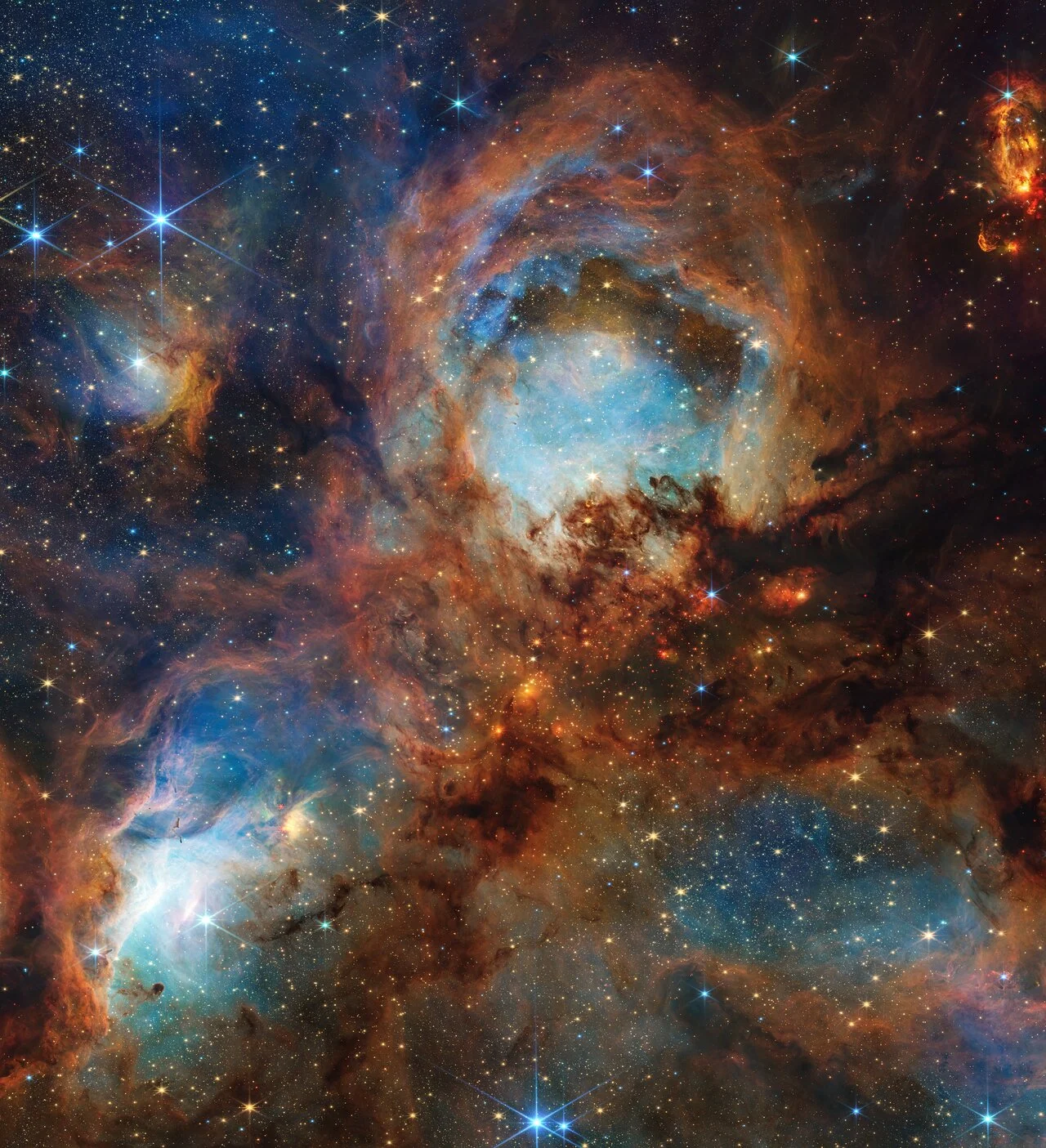
Star Formation Newsletter #399
Lilly Kormann, Moa Huppenkothen, João Alves | 3 April 2026 | Header image: NASA, ESA, CSA, STScI
Aside from the monthly newsletter, we also post newly defended PhDs, interviews, and other news throughout the month. You can always find them on the homepage of our site. In addition, our list of upcoming meetings is now updated.
This edition contains the latest abstracts from March 2026.
CO Ro-vibrational Spectroscopy of AB Aurigae – A Potential Point Source is Present
The Herbig Ae star AB Aurigae hosts a vast, low-inclination protoplanetary disk that exhibits a plethora of substructures, including the protoplanet candidate AB Aur b. We present M-band spectroscopic data taken with NASA IRTF from Feb 2024 covering multiple position angles that captured emission from an off-centered, low temperature, and compact source. Analysis of the CO 1-0 low-J ro-vibrational emission line profiles and spectroastrometric signals localizes the source at around an orbital radius of 65 au and a position angle of 143. These coordinates are distinctly different from those of AB Aur b, which was not detected. Although there is no obvious explanation for the detected source, if we assume it was a circumplanetary disk, then its maximum temperature would be about 550 K and its maximum radius would be about 5 au. Our results alludes to a previously unknown companion that may be residing in the AB Aurigae system.
Vertical Structure of Protoplanetary Disks in Scattered Light: A large sample analysis
High-resolution scattered-light imaging has revealed complex morphologies in protoplanetary and circumstellar disks. Measuring the vertical height of the scattering surface is key to understanding disk structure, evolution, and the properties of embedded dust. We develop a methodology for fitting elliptical shapes to scattered-light images of protoplanetary disks in order to extract vertical height profiles of the dust scattering surface across a large and morphologically diverse disk sample. The dataset consists of 92 near-infrared polarimetric images obtained with VLT/SPHERE. The aim is to identify trends in vertical structure across different disk morphologies and test for correlations with stellar mass, age, and disk dust mass, as well as to investigate the implications of the derived height profiles for the masses of potential embedded planets. We implement a structure extraction and ellipse fitting (SEEF) algorithm that uses edge detection and Gaussian fitting to locate disk structures. Ellipse fitting reveals spatial offsets between the ellipse centre and the stellar position, which are interpreted as vertical height assuming circular ring geometry. Disk inclination, position angle, and the aspect ratio h/r are also derived. The method yields vertical height measurements for 92 disks, showing profiles consistent with flared disk geometries. However, the full sample cannot be described by a single power-law relation. Subdivision by morphology shows no strong correlations for most disk classes, except for extended disks with outer radii larger than about 150 au, which exhibit a clear power-law flaring trend. The lack of strong correlations with other system properties suggests that either different morphologies exhibit distinct vertical structures or that additional physical factors influence disk flaring.
High-resolution mid-IR spectroscopy of SVS 13-A with EXES/SOFIA: The surprisingly high CHOH/HO ratio in the planet-forming zone of a solar mass protostar
Water and methanol are key components of interstellar ices and gas in star- and planet-forming regions, but direct observations of water in low-mass protostars are challenging due to atmospheric absorption. We present high-resolution (R = 70,500) mid-infrared spectroscopy of the Class I protostar SVS13-A with EXES on board SOFIA at 26 m, targeting both HO and CHOH absorption lines. Several lines of each species are detected, tracing warm gas with rotational temperatures of 140—170 K. Remarkably, the methanol column density is a factor of 4 higher than that of water, well above typical interstellar ice ratios (10\%). Comparison with previous millimeter observations indicates that absorption and emission probe distinct regions, with the mid-IR lines likely tracing cooler gas along the line of sight. The surprising observed CHOH/HO ratio may reflect selective sublimation due to the distribution of binding energies or ice stratification in the inner envelope. These observations probe the inner regions of the protostar, where planets are expected to form and inherit the chemical composition of their natal environment, providing a direct link between ice sublimation and gas-phase chemistry. Our results represent the first high-spectral-resolution mid-infrared view of both water and methanol toward a low-mass protostar, offering a unique window into the chemical composition of the innermost envelope and planet-forming region, and highlighting the diagnostic power of high-resolution mid-infrared spectroscopy to uncover hidden chemical layers and the ice-to-gas transition in embedded protostars.
S2D2: Small-scale Significant substructure DBSCAN Detection II. Tracing episodes and gradients of star formation activity
We provide the community with a homogeneous catalogue of small, significant substructures (henceforth NESTs) extracted from the spatial distribution of Young Stellar Objects (YSOs) in a large, consistent sample of star-forming regions. The catalog allows us to explore the relevance of small scale spatial substructure and discuss the interpretation of NESTs as tracers of star formation activity and remnants of the star formation process. We apply our procedure to consistent catalogues of YSOs to obtain NESTs in a sample of star-forming regions. We apply a photometric classification scheme to obtain the evolutionary stage of YSOs and statistically explore the distribution of class 0/I objects as a proxy of recent star formation activity. The region sample is diverse (in distance, size, structure, and global evolutionary stage), and we consequently find different structural properties and star formation histories. Most NESTs in regions with high recent star formation activity show even higher levels of activity. Moreover, the proportion of NESTs with higher activity than the region average increases with the global level of activity of the region. In approximately half of the regions we also find significant spans in the evolutionary stages of the NESTs, consistent with gradients and episodes of star formation. The combination of NESTs with a statistical exploration of the star formation history within each region provides robust and powerful insights into the star formation process. Our results support the role of NESTs as pristine remnants of star formation in highly active regions,stressing the role of fragmentation. The combination of small structures with large scale spatio-evolutionary patterns suggests hyerarchical, prolonged, dynamic, and complex star formation scenarios.
Hub Formation and Filament-Filament Collision: An Analytical Model
Filaments are ubiquitous throughout the Galaxy. Massive star formation is often observed in hub-filament systems, where multiple filaments appear to be interconnected and merging. Filament-filament collisions are therefore a likely triggering mechanism for massive star formation. We derive basic physical properties of filament-filament collisions, such as the collision cross section (CCS), the hub mass, and its mass function, based on a simple cylindrical filament model. We assume a cylindrical filament with length , full width , and line-mass , and consider the CCS between two identical filaments. The collision is specified by three vectors: the directions of the colliding filaments ( and ) and the direction of the relative velocity between the two filaments (). For the thin filament, , the CCS is expressed as , where and represent the directional vectors projected onto a plane perpendicular to the relative velocity . As the angle between and becomes smaller, the cross section proportional to becomes relatively important. We propose a simple model in which the hub mass is estimated by the overlapping portion of the two colliding filaments. The hub mass function is derived using the CCSs and the geometrically estimated overlapping mass. When the directions and relative velocities of the filaments are isotropically distributed, the mass function expected from a single species of filaments fits well to a power law and the power exponent is ~ . The power exponent of the global hub mass function is the same as that of the line-mass distribution function, . This means that a massive hub is formed by the collision of two massive filaments.
A 3D physico-chemical model of a pre-stellar core. II. Dynamic chemical evolution in a pre-stellar core model using tracer particles
This work explores the differences between static and dynamically evolving physico-chemical models of pre-stellar cores. A 3D MHD model of a pre-stellar core embedded in a dynamic star-forming cloud is post-processed using sequentially dust radiative transfer, a gas-grain chemical model, and a non-LTE line-radiative transfer model. The chemical evolution is modeled along 20,000 tracer particle trajectories to capture the impact of a realistic dynamical evolution as the core is formed. The emission morphology of CHOH and -CH and the intensities of CHOH, -CH, CS, SO, HCN, HCO and NH are compared with observations of L1544. Our results show a distinct difference in chemical morphology between the dynamical and static models. The dynamical model reproduces the observed spatial distribution of CHOH and -CH toward L1544, whereas the static model fails to reproduce this morphology. In contrast, when comparing modeled and observed intensities across a broad range of molecules, the static model shows good agreement with observations for L1544. The dynamical model systematically predicts lower abundances and modeled intensities for six of the seven species presented here. For sulphur-bearing species, the intensities are in better agreement with observations when the initial abundances are undepleted in heavier elements. This study reveals distinct differences between dynamical and static physico-chemical models. The static model predicts higher abundances and intensities for the majority of the molecules studied here, compared with the dynamical model. This discrepancy may stem from the specific choices of initial conditions, which could limit the dynamical models ability to fully capture the physical and chemical history. The intensities predicted by the static model are comparable to those observed toward L1544.
B-fields And dust in interstelLar fiLAments using Dust POLarization (BALLAD-POL): VI. Grain alignment mechanisms in the massive quiescent filament G16.96+0.27 using dust polarization observations from JCMT/POL-2
Dust polarization induced by aligned non-spherical grains acts as an important tool to trace the magnetic field (B-field) morphologies and strengths in molecular clouds and constrain grain properties and their alignment mechanisms. The widely accepted grain alignment theory is the alignment induced by RAdiative Torques (RATs). In this work, we investigate grain alignment mechanisms in a massive, quiescent and filamentary Infrared Dark Cloud G16.96+0.27 using thermal dust polarization observation with JCMT/POL-2 at 850 m. We observe the so-called phenomenon of polarization hole attributed to the decrease in polarization fraction in denser regions of higher total intensity and gas density. Our study finds that B-field tangling effect is minimal to cause the polarization hole, and the dominant factor is the reduction in grain alignment efficiency in denser regions, consistent with RAT mechanism. To test RAT theory, we calculate various quantities describing grain alignment, including minimum size of aligned grains, magnetic and magnetic relaxation parameter, and show that RAT mechanism can explain observational data. Our study also reveals evidence for magnetically-enhanced RAT (M-RAT) mechanism required to explain the observed high polarization fractions of above 10 % in the outer regions of the filament. Finally, we perform detailed modeling of thermal dust polarization using based on M-RAT theory and find that the modeling could successfully reproduce the observational data when maximum grain size is around 0.45 m accompanied by an increase in grain axial ratio, along with the consideration of variations in the magnetic field's inclination angle with the line of sight.
The ALMA Survey of Gas Evolution of PROtoplanetary Disks (AGE-PRO): Constraints on disk turbulence, fragmentation velocity, and inner pebble fluxes
How substructures and disk properties affect dust evolution and the delivery of solids and volatiles into planet-forming regions remains an open question. We present results from tailored dust evolution modeling of the AGE-PRO ALMA large program, a sample of 30 protoplanetary disks spanning different evolutionary stages. Visibility fitting of the AGE-PRO ALMA data (at 1.3\,mm) reveals that approximately half of the disks exhibit radial substructures. Combined with stellar properties, disk inclinations, and gas mass estimates from CO isotopologues and NH, this well-characterized set of disks provides an ideal testbed to constrain dust evolution models across different ages and disk morphologies. Using the dust evolution code \texttt{DustPy}, we simulate dust evolution in each disk under four model configurations, varying two key free parameters: the turbulent viscosity () and fragmentation velocity (). Pressure traps are incorporated by perturbing the gas surface density based on the continuum intensity profiles, and synthetic observations generated with \texttt{RADMC-3D} are compared to these profiles. While no single model fits all disks, nearly half are best reproduced by the configuration with low turbulence and low fragmentation velocity (). Models of smooth disks underpredict dust mass, possibly indicating unresolved substructures. Pebble fluxes into inner disk regions correlate more strongly with disk age than with the presence of substructures, highlighting time-dependent dust transport as a key factor in shaping inner disk composition. Our results also provide a comparative baseline for interpreting multiwavelength and JWST water vapor observations.
The Periastron Passage of T Tauri South B as Viewed by ALMA: Millimeter Flux Variations and Dust Heating Triggered by Orbital Motion
We present 225 and 350 GHz imaging of the iconic T Tauri system using the Atacama Large Millimeter submillimeter Array (ALMA). T Tauri is a hierarchical triple system, and the close binary T Tau Sa/Sb underwent periastron passage in March 2023. The ALMA images were obtained in epochs spanning November 2019 through June 2023, and therefore covered the time frame of the recent periastron passage. We clearly resolve the Sa-Sb binary in two epochs of high-resolution measurements with ALMA. We find increases in millimeter flux from heating of the Sa disk and the wider distribution of dust in the environment of the binary. This heating is likely in response to increased stellar accretion activity triggered by orbital motion during the dynamic periastron passage of T Tau Sb around Sa. Resolved, extended millimeter emission is also found to change morphology and increase in flux in the immediate environment of the Sa-Sb binary after periastron passage. This may suggest an increase in nonthermal emission from magnetic interaction, gravitational disruption of the circumstellar disks as the stars passed through periastron, or both of these phenomena. We also detected structures in the compact (24 au radius), thermal dust disk around T Tau N. In particular, we identify a crescent-shaped emission excess just outside a shallow gap at 12 au radius that appears to move at Keplerian speed. Future measurement of dust spectral indices can clarify the origin of increased and variable millimeter emission in the environment of the T Tau S binary.
Dust traps and gas kinematic signatures in a crescent structure of a planet-forming disk
In the past few years, ALMA unveiled a variety of substructures (rings, spirals, crescents) in the continuum emission of most protoplanetary disks imaged at high spatial resolution. While the majority of disks presents axisymmetric ring-like structures in the dust brightness distribution, some sources display asymmetric morphologies (blobs, crescents) that have been often associated to vortices and/or mechanisms generated by the presence of one or more embedded planets. In this brief research report we present the analysis of the arc structure observed in the dust continuum emission of the disk around HD~163296, using high resolution (8~au) matched continuum data from ALMA at four wavelengths. We characterize in detail the arc structures and present a kinematic signature observed in the CS(3-2) emission at the same location. Our results indicate that the crescent is caused by differential dust trapping in a local pressure maxima, for which plausible mechanisms can be the presence of a vortex or trapping in a Lagrangian point of the planet-star system.
New star clusters discovered towards the Galactic anticentre direction using Gaia DR3 data
We report the discovery of 31 new open clusters (OCs) identified in \textit{Gaia}~DR3 data through a systematic search over 220 adjacent fields towards the Galactic anticentre, in the direction of the Perseus arm gap. Eight of them display low-density structures, possibly indicating open cluster remnants properties. The objects were identified and characterized through a combined analysis of photometric, kinematic, and spatial distributions, a methodology successfully applied in our previous works. Their structural properties, mean proper motions, ages, distances and reddening were derived and their centres cross-matched with the available catalogues. The clusters are low-concentrated systems and are mostly located within kpc, exhibiting reddening up to , and ages from 20 Myr to 1 Gyr. The new OCs represent a significant increase in the anticentre cluster census: for kpc and for kpc. They do not belong to the Perseus arm, but may be associated with the Outer Norma arm. The Gulf of Camelopardalis region appears as an interruption in the Perseus arm, possibly reflecting low star-formation activity, dust obscuration, or that the Milky Way is a flocculent, rather than a grand-design spiral galaxy.
Multi-wavelength ALMA Imaging of HD 34282: Dust-trapping Signatures of a Vortex Candidate
Azimuthal arcs in millimeter continuum emission from protoplanetary disks are often attributed to dust-trapping vortices, but definitive observational confirmation of vortices remains lacking. We present sub-0.1" resolution ALMA continuum observations of the HD 34282 disk at 0.9, 1.3, 2.1, and 3.1 mm. These observations resolve a bright azimuthal arc superposed on a compact double-gap, triple-ring morphology, most clearly at shorter wavelengths, and enable us to probe the physical origin of the arc. It exhibits a lower spectral index than the surrounding rings, consistent with enhanced grain growth and/or higher dust surface density of a dust-trapping vortex. Its azimuthal width decreases with increasing wavelength, consistent with tighter confinement of larger grains, or lower optical depths at longer wavelengths. These observations probe dust with Stokes numbers St < 0.03. Vortex models predict negligible peak shifts in this regime, consistent with the 1.3 to 3.1 mm data. At 0.9 mm, however, the arc peak is offset by 15 +/- 4 degree in the direction of disk rotation relative to longer wavelengths, and the near-side ring emission is locally dimmer compared to the far-side, likely reflecting optical-depth or temperature effects. These observations are consistent with azimuthal dust trapping, potentially associated with a vortex-induced pressure maximum.
The trigonometric parallax of IRAS 23385+6053 and physical properties of molecular clouds based on the VLBI astrometry
We performed very long baseline interferometry (VLBI) observations to measure the trigonometric parallax of HO maser sources in the outer massive star-forming region IRAS 23385+6053 using the VLBI Exploration of Radio Astrometry (VERA) in Japan. The annual parallax is ~mas, which corresponds to a distance of kpc, roughly half the kinematic distance of 4.9 kpc reported in previous studies. The proper motion of IRAS 23385+6053 is obtained to be (,)=(, ) mas yr. Based on VLBI astrometry result, we derived the physical properties of molecular clouds in which HO masers have been detected, including IRAS 23385+6053 in the Cepheus and Cassiopeia region. We discuss the line-of-sight structures of the giant molecular clouds using the trigonometric distances obtained from the HO maser sources. Our results suggest that molecular clouds in the Perseus arm extend over approximately kpc at the Cepheus and Cassiopeia region.
Estimation of the magnetic field strength from ALMA dust polarization in the protocluster G327.29
Magnetic fields and turbulence may play a crucial role in the evolution of molecular clouds and ultimately in the formation of dense cores and stars. Despite being studied in many molecular clouds, the exact role of magnetic fields and turbulence in star formation is still poorly understood. Here, we report the high resolution plane of sky magnetic field (B_pos) morphology toward the high mass star forming region G327.29, obtained with the 12-meter of the Atacama Large Millimeter/sub-millimeter Array (ALMA) telescope. From our analysis, we obtain a complex B_pos morphology where the magnetic field orientation is uniformly distributed across the entire range from -90 to +90 deg. The observed area is composed of one filament and one dense central clump, which harbor multiple dense cores. The total magnetic field strengths (B_tot) in these regions are 1.4 \pm 0.7 mG and 2.0 \pm 0.8 mG at a number density (n) of 6.8 \pm 1.5 x 10^5 and 1.1 \pm 0.3 x 10^6 cm^-3 , derived from the angular dispersion function (ADF) method. The virial parameters (α vir )in these regions are 7.7 \pm 7.1 and 0.7 \pm 0.6, suggesting that the regions may be gravitationally bound or unbound after accounting for the errors. Moreover, the ratio of turbulent to magnetic energy (~ 0.25) indicates that the magnetic field is dynamically more important than turbulence. The relative influence of turbulence and magnetic fields on core dynamics appears to depend on how the B_tot scales with gas density (\r{ho}) in the densest regions. In summary, this work presents a comprehensive analysis of the relative roles of magnetic fields, turbulence, and gravity in regulating high-mass star formation in G327.29, enabled by high-resolution ALMA observations.
An Origin of Radially Aligned Filaments in Hub-Filament Systems
Recent observations have identified hub-filament systems (HFSs) as the primary formation sites of massive stars and star clusters. Some HFSs are characterized by multiple filaments aligned radially toward a central high-density hub. However, the physical origin of radially aligned filaments remains unknown. Here, we propose a new formation mechanism of HFSs driven by the interaction of a fast magnetohydrodynamic shock with a molecular cloud characterized by an hourglass-shaped magnetic field and density inhomogeneity. Our three-dimensional magnetohydrodynamic simulations show that the shock propagation leads to the formation of radially aligned filamentary structures with line masses slightly above the thermally critical line mass and lengths of -, and widths of -. High-density filamentary gas () selectively exhibits inward velocities of that increase toward the hub center, while the ambient low-density inter-filament gas retains low velocities regardless of the radius. Mass accretion onto the hub is channeled through dense filaments. The filament formation is driven by oblique shocks generated at the bent magnetic field lines. The resulting post-shock amplification of the tangential magnetic field induces a magnetically guided inflow. The shock-interface interaction amplifies density perturbations, resembling Richtmyer—Meshkov instability modes, which promotes the fragmentation of the shocked layer into multiple filaments. The process studied in this Letter explains both the morphology of radially aligned filaments and the selective mass accretion observed in HFSs. In our simulation, the resulting star formation efficiency is , suggesting that the shock-driven evolution limits the SFE to only a few percent.
Benchmarking pre-main sequence stellar evolutionary tracks using disk-based dynamical stellar masses
Stellar masses are a fundamental property to understand models of pre-main sequence evolution, but their values derived from Hertzsprung-Russell (HR) diagrams are strongly model dependent. We benchmark pre-main sequence stellar evolutionary tracks using stellar masses dynamically estimated by fitting a parametric model to ALMA observations of the CO line transition emitted by the disks orbiting 20 sources in the old ( Myr) Upper Scorpius star forming region. We derive stellar masses from HR diagram fitting for ten different stellar evolutionary models, which we then compare with their stellar dynamical masses for comparison in the stellar mass range . Models with a moderate-to-low fraction of cold stellar spots () most accurately reproduce the dynamical stellar masses ( of the targets agree within ). While a higher spot coverage () provides similar stellar mass predictions similar to magnetic equipartition models, larger fractions () significantly disagree with dynamical masses. Magnetic equipartition models overestimate stellar masses up to a factor , whereas non-magnetic models underestimate them up to . For some models, there is evidence that the stellar mass discrepancies are anticorrelated with dynamical stellar masses. When stellar dynamical mass priors are considered in HR diagram fitting, the median age of a single source can change up to , while the median ages inferred across different tracks become consistent, with the age scatter decreasing by . These results provide strong empirical constraints for testing and developing evolutionary models of pre-main sequence stars.
Q/W-band Observations toward Starless Cores in Orion (QWOSCO) I. Overview, Isotopologues, Isomers, and Complex Organics
Molecular inventories in starless cores are powerful tools for probing the physical and chemical structures at the earliest stages of star formation. Wide-band spectral scans are invaluable for obtaining a comprehensive view of the chemical composition. In this paper, we present the first results from the project Q/W-band Observations toward Starless Cores in Orion (QWOSCO), which uses the Yebes 40-m telescope to survey 23 starless cores in the Orion cloud at the Q (31.0—50.5 GHz) and W (71.1—91.4 GHz) bands with a total bandwidth of 40 GHz. We detect approximately 40 molecular species and derive their column densities, with each species exhibiting a characteristic spread of roughly one order of magnitude. The derived isomer and isotopologue column density ratios, including A/E, ortho/para, cyclic/linear, HNC/HCN, 12C/13C, 14N/15N, 16O/18O, 32S/34S, and D/H, are consistent with expectations for starless environments. Our results together with the literature suggest that the complex organic molecules (COMs) CH3OH and CH3CHO are both likely ubiquitous in starless cores. The column density ratio of CH3CHO with respect to CH3OH in starless cores are comparable or lower by a factor of around 25 than those in hot corinos at the protostellar stages if the CH3OH column density is directly derived or rescaled from that of 13CH3OH, respectively. Accordingly, we discuss the possible roles of methanol opacity and chemical mechanisms across the starless and protostellar stages.
Effect of gravity-driven longitudinal flows in filaments on angular momentum transport to embedded cores
Different models of filament formation predict distinct patterns of angular momentum redistribution toward embedded cores, set by the underlying velocity-field structure, which can set the initial conditions for a preferential orientation between protostellar outflows and filaments. However, the absence of a dominant alignment in observations keeps this connection open to debate. We investigate whether gravity-driven longitudinal flows along filaments can redistribute angular momentum (AM) toward collapse centers and influence outflow-filament alignment. To this end, we analyze the distributions of 3D and 2D-projected angles between sink angular momentum vectors and host filament orientations in an SPH simulation of giant molecular cloud and filament formation. We also characterize the filament velocity field by measuring the angles between SPH particle velocity vectors and filament axes, and the degree of convergent flow toward filament density peaks. No preferred alignment between the sinks' AM and the filament direction is found at early evolutionary stages, neither in 3D nor in 2D. Later, however, a predominantly perpendicular configuration emerges in 3D. Tracking individual sinks indicates that this alignment is not primordial but develops as gravity strengthens. In individual filaments, the onset of perpendicular alignment coincides with the development of convergent longitudinal flows. Finally, we estimate the minimum fraction of perpendicular 3D angles required to reveal a perpendicular 2D alignment for a given sample size. While longitudinal flows develop over extended timescales, once established, they can rapidly reorient the angular momentum vector of the sinks, enabling perpendicular alignments to arise within typical outflow lifetimes.
HCN, HCN, and HNC in molecular cores evolving towards star-forming regions
As a work in progress, results from a chemical and physical analysis of molecular cores in early evolutionary stages concerning star formation are presented. Using archival data from the Atacama Large Millimeter Array (ALMA), a sample of 37 sources was investigated, from which spectra in the frequency range 330—350 GHz were extracted towards the central positions of the molecular cores. Transitions of HCN, HCN, and HNC were analysed using Gaussian fits, obtaining peak intensities, fluxes, and line widths. The column densities of each molecule and their abundances were estimated. The behaviour of these abundances with the temperature of the region was studied, observing positive correlations for HCN and HNC, and none for HCN. This study contributes to the characterisation of the initial conditions of the interstellar medium in early phases of stellar evolution.
No evidence of polarization in the m PAH emission line by independent analyses
Polycyclic aromatic hydrocarbons (PAHs) are commonly used as proxies for star formation, molecular gas content, and other interstellar medium (ISM) properties in our Galaxy and other galaxies. Given their abundance and brightness, polarization measurements of PAH features could, in principle, provide a probe of the ISM magnetic field and intrinsic PAH properties; however, the diagnostic power of PAH polarization remains to be established. Previous studies reported that the m PAH emission line in the northwestern nebula of the Herbig Be star MWC 1080 was polarized at %. This level of polarization was explained via the paramagnetic relaxation process, which may allow the characterization of magnetic fields in the ISM. Using the same observations, here, we re-analyzed the m spectro-polarimetric observations taken with CanariCam on the 10.4-m Gran Telescopio CANARIAS (GTC), and we measure a polarization of % within m, consistent with an unpolarized source, % (instrumental polarization). We reproduce the previously reported polarized PAH emission line if the polarization fraction spectrum is oversubtracted by a constant instrumental polarization and the polarization uncertainties, which is inconsistent with the fundamentals of polarimetric data analysis. Thus, the published m spectro-polarimetric data taken with CanariCam/GTC provide no statistical evidence for a polarized m PAH emission line, in agreement with current dust models.
Turning the knobs on dust evolution: Comparing codes, parameters and their effects on planet formation and disc observables
Protoplanetary discs contain a wide range of dust sizes that strongly influence their thermal structure and planet formation processes such as planetesimal formation and pebble accretion. Dust evolution models are therefore essential for both planet formation simulations and the interpretation of disc observations. Several open-source dust evolution codes are available, each adopting different methods and assumptions. We present a systematic comparison of 1D radial simulations using DustPy, TriPoD, and two-pop-py, and 2D radial-vertical simulations with TriPoD, mcdust, and cuDisc. The comparison includes dust size distributions, dust disc masses, planetary gap structures, millimetre fluxes and disc sizes from synthetic observations, planetesimal formation regions, and planetary growth via pebble accretion. We also perform a parameter study to assess how key dust-evolution parameters influence disc evolution, planet formation, and code agreement. In 1D, two-pop-py depletes dust masses faster and produces higher dust concentrations outside planetary gaps than DustPy or TriPoD. The latter two generally agree well, except when size distributions deviate strongly from a power law. While the calculated millimetre fluxes and disc radii typically agree well, planetesimal formation locations and pebble accretion rates vary significantly between codes. In 2D, we compare cuDisc, mcdust, and TriPoD in simulations of turbulence- and sedimentation-driven coagulation. The dust size distributions agree well, despite the completely different numerical approaches used to model dust coagulation. The largest differences arise in the upper atmosphere, where mcdust suffers from low mass resolution and TriPoD fails to reproduce the exact shape of size distributions that deviate from a power-law.
Protostellar Outflows Shed Light on the Dominant Close Companion Star Formation Pathways
Understanding the formation pathway for close-companion protostars is central to unraveling the processes that govern stellar multiplicity and very early star formation. We analyze a large sample of 51 Class 0/I close-companion protostellar systems, of which 38 show detectable outflows, yielding 42 measured outflows used in our analysis. We use ALMA observations of 11 systems in Perseus and 40 systems in Orion. These companions formed either directly at these small scales ( au separations) via disk fragmentation or at larger scales ( au separations) via turbulent fragmentation followed by inward migration. Because of differences in formation mechanism, the former is expected to have preferentially aligned disks and outflows, whereas the latter is expected to show no preferred alignment. The relative prevalence of these formation pathways remains uncertain, yet it is critical to forming a comprehensive picture of star formation. We examine the distribution of position angles of companion protostars relative to the position angles of their molecular outflows. The outflow, as traced by CO (), is a useful proxy for the angular momentum of the system, expected to be orthogonal to the binary orbital plane. We use a simple model to account for random sampling of inclination and orbital phase in each system, finding that the observations are consistent with a distribution in which the outflows are preferentially orthogonal to the companions. Based on this analysis, we suggest disk fragmentation is the dominant formation pathway for close-companion protostellar systems.
A Modified Conveyor Belt Model: Implications for Surface Density Thresholds for Massive Star Formation
Recent models and simulations of cluster formation within molecular clumps consider multi-scale, hierarchical accretion, which leads to clump mass growth over time. This mode of mass accumulation could have implications regarding the evolution of observable properties such as mass and radius, bringing into question the interpretation of commonly cited thresholds for high-mass star formation. In this paper, we use the conveyor belt model of cluster formation to create synthetic cores/clumps and derive physical and observational properties. We show that while this model successfully predicts many observed trends, modifications are required to match properties of high-mass prestellar clumps. When the model clumps are observationally classified as intermediate- or high-mass star-forming, the threshold delineating these two groups agrees with those found in the literature; however, results show that high-mass clumps at early evolutionary stages can be misclassified using standard surface density thresholds. Our logistic regression analysis reveals the quantity of material to ever enter a star-forming region is the most important factor in differentiating intermediate- and high-mass star-forming regions. This implies observations characterising the environment surrounding star-forming regions are crucial, especially at early evolutionary stages.
JWST Edge-on Disk Ice (JEDIce): Program overview and ice survey results
The icy material within protoplanetary disks plays a central role in planet formation, yet remains poorly characterized by observations. We present 1.6-28m spectra of five disks obtained as part of the JWST Edge-on Disk Ice (JEDIce) program, representing the largest survey of disk ices to date. The major ice species HO, CO, and CO are detected towards all disks, and exhibit a wide range of absolute optical depths and optical depth ratios across the sample. This is suggestive of a range of ice abundances and compositions, but quantitative constraints will require radiative transfer modeling. All disks exhibit ice features across the entire spatial region where the IR continuum is detected; vertically elevated ice grains therefore seem to be ubiquitous in disks. The CO ice is consistently dominated by apolar CO:CO mixtures, implying that the disk ice compositions are neither completely reset nor pristinely inherited from the protostellar stage. The presence of these mixtures also suggests that entrapment may be important in shaping the spatial distribution of CO within the disks. Small molecules commonly seen in protostellar ices (CH, CHOH, NH) are generally not detected in our sample, though tracers of ammonium salts (OCN and the 6.85 m band) are common, potentially reflecting an evolution towards comet-like ice compositions. The spectra also contain a wealth of information about the micron-sized dust, atomic and molecular gas, and PAH content, which together with the ice constraints will provide a comprehensive picture of the chemical, physical, and dynamical state of these systems.
Understanding Balmer Decrements in T Tauri stars in terms of Multiflow Magnetospheric Accretion
Magnetospheric accretion is the paradigm for accretion in Classical T-Tauri Stars (CTTS). However, the standard, one-flow magnetospheric accretion model fails to replicate important characteristics such as the observed Balmer decrements. We address this limitation by adopting a model with two axisymmetric magnetospheric accretion flows of different accretion rates and geometries. We calculate the fluxes of the hydrogen , , and lines of each flow with the magnetospheric accretion model and use Bayesian statistics to fit the Balmer line fluxes of 139 CTTS in the Orion OB1b subassociation, and in the Upper Scorpius, Lupus and Chamaeleon I star-forming regions. We find that the Balmer decrements and line fluxes can be fitted by two distinct but coexisting flows: a compact, high accretion rate flow, close to the star and narrow (mean inner radius and mean width ), covering a few percent of the emitting area, and a more spread out flow, thicker (), and larger (), with lower accretion rate, encompassing the rest of the emitting area. The two-flow model can also reproduce the empirical correlation between the luminosity in and the accretion luminosity. Overall, our findings suggest that a multicolumn approach provides a more accurate representation of the observed Balmer line emission, in agreement with results of numerical simulations.
Large scale mapping of [CI] and the [CI]-to-CO transition in Ophiuchus molecular cloud
Atomic carbon ([CI]) is a key species in the carbon chemistry of the interstellar medium (ISM). Using the Submillimeter Wave Astronomy Satellite (SWAS), we conducted a [CI](P—P) 492 GHz survey covering approximately 4 deg of the L1688 and L1689 regions in the Oph molecular cloud, achieving a spatial resolution of 4.25\hbox{^{\prime}}. The derived [CI] column densities, N([CI]), range from 4.85 10 cm to 6.29 10 cm, corresponding to an abundance ratio N([CI])/N() of 2.24 10 to 2.39 10, with a median value of 1.8 10. Combining observations with photodissociation region (PDR) modeling, we find that [CI] abundance varies less than CO in regions with UV intensity G and N(H) 4.6 10 cm, suggesting [CI] is a more reliable tracer of molecular hydrogen in low-density, high-radiation environments where the [CI]-to-CO transition occurs. Utilizing [CI] as direct H tracer, the CO-dark gas fraction is estimated to be 0.43 , meaning that 43% of the total cloud mass will be missed by conventional calculation based on CO observations but can be calibrated by [CI] emission. The [CI] line widths are systematically broader than those of CO, possibly due to contributions from atomic carbon. These findings provide key insights into Galactic [CI] emission and the carbon cycle evolution in the interstellar medium. Future high-sensitivity [CI] (P—P) surveys with the Chinese Survey Space Telescope (CSST) will significantly advance our understanding of the carbon cycle evolution.
Comparing the Relation inside a Giant Molecular Cloud
In this paper we present a simple analysis around scaling relations derived from the Schmidt conjecture for star-forming molecular clouds, at the intra-cloud scale. Using a hierarchical tree (dendrograms) above a constant threshold ( = 7 mag), we separate individual gas structures in a column density map of the nearby Giant Molecular Cloud Orion A, constructed from Herschel far-infrared maps. These structures define regions of dense molecular gas that can actively form stars. We also estimate their current embedded population using a list of known young stars. From the combined analysis of the column density map and the young star catalog, we construct a series of plots that show the intra-cloud level behavior of three well-known scaling relations: vs. , vs. and vs. . Our dataset, along with other sets from literature, show the validity of a linear relation for vs. , from intra-cloud to inter-cloud scales, over three orders of magnitude. We also especulate on the possibility that the relation could be valid over an even larger scale range. Additionally, our data are consistent with the vs. discussed in previous studies. However, our data is not quite in agreement with previously proposed fits for the vs. relation, and we discuss the implications of using the free-fall timescale as the main parameter defining the star-forming efficiency in dense gas regions.
Time-variable Scattered Light in Herbig Disks Observed with Subaru/SCExAO
Using the Subaru Coronagraphic Extreme Adaptive Optics (SCExAO) instrument, we present near-infrared K-band polarimetric imaging of nine Herbig stars selected from a volume-limited sample within 200 pc. We detect the disks around MWC 480, HD 163296, and HD 143006 for the first time with SCExAO, and compare these observations with previous VLT/SPHERE datasets to identify surface-brightness variability. In MWC 480, we resolve two azimuthal brightness dips near the disk minor axis and find evidence that one of them shifted between 2021 and 2022. In HD 163296, we identify an apparent linear azimuthal motion of a localized peak in polarized intensity along the outer ring over a 15-month baseline. The rapid motion of these features relative to the local Keplerian velocity suggests that the observed variability is driven by changing illumination rather than physical material motion. Due to uncertainties in the underlying scattering background, however, we cannot determine the precise physical origin of the variability. No significant disk variability is detected in HD 143006 over a 10-month baseline. We also report the first detection of a protoplanetary disk using the fast-PDI mode on SCExAO, illustrating both the promise and current limitations of this observing mode. Finally, we report non-detections toward HD 144432, HD 56895, PDS 76, HIP 80425, HD 148352, and HIP 81474. All non-detections with Meeus classifications belong to Group II systems and are likely self-shadowed. For these six systems, we measure the system-integrated polarization fraction and angle of linear polarization, providing quantitative constraints on their unresolved circumstellar environments.
Detection of non-thermal radio emission components from the Orion Nebula: stellar jets, cloud collision or feedback from stellar winds?
The Orion Nebula is the closest high-mass star-forming region, making it an ideal laboratory to investigate physical processes in complex star-forming environments. At radio frequencies, the dominant emission mechanisms are thermal bremsstrahlung and non-thermal synchrotron. HII regions typically emit thermal radiation tracing the ionised gas; however, detecting and characterising non-thermal emission can provide insights into magnetic fields and the energy distribution of relativistic particles in star-forming regions. We have utilised the upgraded Giant Metrewave Radio Telescope (uGMRT) to study radio emission in the Extended Orion Nebula (EON) region. We present results from wide-band interferometric observations using uGMRT bands 3 and 4, probing a frequency range not covered by other sensitive radio interferometers. We produced deep continuum images with RMS noise levels of Jy~beam in band 3 and Jy~beam in band 4. We further generated in-band and broad-band spectral index maps using these images. To establish the robustness of the spectral index measurements, we conducted a detailed analysis using simulated uGMRT data. From the continuum spectral index analysis, we report the unambiguous presence of non-thermal radio emission in the EON region. To investigate its plausible origin, we correlated our results with multiwavelength observations, identifying a strong association between non-thermal emission and outflows from young stellar objects, while also exploring alternative explanations. In future, reliable broad-band radio spectral index measurements, together with dedicated multiwavelength observations, will be invaluable for resolving the origin of non-thermal emission in the Orion Nebula and other star-forming regions.
Direct evidence for magnetohydrodynamic disk winds driving rotating outflows in protostar HOPS 358
Angular momentum removal is a fundamental requirement for star and planet formation, yet the mechanisms driving this process remain debated. Magnetohydrodynamic disk winds, launched along magnetic field lines from extended disk regions, offer a promising solution, particularly in regions where magnetorotational turbulence is weak. Here we present high-resolution Atacama Large Millimeter/submillimeter Array observations of the Class 0 protostar HOPS 358, revealing a rotating, nested outflow structure traced by H2CO, SO, and CH3OH emission. The outflow preserves the disk's rotational sense and is aligned with the disk axis, providing direct observational evidence for a magnetically launched disk wind. From the measured kinematics, we derive a dimensionless magnetic lever arm of approximately 2.3 and constrain the wind-launching region to radii of 10-18 astronomical units within the planet-forming zone. These results demonstrate that magnetohydrodynamic disk winds operate during the deeply embedded phase, efficiently extracting angular momentum while shaping disk evolution and establishing initial conditions for planet formation.
Dust distribution in circumstellar disks harboring multi-planet systems. II. Super-thermal mass planets
Theoretical formation models and exoplanet detection surveys indicate that systems with multiple giant planets are common. We investigate how multiple super-thermal mass planets embedded in a circumstellar disk shape the dust distribution and examine the consequences for interpreting disk substructures and inferring planetary properties. We perform two-dimensional hydrodynamical simulations with a modified PLUTO code, treating dust as Lagrangian particles in a wide range of sizes. We analyze systems with two planets of different masses and orbital separations, comparing them to the single-planet scenario. We generate synthetic ALMA continuum maps using RADMC-3D and compute the relative impact velocities of dust particles to assess potential limitations to grain growth. Dust morphologies in multi-planet systems cannot be described as a simple superposition of single-planet gaps. Secular planetary perturbations can generate multiple dust traps and asymmetric structures, while also exciting significant eccentricities in dust particle orbits. As a consequence, the locations and widths of dust rings and gaps depend on the size of the particles, the masses of the planet, and the orbital configurations. Synthetic continuum images may hide gaps carved by multiple planets, thereby complicating the interpretation of observed substructures. In addition, eccentricities induced in dust orbits lead to stronger gas drag, reducing the Stokes number for a given particle size, and the enhanced relative velocities associated with eccentric orbits can further suppress grain growth, promoting fragmentation and replenishment of small dust grains.
The ALMA-QUARKS Survey: Evidence of an Explosive Molecular Outflow in IRAS 15520—5234
We present a study of the massive protocluster IRAS 155205234, which displays evidence of an explosive molecular outflow that unleashed a kinetic energy of at least 10 erg. The protocluster contains 16 dense cores detected in the ALMA band 6 continuum emission maps, having masses in the range from 0.2 to 11.0 M. Our analysis of CO emission reveals 28 well collimated outflow fingers, the majority of which follow a Hubble-Lemaître velocity law. The outflow fingers show no preferred orientation in the plane of sky and emerge from a common center of origin. We estimate the total mass, momentum, and kinetic energy of the outflow fingers and find that the values are at least one order of magnitude higher than the typical bipolar outflows associated with massive protostars. The morphology and kinematics of the outflow fingers suggest that the outflow associated with IRAS 155205234 is explosive in nature. We calculate the dynamical age of the explosive event to be approximately 6550 years. Additionally, we estimate the frequency of such explosive outflows in the Galaxy, which is one event every 83 years. Finally, we speculate that the rearrangement of masses within the massive protocluster and the dynamical interaction among the massive cores may result in the formation of such an energetic event.
Exocomets of Pictoris II: Two dynamical families of exocomets simulated with REBOUND
We investigate the dynamical evolution of particles in the Pic system to determine likely formation pathways to the present-day observed exocomet populations. We aim to relate these results to similar studies recently carried out since the discovery of the inner planet Pic c. We simulate the Pic system using the non-symplectic adaptive N-body integrator IAS15 in REBOUND. We seed the system with over 100,000 mass-less test particles that evolve for 25 Myr, and adopt initial conditions and a particle distribution that closely matches similar simulations in recent literature. Using IAS15, REBOUND resolves close-encounters between test particles and the two gas giants in the system, which is crucial for understanding aspects of the dynamical evolution. Planet-disk interactions rapidly clear most of the system within 35 AU apart from a region within the orbit of Pic c, and a region between 20 and 25 AU. After 10 Myr, exocomets can be sourced continuously from these regions, as well as from the inner edge of the region beyond ~35 AU where particles are stable on longer timescales. From the region interior to Pic c, the exocomets are formed by excitation via mean-motion resonance with Pic c, obtaining a narrow distribution of radial velocities, consistent with spectroscopic observations. Particles initialized in the outer system may enter onto stargrazing orbits due to disruption by the two gas giants, causing a wider radial velocity distribution, and we propose that this population corresponds to a second dynamical family previously observed via spectroscopy. These particles typically undergo chaotic dynamical evolution for to years after passing the water sublimation limit at ~8 AU until reaching the sublimation distance of calcium near 0.4 AU, implying that the two families of exocomets may have different volatile contents.
The SPHEREx Ices Investigation: An Overview
SPHEREx is a NASA mission designed to perform an all-sky spectroscopic survey in the 0.75 - 5 m wavelength range. Its primary science objectives are to investigate: (1) inflationary cosmology, (2) the history of galaxy formation, and (3) the abundance of molecular ices - critical for prebiotic chemistry - found on the surfaces of interstellar dust grains within planet-forming regions. This paper focuses on the third theme, the SPHEREx Ices investigation, for which SPHEREx is conducting a spectroscopic survey of nearly ten million preselected sources throughout the Milky Way and Magellanic Clouds to characterize their ice absorption features. By selecting targets based on infrared color, spatial isolation, and brightness, the Ices Investigation secures high-signal-to-noise spectra across a broad range of astrophysical environments that are relatively free of spectral contamination. Rather than attempting to decompose each spectrum into its individual ice components, the Ices Investigation prioritizes accurate measurements of the integrated optical depths of key molecular ice absorption features. This approach enables statistically powerful correlation studies between ice abundances and environmental parameters - including extinction, temperature, gas composition, radiation field strength, cosmic ray flux, and star formation activity. The data pipeline developed for this purpose incorporates machine learning for continuum estimation, drawing on both SPHEREx and ancillary datasets. Ultimately, the expansive spectral archive produced by SPHEREx, combined with targeted follow-up from facilities like JWST, will transform our understanding of Galactic ice formation, evolution, abundance and their inheritance into planetary systems and prebiotic inventories.
IRAM 04191+1522: a compact proto-brown dwarf binary candidate
Very low-luminosity objects in nearby star-forming regions have been identified as promising proto-brown dwarf candidates. The study of their multiplicity can shed light on the dominant formation mechanism of these substellar objects. We aim at studying the multiplicity of the very low luminosity object IRAM 04191+1522. To do so, we have obtained 0.89mm ALMA observations with a very extended configuration, achieving an angular resolution of ~0.04 arcsec (6 au at 140 pc). We have complemented our data with new VLA observations, and ALMA archival data at 1.3mm. As a result, we resolve IRAM04191+1522 into a close binary candidate for the first time. The binary is detected in the ALMA continuum data with a projected separation of ~80 mas, or 11 au at a distance of 140 pc. The two sources are oriented in the East-West direction, with the eastern component being brighter and more extended than the western one, which is marginally resolved. The analysis of C18O(2-1) archival data reveals gaseous material in rotation around the binary, presumably from a circumbinary disk with ~27 au of radius centered on the faintest ALMA component. A fit of the position-velocity diagram allows us to estimate a total dynamical mass for the system of 50+-40 MJup. Therefore, we classify IRAM04191 as a tight proto-brown dwarf binary candidate. The VLA data reveals the detection of a single object closer to the western ALMA source, and with a spectral index consistent with a radio jet.
GASTON-GP: Source catalogue and millimetre variability of massive protostellar objects
The processes governing protostellar mass growth remain debated, although episodic accretion is now understood as a key feature of protostellar evolution across all masses. Luminosity bursts have been observed in both low- and high-mass protostars, but the overall statistics remain limited, especially for high-mass objects. Over the past decade, numerical simulations of high-mass core collapse have provided a theoretical framework for interpreting protostellar variability, yet additional observational constraints are required to determine the characteristics and importance of bursts. In this work, we analyse data from GASTON-GP programme, which mapped a 2.4 square degrees region of the Galactic plane (centred at l = 24 deg) at 1.15 and 2.00 mm using NIKA2 on the IRAM 30 m telescope. The survey obtained 11 epochs over four years, offering the first opportunity to study millimetre variability in a large sample of massive protostellar sources. From the combined dataset, we constructed catalogues of 2925 compact sources at 1.15 mm and 1713 at 2.00 mm. Using a dedicated relative calibration scheme, we generated millimetre light curves for around 200 high-signal-to-noise sources and identified one variable candidate. However, it is not protostellar. Consequently, we report no robust detections of variable protostellar sources in GASTON field. This is the direct consequence of observational limitations (i.e., sensitivity, resolution) combined with the lack of any 100-fold luminosity bursts during the observations, which is consistent with estimates inferred from isolated core collapse simulations. This study highlights the need for future high-resolution, high-cadence surveys to constrain the accretion histories of massive protostars.
Characterization of molecular outflows at core-scale in the massive clump AGAL G345.0029-0.224
High-mass stars, with their powerful winds and intense radiation fields, are fundamental in regulating galactic dynamics and evolution; however, despite their great relevance, the mechanisms involved in their formation are still not fully understood. In this context, molecular outflows, which are essential for removing angular momentum and allowing accretion onto the central object, are a crucial phenomenon for characterizing their formation. Previous studies reveal a discrepancy in the masses of outflows associated with high-mass clumps between works conducted at the clump scale ( pc) and those at the core scale ( subpc). This suggests that the high-mass outflow activity observed at the clump scale might be the result of the contribution from several lower-mass outflows linked to individual molecular cores. This work presents a study of the molecular gas toward a high-mass clump associated with an Extended Green Object (EGO). EGOs are indicators of jets associated with high-mass protostars. Employing high angular resolution data from the Atacama Large Millimeter/submillimeter Array (ALMA), the presence of several hot cores with outflow activity was observed in the source. A characterization of the outflows at the core scale is presented within the context of the physical parameters of the molecular clumps.
From planetesimals to planets with N-body simulations in the giant-planet formation region
The cores of wide-orbit giant planets can form via pebble accretion if large planetesimals form in the outer regions of protoplanetary discs at sufficiently early times. Streaming instability simulations support mass distributions consistent with Solar System minor body constraints, but when and where planetesimal formation took place remains uncertain. Here, we report on our N-body simulations of core formation through pebble and planetesimal accretion starting from streaming-instability inspired planetesimal mass distributions. We explore two initial radial planetesimal distributions, a ring-like and a spatially more uniform distribution, between 10 and 50 AU. To address the numerical challenge of simulating realistic planetesimal numbers, corresponding to one to ten Earth masses of planetesimals, we made use of GPU acceleration for the N-body interactions (with GENGA) and a newly developed pebble accretion module. We find that the top of the planetesimal mass distribution provides the seeds for core formation through pebble accretion, leading to the formation of multiple giant planets. This is consistent with previous studies not including N-body interactions. Planetesimal surface densities, crudely corresponding to an initial 10% formation efficiency, imply low mean collision rates (around unity) in the gas disc phase. Our simulations show that giant planet formation depends only weakly on the initial locations where planetesimals form, because of rapid dynamical scattering, and on their total mass budget, due to filtering of the pebble flux between embryos. After disc dissipation, giant planet systems stir the remnant primordial planetesimals, making a scattered disc an inherent outcome of giant planet formation. Giant impacts between planetary cores generally appear to be rare in the first 100 Myr.
Modeling the Accretion of High-Velocity Clouds from a Rotating Halo
High-Velocity Clouds (HVCs) are a major fuel reservoir for star formation in the Galactic disk. Determining their origin and kinematics is thus crucial for understanding Galactic evolution. In this paper, we employ simple test-particle simulations to model HVC kinematics, generating line-of-sight velocity maps and probability density functions (PDFs) for comparison with observational results. We find that models assuming low angular momentum and an initial scale of tens of kiloparsecs (kpc) successfully reproduce the observed kinematic trends for both blue-shifted and red-shifted components. This consistency may support the dominance of intermediate-halo dynamics (tens of kpc scale) in regulating Galactic evolution, consistent with HVC formation via thermal instability in metal-polluted gas in the halo. Furthermore, by considering the entire bulk mass involved in the continuous accretion process – including diffuse or ionized components that often escape direct observation – our theoretical estimates yield a total mass accretion rate of several solar masses per year. This indicates that HVC accretion has the potential to supply a sufficient amount of gas to the Galactic disk to sustain ongoing star formation over several Gyr. Our findings suggest that the Galactic baryon cycle and disk evolution are governed by dynamics within the intermediate halo, providing key kinematic constraints for future magnetohydrodynamical simulations that resolve spatial structures of high velocity clouds.
On the relation between magnetic field strength and gas density in the interstellar medium. II. Density uncertainties and diffuse gas constraints
The relationship between magnetic field strength and gas density is essential to understand the interstellar medium and star formation. Zeeman measurements in dense atomic and molecular gas phases have traditionally been used to directly probe magnetic field strengths in the Milky Way. This allowed derivation of a relationship between magnetic field strength and gas number density . We recently generalized this relation as a two-part power-law with non-zero slopes and a transition density given as for and for . Here, we extend our previous hierarchical Bayesian framework by incorporating a large body of pulsar observations that probe the diffuse interstellar medium and explicitly modelling density uncertainties through a global log-density correction parameter applied to all densities. We also account for magnetic field geometry and measurement uncertainties through a magnetic hyperparameter to estimate . This results in a stronger constraint on the diffuse gas part of the — relation. Our results confirm a non-zero exponent in the diffuse gas and a broad transition density with our best model and data set yielding maximum a posteriori results of , , , and .
Optical Spectroscopy of the IR Source CPM 19 and Surrounding Objects
Optical spectra of the well-known infrared source CPM~19, which exhibited a strong decline in brightness during the period from 1984—1987 to 2000—2005, have been obtained for the first time. A strong and broad H emission line has been detected, along with the possible presence of [S II] emission. No traces of an absorption spectrum are observed. It is suggested that the optical component of CPM 19 is in the pre-main-sequence stage. Various explanations of the observed properties are considered; a plausible scenario is that CPM 19 may belong to the class of UX Ori-type stars with an unusually long eclipse duration, similar to that observed in V1184 Tau. Spectra of other nebulous objects in the vicinity of CPM 19, including the HH objects HH 940 and HH 941, have also been obtained and discussed.
SPHEREx Wide-Field Infrared Spectral Mapping of Interstellar Ices and Polycyclic Aromatic Hydrocarbons
We present some of the first infrared spectral maps acquired by SPHEREx. These maps, which to our knowledge are the largest of their type ever compiled in the near-infrared, reveal multiple strong lines due to interstellar ices and polycyclic aromatic hydrocarbons (PAHs) throughout the Cygnus X and North American Nebula regions. The maps emphasize the strongest features arising from the 3 m HO, 4.27 m CO, and 4.67 m CO lines and the 3.28 m PAH feature, all of which are detected over large areas with complex and filamentary spatial distributions. The ice absorption maps of HO and CO in particular broadly trace dense, cold, and well-shielded regions across Cygnus X, consistent with the established picture of efficient ice formation in dense molecular clouds. The interstellar ice features are also detected abundantly in diffuse absorption over wide areas. The relative strength of the HO and CO features varies among different lines of sight, indicating possible differences in local physical conditions or chemical variations. The 3.28 m PAH emission correlates with the emission from the 7.7 and 11.2 m features, but shows small differences that may trace the grain size distribution and variations in the ambient UV field. SPHEREx all-sky spectral imaging, of which only a small fraction is showcased in this work, will support numerous science investigations including the structure of the Galaxy, the physics of the interstellar medium, and the chemistry of stars.
Exploring the chemical evolution in hot molecular cores
We present preliminary results of an extensive research project aimed at describing the physical and chemical conditions of hot molecular cores (HMCs). Using millimeter continuum and spectroscopic data extracted from the Atacama Large Millimeter Array (ALMA) archive, we have estimated rotational temperatures () and column densities of , , and A— and E— for a sample of molecular cores. We present a thermal characterization of these cores, revealing the existence of temperature gradients within them. These cores are, in turn, embedded in large molecular clouds. Additionally, we estimated molecular abundances that were evaluated as tracers of the chemical evolution of these cores. Finally, in a pilot study aimed to link observations with simulations, some of the obtained molecular abundances are compared with predictions from the Nautilus code.
Dipole-exchange spin waves and mode hybridization in magnetic nanoparticles
We investigate spin-wave modes in confined ferromagnetic resonators with spherical and cylindrical geometries across the exchange-dominated, dipole-exchange, and dipolar interaction regimes. Starting from the linearized Landau-Lifshitz-Gilbert equation, we show that the projection of the total angular momentum and mirror parity are conserved quantities in the problem of axially symmetric resonators. These symmetries provide a natural classification of spin-wave modes and explain the degeneracy of exchange modes, as well as its lifting by dipolar interactions. Numerical analysis shows that the nonlocal dipolar interaction removes the exchange degeneracy and hybridizes modes, leading to avoided crossings between modes that belong to the same symmetry sector. To describe this behavior, we develop a coupled-mode theory formulated directly in terms of dynamical magnetization, which reduces the dipole-exchange problem to a finite system of interacting modes. The resulting framework provides a unified description of spin-wave spectra in confined magnetic particles from the exchange limit to the dipolar regime.
Far-infrared Polarization Properties of Nearby Star-forming Regions: A New Compendium of SOFIA/HAWC+ Observations
We present a comprehensive polarimetric study of 26 nearby molecular clouds in four far-infrared bands (53 m to 214 m) using 52 archival SOFIA/HAWC+ datasets. Far-infrared dust polarization observations probe the plane-of-sky magnetic field. To investigate scale-dependent trends, we group the molecular clouds by distance and analyze the data at common angular () and common physical (0.052 pc and 0.32 pc) resolutions. The two shorter wavelengths are more impacted by smoothing, exhibiting a larger decrease in percent polarization. We analyze the polarization spectrum – the polarization fraction as a function of wavelength – and find that it depends more strongly on column density than dust temperature. We find a "falling" spectrum at the 0.052 pc resolution, but find a "flat" spectrum at the 0.32 pc resolution, suggesting that resolution plays an important role in the observed polarization spectra. We propose that warm dust grain emission in small-scale structures ( 0.1 pc) traces different magnetic field geometries only resolved in our close regime data. There is no preferred magnetic field orientation across our data, which suggests that the magnetic field in our parsec scale regions is decoupled from the large-scale field that is primarily parallel to the Galactic plane. The relationship between percent polarization and column density varies between clouds, but the correlation between percent polarization and angular dispersion is consistent across regions. This compendium of dust polarization maps highlights the value of observing at multiple far-infrared wavelengths and will enable additional population-level studies of magnetic fields and dust across star-forming environments.
PRODIGE – envelope to disk with NOEMA VIII. Sulfur oxides trace a shock caused by a streamer in the inner envelope of a protostar
(Abridged) Recently, streamers have been observed causing shocks at the outer edge of protoplanetary disks. The study of sulfur-bearing species can help us to understand the physical and chemical changes caused by infalling streamers toward their landing positions. We study the physical properties traced by SO and SO toward the Class I protostar Per-emb 50, which is possibly related to the streamer infalling toward its disk. We present new NOEMA A-array observations as part of the large program "Protostars and Disks: Global Evolution" (PRODIGE). We analyzed the morphology of SO and SO, and complement our interpretations with additional H_CO and CO data from the same program. We compared the SO and SO morphology with an infalling-rotating model. We applied Bayesian model selection to the brightest SO line to disentangle the different kinematic components traced by this molecule. We used Local Thermodynamic Equilibrium (LTE) and non-LTE analyses to determine the temperature and density of the SO emission. There are two separate peaks of SO emission offset toward the southwest of Per-emb 50, one brighter (peak 1) at about 180 au from the protostar, and a weaker one (peak 2) at about 400 au. Peak 2 is blueshifted with respect to an infalling-rotating envelope. We propose that this peak is caused by the shock between the inner envelope and the streamer. Peak 1 is consistent with the expected envelope motion, and could thus be caused by shocks at the disk-envelope interface, but potential streamer influence cannot be neglected. Both peaks show abundance ratios consistent with a low velocity shock ( \kms) when compared with shock models. Streamers can affect the physical and chemical structure of both disks and envelopes, suggesting that streamers can play an important role in shaping both structures in the embedded stages of star formation.
Formation of spirals in early stage protoplanetary discs
Class II protoplanetary discs feature numerous non-axisymmetric substructures like spirals and the underlying mechanisms for their formation are still highly debated. Coincidentally, early stage, massive discs are subject to the gravitational instability that causes them to collapse into denser substructures. However, like for most instabilities, real systems usually remain marginally stable, here with Toomre parameter . We study how the self-gravity of the gas triggers the growth of spiral structures in the disc. We specifically focus on discs that are considered stable, that is, with respect to the gravitational instability (with ), as these discs remain unstable to non-axisymmetric perturbations like spirals. After a linear stability analysis, we produce high-resolution 2D shearing sheet simulations with the GPU-accelerated code \idefix of self-gravitating discs. We probe different initial densities and thermodynamical models of Toomre-stable discs. The initial transient growth of the spiral wave matches the linear theory provided we take into account the time dependency of the amplification. The spirals are then rapidly non-linearly amplified with growth rate orbital time scale. After this time spiral large scale mode are amplified up to 1000 times more than linear theory predicts. At later times, low density discs reach a weak gravito-turbulent state with and discs with higher density undergo runaway collapse of the spiral arms. All discs exhibit dominant large-scale spirals.
ALMA Central molecular zone Exploration Survey (ACES) V: CS(2-1), SO(2_3-1_2), CH3CHO(5_1,4-4_1,3), HC3N(11-10), and H40a lines data
We present data from the ALMA Central Molecular Zone Exploration Survey (ACES) Large Program, which provides broad spectral-line and 3 mm continuum coverage of the Central Molecular Zone (CMZ) at a spatial resolution of 0.1 pc. The survey delivers homogeneous, wide-field mosaics that enable direct comparisons of the physical and chemical conditions across diverse environments in the Galactic center. In this data release paper, we present the CS(2-1), SO(2_3-1_2), CH3CHO(5_1,4-4_1,3), HC3N(11-10), and H40a lines observed simultaneously within two broad spectral windows. These lines reveal pronounced spatial and chemical variations across the CMZ, tracing distinct components of molecular gas, shock-affected regions, and ionized structures. The high angular resolution and multi-line capability of the ACES dataset make it a powerful resource for future studies of gas dynamics, star formation activity, and the physical connection between the CMZ and Sgr A*.
From dust to planets – II. Effects of wide binary companions and external photoevaporation on planetesimal and embryo formation
More than half of Solar-type stars are found in binary systems. The numbers of exoplanets within binary systems in s-type orbits now numbers over 700. However, whilst the numbers have increased, there still does not exist a global model of planet formation for wide binary systems, where there does for single stars and circumbinary systems. As a precursor to such a model, that includes the necessary physical planet formation processes, it is important to understand how an outer binary companion affects the evolution of circumstellar discs, and the formation of planetesimals and planetary embryos. The main mechanism for which these processes are affected, is through truncation of the protoplanetary disc outer edges. In this paper, we determine these effects, whilst also comparing them to the effects of external photoevaporation that competes to truncate protoplanetary discs. We find that disc truncation by both a binary companion and external photoevaporation significantly reduces the efficiency to which planetary embryos are able to accrete pebbles and grow into terrestrial mass planets. This is due to the pebble supply being cut off as the pebble production front reaches the disc outer edge before planets are able to significantly increase in mass. This hindrance to planet formation occurs when the truncation radius due to the binary companion is below au, corresponding to binary separations of au for equal mass, circular binary stars. For separations greater than 300 au, planet formation operates similar to that around single stars. Our results highlight the detrimental effects of a binary companion for intermediate binaries, that can provide possible explanations for the dearth of multiple planets within binary systems of separations au
First Detection of the Glycine Isomer Glycolamide in Hot Molecular Core
Understanding whether prebiotic molecules can endure and reform through the energetic stages of star formation is essential for tracing the continuity of interstellar chemistry toward life. Glycolamide, an isomer of glycine, was recently detected in the molecular cloud G+0.693-0.027. However, establishing its presence in warm, high-density environments is crucial to evaluate the chemical continuity of amides. Here we report the first detection of glycolamide in a hot molecular core, G358.93-0.03 MM1, using ALMA 1 mm observations. Seven unblended or only mildly blended emission lines were identified, yielding an abundance of (1.70.2) relative to H. The comparable formamide/glycolamide and acetamide/glycolamide abundance ratios in both sources suggest a chemically connected amide network across different environments. These results demonstrate that amides can persist and chemically evolve during massive star formation, tracing the chemical continuity from interstellar to protostellar environments.
The GRAVITY young stellar object survey – XV. The star-disk interaction region of the T Tauri star DO Tau
Protoplanetary disks around young Sun-like stars are the cradles of the vast majority of detected exoplanets. Probing these disks at multiple spatial scales is key to uncovering how planets form. We aim to spatially and spectrally resolve the inner disk and star-disk interaction region of the M0.3 T Tauri star DO Tau by combining two complementary techniques. We used high-resolution near-infrared spectra from CFHT/SPIRou to constrain the magnetospheric star-disk interaction process and optical long-baseline interferometry with ESO VLTI/GRAVITY to determine the sizes of the K-band continuum and Br line emitting regions. From the SPIRou spectra, we confirmed that this ~0.5 M star is a strong accretor. The HI and HeI lines exhibit strong variability on a daily timescale, consistent with the burster classification of DO Tau derived from its K2 light curve. We derived an upper limit of 0.35 on the ratio between the magnetospheric truncation radius and the disk corotation radius, indicative of an ordered unstable accretion regime. The size of the Br line emitting region obtained from GRAVITY is much smaller than the K-band continuum emitting region. This compact Br emission region ( 0.011 au) suggests that most of the line flux originates from the magnetospheric accretion region and/or from an inner wind close to the magnetosphere-disk interface. The inclination we derived for the inner disk (45-55°) differs from that of the outer disk inferred from the ALMA continuum (30°). This points toward a misalignment or warp of the outer disk that may originate from the suspected past encounter with the neighboring HV Tau system.
Fundamental properties of protoplanetary discs determined from simultaneous fits to thermal dust images and spectral energy distributions
We present a novel machine learning method that is capable of rapidly and accurately producing dust-continuum model images and spectral energy distributions from training sets created using a detailed radiative transfer code. We create a training set that encompasses the parameter space for protoplanetary discs, and then couple the trained machine learning method with a Bayesian optimisation algorithm. We then simultaneously fitted 1.3 mm ALMA ODISEA survey images of protostellar discs in rho Oph, and their spectral energy distributions, in order to determine fundamental discs parameters such as dust masses and radii. We find that good simultaneous fits may be found for the Class II objects in the survey, although the spectral fits are poorer for the Class I and flat spectrum sources. We find that the dust mass distributions of discs is broader and shallower than that predicted from 1.3 mm flux dust mass estimates, substantially increasing the numbers of objects with high-mass and low-mass discs. We show that this is due to a combination of optical depth and dust temperature effects, which are strongly related to the disc size and inclination constraints provided by the imaging fits. We show that there is a significant decrease in disc scale height and disc flaring when moving from the the Class I objects, to the flat spectrum sources, and the Class II discs.
exoALMA. XXIV. Formaldehyde Emission in Protoplanetary Disks of exoALMA Compared with Their Properties and Dynamical State
The presence of asymmetries and substructures in protoplanetary disks, revealed by both dust and gas emission, highlights the potential interplay and the broader connection between chemistry and dynamics in disk evolution. We explore multiple relationships using the nonparametric Kendall- correlation to examine formaldehyde (HCO) emission with relation to stellar and disk properties for a subset of disks from the exoALMA sample. We also retrieve the HCO column density and excitation temperature using four transitions, measured in radial bins of 100 au, and quantify the level of asymmetry in the resolved peak intensity of the HCO emission. From our correlation analysis, we find no correlations with sufficient statistical significance. However, we identify tentative relationships that can be tested with larger samples. In particular, we report a proposed correlation () between stellar effective temperature and the formaldehyde excitation conditions, suggesting that, to first order, the central star dominates the nature of the HCO emission over possible dynamical asymmetries traced by dust. Although a correlation with the stellar luminosity was also expected, a larger sample is required to confirm or refute this trend. A possible correlation with spectral type, together with the broad range of HCO excitation temperatures within the inner 100 au of the studied disks, hint at possible multiple chemical formation pathways for HCO, including both gas-phase reactions and ice-surface chemistry on dust grains.
FEAST: a NIRSpec/MOS survey of emerging young star clusters in NGC 628
JWST can pierce through dusty molecular clouds to study the early stages of star formation, where young star clusters are actively driving stellar feedback and still emerging from their natal cloud. We present a first look of the JWST/NIRSpec multiplex spectroscopy observations acquired by the Feedback in Emerging extrAgalactic Star clusTers (FEAST) program for the nearby spiral galaxy NGC628. We showcase JWST's ability to resolve the spectral properties of emerging young star clusters (eYSCs) and their immediate interstellar medium (ISM) by focusing on a bright star-forming complex () in the northern spiral arm as a science proof-of-concept. The eYSC spectra are rich in ionized gas (from HII regions), as well as warm H and polycyclic aromatic hydrocarbon (PAH) emission from photodissociation regions (PDRs), consistent with young star formation. equivalent widths and H/He ionizing photon fluxes both indicate the presence of hot, young massive stars (O8.5V-O8V), consistent with photometry SED estimates. The ionized gas is highly correlated with H and PAH emission, suggesting that the PDR morphology evolves as clusters emerge from their natal cloud. We find a photoionization-dominated regime from independent line diagnostics, with little contribution from Supernovae-driven shocks, highlighting the importance of pre-Supernovae feedback when massive stars are present. This pilot study showcases how JWST's multiplex spectroscopy mode can disentangle the mechanisms present in the youngest stages of star formation for the first time outside the Local Group.
Early Planet Formation in Embedded Disks (eDisk). XVIII. Indication of a possible spiral structure in the dust-continuum emission of the protostellar disk around IRAS 16544-1604 in CB 68
We performed numerical simulations along with radiative transfer calculations to reproduce an intriguing asymmetric shoulder feature in the dust-continuum emission of the protostellar disk around one of the eDisk targets, the Class 0 protostar IRAS 16544-1604 in CB 68. This is our first attempt to bridge the theoretical works of protostellar disk evolution and the eDisk observations. We found that while our hydrodynamic simulations form spiral structures caused by gravitational instability, they become less discernible after the disk is inclined and convolved with the telescope beam. The widths of the spiral structure as obtained by our numerical simulations are ~0.1-0.8 times the eDisk beam size of 4.5 au. Our modeling effor implies that the apparent absence of spiral features in the eDisk observations does not necessarily indicate the real absence of internal substructures and gravitational instability. We also found that the asymmetric shoulder structure of the continuum profile along the major axis appears when the disk is massive enough with a Toomre parameter Q~1. This mechanism offers a potential explanation for the observed, asymmetric shoulder features in the disks surrounding IRAS 16544-1604 and the other eDisk sources.
Star formation in the circumgalactic high-velocity cloud Complex H
The accretion of metal-poor gas sustains galactic star formation. In the Milky Way, this process is fueled by high-velocity clouds (HVCs), yet their fundamental properties have remained elusive in the absence of stellar tracers. Here we report a binary open cluster within HVC Complex H. With an age of 11.2 +- 0.6 Myr and a subsolar metallicity of 0.05(+0.05-0.02) Zsun, the clusters provide a direct stellar distance anchor to the cloud at 13.8 +- 0.6 kpc. Their proper motions indicate Complex H is on a prograde, south-to-north orbit through the outer Galactic disk. The resulting interaction produces a 'slow-fast-slow' velocity gradient, with the cloud's outer layers decelerating as they merge into the disk. Orbit integration suggests the clusters formed from an internal cloud-cloud collision. This triggering mechanism implies other HVCs could similarly produce high-velocity stars. The scarcity of previous stellar detections in HVCs is explained by the rapid escape of young stars (< 20 Myr), while CO non-detections may stem from weak emission due to low metallicity and gas dispersal. This work reveals that the circumgalactic medium can sustain star formation, offering a tangible laboratory to probe the physical conditions of accreting gas before it merges with the Galactic disk.
The eruptive young star IRAS 21204+4913
The results of photometric, polarimetric, and spectroscopic observations are presented for the young star IRAS 21204+4913, whose visible brightness has increased by since October 2025. The star's absorption spectrum in the m range resembles those of A - F giants and supergiants, but it also exhibits molecular TiO bands. The brightening was accompanied by a significant increase in the degree of polarization of the stellar radiation (to in the I-band), likely due to scattering by dust in an expanding circumstellar shell. The P Cygni profile of the H line implies a dusty wind velocity of km/s. We believe that the outburst of IRAS 21204+4913 is caused by an increase in the accretion rate of protoplanetary disk's matter onto the young star with a mass of M to M yr. Furthermore, IRAS 21204+4913 displays several unusual features: the dependence of the width and radial velocity of absorption lines on the excitation potential, emission in the TiO molecular bands, and a comparably bright outburst that occured in 1948. Several T Tauri stars and a group of Herbig-Haro objects are found in the vicinity of the star.
Gas chemistry in the dust depleted inner regions of protoplanetary disks. I. Near-IR spectra and overtones
The molecular composition inside the dust sublimation zones of protoplanetary disks is mostly unknown but important to understanding terrestrial planet formation. A few molecules have been observed from this region, specifically CO, H2O, OH and SiO. The small surface area makes observing this region difficult, hence modeling is required to disentangle the innermost disk from regions further out. We model a protoplanetary disk around a Herbig-type star including the dust depleted inner region (approx. 0.1-0.3 au) and aim to investigate the chemistry of this region and explain existing and future observations. Methods. We post-process the dust and gas distribution of a magnetohydrostatic model with the radiation thermochemical code ProDiMo to study the chemistry and to produce observables. We find that the dust free inner disk is a molecular rich environment, where besides CO we also find H2, H2O and SiO. The gas temperature profile is complex and fluctuates between 700 and 2000 K, which is warm enough to produce CO overtone line emission. Next to the CO overtone lines we also find strong high J-level fundamental CO lines between 4.3 and 4.6 micron. The elemental enrichment of Si due to dust sublimation leads to 2 orders of magnitude more SiO abundance. The SiO gas has average temperatures of approx. 1000 K resulting in strong SiO overtone emission in the spectral range between 4 and 4.3 micron. We predict that the gas density in the dust depleted inner disk is high enough to allow for H2 formation, resulting in an molecular rich environment. For our representative Herbig model, the dust-depleted inner disk is responsible for at least 90% of the line emission for CO and H2O between 1 and 28 micron. Next to CO overtone lines, SiO overtone lines are expected to be an important tracer of a dust free inner disk.
Accretion onto the Embedded Protostar L1527 IRS: Insights from JWST NIRSpec and MIRI Observations
Accretion is the primary driver of protostellar evolution, regulating mass assembly and shaping the physical and chemical environments of young stellar objects. Quantifying accretion in the Class 0 protostellar phase is particularly important, yet remains observationally challenging due to high extinction toward the central protostars. In this paper, we present JWST NIRSpec and MIRI/MRS IFU data towards the Class 0 protostar L1527 IRS. We extract one-dimensional spectra and find emission from atomic and molecular hydrogen, water, OH, and several ionic species. The atomic hydrogen lines, Br, Pf, and Pf are the most critical to this study since they can be used as accretion diagnostics. The existence of these atomic hydrogen lines viewed in scattered light indicates that accretion is likely occurring magnetospherically rather than through a boundary layer. Moment 0 emission maps show that the hydrogen emission is co-spatial with the scattered light continuum with a strong east-west asymmetry which is not due to outflow shocks. We additionally present moment 0 maps of other detected species and discuss their emission morphology. By primarily analyzing the Br line, the strongest of our detected atomic hydrogen lines, we characterize the accretion onto L1527 IRS by estimating the accretion luminosity to be and the accretion rate to be around . We lastly discuss the implications of our results with respect to both non-steady and asymmetric accretion possibly occurring in L1527 IRS.
Are supernovae driving turbulence in the solar neighborhood?
Turbulence plays an important role in shaping the interstellar medium, and strongly influences star formation. We aim to identify the physical processes capable of sustaining HI turbulence in the solar neighborhood. We compare recent HI line-of-sight velocity observations within a volume of radius 70-500 pc centered on the Sun with a suite of 1 kpc numerical simulations that include two distinct turbulent drivers: (i) supernova (SN) feedback and (ii) imposed large-scale turbulent forcing. For each simulation, we construct synthetic sky maps that closely mimic the observational one, allowing for a consistent comparison between the simulations and the observational data. HI observations show a median velocity dispersion of 11.1 km s-1 in the solar neighborhood. SN-driven simulations systematically underpredict this value, yielding dispersions in the range 4.9-6.7 km s-1. Simulations with strong enough large-scale forcing can reproduce not only the median observed velocity dispersion, but also the observed velocity distribution.
Magnetic field measurements in a sample of Class I and flat-spectrum protostars observed with SPIRou
Magnetic fields play a crucial role throughout stellar evolution, regulating angular momentum, channelling accretion, and launching jets and outflows. While the magnetic properties of Classical T Tauri Stars (CTTS) are well characterised, those of their progenitors, Class I and Flat-Spectrum (FS) protostars, remain poorly constrained due to observational challenges linked to their embedded nature. We aim to detect and characterise large-scale magnetic fields in a sample of Class I and FS protostars, which are expected to host strong dynamo-generated fields. Using SPIRou, a high-resolution near-infrared spectropolarimeter, we analysed polarised spectra and applied the Least Squares Deconvolution (LSD) technique to extract magnetic signatures and measure longitudinal fields from Stokes V profiles. We report new detections of large-scale magnetic fields in 5 FS protostars. Including the previously known magnetic FS protostar V347 Aur, 40% of our sample (15 objects) is confirmed to be magnetic. These stars exhibit clear Zeeman signatures, with longitudinal field strengths ranging from ~80 to ~200 G. The remaining targets show no detectable Stokes V signature, with upper limits on dipolar fields between 500 G and >5 kG. These results indicate that Class I and FS protostars can host large-scale magnetic fields, possibly weaker than in CTTS, supporting the idea that magnetic processes are already active during the main accretion phase and may influence star-disk interactions from the earliest stages.
Ice chemistry that can be unveiled with the JWST: SynthIceSpec, a synthetic spectrum generator to test spectral limits. Solid CO_2 as a dust thermometer and solid CH_3CN detectability in cold cores
As the (JWST) pursues its observing journey, several thousands of icy-grain spectra are expected to be measured and analysed. The inventory of ices in particular, via the observations of background sources, is accessible for hundreds of lines of sight (LOSs) per molecular-cloud region, opening the possibility to add strong constraints on the solid phase chemistry in a vast domain of cloud densities. SynthIceSpec is a synthetic infrared (IR) spectrum generator that has been designed as a tool to support observing proposals and to test the outcome of chemical models. It is based on laboratory measurements of pure and mixed ices, where each vibrational component is fitted by a sum of Gaussian profiles. Given an initial ice chemical composition (either set by the user or the outputs of a chemical model), a full JWST spectrum is generated, to which the contribution of silicates; continuum, stellar photospheric absorption bands; and extinction law can be added. For the continuum, stellar photospheric models for a wide range of spectral types can be selected by the program, or, Spectral Energy Distribution (SEDs). We present a few use cases of SynthIceSpec: we probed the impact of dust temperature on CO_2 ice formation using IR data and gas-grain modelling. Next, we used SynthIceSpec to explore the detectability of the main feature of CH_3CN at 4.45 um in a cold core environment with the JWST, which was previously tentatively detected in YSOs. The detection thresholds we derive are reasonably low and observable, but identification is directly impacted by the photosphere absorptions that can greatly hinder identification. For some photostellar types, it could remain feasible. Coupled with the Estimated Time Calculator of the Space Telescope Science Institute, SynthIceSpec can be used to find the optimum observational setup for new observations.
Unlocking accretion rate diagnostics for high-mass protostars using JWST/MIRI HI lines
While many aspects of high-mass star formation have been investigated, the accretion onto the central protostars is one of the most fundamental but less explored physical properties. JWST/MIRI offers a unique opportunity to explore tracers of accretion at less-extincted wavelengths (5 to 27 um) than those studied so far. We probe the MIRI (MRS/IFU) capability to detect and resolve atomic Hydrogen (HI) emission lines in such embedded objects, to subsequently estimate accretion luminosities (Lacc) and accretion rates (Macc) for the first time in a sample of high-mass star forming regions at different evolutionary stages. We use dereddened HI line luminosities as tracers of accretion by applying existing line-to-accretion-luminosity relations (Lacc-calibrations). As they were originally established for low-mass Class II objects, we assess their applicability on our sample prior to estimating Macc. The infrared continuum reveals, at much higher spatial resolution than before, the location of new protostars, toward which we detect a handful of HI lines. While a few lines are secure detections, many are tentative. The most commonly detected line is HI 7-6, followed by HI 8-6 and HI 6-5. Assuming that their line fluxes are dominated by accretion, we find that two of the three existing Lacc-calibrations predict excessively high Lacc that largely exceed the corresponding L_bol, and that the third Lacc-calibration still overpredicts Lacc for some sources. Considering the given uncertainties, estimated accretion rates are only tentative. This work demonstrates the great potential of JWST/MIRI to probe HI line emission originated in the innermost regions of high-mass protostars, setting the ground floor for further investigations into accretion. While this project had the ambitious goal of robustly quantifying Macc, we have shed light on what outstanding methodological challenges remain.
Hunting for methanol in the water rich, planet forming disk around HL Tau
Methanol, the simplest complex organic molecule found in space, is considered a key compound necessary for the formation of chemical species of prebiotic interest. Methanol detections in protoplanetary disks remain scarce, even though it is frequently detected in the material surrounding other Young Stellar Objects. We investigate the presence of methanol in the protoplanetary disk around the HL Tau protostar, motivated by the detection of spatially resolved warm water emission. Given the similar volatility of methanol and water, thermally desorbed gas-phase methanol is expected to emit from the same region of the HL Tau disk where water vapour has been observed. Accordingly, we selected and imaged the most promising ALMA archival observations to search for rotational methanol lines. We found no methanol emission in the analysed archival datasets. Assuming optically thin emission and LTE, we derive stringent upper limits on the methanol column density for different excitation temperatures: < 7.2 x 10^(14) cm^(-2) at 100 K and < 1.8 x 10^(15) cm^(-2) at 200 K, assuming a circular emitting region with a radius of 17 au (~ 0.12''). Furthermore, we obtain a stringent upper limit on the methanol-to-water column density ratio (< 0.55 x 10^(-3) at 100 K and < 1.4x 10^(-3) at 200 K), which is, on average, an order of magnitude lower than the values measured for other Young Stellar Objects and Solar System comets. We argue that the most likely explanation for the methanol non-detection in HL Tau is the presence of optically thick dust in the central region of the disk, which obscures part of the methanol emission. The upper limit on the methanol-to-water ratio in the HL Tau disk is at least an order of magnitude smaller than most clouds, YSOs and comets, possibly due to radiative transfer and/or excitation effects, or due to a different chemical evolution compared to the other sources.
NEATH V: the relationship between line emission from dense gas tracers and the star formation rate
The Gao-Solomon relationship between the luminosity of the HCN line and the star formation rate (SFR) is observed to remain close to linear over scales ranging from individual star-forming clumps to entire galaxies. This is widely interpreted as the HCN line tracing the reservoir of dense gas directly associated with star formation. However, resolved observations of nearby molecular clouds have demonstrated that the threshold density above which star formation occurs is significantly higher than that of the gas traced by HCN emission. We perform radiative transfer modelling of molecular line emission from simulated clouds, based on magnetohydrodynamic simulations with realistic gas and dust thermodynamics and a time-dependent treatment of the molecular abundances. We find no correlation between HCN emission and the SFR in the simulations: the HCN line remains almost constant in brightness over several orders of magnitude in SFR. The NH line correlates positively with the SFR, but weakly, and with a substantial dependence on environmental conditions. The strongest correlation between line emission and physical cloud properties is between the NH/HCN ratio and the dense gas fraction, which is close to linear. We argue that the observed HCN-SFR correlation on extragalactic scales is a result of each measurement integrating over many individual molecular clouds, which, on average, possess the same mass fraction of dense, star-forming gas. The HCN line does not directly trace this reservoir for star formation.
Spiral formation caused by late infall onto protoplanetary disks
The classical picture that planet formation occurs in protoplanetary disks that are isolated from their environment is undergoing a major shift toward a more connected picture. An increasing amount of evolved disks are found to be actively interacting with their environment, often showing various types of spiral structures. In this work, we aim to investigate if these spirals can be a direct result of ongoing late infall using the grid-based 3D hydrodynamics code FARGO3D. We perform a detailed analysis of the spiral properties and appearance in scattered light and CO line emission using the radiative transfer code RADMC3D. In scattered light, we find both well-defined spirals with few arms (m=2) and more flocculent structures: The gradual accretion of gas remnants after a major accretion event has the most success in the former, whereas active accretion via streamers favors the latter. The m=2 spirals we find have a very low pattern speed, making them easily discernible from spirals caused by a perturber. We also find spiral patterns in the CO residual motions, but their morphology does not match the one found in scattered light. The disk perturbations are strongest in the upper layers (z>4H), which is reflected by the reduced amplitude of the residual motions in the more optically thin CO emission. Moreover, we find that the formation of m=2 spirals is not promoted in disks with lower mass, despite being more susceptible to deeper kinematic perturbations. While the late-infall streamers impact planet formation directly through the delivery of fresh material, we show that the midplane remains unperturbed unless the infalling mass is of the same order of magnitude as the disk mass. Planet formation can therefore only be impacted by late infall through secondary mechanisms that lead to dust trapping or the generation of turbulence starting from surface-level perturbations.
SIMPLIFI-Study of Interstellar Magnetic Polarization: A Legacy Investigation of Filaments. II. Enhancement of grain alignment near embedded protostars in the DR21 Ridge
Thermal dust continuum polarimetry is a powerful indirect probe of magnetic field geometry in dense molecular clouds while at the same time providing information on the alignment of dust grains with the magnetic field. The leading theory of grain alignment, Radiative Torque Alignment (RAT), has been successful in explaining a variety of observations, including the loss of polarization fraction toward high column densities. One prediction of RAT is that an increase in grain alignment efficiency should be observed in the environments surrounding protostars, due to radiation from the embedded source. However, observational confirmation of this prediction remains scarce. In this study, we sought to test the theoretical prediction of enhanced grain alignment near protostars in the high-mass star forming region DR21 using 214 SOFIA/HAWC+ observations. We investigated the correlation of the polarization fraction of dust emission, , and the polarization angular dispersion, , with respect to total intensity. We also probed intrinsic dust polarization properties using the product as a proxy. We detected significant polarization fractions even at the highest intensities, where strong depolarization is typically expected. The polarization fraction-intensity trend flattens at MJy/sr ( ). We compared the observed trends with predictions from an analytical model of a centrally heated envelope surrounding an embedded luminous protostar. The predictions from the simple model agree well with the observed trends. Our results provide strong support for enhancement of grain alignment by local radiation from embedded sources.
The role of inner disk edges in shaping ultra-short-period planet systems around late M dwarfs
Close-in rocky planets are the most common type of exoplanets around late M dwarfs, ranging from more temperate worlds to highly irradiated lava planets with molten surfaces, and many theoretical studies have attempted to explain their formation. However, the origin of rocky planets with orbital periods shorter than one day, known as ultra-short-period (USP) planets, remains uncertain. We aim to investigate whether the formation and survival of USP planets is connected to the location of the inner edge of the protoplanetary disk, considering different disk edge prescriptions. We use N-body simulations that include planet-disk interactions, star-planet tidal interactions, and relativistic corrections, applied to a sample of lunar-mass planetary seeds growing via pebble accretion in a low-viscosity disk (). The inner edge of the disk is modeled in three ways: as a fixed close-in edge, as an outward-evolving edge set by the magnetospheric truncation radius, and as an inward-evolving edge defined by the corotation radius. USP planet formation appears to be tightly controlled by the location of the disk's inner edge. Our simulations show that only the close-in-fixed-edge Scenario and the inward-evolving-edge Scenario are capable of producing USP planets, as planets tend to follow the movement of the disk's inner edge. This suggests that USP planet formation is favored when the inner edge remains close to the corotation radius of a rapidly rotating star.
Monitoring the magnetospheric accretion of the classical T Tauri star DO Tau with SPIRou
We present observations of the classical T Tauri star DO Tau collected with the near-infrared SPIRou spectropolarimeter and precision velocimeter at the Canada-France-Hawaii Telescope from early 2020 to late 2025. Circularly polarized Zeeman signatures were clearly detected at most epochs in the atomic spectral lines of DO Tau, yielding longitudinal magnetic fields of up to 280 G modulated with a period of 5.128+-0.002 d which we identified as the rotation period of DO Tau. Applying Zeeman-Doppler imaging to the SPIRou data recorded in 2021, 2024 and 2025, we found that DO Tau hosts an unusual large-scale magnetic field that is weaker, less poloidal, more inclined to the rotation axis, and varies more rapidly with time than those of previously studied T Tauri stars, possibly as a result of intense accretion between the inner disk and the stellar surface. The dipole component of this large-scale field of about 0.2-0.3 kG even flipped polarity toward the end of our observing campaign, making DO Tau the first T Tauri star for which a magnetic polarity reversal is reported. The magnetospheric gap surrounding the central star was quite compact, extending to ~1.6 Rstar (0.014 au) as a result of the strong accretion rate (log Mdot = -7.7 Msun/yr), with the inner accretion disk being warped by the tilted stellar magnetic field. Radial velocity variations suggest the presence of a close-in planet of a few Mjup or a density structure in the inner accretion disk at an orbital period of 21 d (corresponding to 0.12 au), which might be linked to the wiggle in the jet axis of DO Tau.
Unveiling an Hourglass-Shaped Magnetic Field toward IRDC G351.77-0.53
We present the SOFIA/HAWC+ 214 m polarimetric observations toward the infrared dark cloud G351.77-0.53 (hereafter G351), complemented by existing multi-wavelength data sets. Infrared excess from the embedded sources indicate ongoing star formation activity in the cloud. The G351 cloud hosts two prominent star-forming clumps, i.e., c1 and c2. The plane-of-the-sky magnetic field lines from Planck observations are predominantly oriented perpendicular to the filament's major axis. Magnetic field orientations from SOFIA/HAWC+ 214 m observations reveal distinct hourglass-shaped field configuration toward c1, while the field lines remain perpendicular to the rest of the filament. Using the Davis-Chandrasekhar-Fermi method, we estimate a mean plane-of-the-sky magnetic field strength of 147 60 G in the G351 filament, with values reaching 0.8 mG toward c1. The mass-to-flux ratio analysis indicates that the filament is magnetically transcritical, where the gravitational and magnetic field energies are comparable. The hourglass-shaped magnetic field observed toward c1 could result from magnetically regulated gravitational collapse, the alignment of converging sub-filaments with the magnetic field, or a combination of both processes. The energy budget analysis further indicates that magnetic fields play an important role in governing the cloud's gas dynamics, followed by contributions from turbulence and gravity.
ALMAGAL VIII. Early phases of triggered star formation in source AG286.07161.8229
Several theoretical and observational studies have shown that new waves of triggered star-formation can be induced by the feedback from newly formed massive protostars, due to the expansion of H II regions. We used the millimeter dust continuum data of the ALMAGAL survey and the Anderson et al. 2014 catalog of H II regions and selected one ALMAGAL source for ALMA follow-up observations. In fact, in source AG286.07161.8229 six cores were detected at a resolution of au, but only two at a higher resolution. The 4 cores not detected at higher resolution are prestellar core candidates. We used archival data from the SMGPS and RACS to confirm whether an H II region is present in the field. We observed the source with with ALMA in Band 4, covering the emission of DCO (21), ND (21), DCN (21), and CHCCH (98), to estimates whether these cores are in an early phase of the star-formation process. The new Band 4 continuum image revealed three cores outside of the ALMAGAL field of view, for a total of 9 cores in the region, 8 of which are located along an arch of radius pc. We have derived a spectral index between -0.14 and -0.4, in the frequency range of 0.8-1.6 GHz for the candidate H II region, which is consistent with optically thin free-free emission. Using plausible temperature ranges, based on the information from chemical tracers and the dust continuum, we derived mass ranges for the cores (M) and ranges for the virial parameter (). All the cores along the arch have virial parameters 2, with only one exception. Comparing the typical separation and mass of the cores with those expected in the case of the collect and collapse scenario and with the thermal Jean length and mass, the best agreement is found with the characteristic scales in the case of triggered star formation.
When turbulence beats magnetism: origin of massive star cluster seeds
High-mass stars form in protoclusters, where gravo-magnetic processes shape collapsing clouds and clumps to be elongated preferentially perpendicular to magnetic (B) fields. Yet it remains unclear whether gravo-magnetic processes still govern the formation of smaller-scale condensations in massive-star-forming protoclusters, which are crucial for understanding the stellar initial mass function and multiplicity. Here we report the first statistical evidence that the condensation elongations are preferentially aligned with local B fields, based on high-resolution data from the largest dust polarization survey toward 30 massive star-forming regions with the Atacama Large Millimeter/submillimeter Array (ALMA). Our clustered massive star formation simulations reveal that this more parallel alignment is exclusively observed in models where initial turbulence dominates B fields. In contrast, models with initial B fields dominating turbulence distinctly exhibit a more perpendicular alignment. The comparison between observations and simulations suggests that turbulence could play a more important role than B fields in the formation of condensations in the context of clustered massive star formation, contradicting the prediction of classical magnetically regulated models. Moreover, we find a possibly turbulence-induced preferential misalignment between the B field and rotation axis of condensations, which may potentially reduce the magnetic braking efficiency and facilitate the formation of large protostellar disks.
The Cold Debris Disk Surveys I. Host Star Properties
We describe the dynamical, photometric, and spectroscopic data available for stars targeted by Spitzer and Herschel to search for cold circumstellar dust emission from debris disks, a collection that we name the Cold Debris Disk Surveys (CDDS). These data include Hipparcos and Gaia parallaxes, 0.4-1250 micron photometry, spectral types, effective temperatures, gravities, bolometric luminosities, visual extinctions, metallicities, lithium abundances, rotational periods, projected rotational velocities, the Ca~II HK and IR triplet activity indicators, and X-ray luminosities for 3675 stars. Within this sample, we investigate the frequency of stellar and planetary companions (including potential new proper motion companions); use the data to assign CDDS stars to the field or one of many moving groups, open clusters, or stellar associations; and investigate correlations between stellar activity indicators. In future papers, we plan to explore the magnitude and frequency of infrared excess emission as a function of host star properties; to search for new companions with Gaia; and to examine the evolution of infrared excesses with the ages of stars in clusters and the field.
The Circumbinary Disc of HD 34700A II. Analysis of a strong dust asymmetry
ALMA observations have shown that substructures are ubiquitous in protoplanetary discs. A sub-group, the transition discs, shows large cavities and rings in dust continuum. Among these, some present very high contrast asymmetries possibly due to the presence of vortices. HD 34700A is a binary system featuring a cavity, a ring, and multiple spiral arms detected in scattered light, a prominent crescent in the ALMA continuum and a complex gas morphology possibly connected with ongoing infall. We present new ALMA band 6 (1.3 mm) continuum images of the circumbinary disc around HD 34700A and compare them with two other systems showcasing high (, measured as the peak-to-azimuthal-average ratio) contrast continuum asymmetries, IRS 48 and HD 142527. We aim to characterise the crescent morphology and discuss their possible origin. We perform visibility modelling of the new high resolution (0.''11x0.''09) ALMA band 6 continuum data of HD 34700A, together with improved visibility modelling of the other two targets. Our visibility model is in remarkable agreement with the HD 34700A data, featuring only localised residuals in the region of the disc corresponding to the tail of the asymmetry. We reproduce the double-peaked emission in HD 142527, and recover the crescent shape in IRS 48. We then run a hydrodynamic model of a vortex with different dust fluids, reproducing the general asymmetric crescent morphology observed in the HD 34700A and IRS 48 systems. With a combination of visibility, dust evolution and hydrodynamical models, we have constrained the morphology of the dust continuum emission of HD 34700A for the first time, and improved existing models for IRS 48 and HD 142527. The high azimuthal contrast of the asymmetries rules out the orbit clustering of eccentric cavities scenario, while the dust evolution models we consider suggest that the vortex scenario is a plausible option.
Core-envelope coupling of gravito-inertial waves in pre-main-sequence solar-type stars
After the recent detection of solar equatorial Rossby waves, a renewed interest has been brought to the study of gravito-inertial waves propagating in the convective envelope of solar-type stars. In particular, the ability that some of these envelope gravito-inertial modes have to couple with the ones trapped in the radiative interior might open new windows to probe the deep-layer dynamics of solar-type stars. The possibility for such a coupling to occur is particularly favoured in pre-main sequence (PMS) solar-type stars. Indeed, due to the contraction of the protostellar object, they are able to reach large rotation frequencies before nuclear reactions are ignited and magnetic braking becomes the driving mechanism for their rotational evolution. In this work, we therefore study the coupling between the envelope inertial waves and the radiative interior g modes in PMS stars, focusing on the case of prograde dipolar modes. We consider the case of 0.5 Msun and 1 Msun PMS models, each with three different scenarios of rotational evolution. We show that, for stars that have formed with a sufficient amount of angular momentum, this coupling can occur in frequency ranges that are accessible to space-borne photometry, creating inertial dips in the period spacing pattern. With an asymptotic analysis we characterise the shape of these inertial dips to show that they depend on rotation and on the stiffness of the convective-radiative interface.
Observations of DNC and DCO toward the -shaped Filament and Starless Cores in the Orion Molecular Clouds
Although the deuterium fraction is known to be a powerful evolutionary tracer, its variation within individual molecular cloud cores is still poorly understood. The northern -shaped filament and 20 individual starless cores in the Orion A and B clouds were mapped in the deuterated molecules of DNC and DCO with the Receiver 7BEE installed on the Nobeyama 45~m radio telescope. In a ~ 5' X 30' map of the northern -shaped filament in the Orion A cloud, the DNC emission is detected over the filament, whereas the DCO emission is localized toward OMC-3, the northernmost region of the filament. The difference in distribution between DNC and DCO can be attributed to that between N- and C-bearing molecules as previously suggested by Tatematsu et al. High DNC/HNC column density ratios were observed in OMC-2 and OMC-3, and low ratios in OMC-1. It seems that OMC-2 and OMC-3 still contain molecular gas close to the onset of star formation. In 3' X 3' maps of the individual starless cores in Orion, the column density ratios of DNC/HNC and DCO/HCO are found to be rather constant locally within each core, although the core-to-core variation is not small. Similar timescales of deuterization, depletion, and dynamical evolution might explain the locally constant ratio.
3D CMZ V: A new orbital model of our Galaxy's Center, informed by data across the electromagnetic spectrum
The 3D structure of The Milky Way's Central Molecular Zone (CMZ) informs our understanding of star formation cycles, black hole accretion, and the evolution of galactic nuclei. However, a comprehensive 3D model has remained elusive, as no singular dataset nor theory contains the requisite information to describe the orbital motion of the gas. We implement a Bayesian framework to flexibly combine datasets across the electromagnetic spectrum for molecular clouds in our CMZ catalog. We develop near/far metrics for each dataset, including dust extinction, absorption, stellar densities, X-ray echoes, and proper motions; and report a posterior positional probability density function (PPDF) for each cloud. We then use the posterior PPDF distributions for all CMZ clouds to search for a best fitting x orbit. We find that no single orbit is a perfect fit, but the structure can overall be represented by nested x orbits, with major axes ranging from about pc. We also present projected line of sight distance estimates for all 31 clouds in the catalog. Our results highlight asymmetries along the line of sight, with most clouds lying on the near side of the Galactic Center, and agree overall with current near/far assumptions for most CMZ clouds, including those in the Sgr A region, which may be much closer to the center. We conclude that the CMZ can be well-described by x orbital families, and that the overall gas distribution is more complex than a single closed or open elliptical orbit.
Planetesimal formation via the streaming instability persists under turbulence driven by magnetorotational instability
Clumping by streaming instability (SI) leading to gravitational collapse is the leading proposed mechanism for forming planetesimals, the building blocks of terrestrial planets and giant-planet cores. The critical dust-to-gas density ratio above which the SI leads to dust concentration strong enough to result in collapse depends on local dust properties and disk conditions, such as particle Stokes number, pressure gradient, and turbulence. The role of turbulence has recently drawn attention because simulations have shown that even modest levels of istropically forced turbulence can significantly increase the critical dust-to-gas ratio. However, we show that this does not hold for turbulence self-consistently generated by the magnetorotational instability (MRI). We present the first parameter study of the SI in three-dimensional, stratified, shearing-box simulations including non-ideal magnetohydrodynamics with ambipolar diffusion. Modest turbulence yields a clumping boundary similar to pure SI cases, while stronger turbulence does increase the critical dust-to-gas density ratio, though less than in the models where turbulence is isotropically forced. Particle concentration occurs inside zonal flows, large-scale structures generated by the MRI. Our results suggest that self-consistent, MRI-driven turbulence does not necessarily inhibit planetesimal formation.
Want to see a paper in The Star Formation Newsletter next month?
Submit abstracts
to our submission form.
― Since the previous SFN ―
Loading...