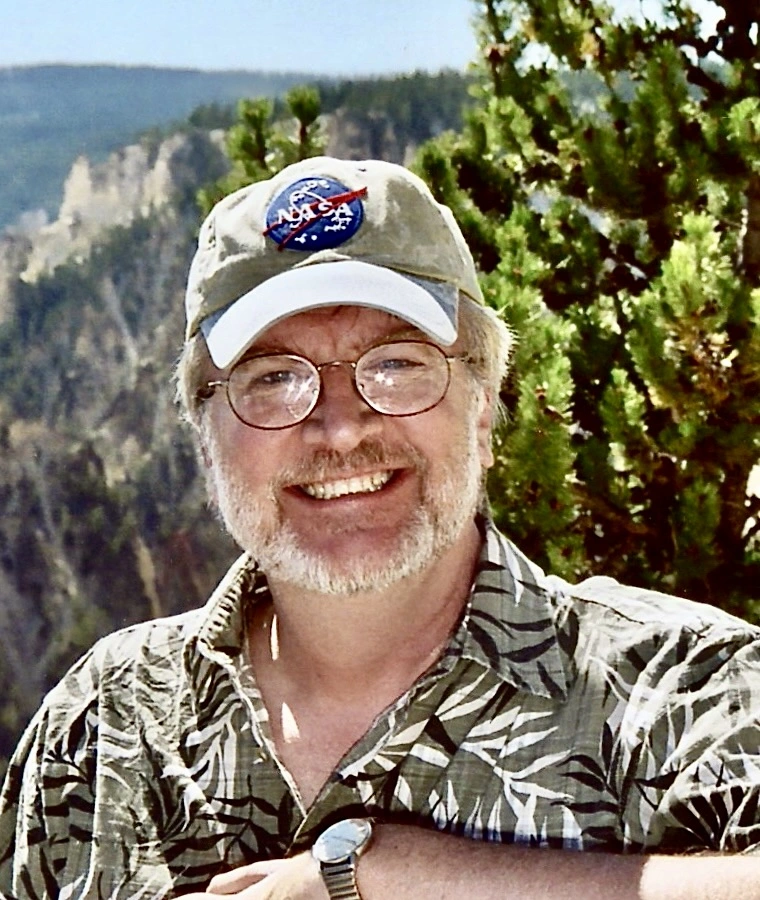
Q: What was the focus of your PhD, and who advised you?
A: My parents often told me that by age 10 I was interested in only one career: astronomy. [They did not think I was serious and figured that studying to be an astronomer would keep me out of trouble.] Happily, the University of California charged no undergraduate tuition for state residents in the 1960s. Growing up in California at this time, the very low cost to attend the Berkeley campus made choice of college obvious. For graduate school, the University of Chicago—with its irresistible nickname, “Where fun goes to die”—seemed an excellent fit for me. The admission officers at several other graduate schools agreed and encouraged me to enroll at Chicago.
I was one of the last—among many—doctoral students from the University of Chicago’s historic Yerkes Observatory in Williams Bay, Wisconsin. I arrived in 1972 and began working with Doyal (Al) Harper, who had come the year before to establish his far-infrared (far-IR) instrumentation and observing program. I was available labor, so I joined him, and completed my 1978 thesis, “Far-Infrared Observations from Compact HII Regions.”
Yerkes is an historically significant observatory, often credited as being the birthplace of astrophysics in the US. It was founded by George Hale, who was its first director and who organized the first meetings of the American Astronomical Society there. Among other scientists who worked, taught, or were educated at Yerkes were Edwin Hubble, Albert Michelson, Subrahmanyan Chandra, and Nancy Grace Roman.
Q: Over the following decade, you published numerous papers on star-forming regions throughout the Milky Way. What were some of the key results, and what did you learn?
A: Largely, my thesis—and those of my Yerkes colleagues, Charles Telesco and Harvey Moseley—emphasized as much on developing technology for this emerging field as on the science. When I arrived at Yerkes, far-IR astronomy, covering roughly 20 to 350 micrometers, was conducted to a large degree from NASA’s Learjet Observatory (LJO). The LJO carried a 30-cm telescope, now in the Smithsonian Museum, and could observe for a few hours at altitudes up to about 15 km. This is above much of the obscuring atmospheric water vapor. However, at this altitude, astronomers on board had to wear oxygen masks, flame-resistant clothing, and crash helmets throughout the flight. The demanding annual two-day training for high-altitude operations was made tolerable by an option for instruction on using ejection seats.
The success of the LJO demonstrated the value of far-IR observations and led NASA to develop the Kuiper Airborne Observatory (KAO) in 1974, a converted C-141 cargo aircraft. The KAO allowed “shirtsleeve” operations with a much more capable 0.9-m telescope, which I used for my thesis work. The oxygen masks, crash helmets, and fire-resistant clothing were gone. Unfortunately, I never got the chance to use an ejection seat.
It quickly became clear that far-IR observations were essential for determining the total luminosities, formation efficiencies, and locations of deeply dust-enshrouded star-forming regions in the Milky Way that could not otherwise be seen. At Yerkes, our work also extended to energetic galaxies, evolved and dying stars, planetary nebulae, and objects across the Solar System. During that period, our far-IR instruments also advanced from single detectors to small detector arrays.
For my thesis, I was intrigued by how the birth of the most-luminous stars affected — or did not — subsequent star formation in massive molecular clouds. M42 and NGC 2024 in the Orion region, M17, and the vast W3 complex were favorite targets. Extensive observations of their molecular clouds were underway as we carried out our parallel far-IR investigations. It was an exciting time, as entirely new wavelengths were becoming available with the deployment on ever-larger telescopes of instrumentation not previously available.
When I earned my doctorate in 1978, job offers were not exactly pouring in. I began to suspect that expertise in high-altitude far-IR observing—especially without ejection-seat credentials! —was not the strongest foundation for a young astronomer’s career. It was extremely fortunate for me, then, when Robert Gehrz and John Hackwell at the University of Wyoming offered me a faculty position. Not only did the two of them become great friends, but the modest-size University was a superb environment for largely independent work.
Q: What do you consider the most influential work you carried out while at Wyoming?
A: Easy: the most influential work I did in Wyoming was leading the small team that produced the first proof of concept for what eventually became the James Webb Space Telescope (JWST)—although that came more than a decade after I arrived.
While at the University of Wyoming, my family and I regularly vacationed in Grand Teton National Park in the late 1980s. It occurred to me that this stunning natural setting would be an ideal place for an international astronomy conference. At the time, my research centered on star formation and the interstellar medium—subjects I wanted to understand more deeply—so an international summer school seemed especially valuable. With David Hollenbach and Michael Shull, and with support from the University of Wyoming, we held three annual summer schools in the park. In the decades that followed, I chaired or co-chaired two dozen professional conferences in the United States and Europe, often on topics I wanted to learn more about but did not have the commitment to study on my own. [Colleagues called it laziness.]
Q: In the 1990s, you led a team that developed the first proof of concept for what became the James Webb Space Telescope. How did this come about?
A: The pioneering scientific work carried out using the KAO contributed significantly to the motivation for later IR and sub-mm observatories in space, far above the Earth’s atmosphere. In the 1980s and 1990s, NASA, the Dutch space agency, the United Kingdom, and others launched a small number of infrared space telescopes. These successful first-generation observatories all relied on the same basic approach: a modest-aperture telescope enclosed within a toroidal tank of liquid helium to cool the optics and instruments to the extremely low temperatures required for operation. But the same technology that enabled these missions also limited them, constraining both aperture size and mission lifetime because the helium eventually evaporated. Those limitations were well-understood and motivated some early concepts to exploit the cold of space.
The most compelling of these concepts came from Timothy Hawarden of the Royal Observatory Edinburgh (ROE). Tim had spent several years developing his idea, the Passively cooled Orbiting Infrared Observatory Telescope\ (POIROT). By good fortune, I was on sabbatical from the University of Wyoming at ROE when Tim presented POIROT in late 1989. Malcolm Longair, the observatory director, immediately recognized the extraordinary potential of an infrared observatory cooled by radiation alone. He gave the staff one intense weekend to scrutinize Tim’s model for any embarrassing technical or numerical flaw. None were found, although the issue of major design flaws would arise in subsequent years, as radiative cooling in space was not immediately widely accepted. No fundamental flaws were found at ROE in Tim’s design, and a funding proposal was promptly submitted to ESA. My contribution to that activity was modest; my greater role began a few months later, when ESA rejected it as technically immature.
Our response to that rejection was obvious. Because ESA planned another proposal solicitation a few years later, we decided to turn Tim’s idea into a much more technically complete proof of concept; that is, a prototype. I led that effort and named it Edison, after the American inventor.
The greatest challenge of producing a compelling Edison proof of concept was persuading talented engineers to contribute part time, after their regular work and often at the expense of family holidays. We had very little funding—only a vision for a major paradigm shift in space astronomy, encouragement from our institutions, and a few overextended credit cards.
While our poorly funded Edison study was underway in the United Kingdom — with me flying back and forth from Wyoming — intensive work was also progressing in the United States on an ambitious NASA infrared observatory. Within a few years, the Space Infrared Telescope Facility (SIRTF, later Spitzer) would successfully continue the long-established liquid-helium approach although with some added radiative cooling.
With engineering support primarily from Rutherford Appleton Laboratory (RAL) near Oxford, we published several technical papers and eventually submitted an Edison proposal to ESA in 1993. It too was rejected, but ESA explicitly acknowledged the importance of our work. Our proof of concept, after many subsequent years of engineering design, would ultimately lead to the James Webb Space Telescope (JWST). Although we were disappointed by another rejection, we remained grateful for the generous—often unpaid—contributions of many.
After the second ESA rejection, I was exhausted, had been traveling for more than three years, with no obvious source of continued funding. At that point, it was up to others to build on our first proof of concept. Years later, a prominent European astronomer remarked that work on radiative cooling for infrared space observatories had produced “the most successful mission designs that never flew.”
The story of Edison, the first proof of concept for a future large-aperture space telescope, has been told elsewhere, most fully in The Space Review on October 21, 2024.
After a decade and a half at the University of Wyoming, I had the good fortune to be invited to join the NASA/AURA “HST and Beyond” team. Its influential 1996 product, “The [Alan] Dressler Report,” helped persuade NASA to build what eventually became JWST and to continue funding Hubble, which was far from certain at the time.
Q: After 15 years at the University of Wyoming, you were offered a position at NASA Headquarters in Washington, DC. Why did you take it and leave academic research?
A: Larry Caroff, who had provided timely support for Edison and whose NASA position I would later assume, made my decision easy. He told me that if my goal was to win a Nobel Prize, it probably was not going to happen, so why not help make it possible for others to win one? His logic was hard to argue with. I accepted the job at NASA Headquarters, where I would work for many years with Ed Weiler, while overseeing the agency’s infrared and submillimeter programs.
Q: You worked for many years at NASA and were involved in astrophysics program planning. Please give us an inside view of how those processes worked.
A: Program planning at NASA Headquarters never ends. Every annual budget requires substantial strategic thought, as do new projects and major technologies. That work can involve coordination with international partners, NASA centers, other government agencies, academia, technology development teams, the White House, and Congress.
Every project needs an active “guardian angel” at NASA Headquarters to ensure it remains visible in program planning. It was painful to see some projects go unfunded, at least in part because no one made the strongest possible case for them in Washington.
We regularly urged project teams and astronomy departments to encourage early-career professionals to spend at least a few years at NASA Headquarters. The work there is nothing like research, but it is often vastly more influential: Washington is where the future of science is funded. And the behind-the-scenes understanding of NASA and government processes can be invaluable.
During the latter half of the 1990s, I served as the senior—that is, program—scientist at NASA Headquarters for Hubble, briefly for the Webb and Spitzer telescopes, as well for FUSE, SWIFT, several smaller missions, and infrared/submillimeter technologies. I also represented NASA HQ to ESA’s Herschel sub-mm space telescope, launched in 2009, which extended many of the science programs pioneered by the KAO three decades earlier.
As a side activity, I often drafted first versions of NASA Administrator Dan Goldin’s speeches for astronomy conferences. [It was a truly unique experience to hear the words I wrote for Dan be greeted with lusty groans and wails from the astronomy audience.] I also joined the small, sub rosa “Decadal Planning Team” (DPT), jointly formed by the White House and NASA to create NASA’s first fully integrated science and human spaceflight program. Our work became a major part of NASA’s contribution to President George W. Bush’s Vision for Space Exploration in the early 2000s. A short history of the DPT and its influence on U.S. space policy appears in Wikipedia, with a fuller formal account in Origins of 21st Century Space Travel by G. R. Asner and S. J. Garber.
By the late 2000s, it was once again time to reorganize NASA Headquarters, as seemed to happen every decade or so, whether necessary or not. In 2003, I was reassigned a few miles outside Washington to NASA’s Goddard Space Flight Center (GSFC). That move proved doubly fortunate: it was there that I met my wife, and for a couple of years I also assisted Frank “Cepi” Cepollina, the legendary leader of NASA’s Hubble servicing efforts. Working with Cepi introduced me to the realities of in-space operations, including robots, astronauts, technologies, and scientific goals. A few of us at GSFC began meeting informally to discuss capabilities that might support future in-space operations of many kinds. Those conversations became the Future In-Space Operations (FISO) on-line seminar series, still ongoing after nearly two decades and now managed by Daniel Lester, with almost 700 presentations archived to date, available here.
Inspired by the astronauts I met at NASA, I began attending lengthy conferences on human missions to Mars, missions that were invariably complex and expensive. In 2012, after long discussions with Michael Raftery of Boeing, Sam Scimemi of NASA, and Chris Carberry of Explore Mars, Inc., we optimistically concluded that human travel to Mars could be made possible at far lower cost by developing an architecture independent of the constraints imposed by national space agencies. I co-chaired the first seven workshops on this topic, and the work continues as I write this. Reports are available on the Explore Mars website.
Now, looking back on a half-century in academia and the space agencies, the most useful retirement advice, should I be asked, is simple: prepare to retire into something. I volunteer as a docent at the Smithsonian Air & Space Museum and George Washington’s home church a few blocks from my house. [Yes, that George Washington.] I am also finishing a study of how artificial intelligence and large language models might reduce much of the human effort now required to produce those major strategic plans for NASA and NSF.
For young people considering astronomy, it is a wonderful career—whether in theoretical astrophysics, observational work, or the construction of advanced instruments. But it demands extraordinary commitment, perhaps more than any other profession I know. The career involves many years of study, uncertain employment prospects, and fierce competition with no guarantee that your work will succeed or prove as valuable as you might hope.
And there is always the chance of an opportunity to use an ejection seat.